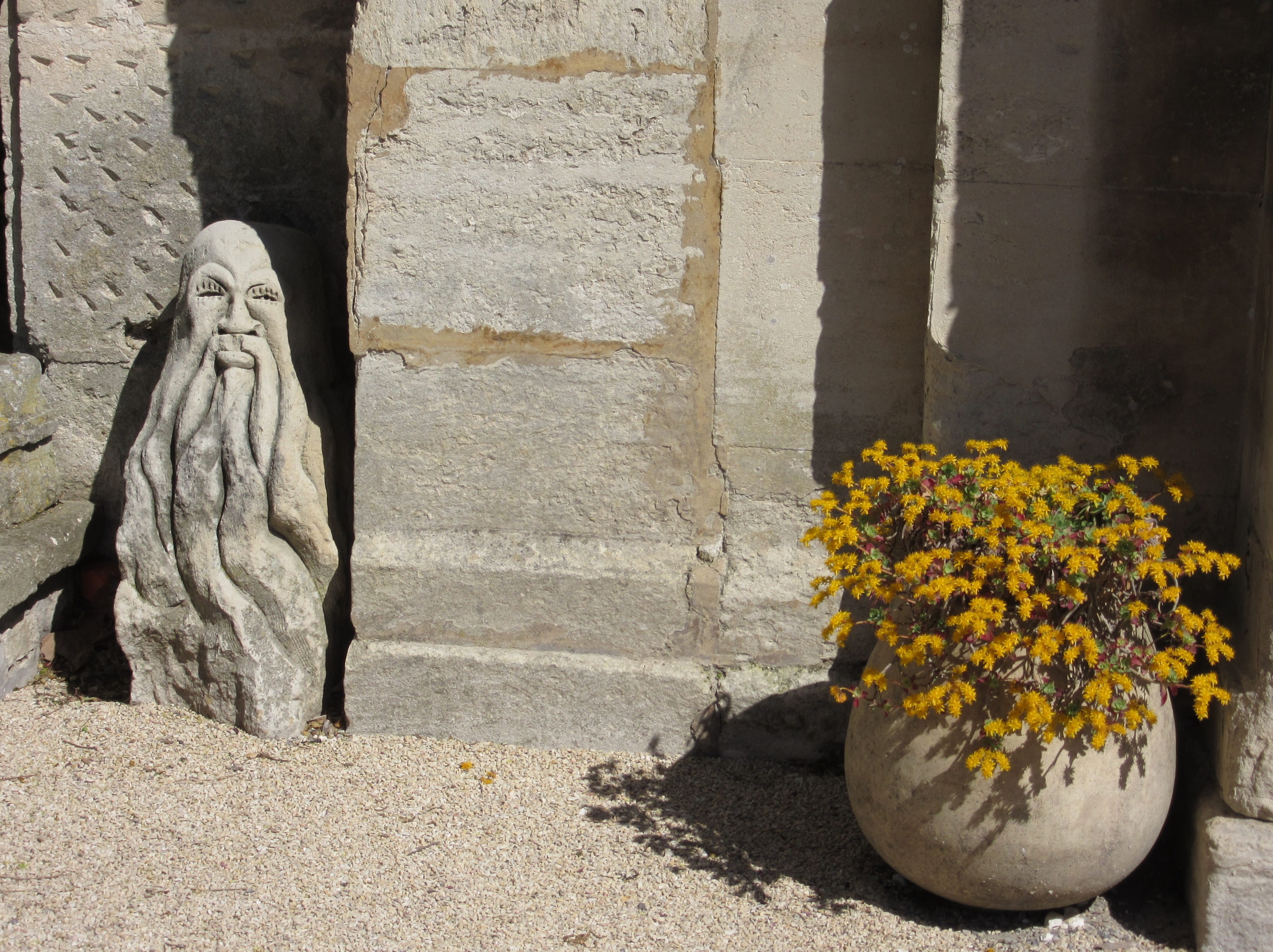
Nice is nice. Cannes can be too. Loving the Cote d’Azur…

Things are warming up on the French Riviera. We moved a bit east of Saint-Tropez to some of the other resort cities.

2015-04-12 147

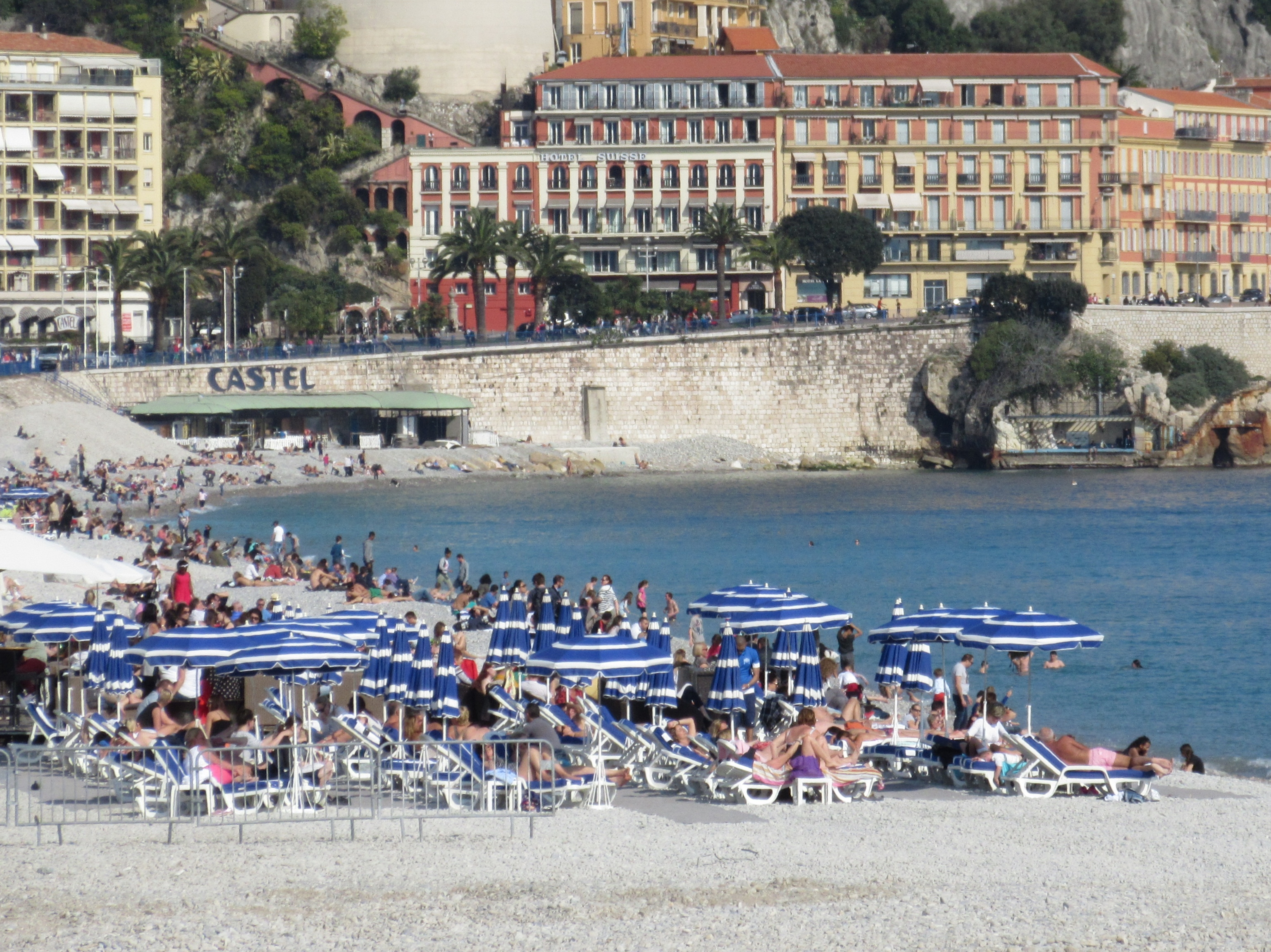
Everything you expect for the Cote d’Azur: sun, beaches, blue waters, and a cruise boat or two. Things are nice in Nice.
2015-04-12 155

Cote d’Azur means “Azure Coast.” Azure is blue. We’re finding blue everywhere along the Riviera.

2015-04-12 149

Even blue mustaches on the sidewalk art

OLYMPUS DIGITAL CAMERA

Looks can be deceiving. This near wall of windows and balconies is actually a painting on a solid wall.

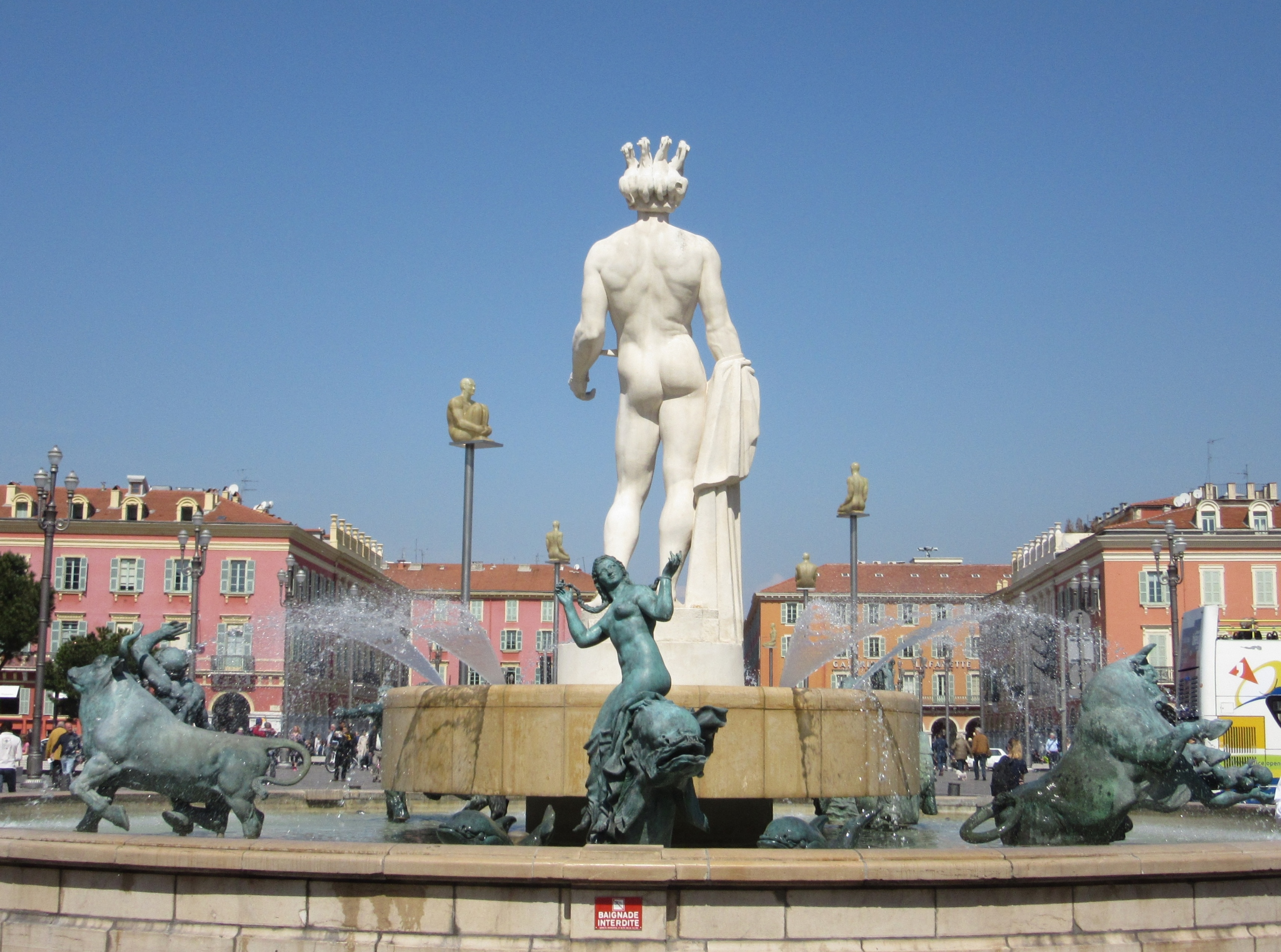
Nice has a large, beautiful pedestrian plaza named Place Massena. It is, however, cut through with an electric train. (They can be quiet and sneak up on you!)  The plaza has a beautiful fountain with a statue fittingly known as Fontaine Du Soleil, Fountain of the Sun.
2015-04-12 004

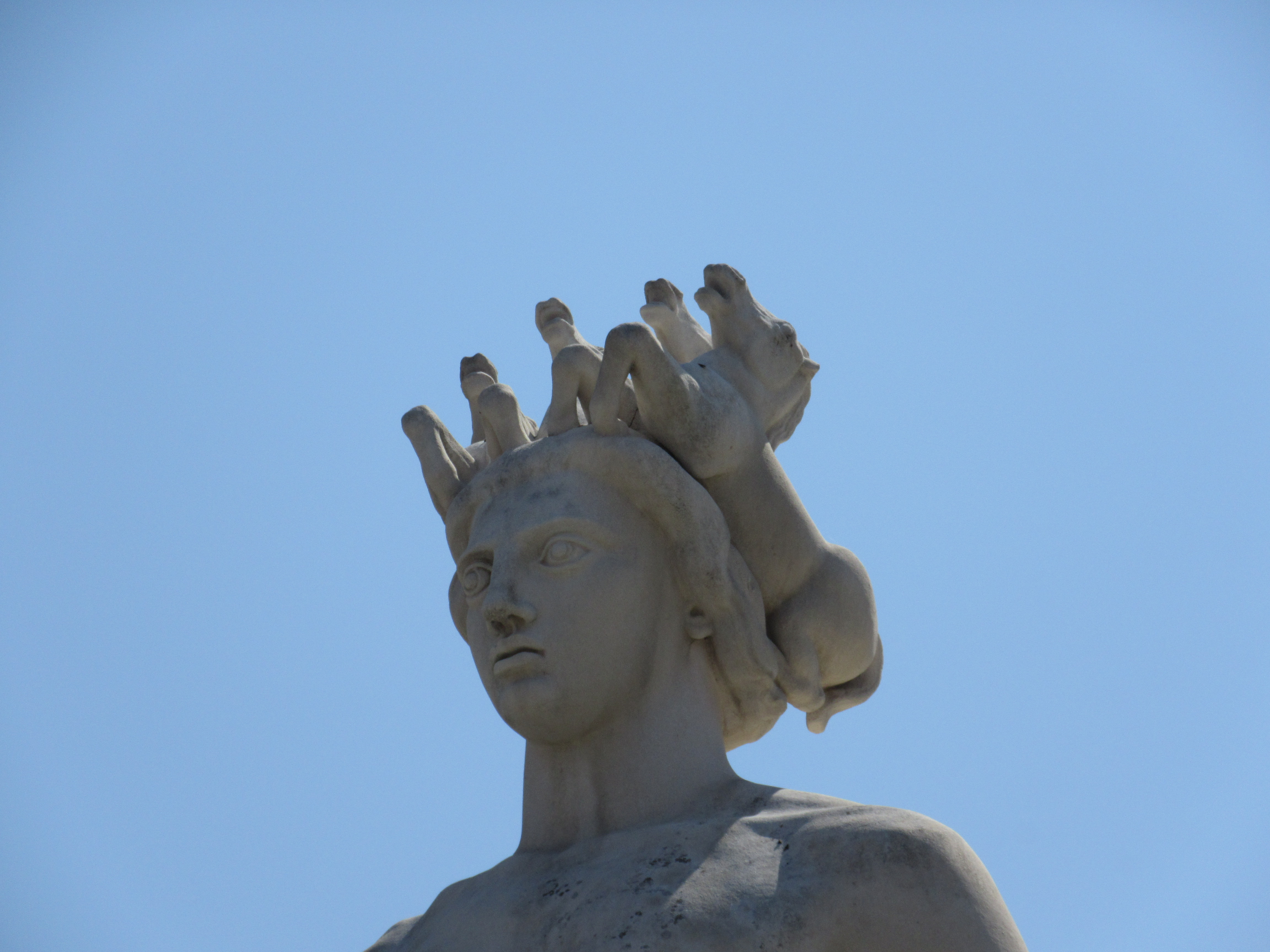
A 21-foot-tall marble statue of Apollo is surrounded by bronze statues representing Earth, Mars, Mercury, Venus and Saturn.

The large naked Apollo was removed from the square for many years for “moral disruption” and just returned in 2007. We wondered why he wore a crown.
2015-04-12 020

Not a laurel crown. It’s his four horses. They look rather small to be pulling Apollo’s chariot.

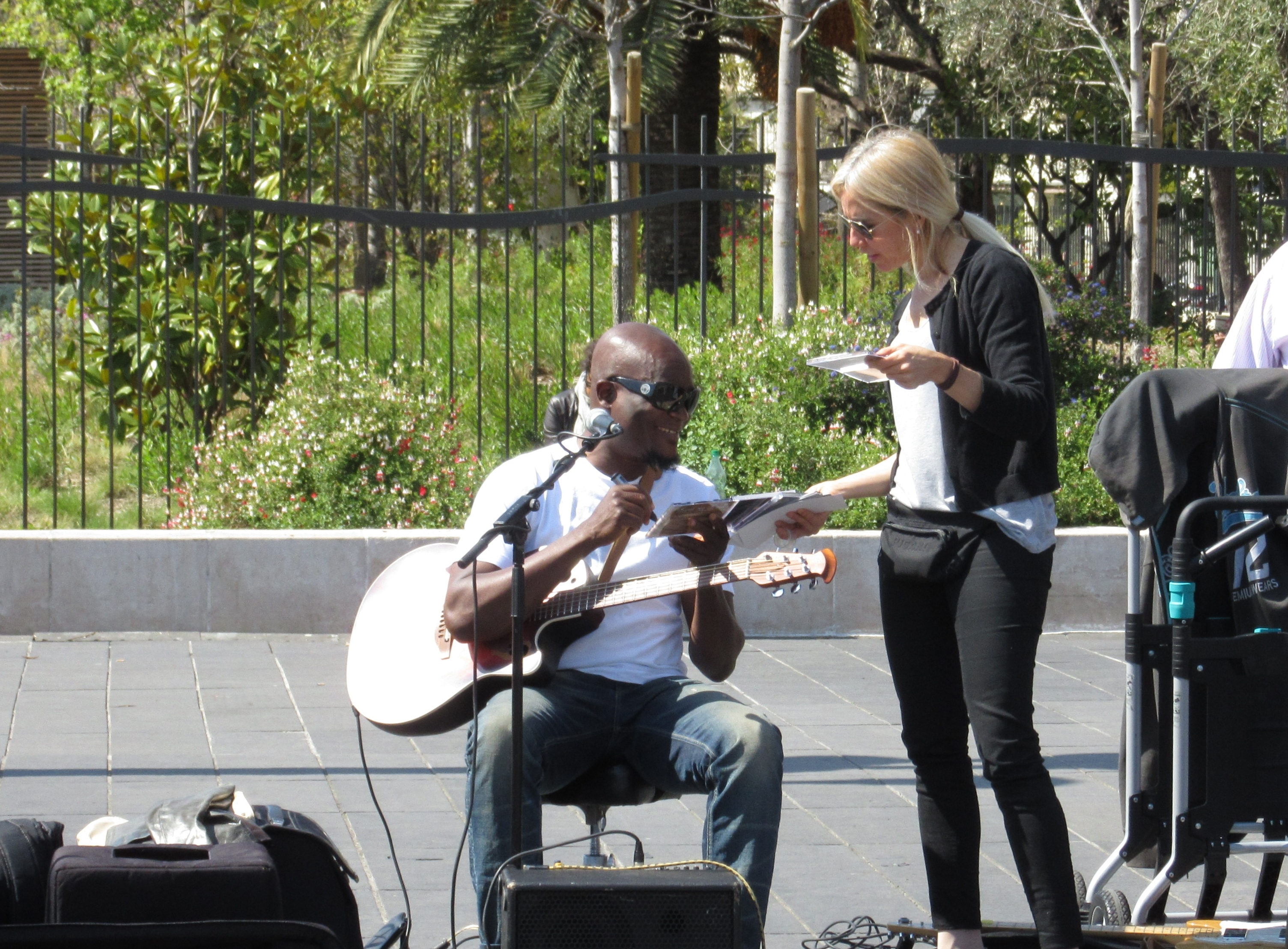
On a lovely spring day we saw fellow tourists, school groups,  a bevy of middle-aged women artists sketching, and some buskers. One in particular impressed us: Aaron Lordson. He’s from Togo and sings in English with a rich, deep, beautiful voice, albeit a few unusual pronunciations. We’ve been listening to one of his CDs as we drive around.
2015-04-12 015

Aaron Lordson, a great talent. You heard it here first (not actually first, but before Ellen Degeneres)

We visited the modern art museum MAMAC (Musée d’Art Moderne et d’Art Contemporain), partly for the art inside (a separate post) and partly for the views.
2015-04-12 059

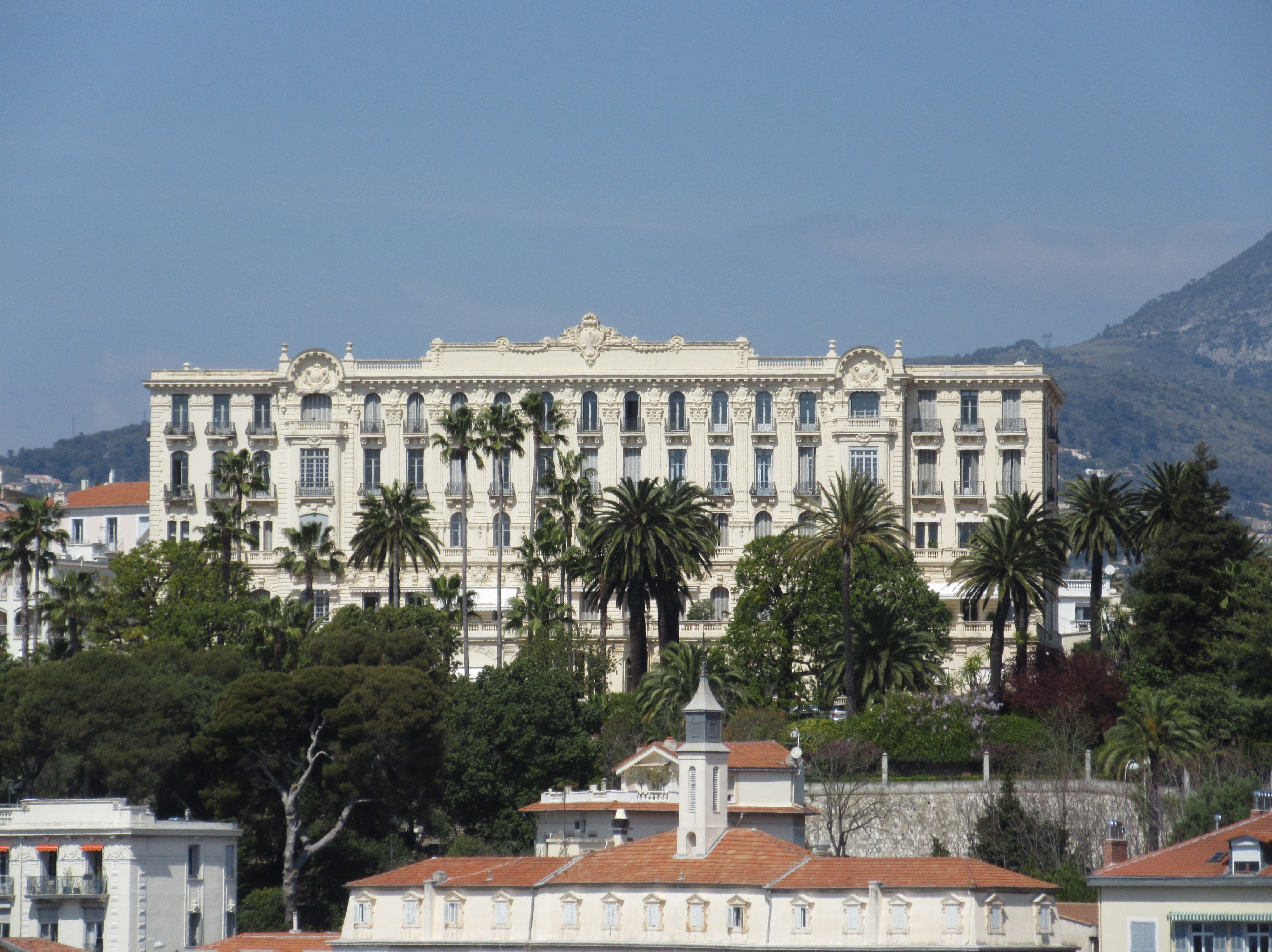
A palatial building in Nice. We don’t know what it is!

2015-04-12 026

Nice has a mistral bell, this one on a pretty clock tower.

2015-04-12 050

This looks like the gardeners tried to capture the Michelin man.
2015-04-12 069

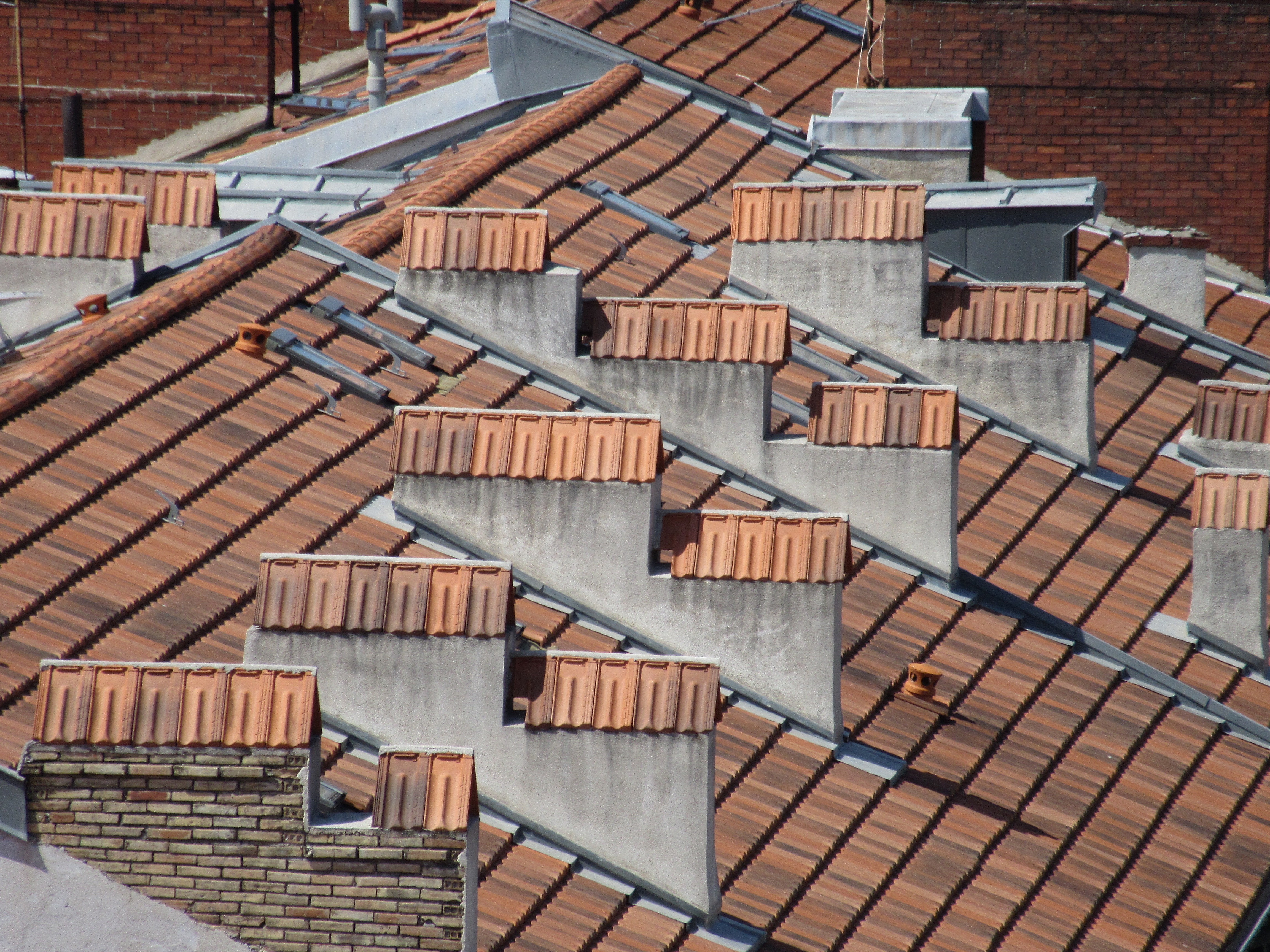
Lovely geometrics on the rooftops.

OLYMPUS DIGITAL CAMERA

On the walkway on the top of MAMAC, Nancy is in orange camouflage to blend with the rooftops.

OLYMPUS DIGITAL CAMERA

View from MAMAC toward the Nice Akropolis across the Promenade des Arts. The big gray block head, Tete Carree, is the administrative offices for the library.

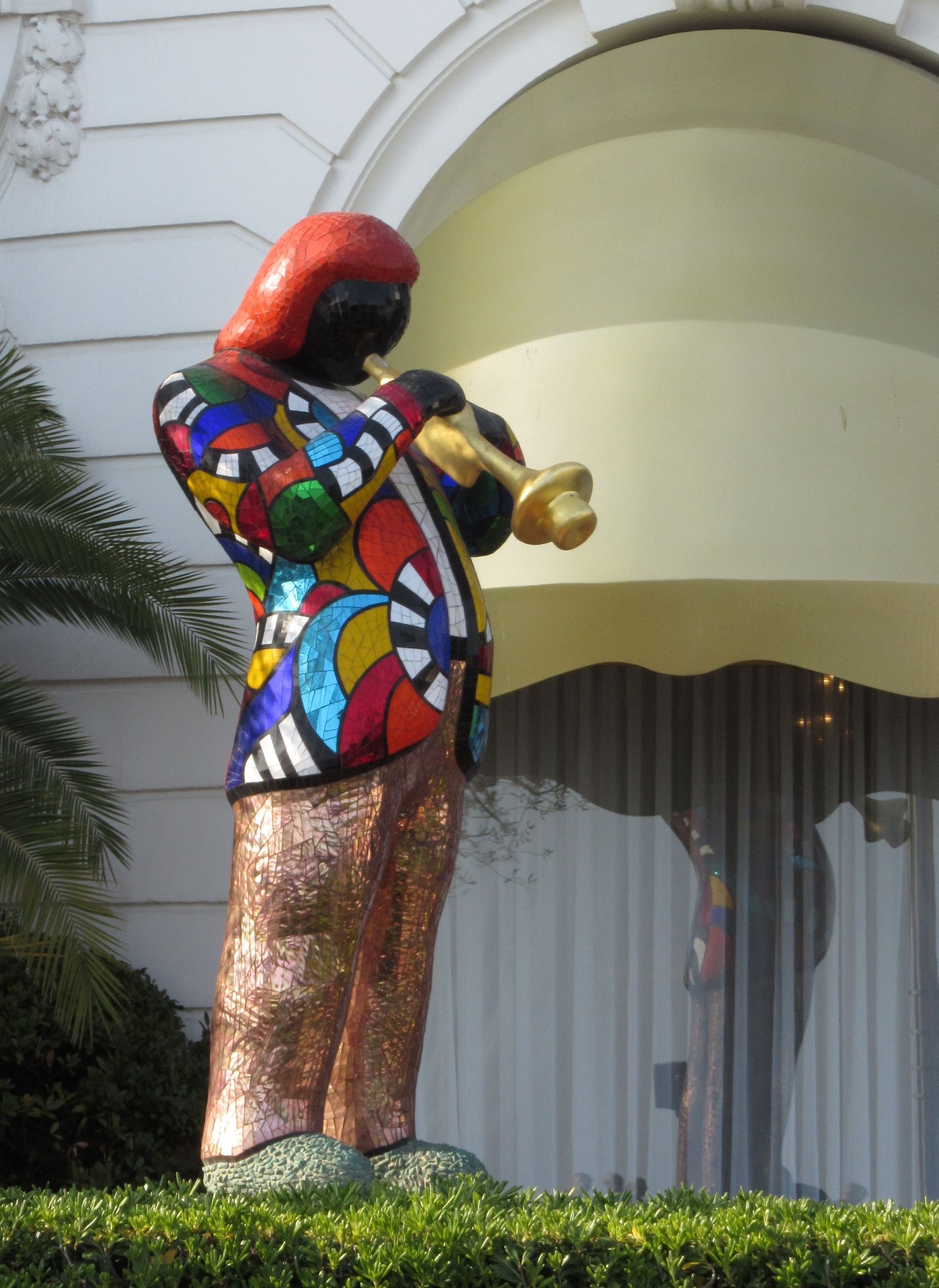
On our way out of Nice we passed the Hotel Le Negresco, displaying a colorful piece of art by Niki de Saint Phalle.
2015-04-12 164

Miles Davis, 1999, by Niki de Saint Phalle

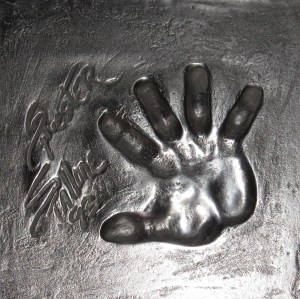
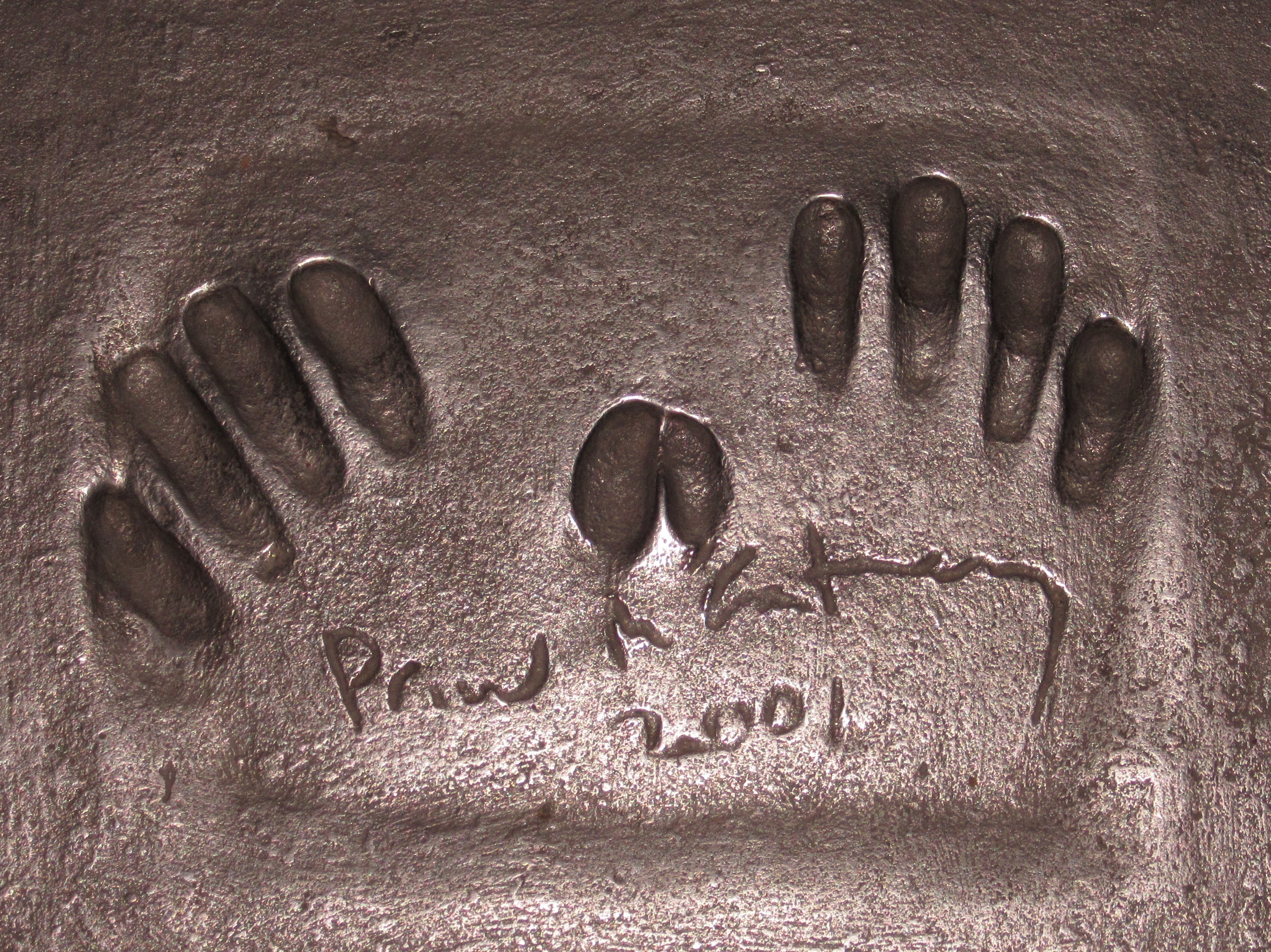
We stopped for the evening in Cannes. The city is getting ready for the big film festival in May. Actually there is a digital festival underway already. No celebrity sightings…not live at least. We did see handprints, just like Hollywood. Angelina Jolie and Dennis Hopper have prime spots. We’re speculating that someone else was moved out to make room for Angelina. The prints are quite distinctive, showing individual personality.
2015-04-12 185

Sylvester Stallone made a solid push into and almost through the cement.
2015-04-12 186

Paul McCartney used just his fingertips, as if he were playing the piano.

2015-04-12 184

And this is from one of my (and NPR’s Terry Gross’) favorite composers, Michel Legrand, 3-time Oscar winner.

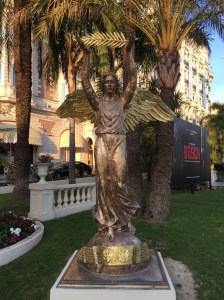
Like the Academy Award has its Oscar statuette, the Cannes film competition has a highly desired prize, the Palme d’Or, the Golden Palm.
IMG_5580

This golden angel in Cannes is ready to bestow a golden palm.

These areas will be hopping soon when the celebs hit the town.  Some will stay in hotels…
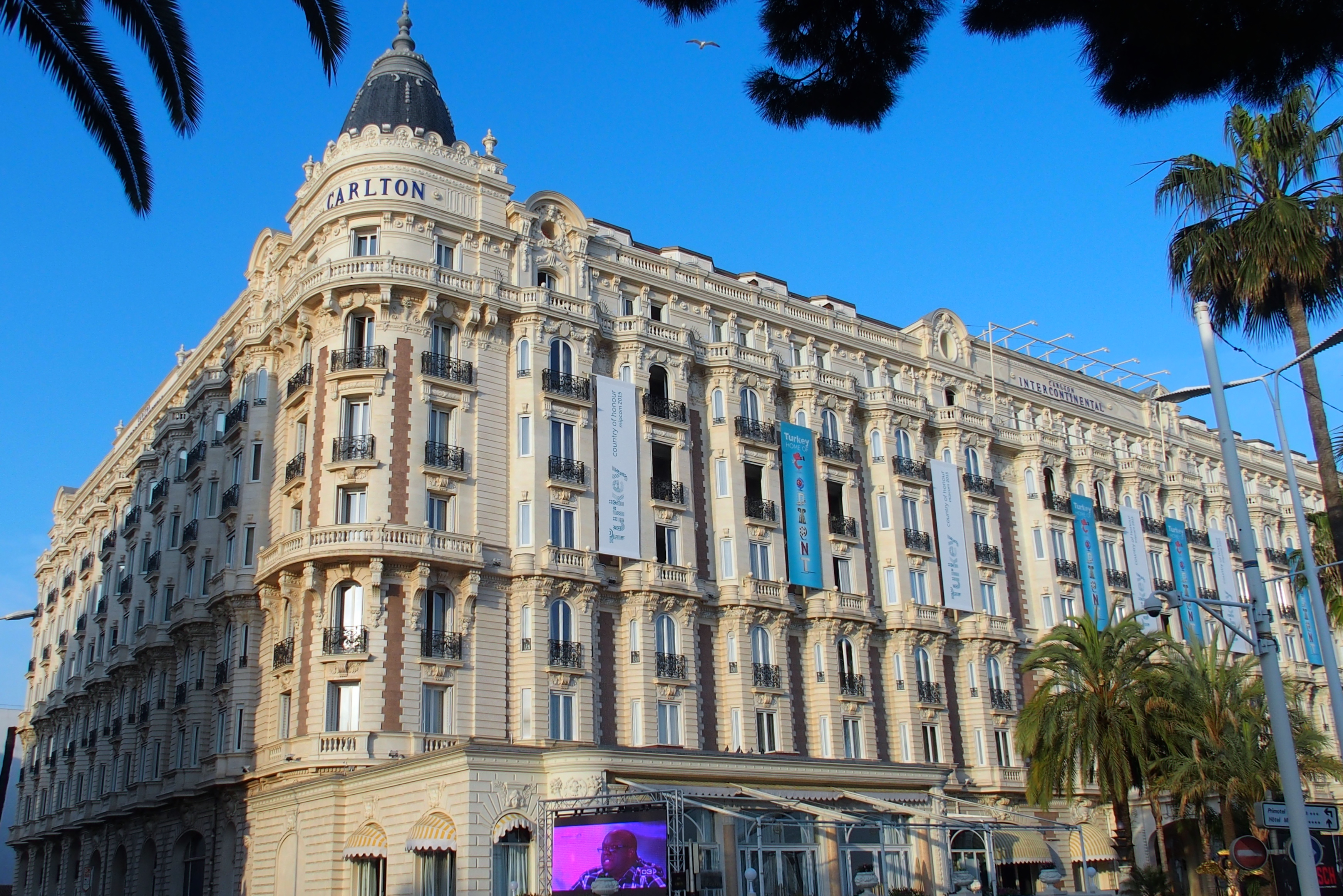
OLYMPUS DIGITAL CAMERA

Hotel Carlton, where Stephen and Kathy honeymooned!

and lots will stay on their private boats.
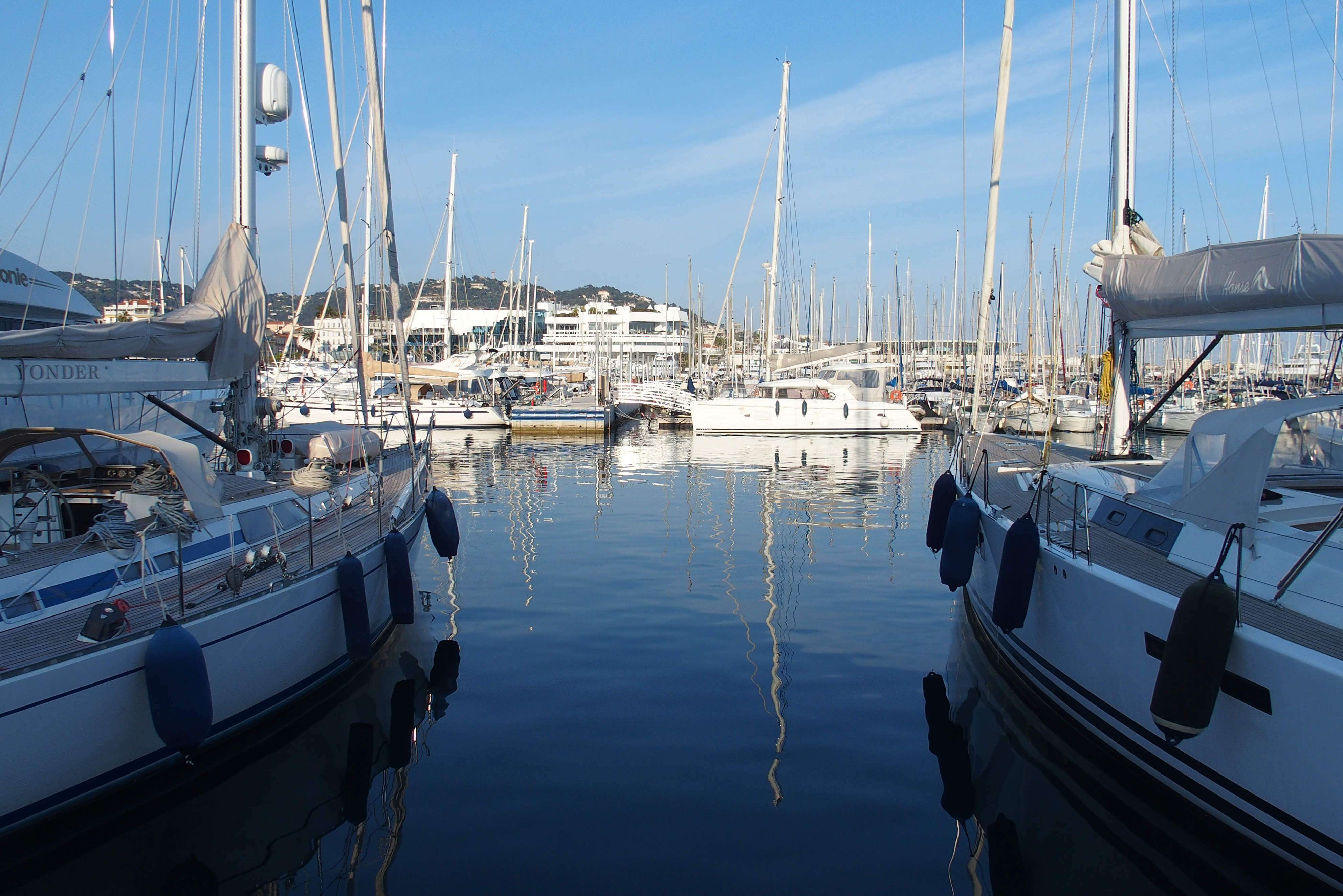
OLYMPUS DIGITAL CAMERA

Yachts peacefully floating on the blue waters in the Cannes port. The big ones with celebs have not yet arrived.

It’s easy to get carried away with the whole “Azur” idea. It’s such a lovely color. This was “la toilette” in our airbnb back in Grasse.
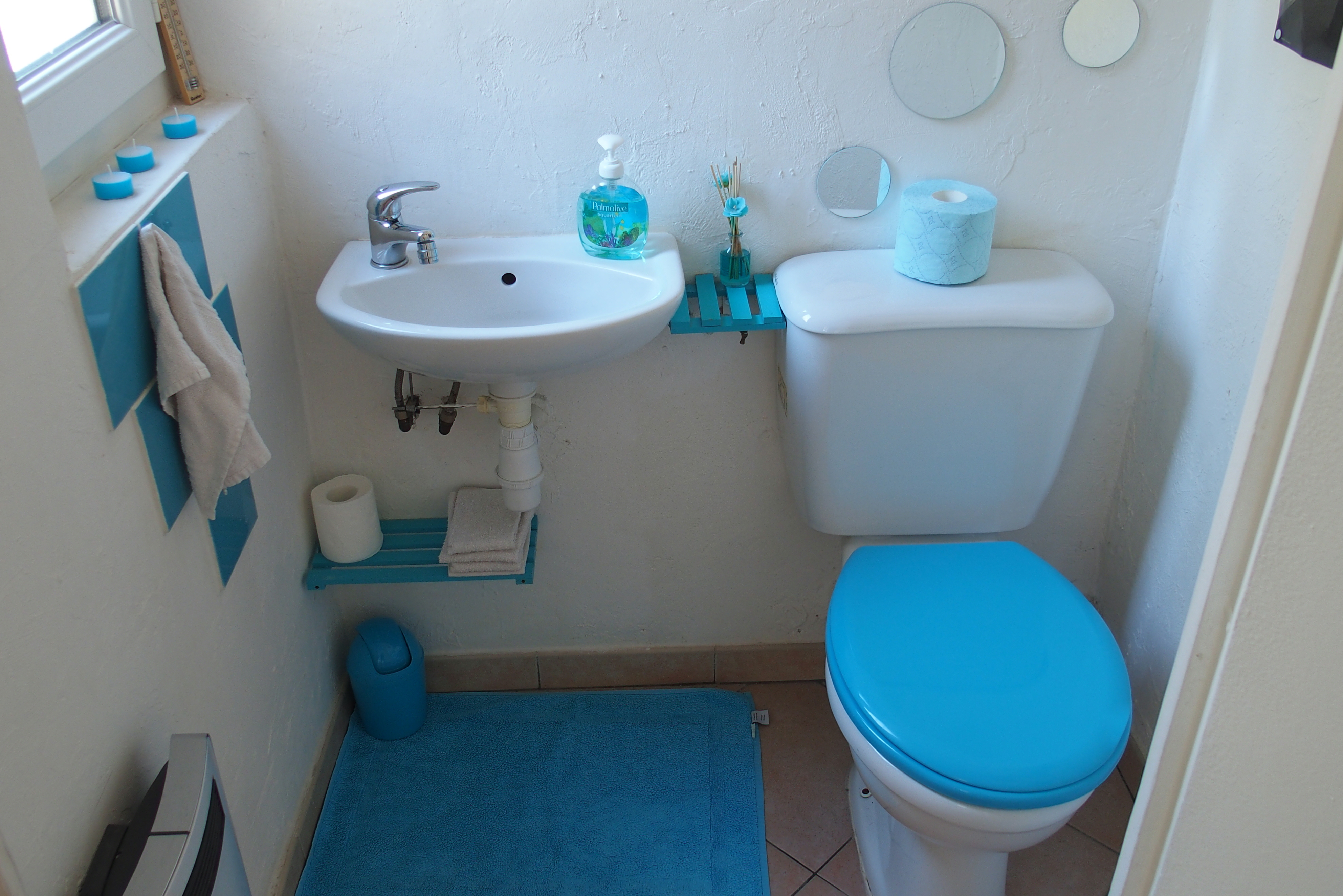
OLYMPUS DIGITAL CAMERA

Azure right down to the toilet paper!


Posted in Travel Journal | Tagged , , , , | Leave a comment

MAMAC, a very NICE modern art museum

New York has MoMA and Nice has MAMAC, Musée d’art moderne et d’art contemporain. Although it’s just plain azure at the moment, the facade often features brilliant light installations turning the entire entrance into a work of art.

OLYMPUS DIGITAL CAMERA

The entrance to MAMAC is both modern and contemporary.

The French artist Niki de Saint Phalle spent quite a bit of time in Nice and donated nearly 200 of her distinctive pieces to MAMAC.

OLYMPUS DIGITAL CAMERA

Niki de Saint Phalle’s Loch Ness Monster guards the entrance to MAMAC. He looks more playful than scary.

OLYMPUS DIGITAL CAMERA

Loch Ness monster from above. When first installed, people thought he was a playground structure. Lots of “ouches” on the sharp mirrors. Scary after all.

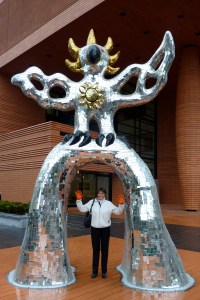
We were already familiar with Niki de Saint Phalle’s work. Her Firebird (L’Oiseau de Feu sur l’Arche) is a giant mirrored piece that has been in front of the Bechtler Museum in Charlotte, North Carolina since 2009. About 60 pieces of her enchantingly colorful art were exhibited there several years ago.

P1000104

I’m 5’10” so you can get a sense of the size of the Firebird statue. It’s 17 feet tall and was created in 1991.

2015-04-12 103

A bit of artistic recycling. MAMAC displays The Sun, a painting she created in 1998.

2015-04-12 105

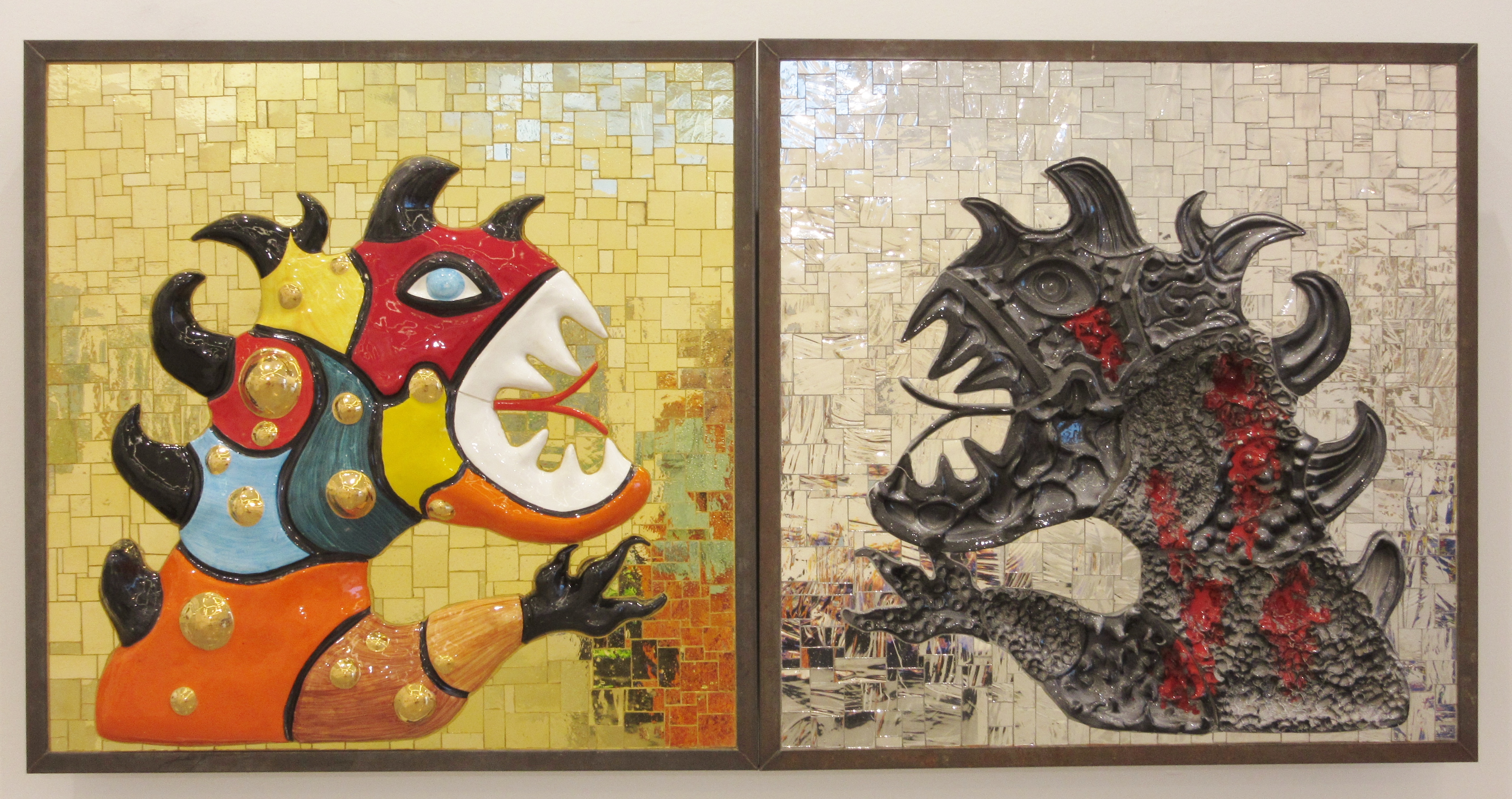
Positive and Negative Dragons, 1988. Signs of the artist’s inner torment?

2015-04-12 109

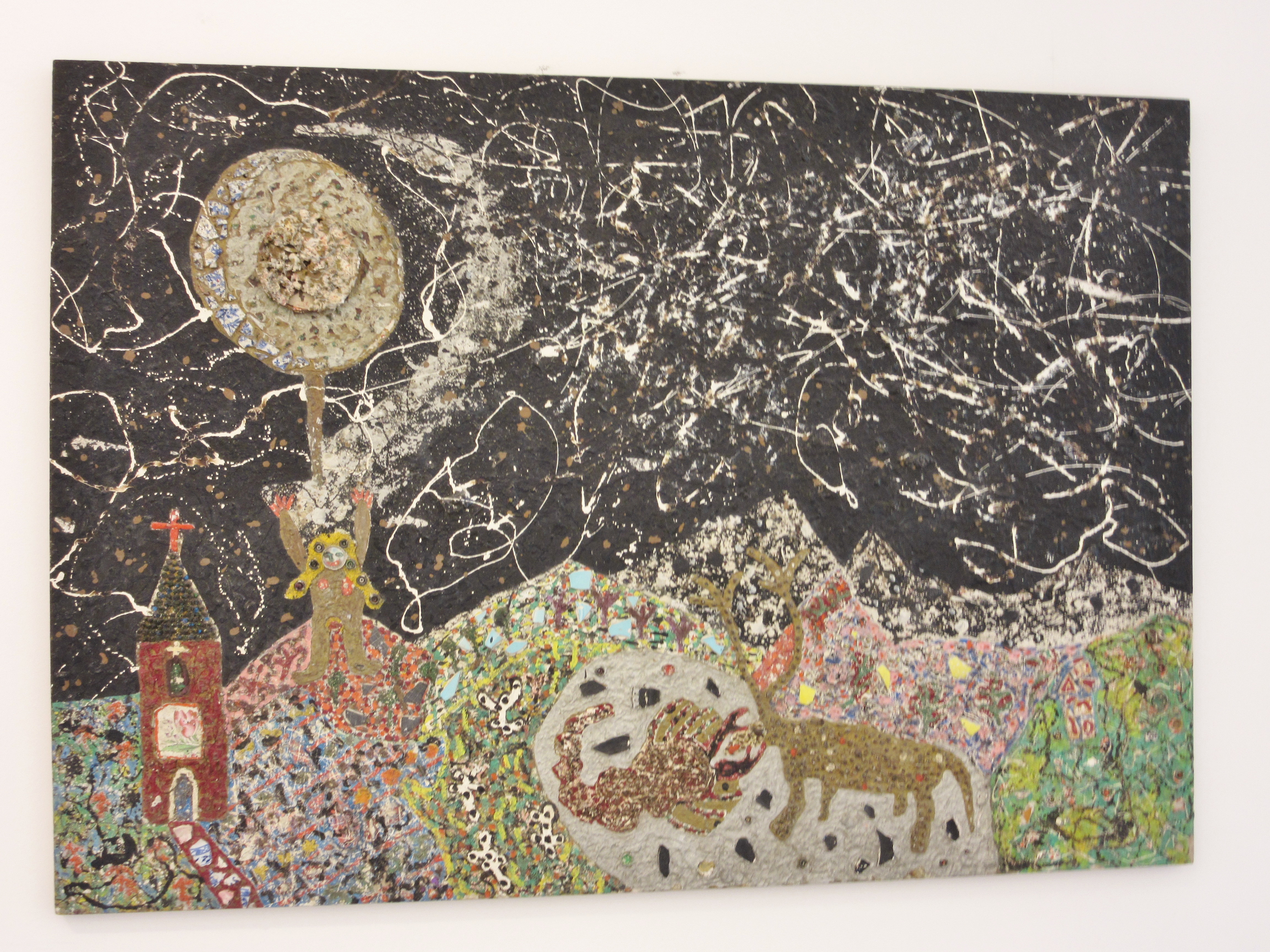
Squint a bit and her Scorpion and Stag looks a bit like van Gogh’s Starry Night, don’t you think?

The museum has lots of other art as well. Some of it, we just had to ask, “This is art?”

IMG_5549

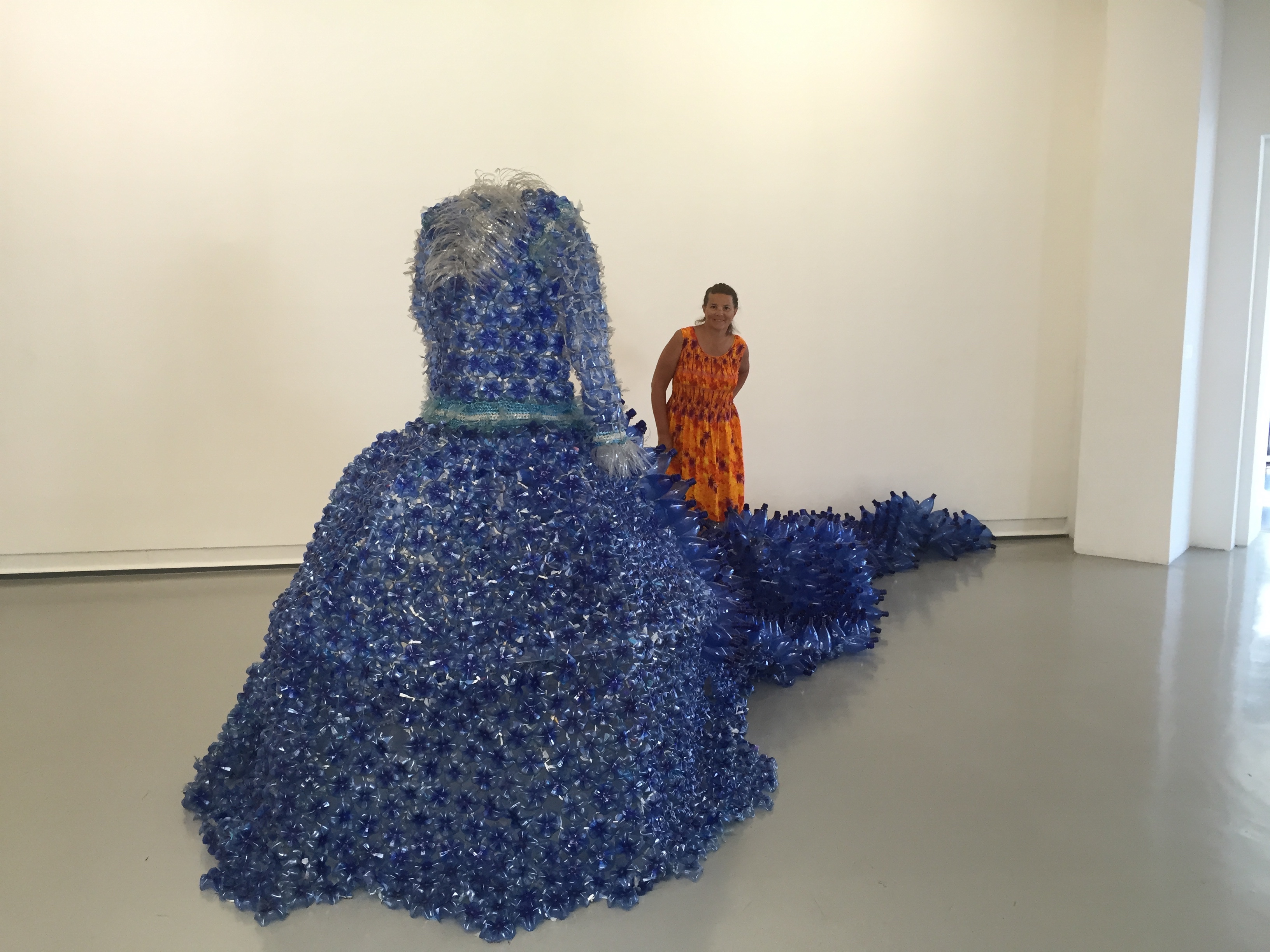
The ultimate recycling project, Vestito Blu, a blue dress and train made from plastic bottles by Enrica Borghi.

2015-04-12 076

Close-up detail shows the tremendous amount of planning and care that went into the project. Have you ever tried to hold more than three empty plastic bottles at the same time? Impossible.

Interestingly, this use of plastic in artworks has led to a whole new field of POPART: the Preservation Of Plastic Artefacts in museum collections. How long will this art last? How do you keep it clean?

How do you keep this one clean? It’s a Poubelle (trash bin) by Arman. (Click on the image to enlarge. You might have the makings of your own piece of artwork in your kitchen trash right now: Coke, Pepperidge Farm, Marlboro…)

2015-04-12 094

This one was created in 1969. It seems to be holding up quite nicely, not your normal trash bin decomposition.

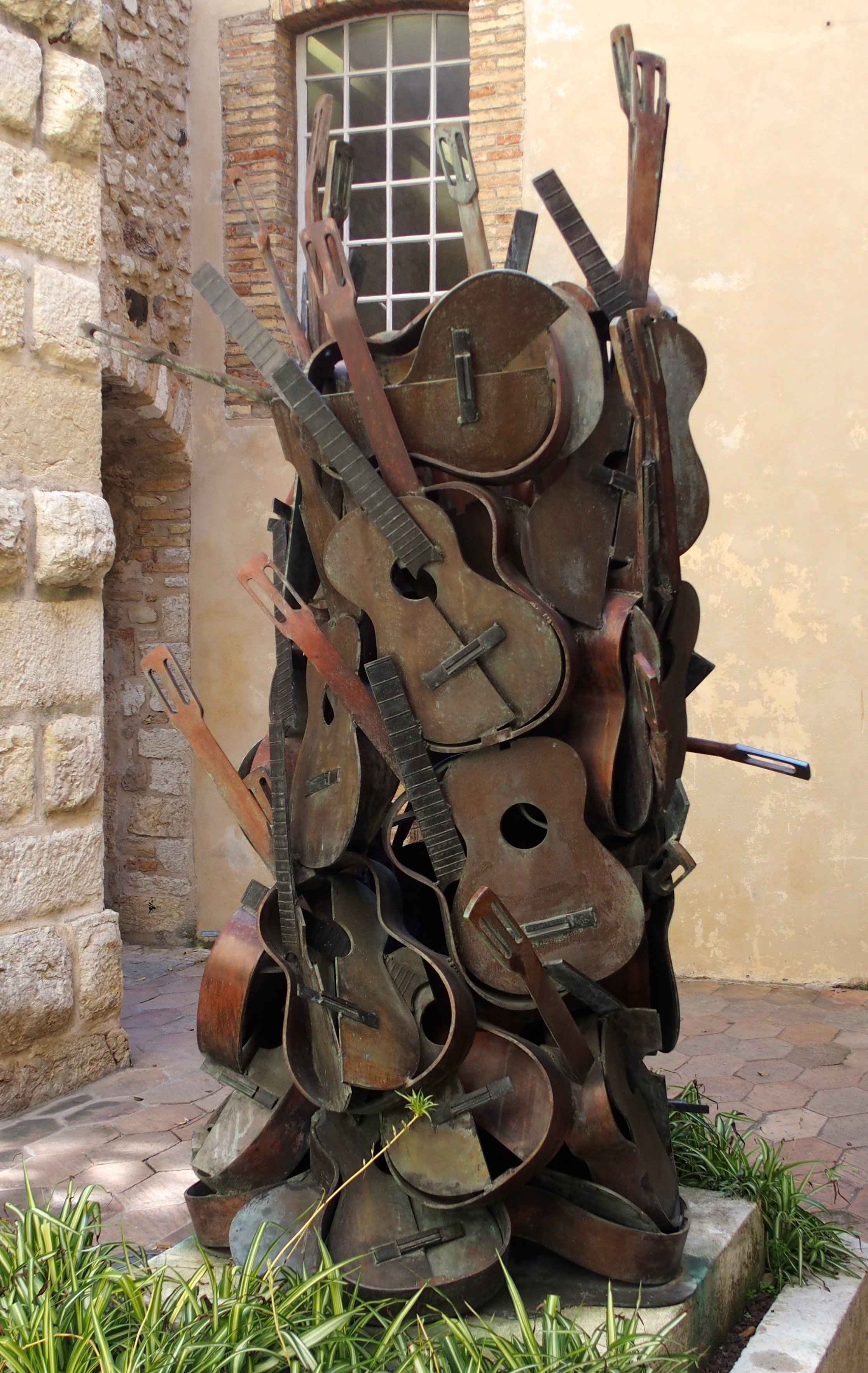
Some of Arman’s other pieces are intentional decomposition, a little less yucky. We saw the guitars cut apart at the Picasso museum in Antibes. Here he has cut brass instruments in half.

2015-04-12 086

Arman, untitled, 1983

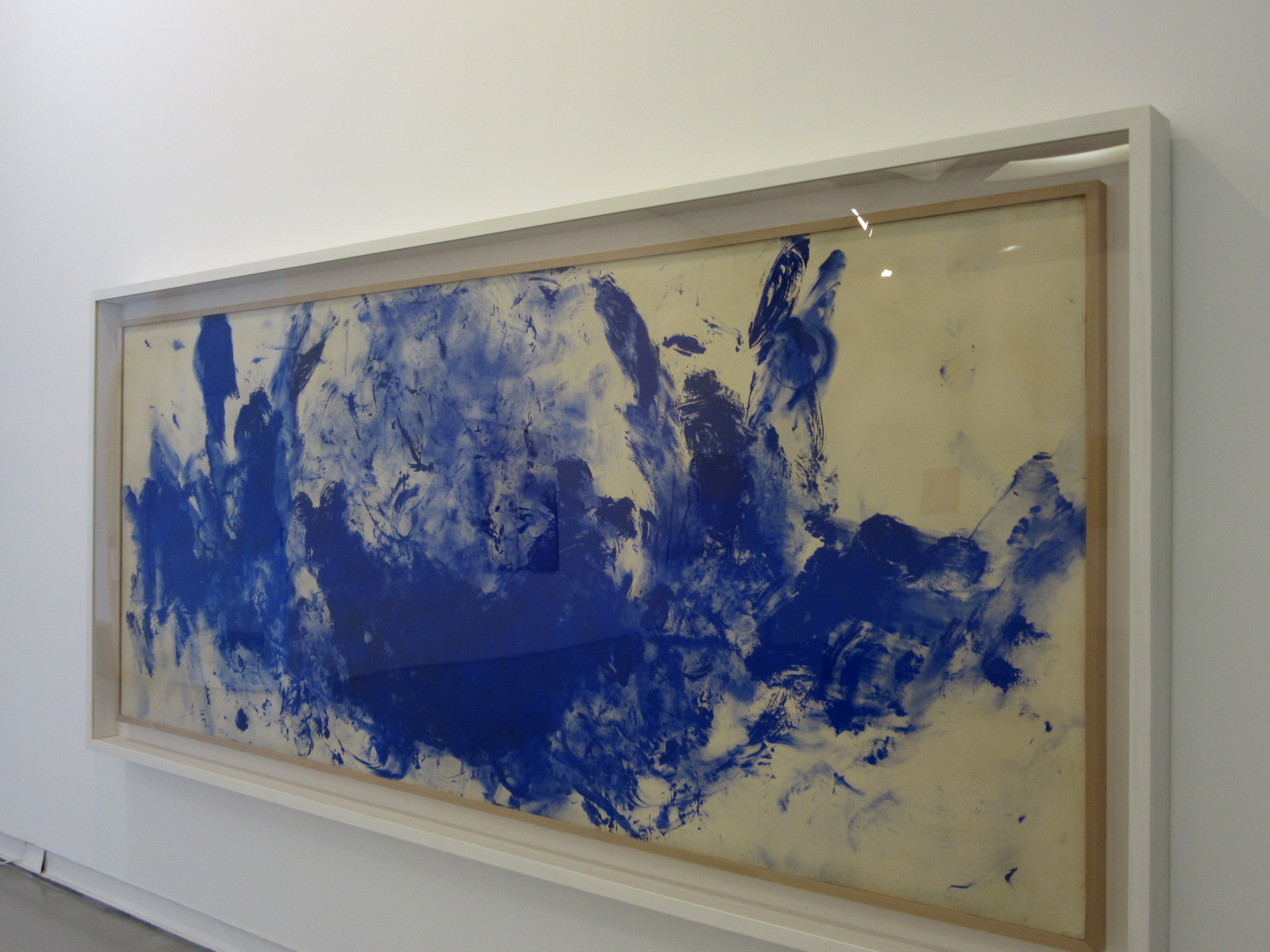
Finally, the museum has numerous paintings and sculptures in blue by Yves Klein. In this piece, he slathered paint on nude women and supervised their movement across the canvas to create a work of New Realism.

2015-04-12 115

Klein’s instructions to his subjects sound like Twister. Put your left arm there and your right breast here… “Et voila!”

It was good to have a day of culture, whether we understood it all or not!


Posted in Smell the Roses | Tagged , , , , | Leave a comment

Grasse, the city of flowers and perfumes

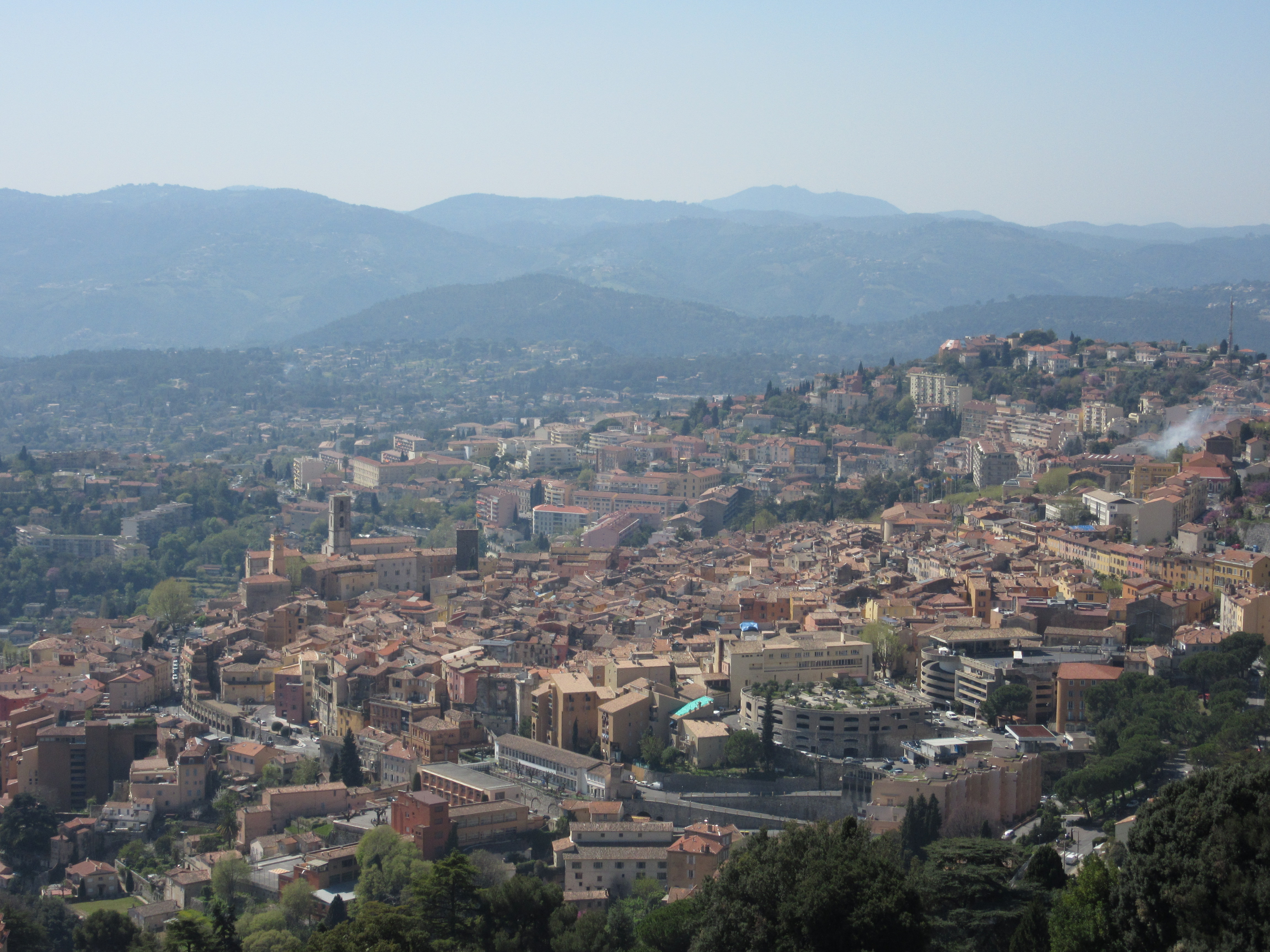
Grasse is another town in southern France with buildings washed in pastel orange and pink under roofs of terracotta tiles. Streets are narrow and winding. Mountains loom in the distance beyond the bell towers. It looks a bit like Menerbes or Roussillon or many of the other small towns, but we sensed it was a bit different.

2015-04-11 001

Bell tower and mistral bell in Grasse’s old town

At one time Grasse had a large number of leather-makers, their tanning creating a stench across the town. As early as the 16th century, innovative residents began to create floral perfumes to clear the smell. Now Grasse is the “World Capital of Perfume,” a fairly large city of over 50,000 people. More than a quarter of the people here work in jobs related to perfume, providing almost half of the perfumes and raw materials for the very large French production for world consumption.

2015-04-13 030

Greater Grasse, a big, smelly city…smelly in a GOOD way now.

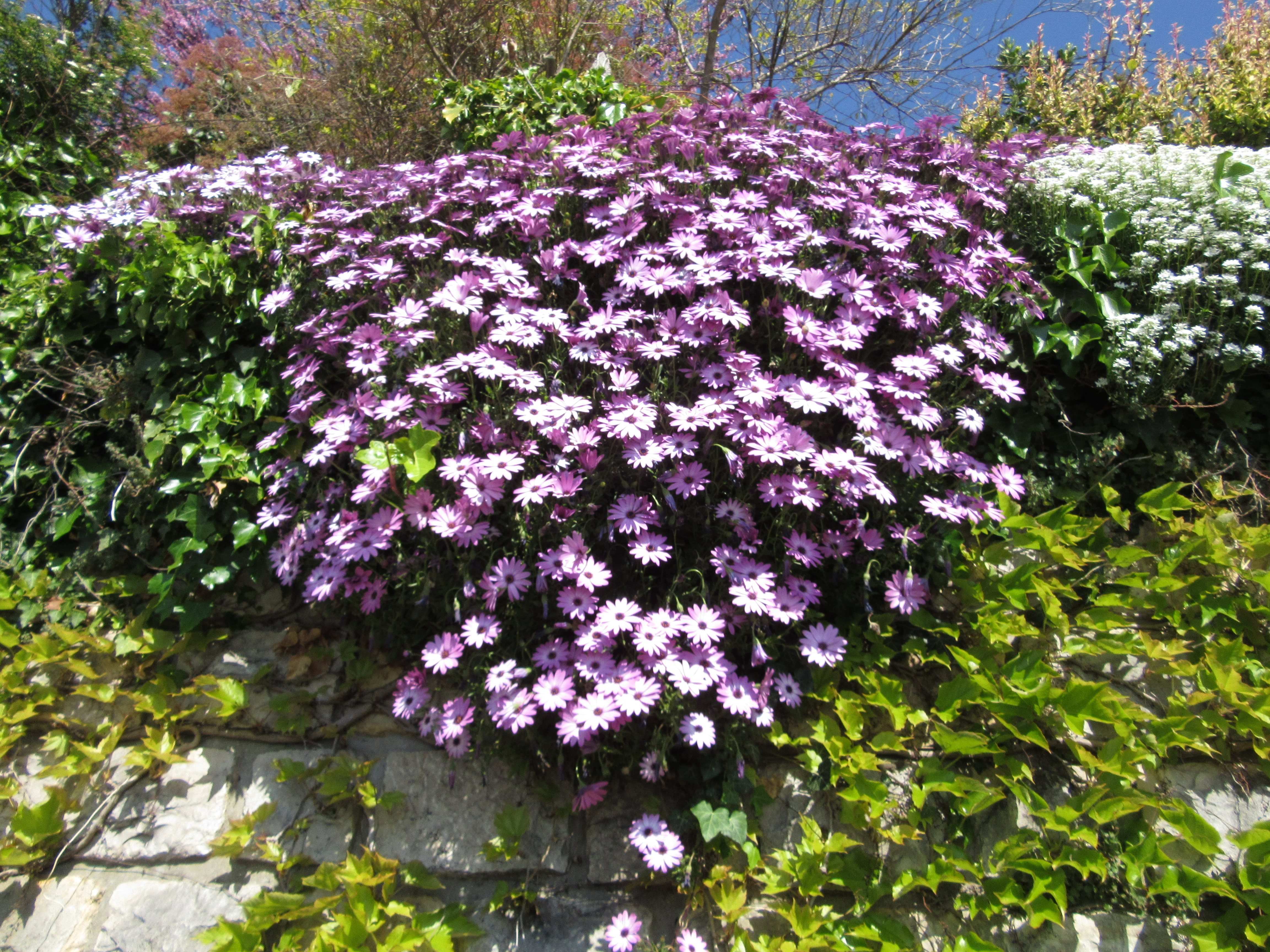
The town is known as the city of flowers and perfumes. With warm weather, plentiful water, and tender loving care, flowers thrive. Jasmine, with a delightful aroma, is prominent later in the summer. In early April, we’re already seeing blooms throughout the city.

2015-04-13 018

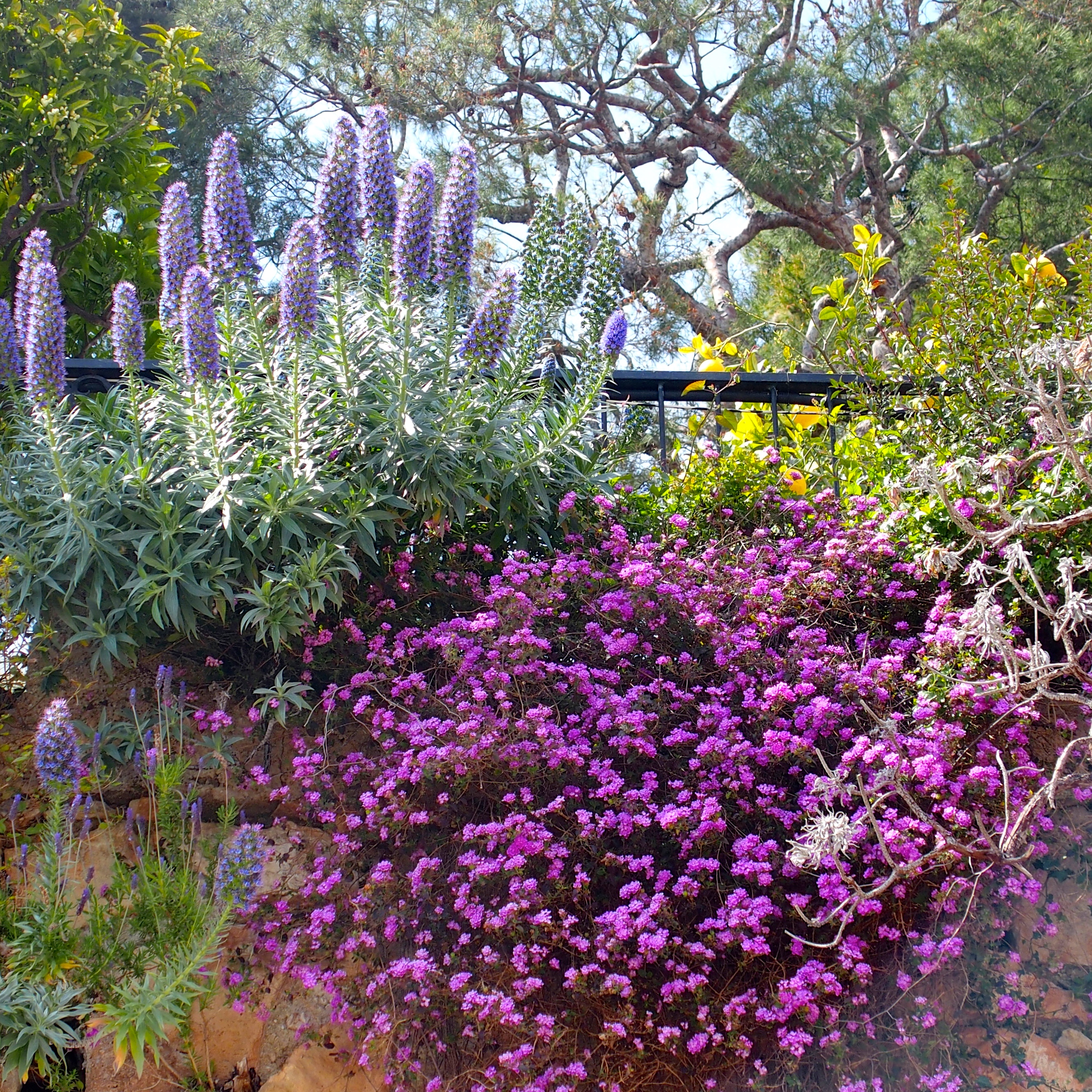
Bright blossoms cascade over the walls everywhere.

OLYMPUS DIGITAL CAMERA

More delightful flowers.

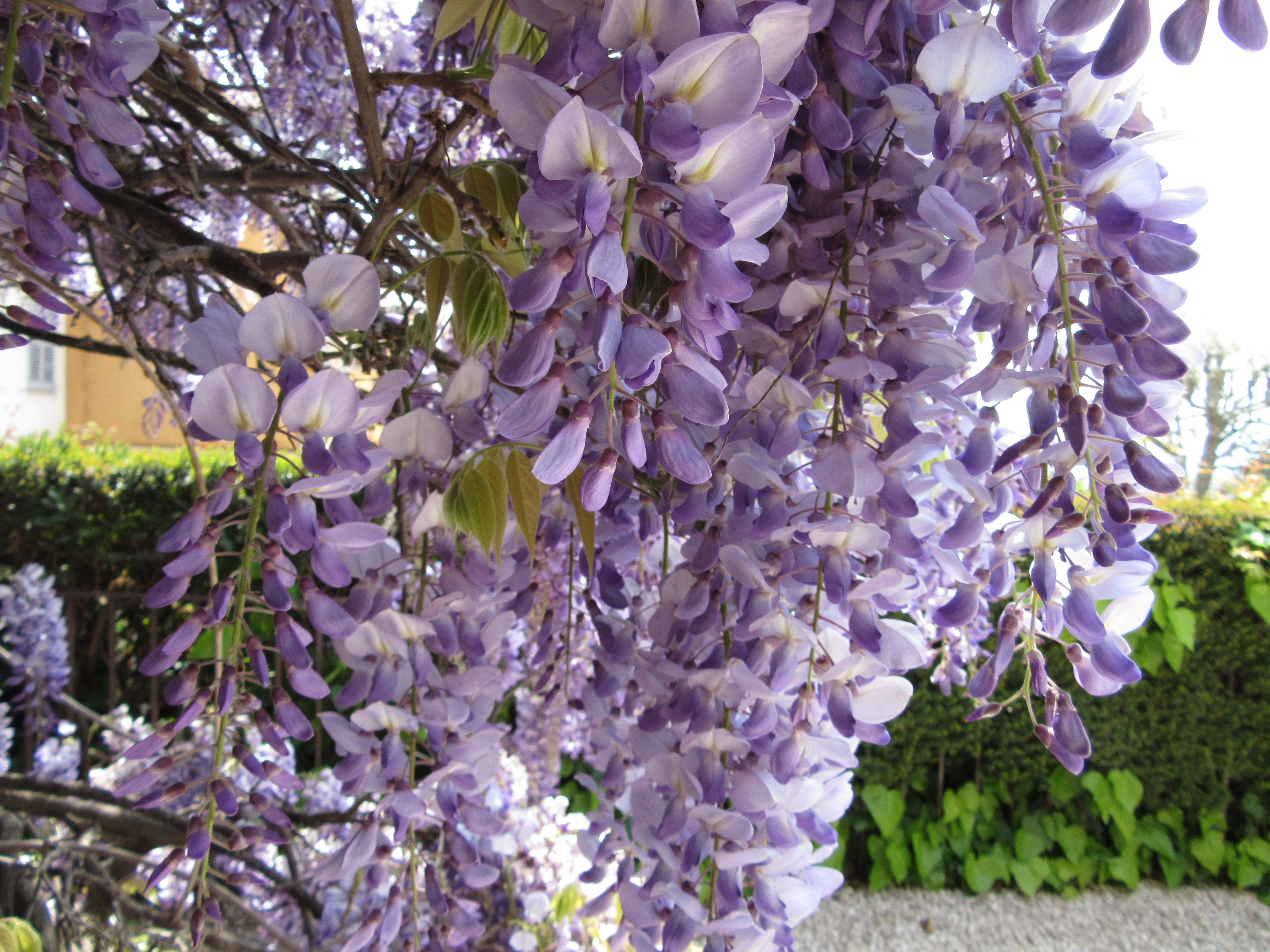
We remembered the lavender-colored wisteria from our visit to Grasse in 2001. It’s still here!

2015-04-10 014

Wisteria vines take over the city.

2015-04-11 027

The beautiful wisteria blossoms. They don’t smell as good as lilacs or lavender, but they look lovely.

Three main parfumeries dominate the city: Galimard and Fragonard developed here in the 1700s and Molinard 100 years later. Each has a manufacturing facility, a small museum, and of course, a sales boutique! The city also has the International Perfume Museum, which explains the history of perfume and displays bottles from ancient civilizations to the present. Hands-on exhibits let you push buttons to get whiffs of different scents.

2015-04-11 029

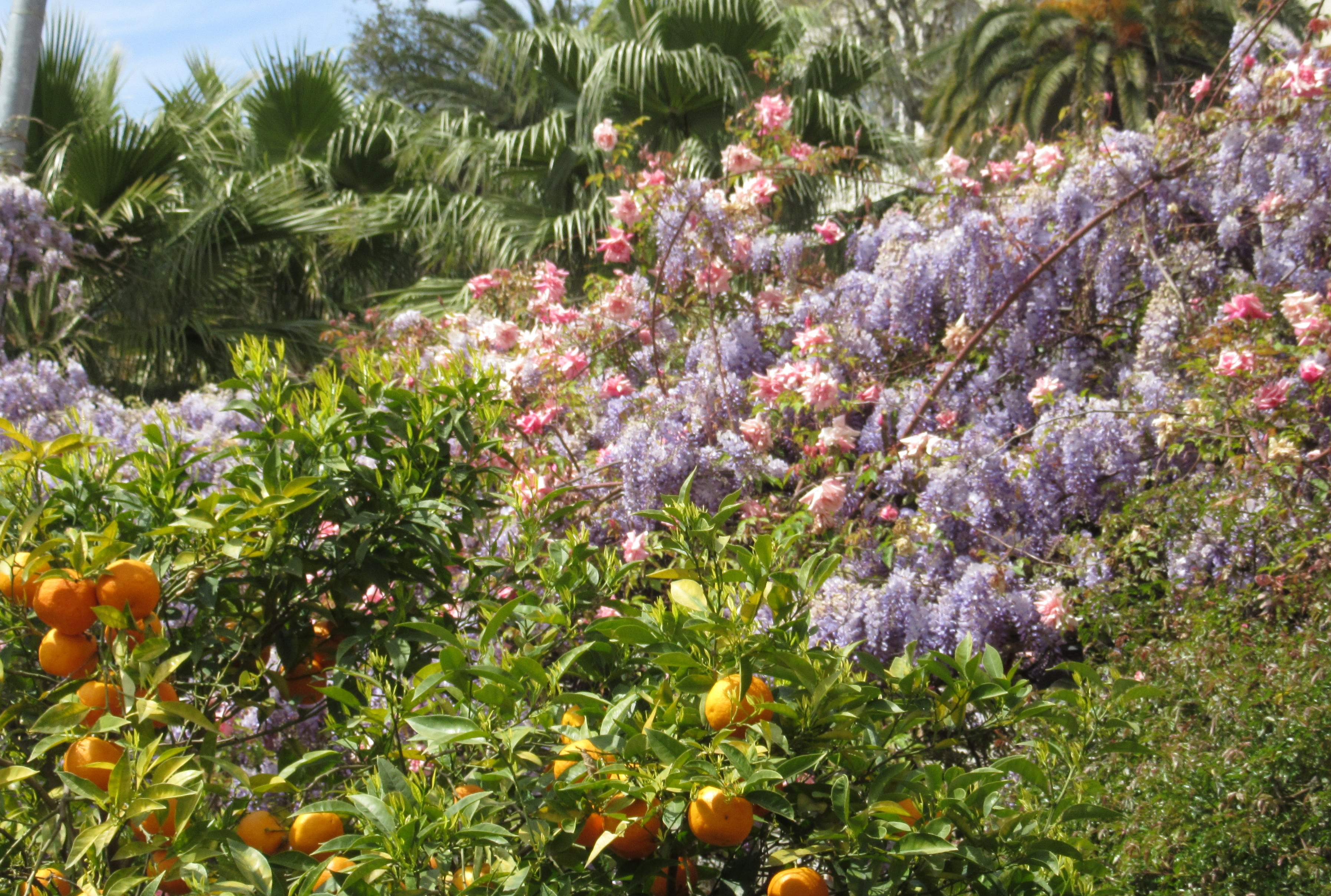
Roses, oranges, and wisteria in the garden of the perfume museum.

Just like vineyards rely on winemakers and tasters to ensure that they create the best vintages, parfumeries have sensory specialists. The perfume creator/sniffer is called “le nez” (the nose). He or she may be able to distinguish thousands of different scents. Nicolas Maillebiau and more recently his daughter Isabelle have created perfumes for Nina Ricci, Dior, Guerlain, Lalique, and many others. They capture essences of flowers, fruits, musks, and now synthetics and blend them to make unique beautiful fragrances.

2015-04-11 046

The “nose” knows perfumes.

We read an interesting story about a specific (fictional) “nez” Grenouille in the book, Perfume: The Story of a Murderer. Born without any personal smell, as in body odor, Grenouille has an outstanding and insatiable sense of smell. He seeks to create the perfect perfume and finds raw materials in the natural body scents of people he meets. Just as musk from an animal can be obtained only by killing it, Grenouille must murder to build his perfume. Sounds gruesome, but it’s worth reading.

2015-04-11 048

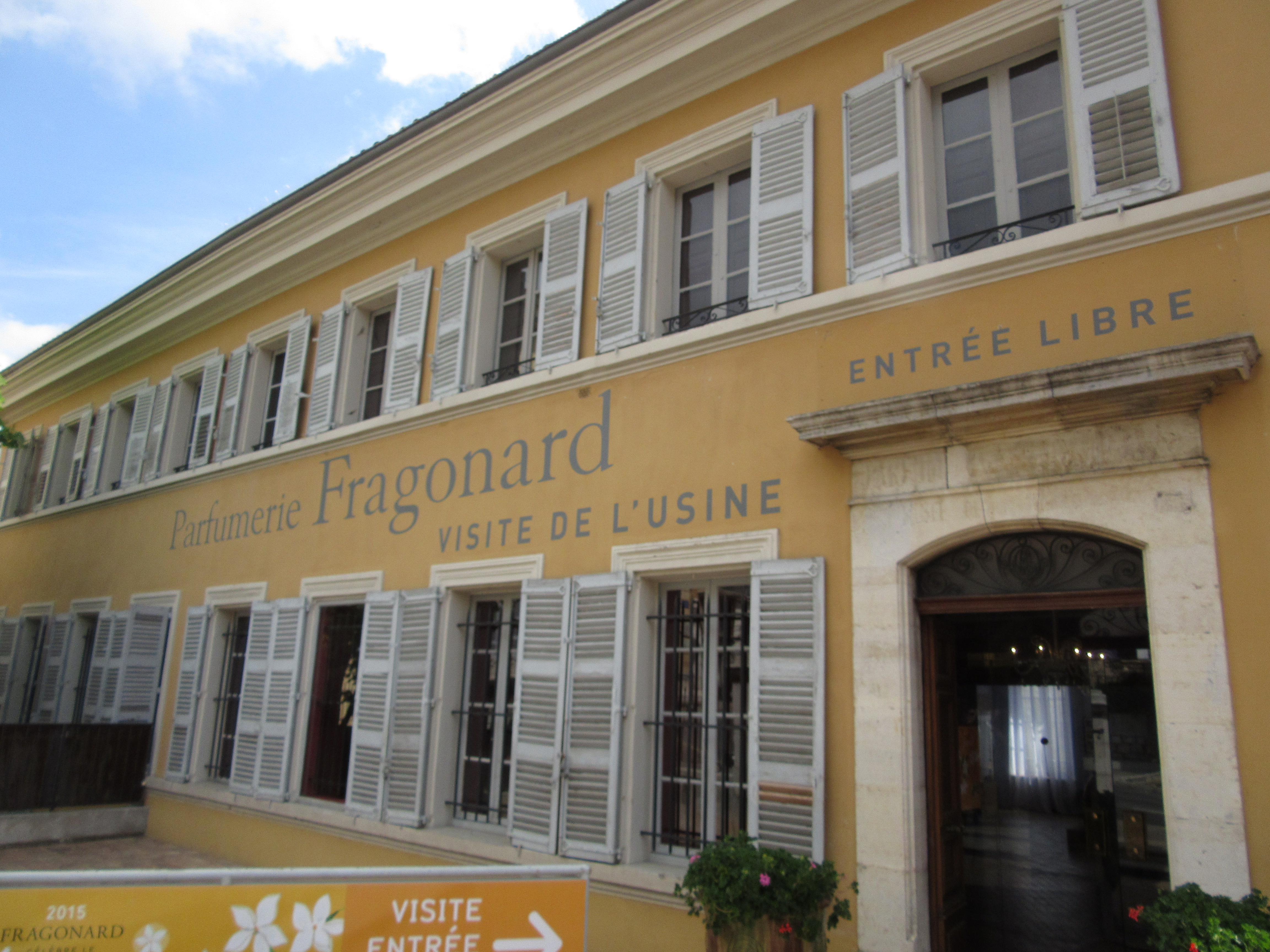
Fragonard, one of Grasse’s big names. Have you heard of it? Or Molinard or Galimard?

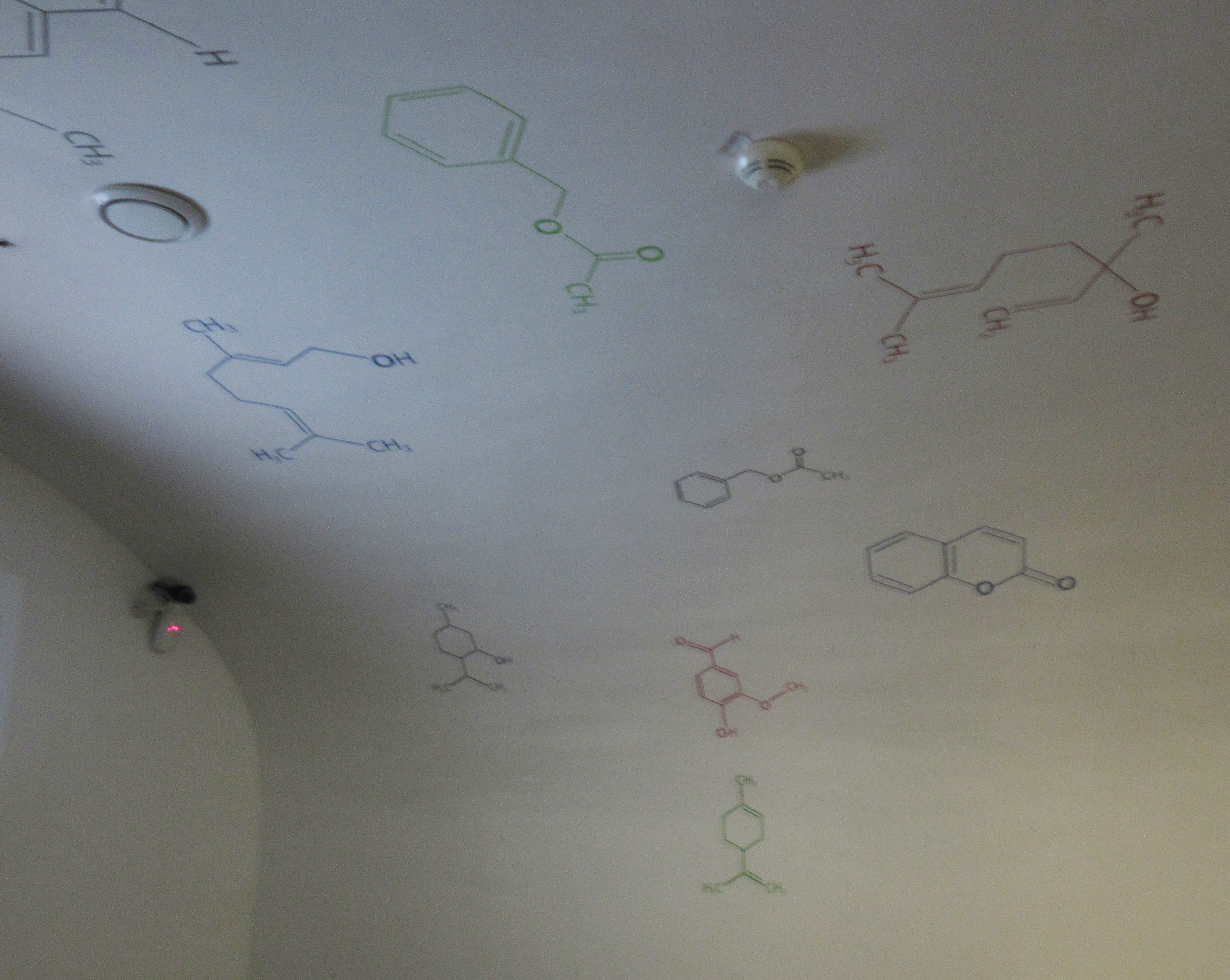
In the 20th century, perfume companies started using synthetic chemicals to reproduce some of the perfumes making up their blends and create new scents that don’t occur naturally. That’s why all the Hollywood starlets can create something new as their signature perfumes. Musk in particular is largely synthetic now, which is good for the animals that were giving up their glands (and lives) to create perfumes.

2015-04-11 043

This might be the perfume you’re wearing right now.

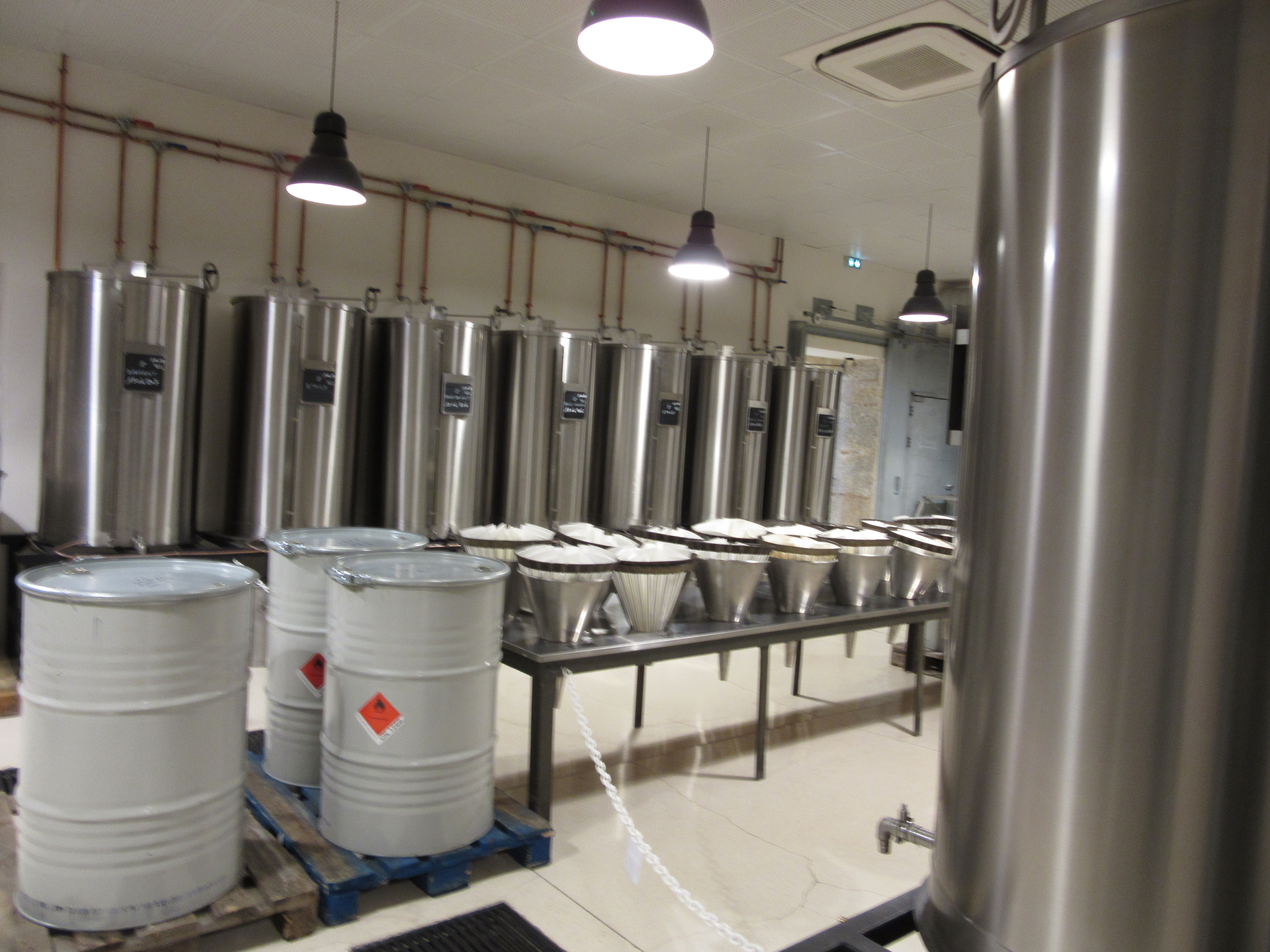
And the production is no longer French women patiently gathering flower petals by hand and their husbands cooking and filtering to make essential oils. Perfumes come from factories, with large distillation columns and big stainless steel tanks.

2015-04-11 044

Perfume is made in a chemical manufacturing factory.

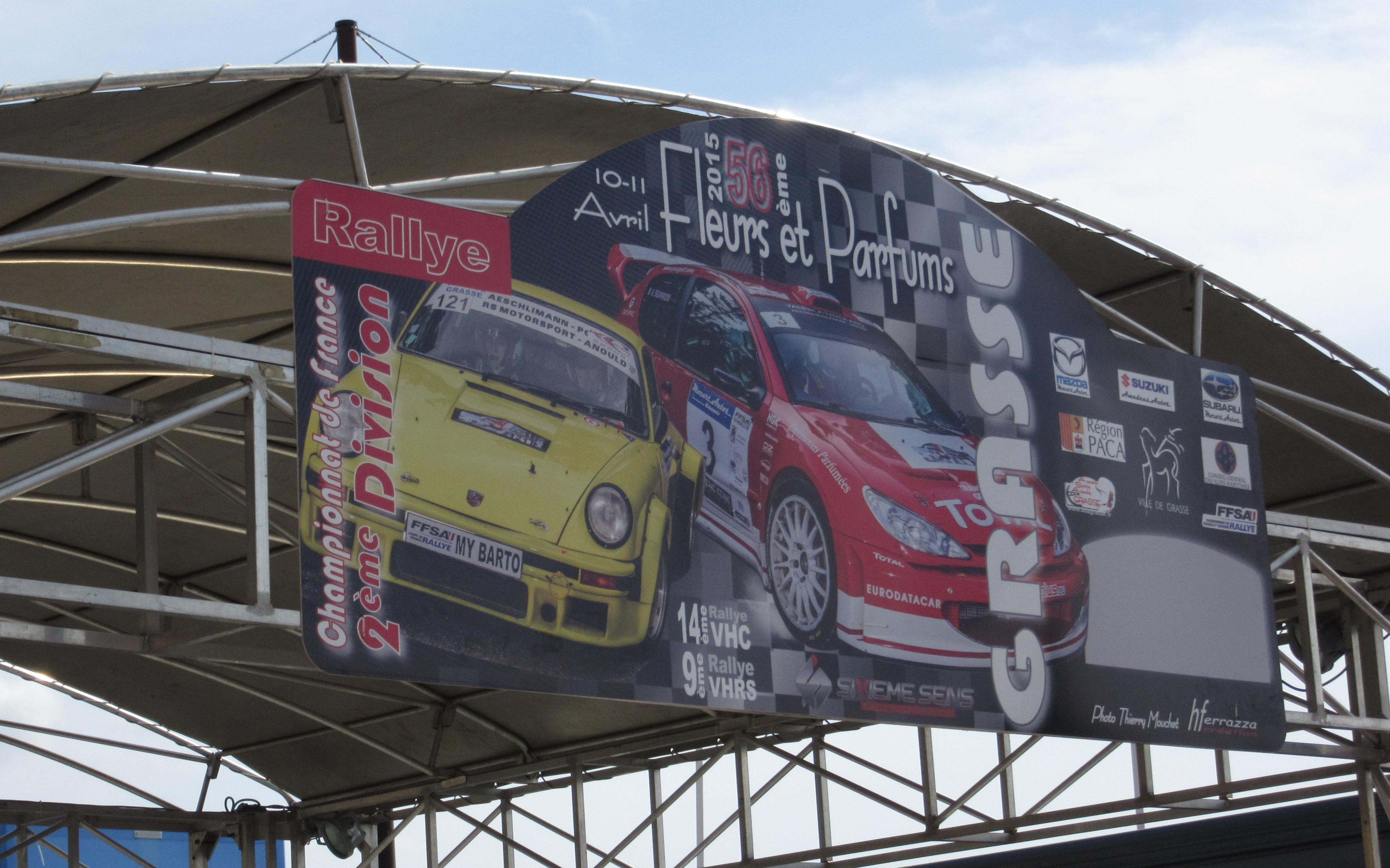
During our days in Grasse we came upon a car race, fittingly, the 56th annual Rally of Flowers and Perfumes. We were moving slowly on a one-way street to our apartment and assumed there was an accident. No. Just race cars revving their engines and driving fast along the same streets we were using.

2015-04-11 006

Walking past the starting line which was the exit of a downtown parking garage.

This was right in the heart of Grasse, using narrow city streets with buses, cars, and pedestrians doing their normal thing while race cars made loud noises and zipped past slower drivers.

2015-04-10 112

A policeman helps ensure the rally car can get out into the lane of traffic.

2015-04-10 115

Nothing is blocked off. We were hot on this racer’s tail.

We stayed in Grasse as the base for visiting the French Riviera. It is less than 15 miles from the Cote d’Azur, meaning an hour’s drive from Nice, Antibes, and Cannes with traffic. On many days we took a morning walk to the old town for delicious French pastries for breakfast before we went exploring.

2015-04-13 007

Michael waits patiently for our favorite boulangerie to open.

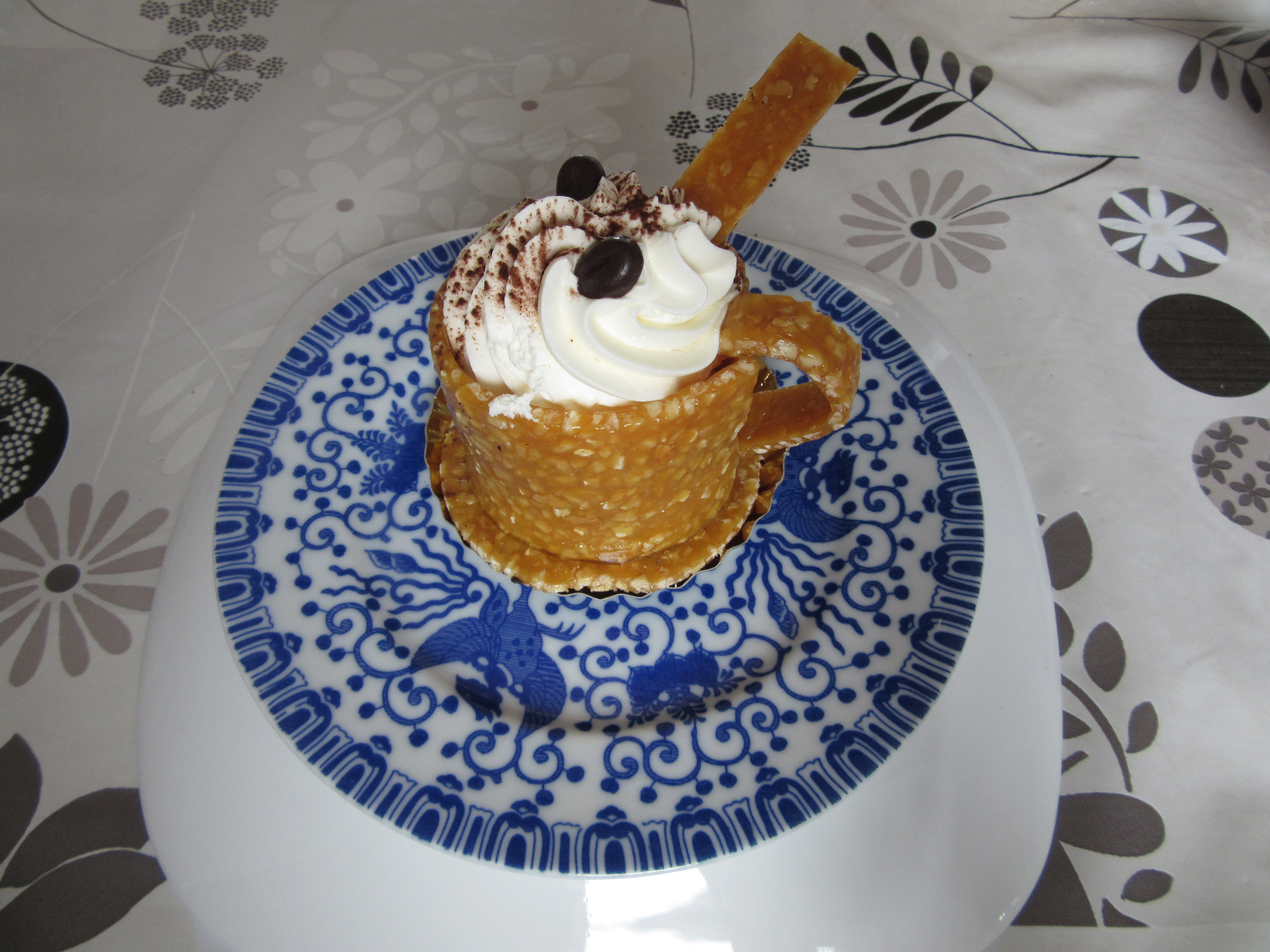
French chefs are frequently identified as artists. Their food tastes delicious and it often looks like works of art.

2015-04-11 053

La Belle Epoque’s “cappuccino” has a coffee ganache inside a praline cup.

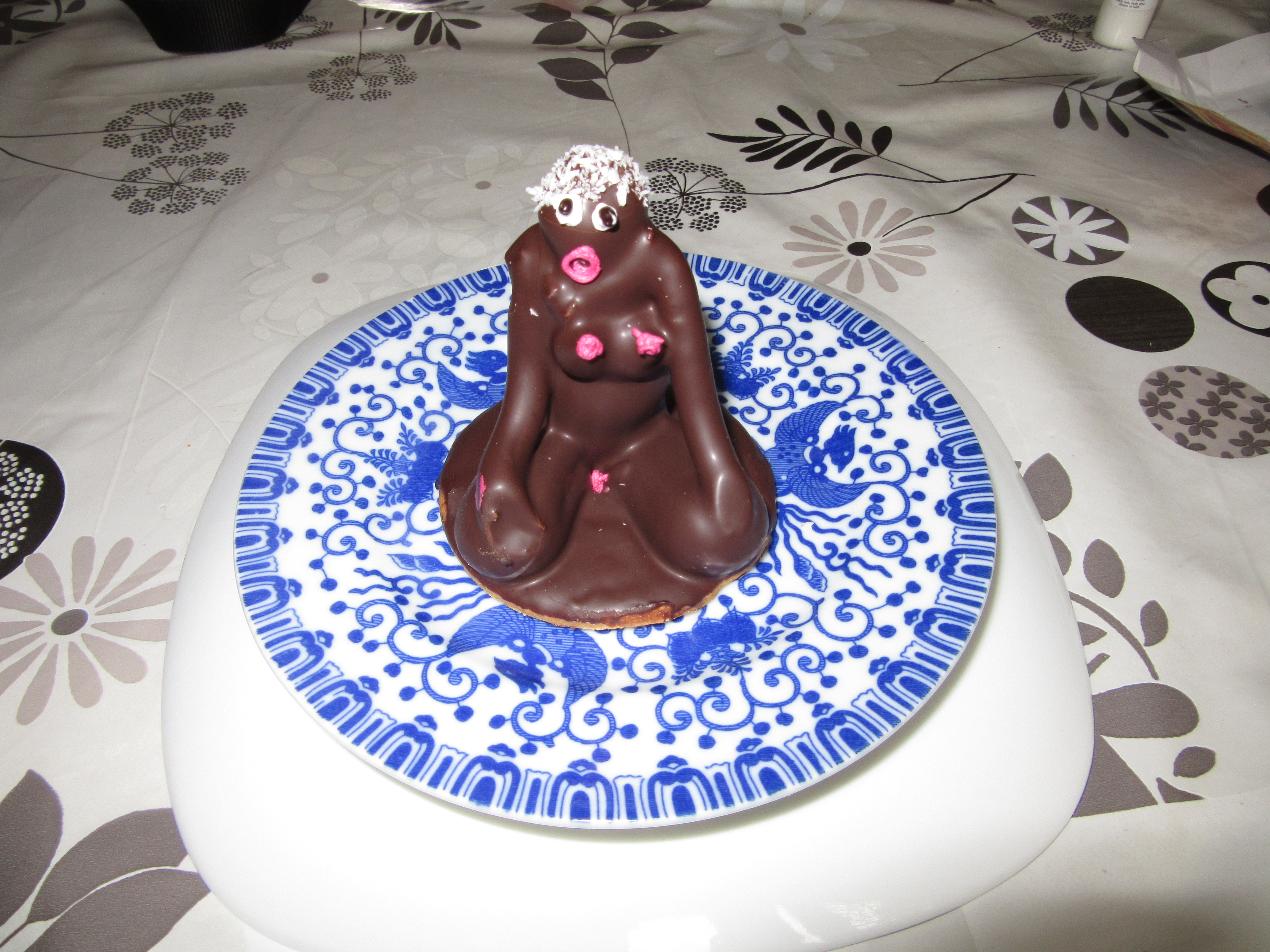
The baker from La Belle Epoque, Yannick Tavolaro, is not only creative, but also controversial. For 15 years he has been making the pastry called La Deesse (the goddess, like Miro’s Deesse we saw in the Picasso Museum in Antibes). He also makes Le Dieu (the god) to go with his goddess.

2015-04-11 059

Le Deesse is delectable. Chocolate ganache in the body, coconut cream in the head, rich dark chocolate coating. Like a Mounds bar conceptually, but better in taste.

In recent times this tasty little pastry has been identified as racist, perhaps like Aunt Jemima in the US. Opponents wanted the pastries banned. The resolution was that Tavolaro could make these pastries but not display them in his shop window. Somehow we found them…and loved them. In late-breaking news, we just learned that the top French court has overturned the ban.

2015-04-11 008

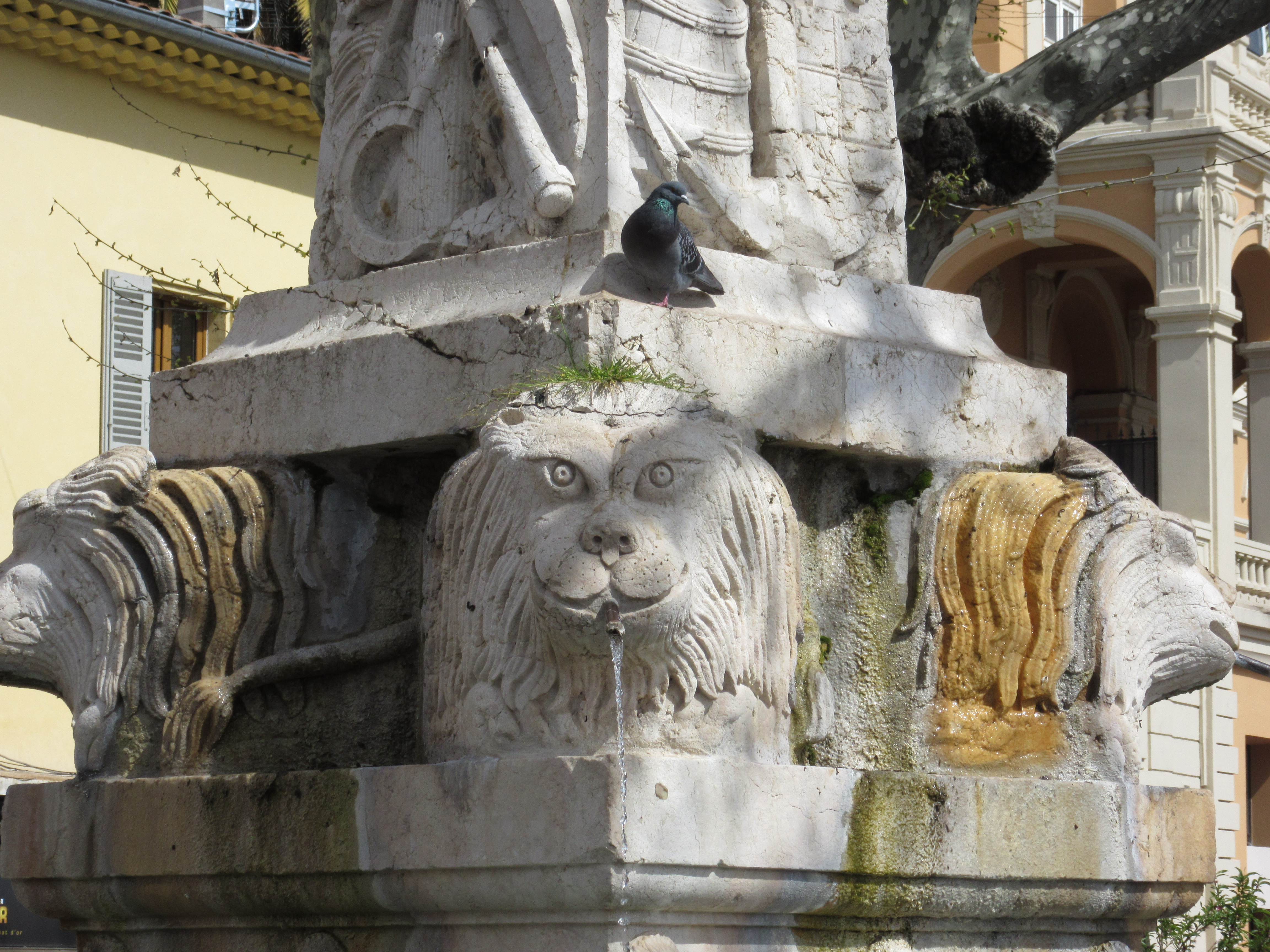
Each day the lion fountains drooled as we walked past on our way home with our treats.

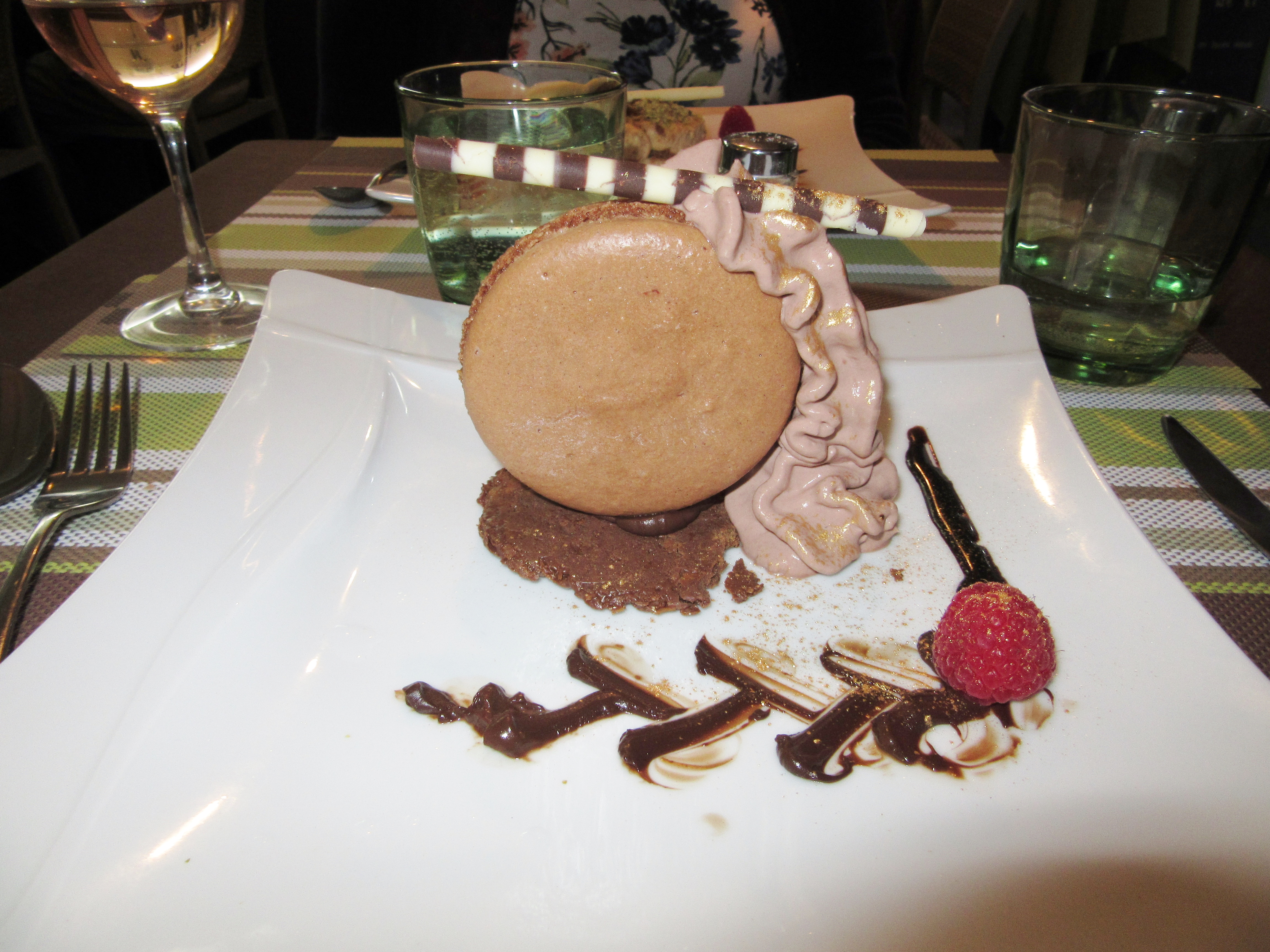
We had a great meal at la Licorne, the Unicorn, with one of the best desserts ever!
2015-04-14 145

A chocolate macaron with chocolate ganache and coulis. Parfait! (It’s a unicorn!)

We have moved on from Grasse, but we will stop back on our return to Provence. We have to get more pastries!


Posted in Smell the Roses, Travel Journal | Tagged , , , | Leave a comment

Antibes, with Picasso and purple jellyfish

We visited Antibes, another beautiful old town on the Cote d’Azur. It was an important port and fortification during Greek and Roman days and later a home to bishops, but it was eventually seized by barbarians. Now it is seized only by tourists, who visit to see beaches and artworks.

2015-04-14 002

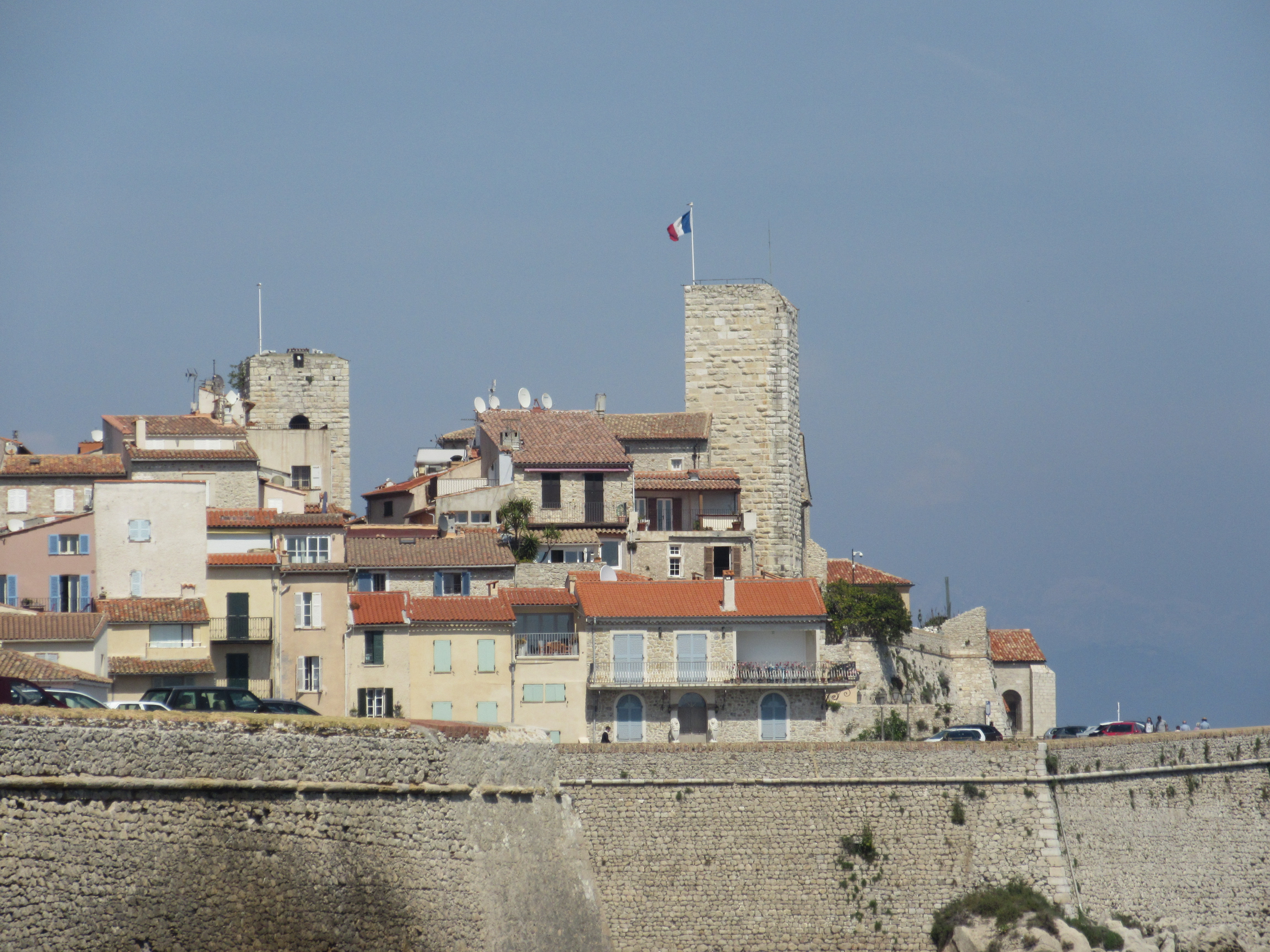
The old town of Antibes behind walls fortified against the waves of the Mediterranean.

Although Antibes is very popular with tourists, including the rich and famous, its beaches this spring are not yet ready for peak season. The water temperature is still in the 60s but the sun is glorious.

2015-04-14 075

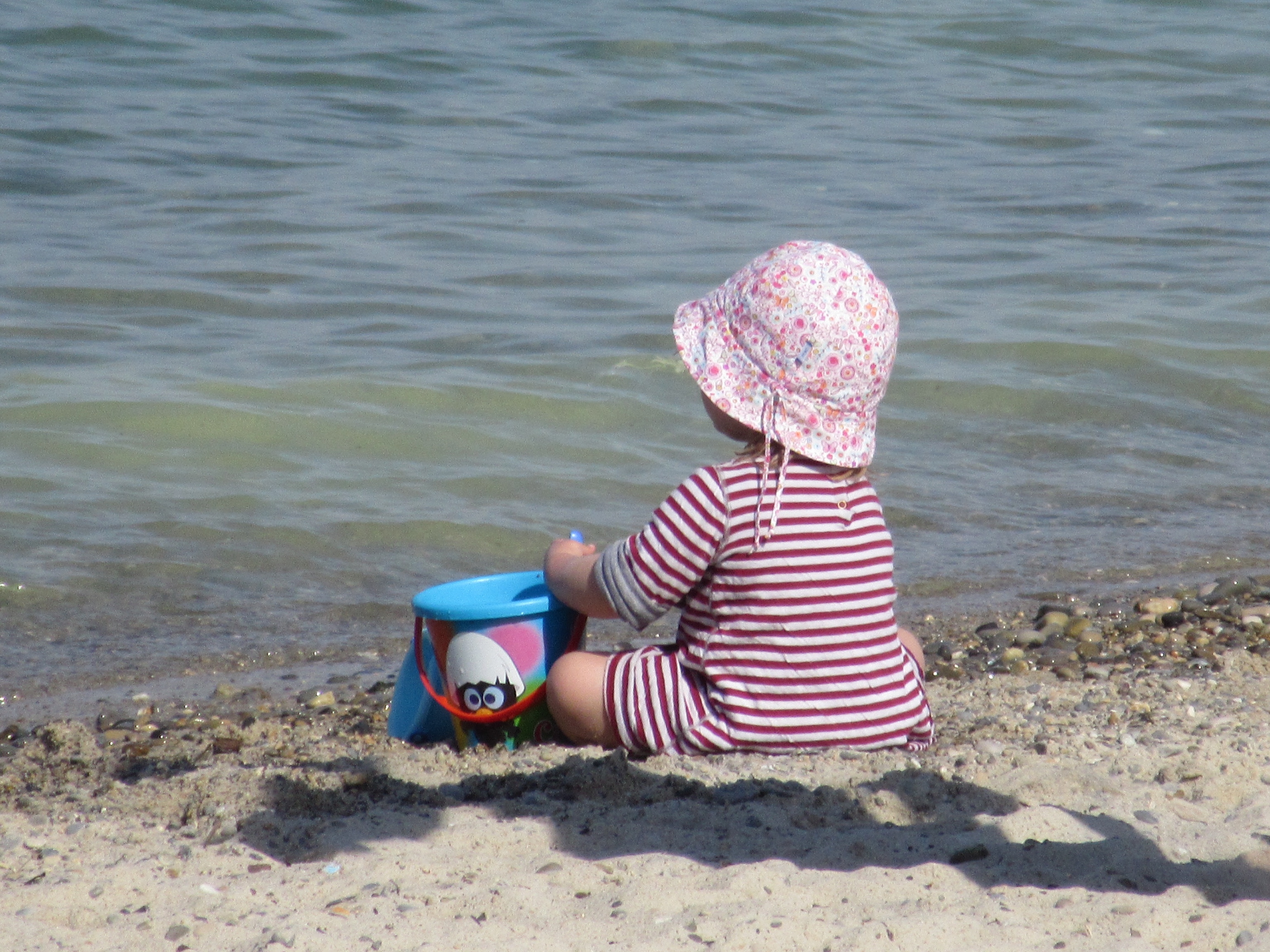
A “jeune fille” enjoying the sand of Antibes in her French stripes.

2015-04-14 115

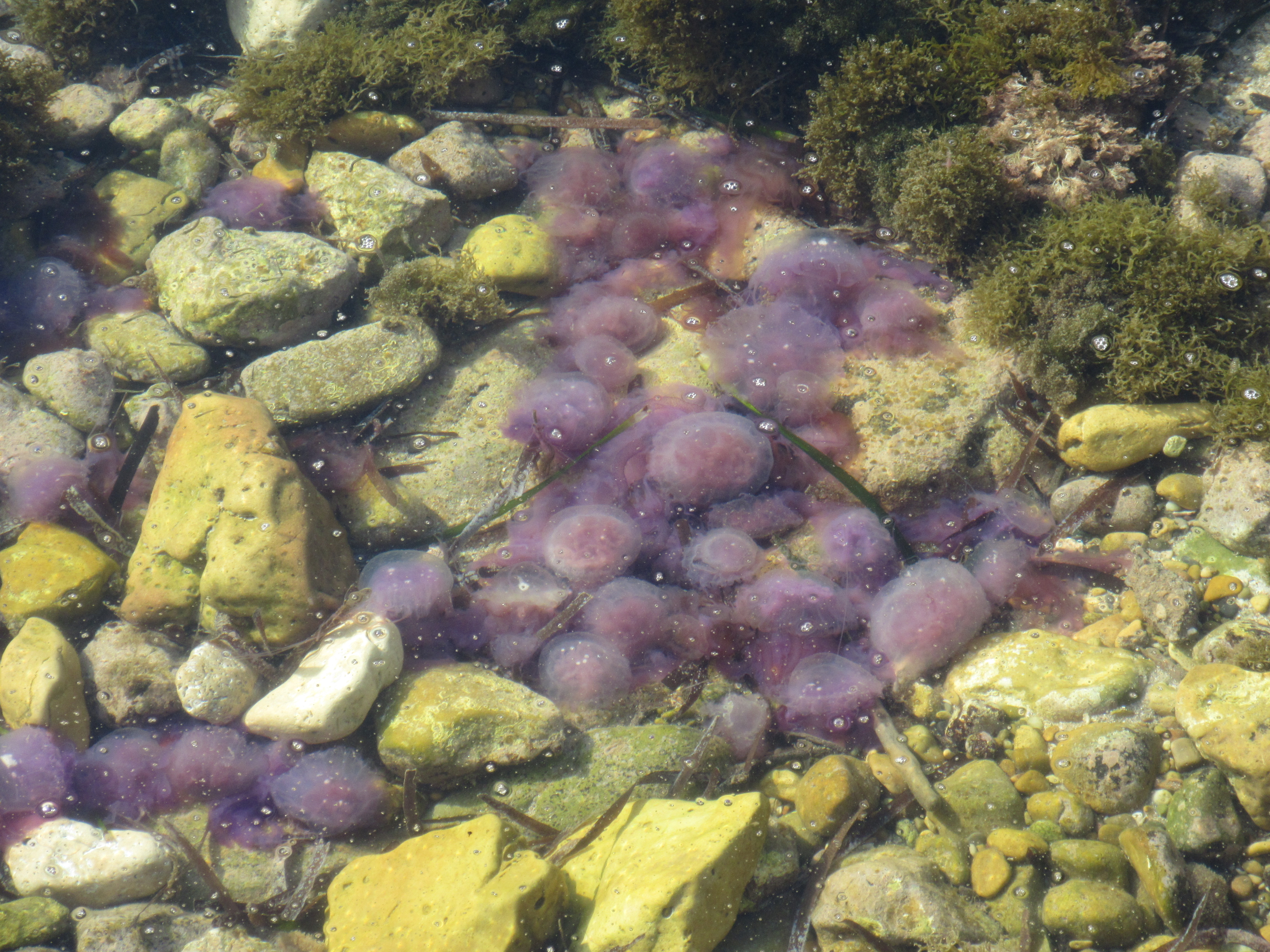
Instead of bluebottles, we’ve found purple jellyfish. Or perhaps they are lavender.

2015-04-14 079

The walk along the shore around Cap d’Antibes is very pleasant.

2015-04-14 107

We need a mistral to blow off the haze. This is a view from Antibes toward Nice with snow-capped mountains in the distance.

2015-04-14 067

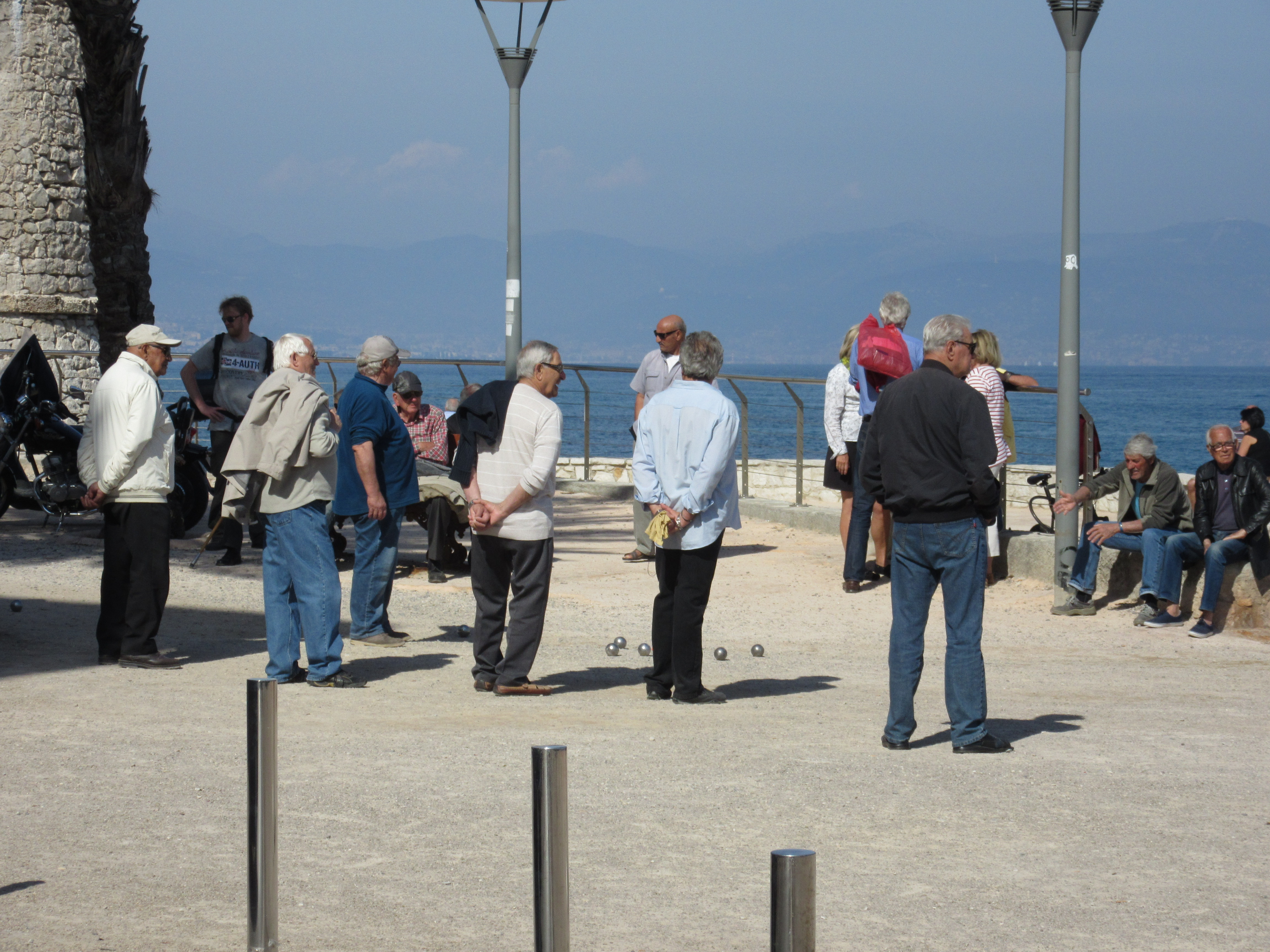
Boules is very popular in France. This group seemed to be at a stalemate, all talk and no boule action. Let’s play boule!

2015-04-14 013

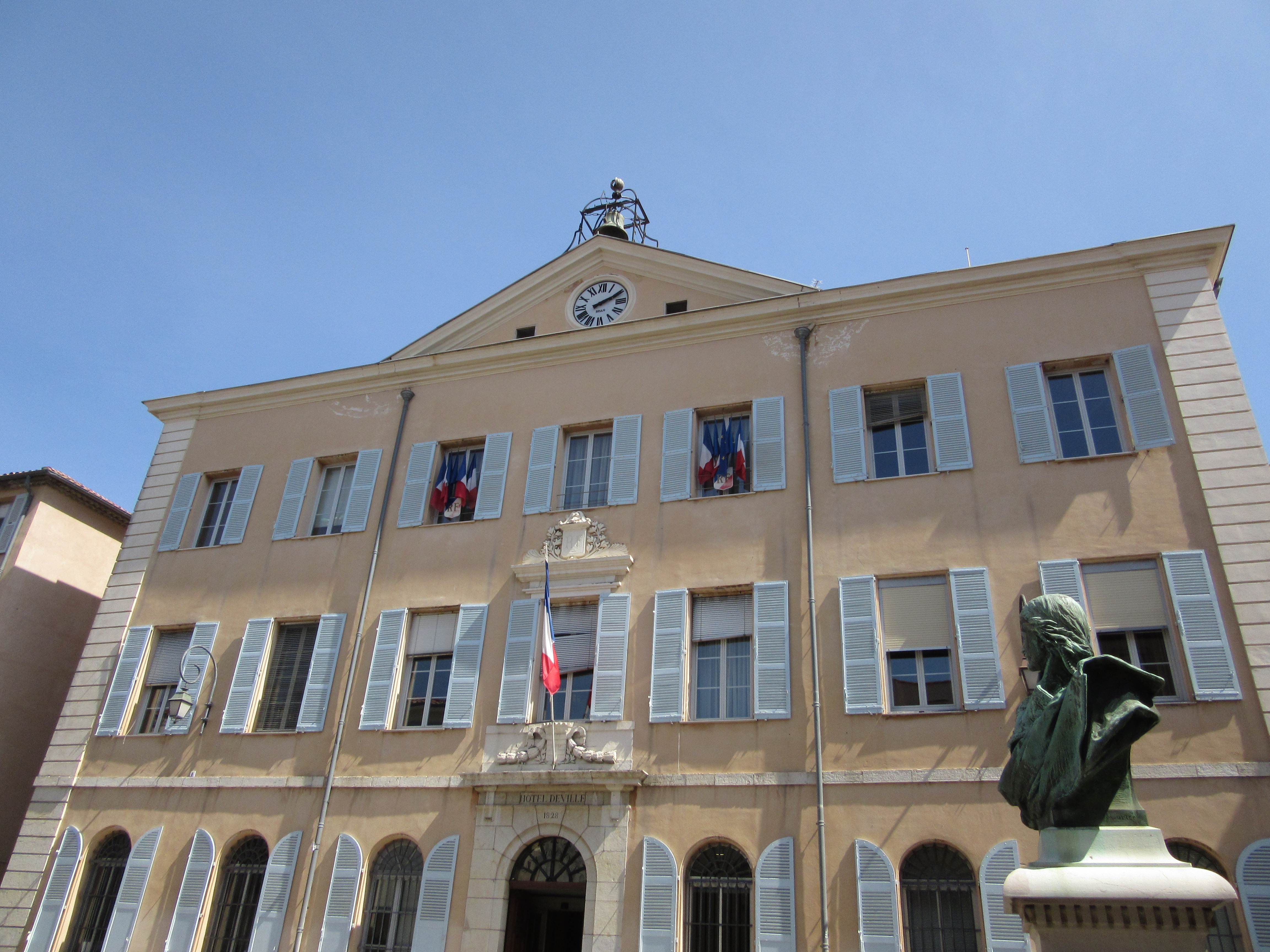
Every French city seems to have a Hotel de Ville. This is in Antibes, with a mistral bell on the top.

2015-04-14 021

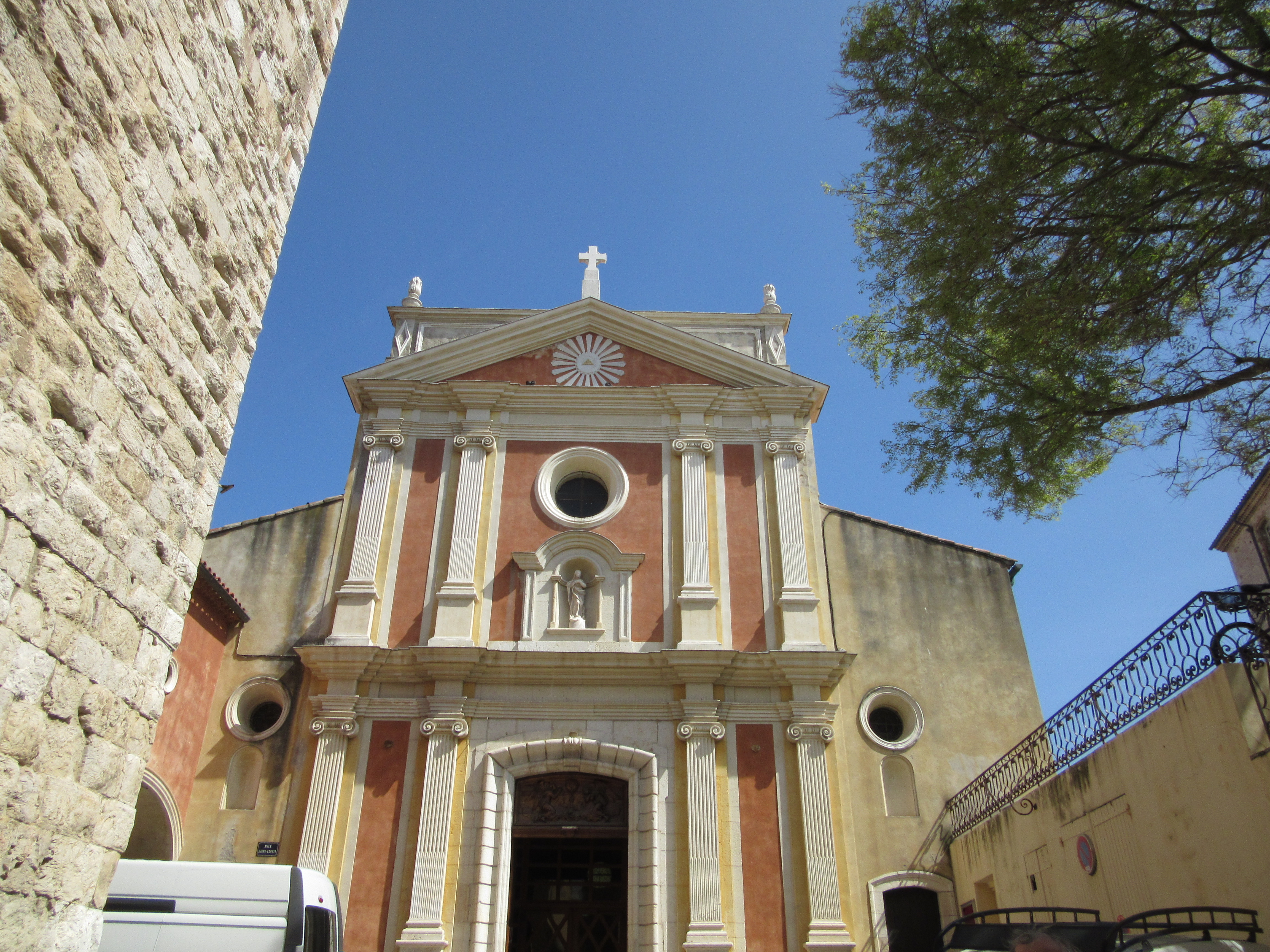
The Church of the Immaculate Conception brings in the yellow and red ocher colors of Roussillon.

In 1946, Pablo Picasso visited fellow painters in Antibes. He worked in a large studio in the Chateau Grimaldi, a stone castle by the sea, built in 1385.

IMG_5597

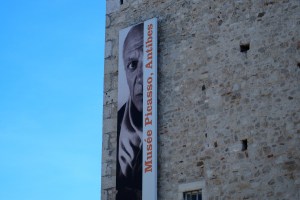
This was the world’s first Picasso museum. It has over 200 works, including many sketchings and ceramics.

OLYMPUS DIGITAL CAMERA

Did Picasso ever smile?

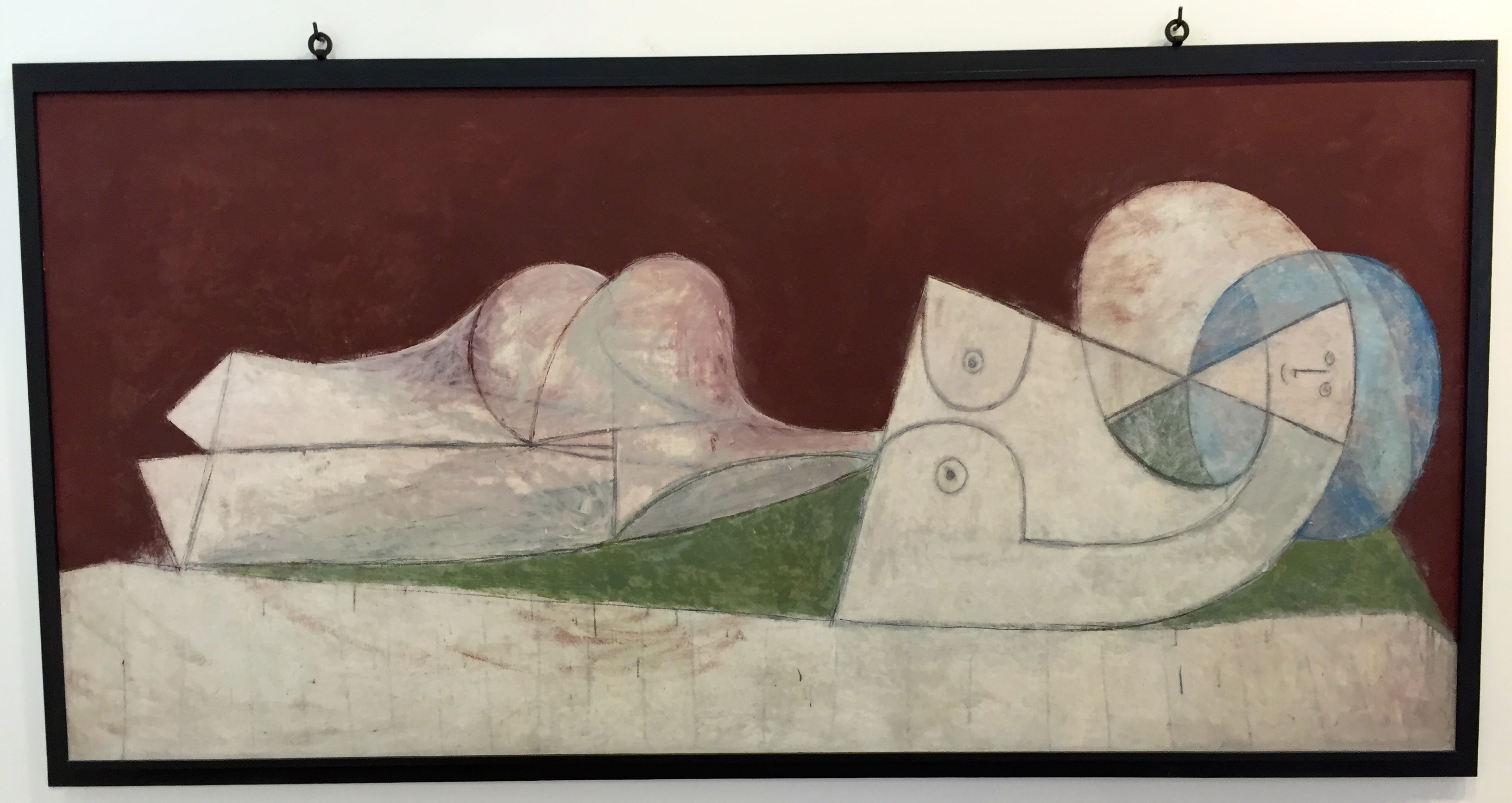
Picasso spent just two months in this studio. He created 23 paintings and 44 drawings, many including sea urchins, women, and women with sea urchins. Additional pieces have since been donated.

IMG_5594

One of Picasso’s paintings of a nude female.

IMG_5593 - Version 2

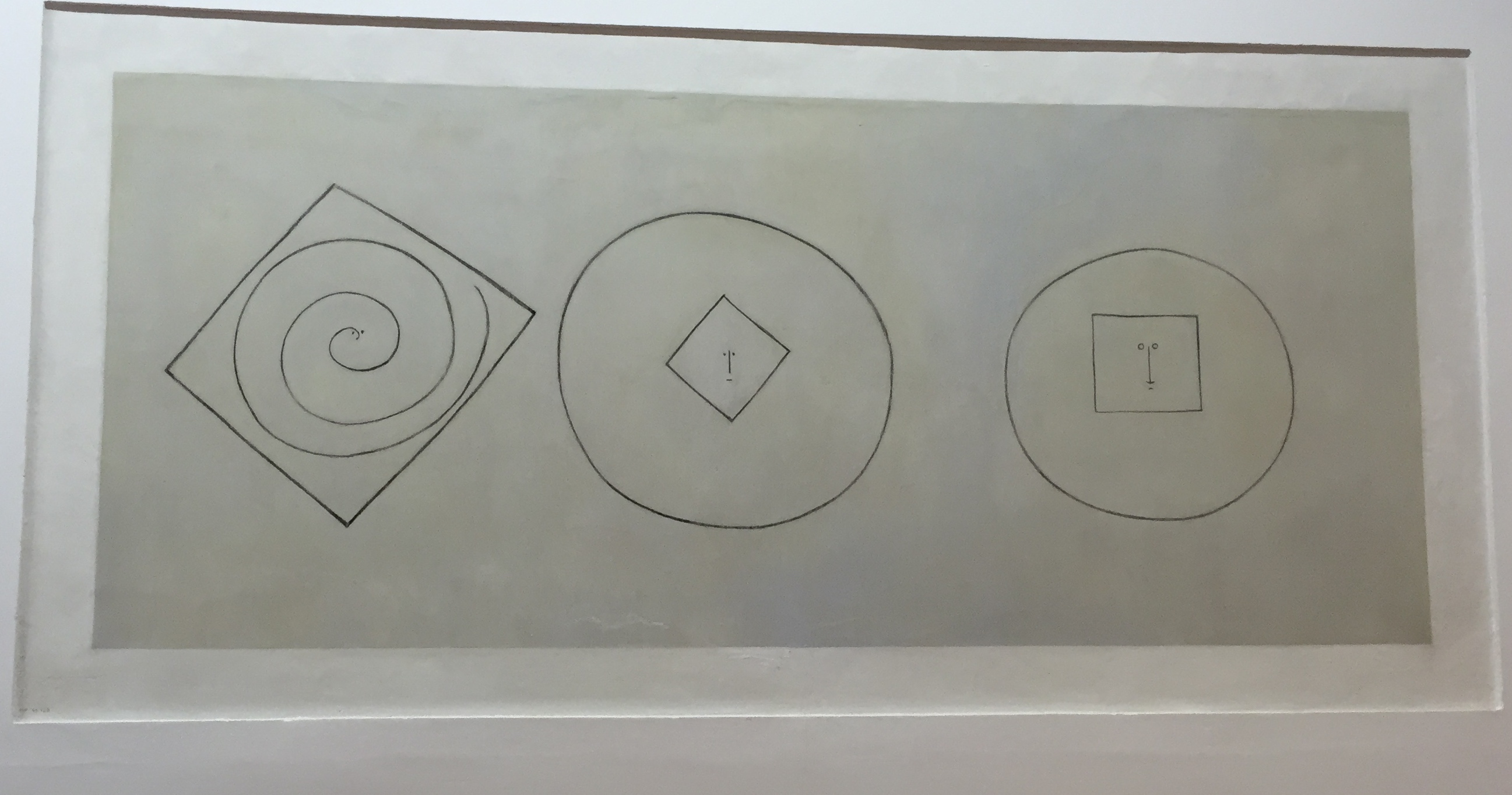
These geometrics are a bit like early emoticons…or like the variety of wall outlets we have seen in our travels around the world.

Little known fact: Picasso joined the Russian ballet in 1917. (All this artistic talent and he could dance too?) He was not a dancer, but created set design and costumes. His cubist costumes for Parade for Ballets Russes severely limited dancer movement.

IMG_5599

Not a ballet dancer.

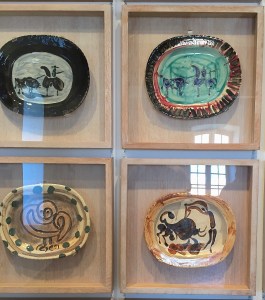
When Picasso lived and worked in Vallauris, just west of Antibes, he stumbled upon craftsmen working with Madoura ceramics. This was one more medium for him to master. He created hundreds of vases, platters, pitchers, and plaques, many including elements of his other works. Nearly 80 of these ceramic pieces are now in the Musee Picasso in Antibes.

Despite Picasso’s pacifist views (as evidenced by Guernica and other works), he didn’t seem to shy away from bullfighting, the “to the death” variety like we saw in Arles. The top two of his ceramics below show picadors, with their horses wearing the nominally protective peto coverings. The bottom right shows the banderillero about to place two banderillas.

IMG_5598

Picasso’s plates

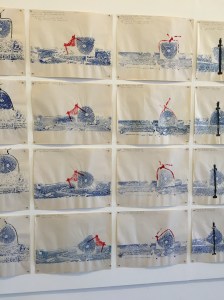
The museum was hosting an exhibition of works on paper by Bernard Pages. A number of pieces involved wetting paper, placing steel rods randomly (to our uneducated eyes) on the paper, covering with more wet paper, spraying with water, and pressing down the layers with rocks. After a short period, the pile was disassembled and the two pieces of paper had almost mirror images captured in rust.

IMG_5600

Bernard Pages pressings

Other sculptors are included in the permanent works at the Musee Picasso.

OLYMPUS DIGITAL CAMERA

These halved guitars are by Arman. It looks a bit like the giant guitar tower in Seattle’s EMP Museum.

OLYMPUS DIGITAL CAMERA

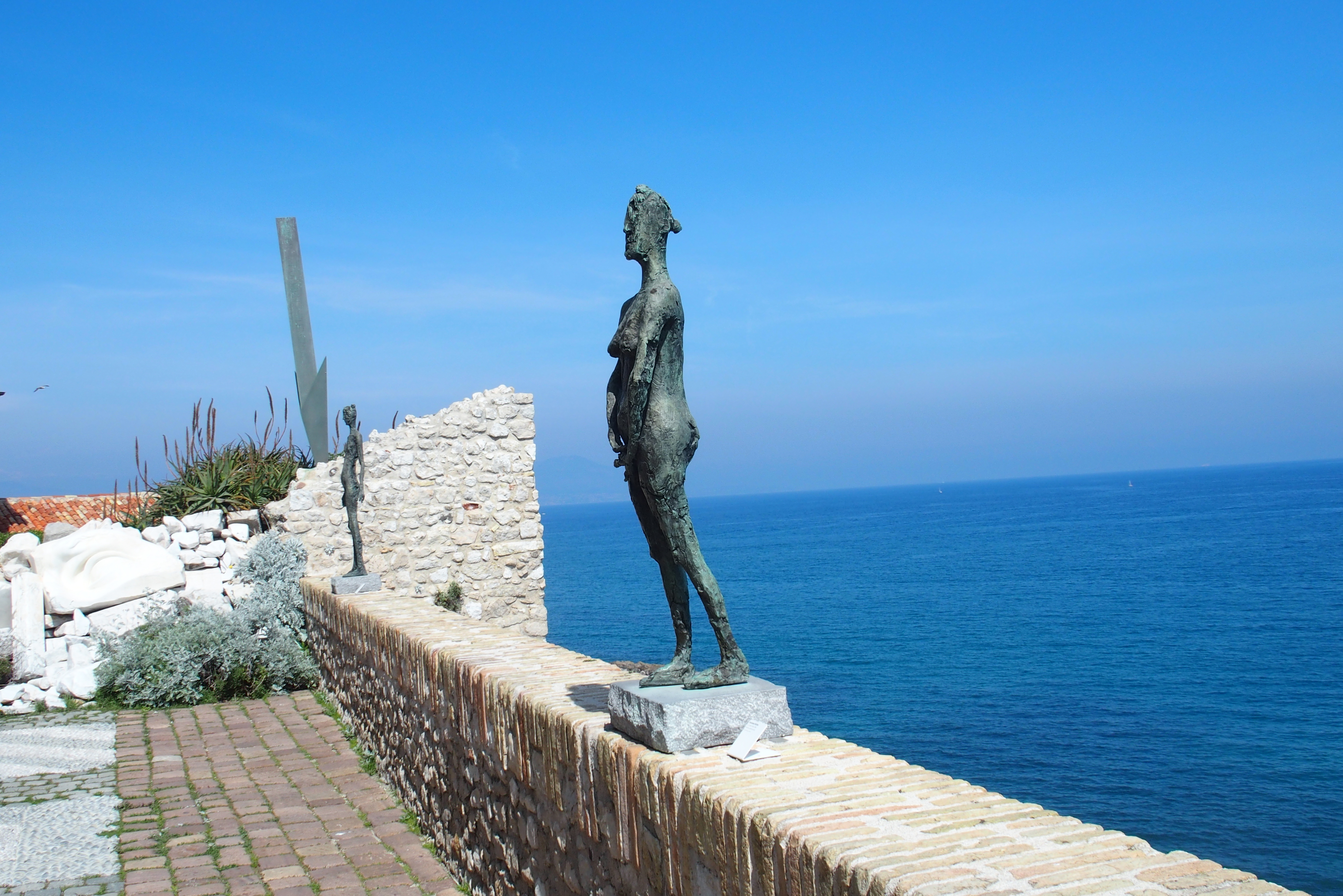
One of a series of bronzes by Germaine Richier. The Cote d’Azur in the background.

2015-04-14 022

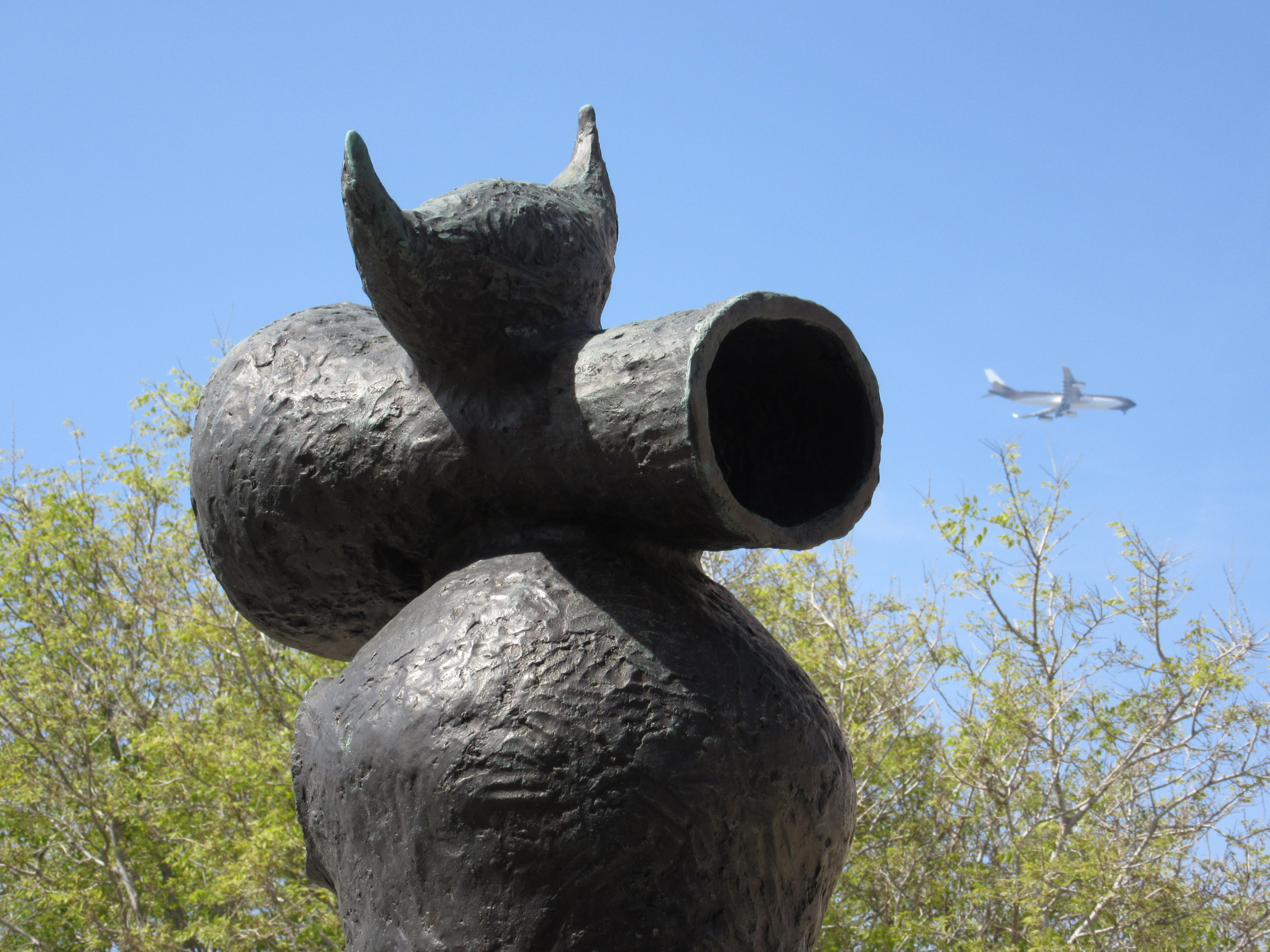
The plane did not come out of the mouth of this bronze sculpture at the entrance to the museum. Nice airport is just a few miles away.

2015-04-14 026

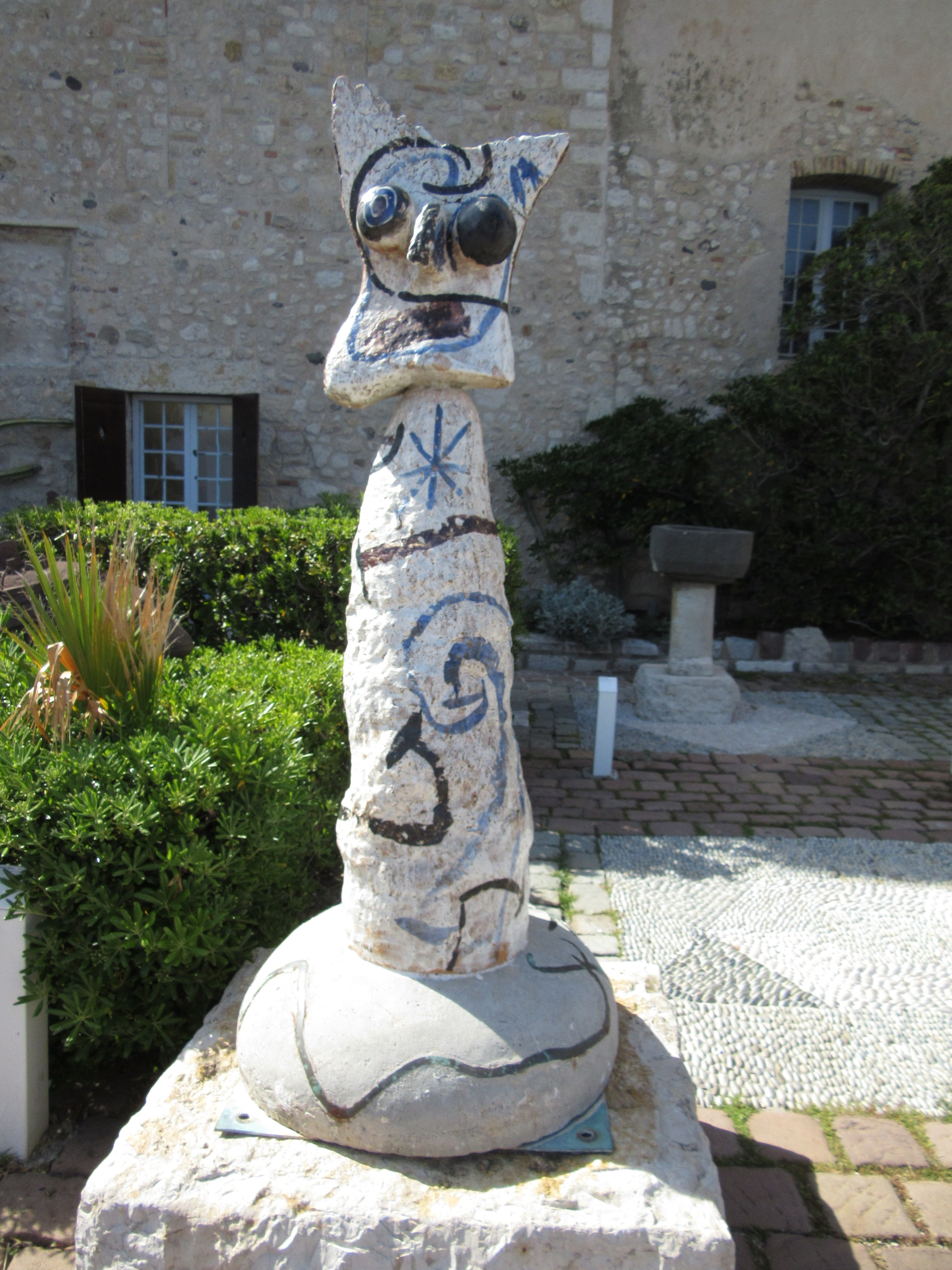
La Deesse by Joan Miro.

OLYMPUS DIGITAL CAMERA

La Deesse and Le Dieu? (The goddess and the god) We didn’t capture the name and artist for the second sculpture of stacked bricks.

2015-04-14 050

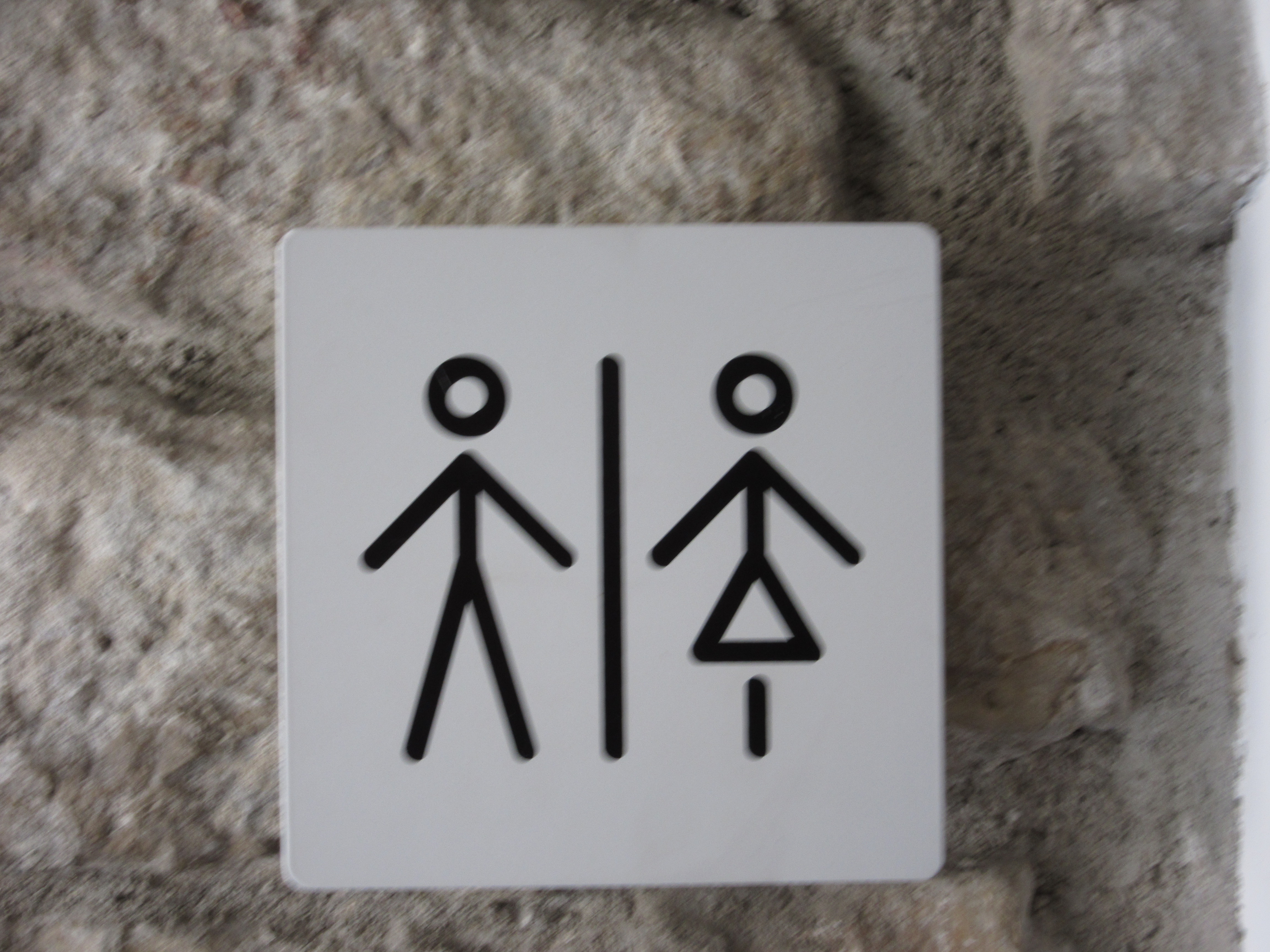
Le Dieu and le Deesse for the bathroom entrance. When she saw me taking this photo, a docent rushed up and said, “That’s not a Picasso.” But on display, it looks like art!


Posted in Travel Journal | Tagged , , , | 2 Comments

Villefranche-sur-Mer, a nice town near Nice

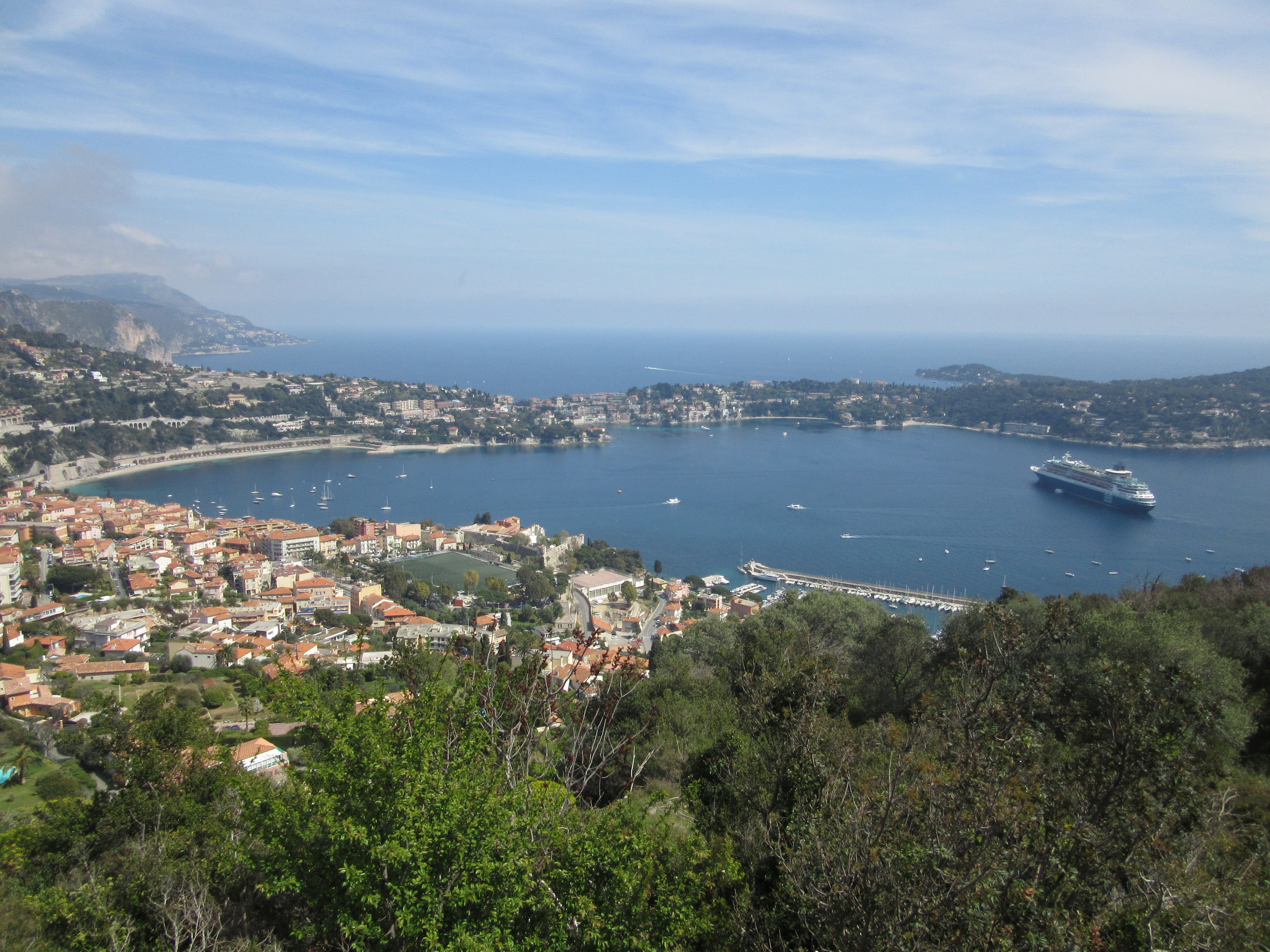
Just east of the very large city of Nice is the harbor and smaller town of Villefranche-sur-Mer, named “Free City on the Sea” when it was declared a free port in the 13th century by the Count of Provence. It is just as nice as Nice, or nicer.

2015-04-10 074

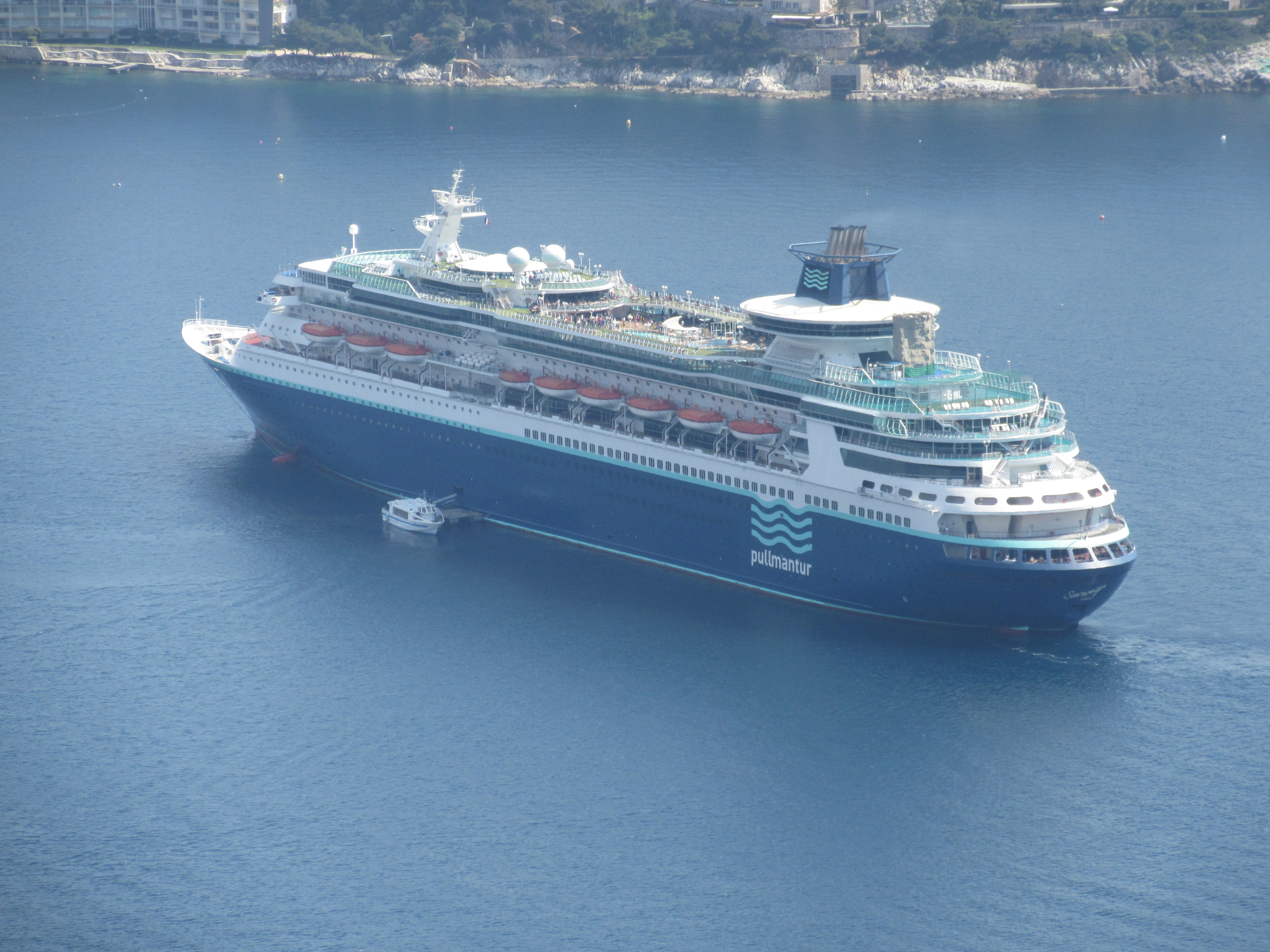
The lovely town of Villefranche-sur-Mer is one of the most popular stops on the south of France for cruise boats.

2015-04-10 075

Tenders like this tiny one alongside the cruise liner make trip after trip bringing passengers to enjoy the beaches and cafes along the harbor.

It isn’t just the French who have appreciated this spectacular setting. Celts, Greeks, Romans, and Spanish have occupied or fought for the land. Even the Russian and US navies used the deep port as a base for their fleets in the 20th century.

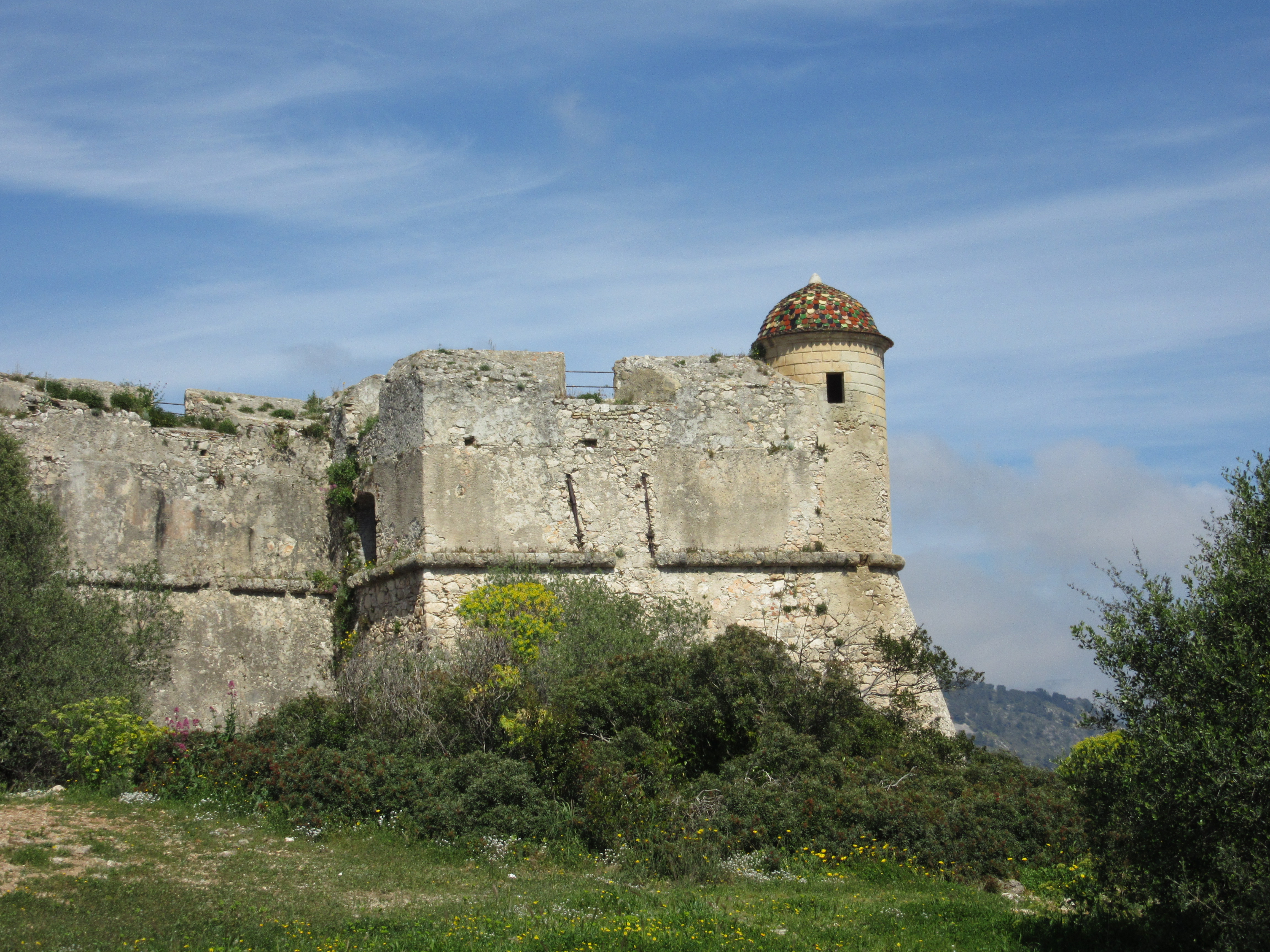
With all this fighting over the strategic territory, the fortress of Fort Mont Alban was built upon a high peak in the 1500s.

OLYMPUS DIGITAL CAMERA

Fort Mont Alban now overlooks some very expensive real estate.

2015-04-10 093

Fort Mont Alban, built in 1543, remains a prominent structure on the hill over Villefranche-sur-Mer.

2015-04-10 097

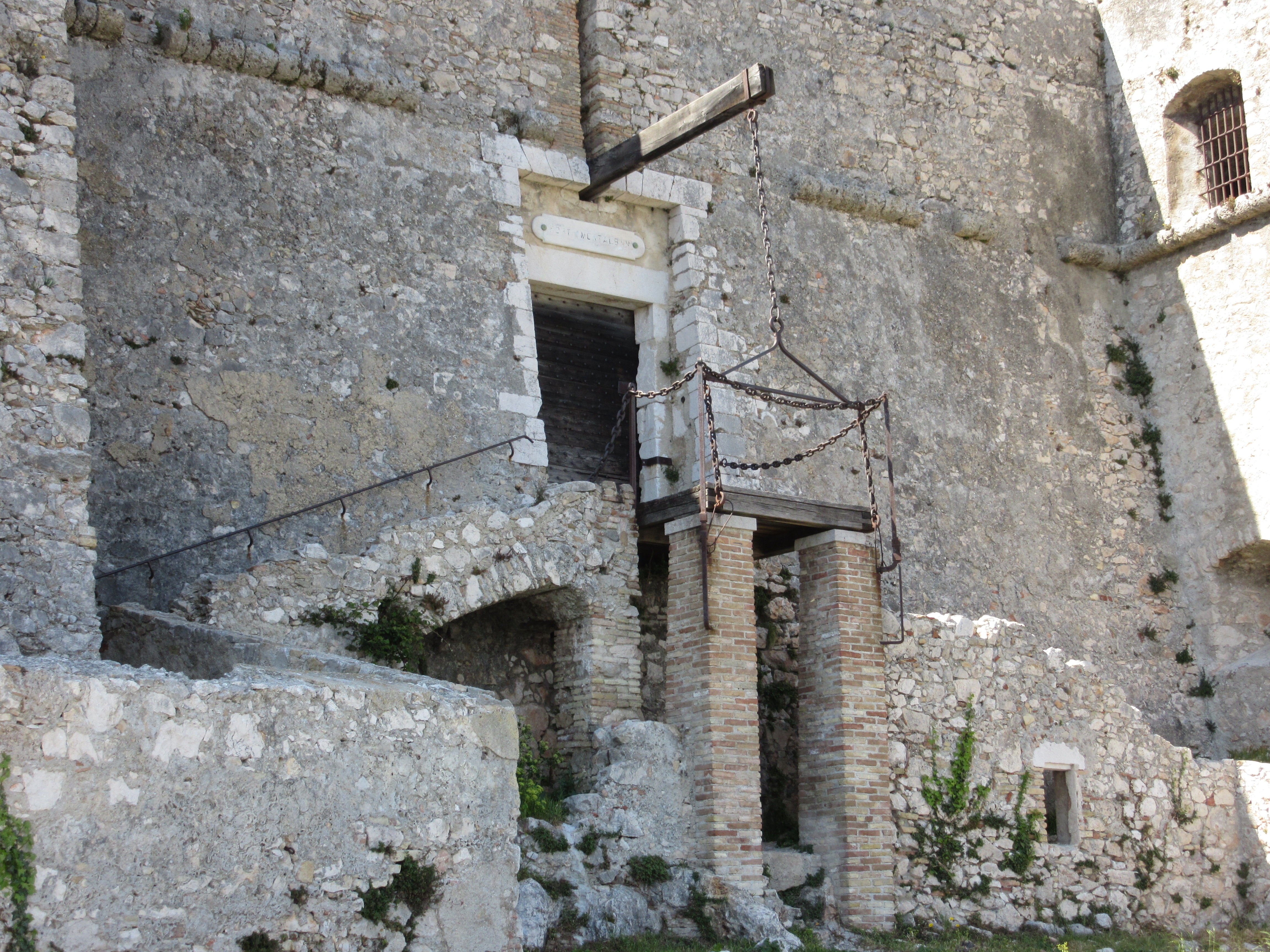
In the back of the fort is a reconstruction of a drawbridge used to limit or grant access.

2015-04-10 089

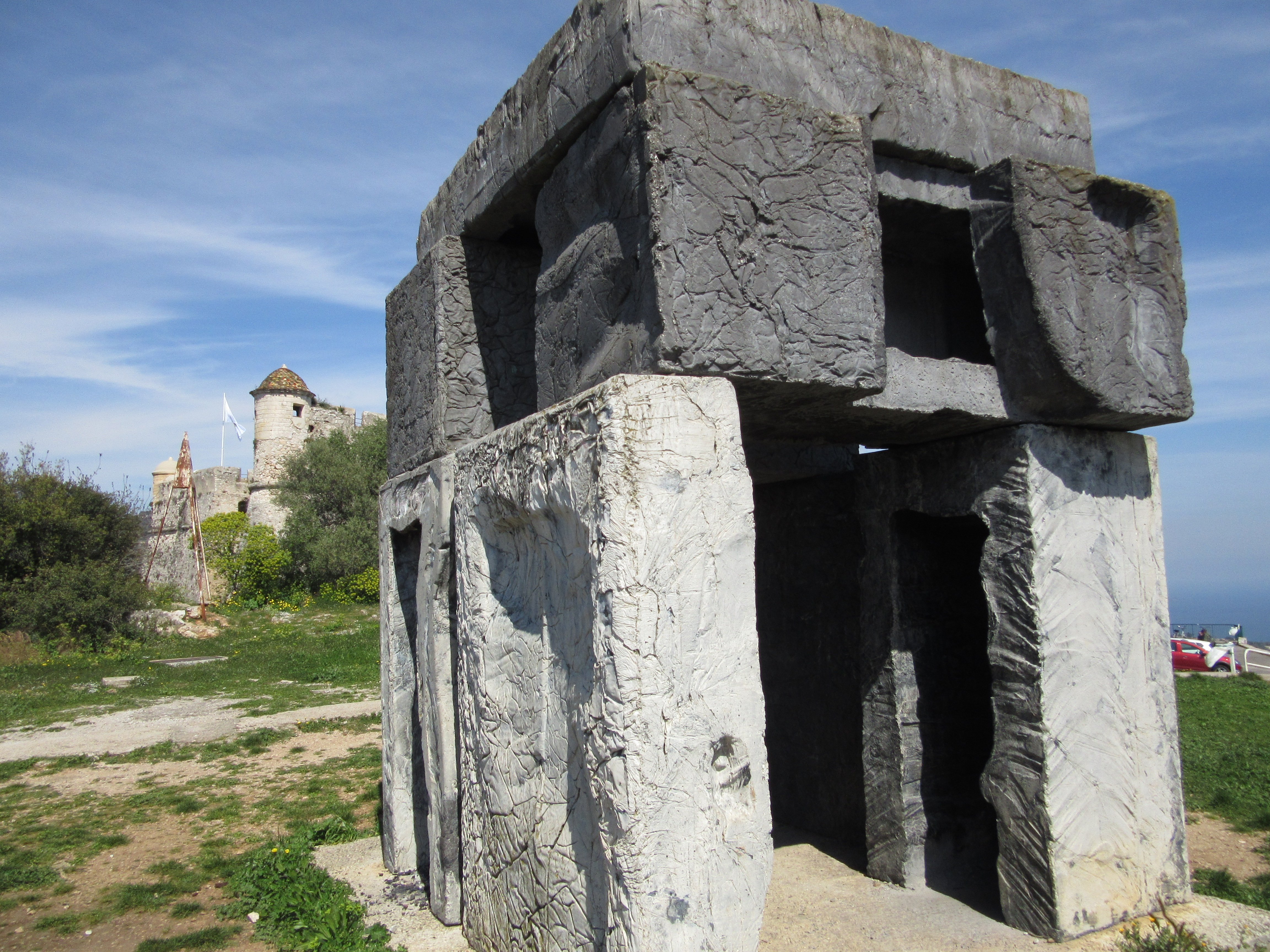
We weren’t sure about this “art” near the fort. It looks a bit like stacked stone coffins, some double wide.

In more recent history, Villefranche, a town with a population of just a few thousand, lost over 80 men and at least one woman during World Wars I and II.

2015-04-10 007

“Villefranche, a ses enfants morts pour la France.” Villefranche, to its children who died for France.

Close to the water is an old town with the large stone walls of its citadel, built in 1557, still standing.

2015-04-10 036

We walked along the stone walls but would not be able to get in from this point.

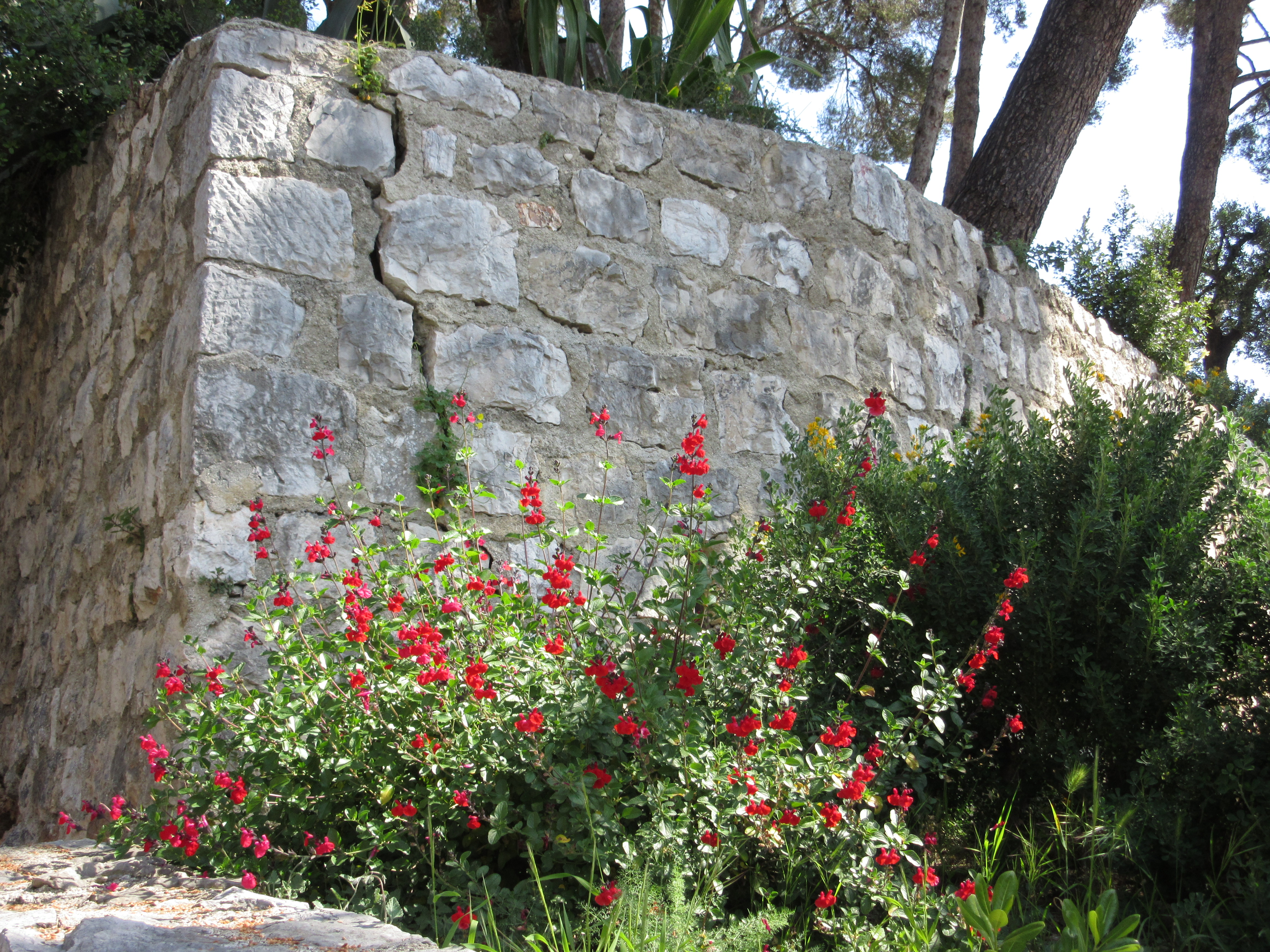
Bright flowers along an old stone wall. Nearby was a very small monument to those who “chose their last resting place on the sea.”

OLYMPUS DIGITAL CAMERA

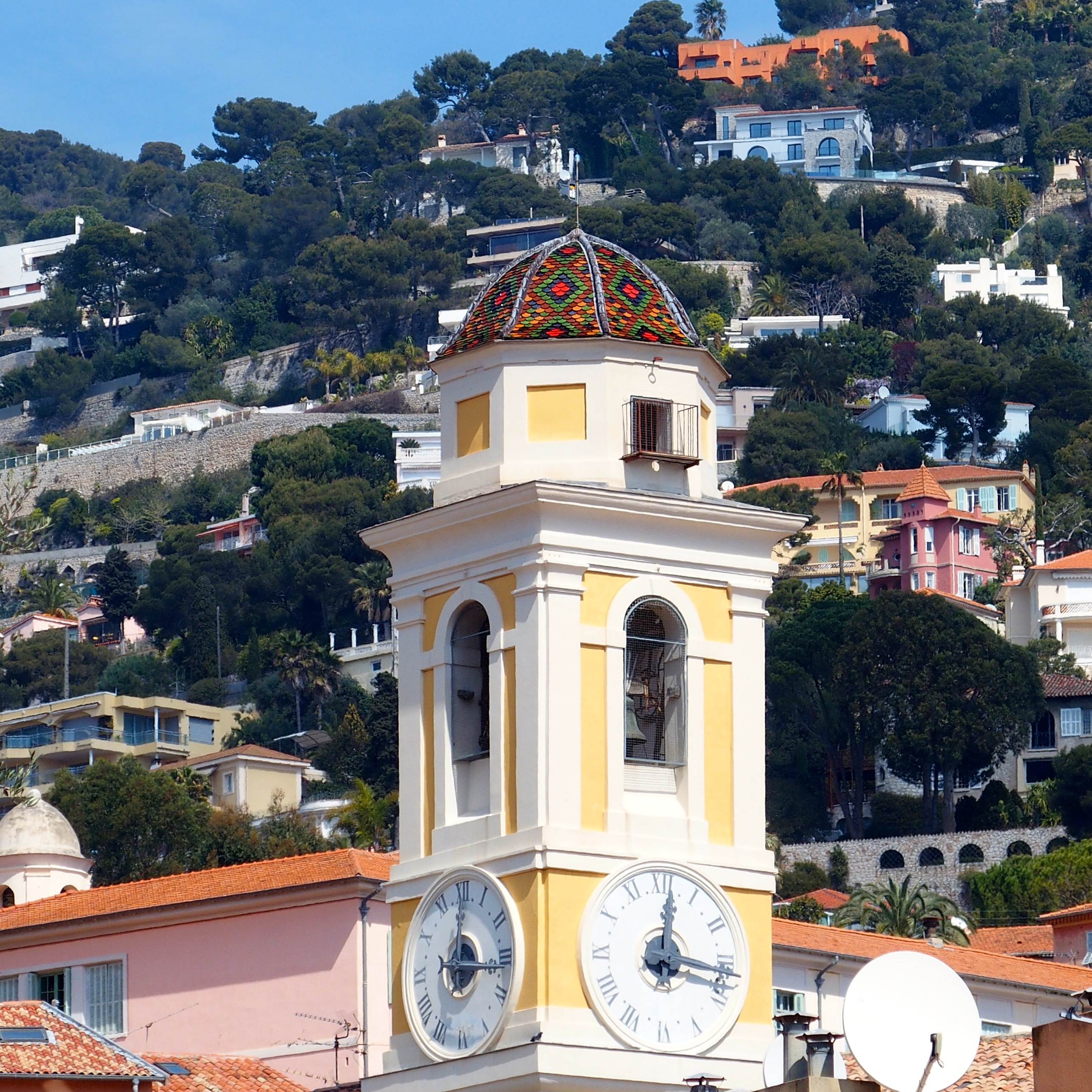
The tower of Saint Michael’s Church stands out above the orange tiled roofs of other old town buildings.

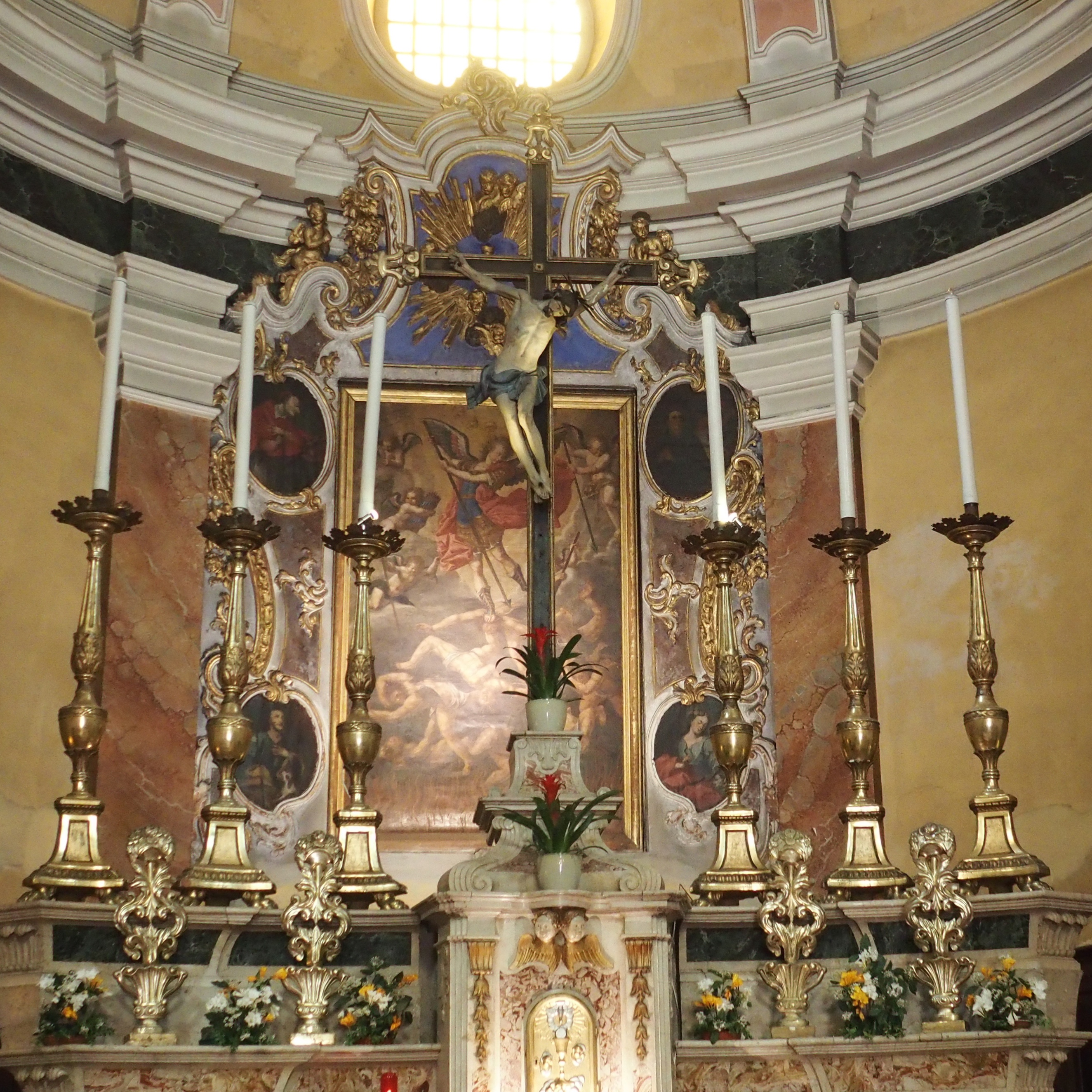
Inside, behind the altar is a large painting of Saint Michael battling the devil.

2015-04-10 060

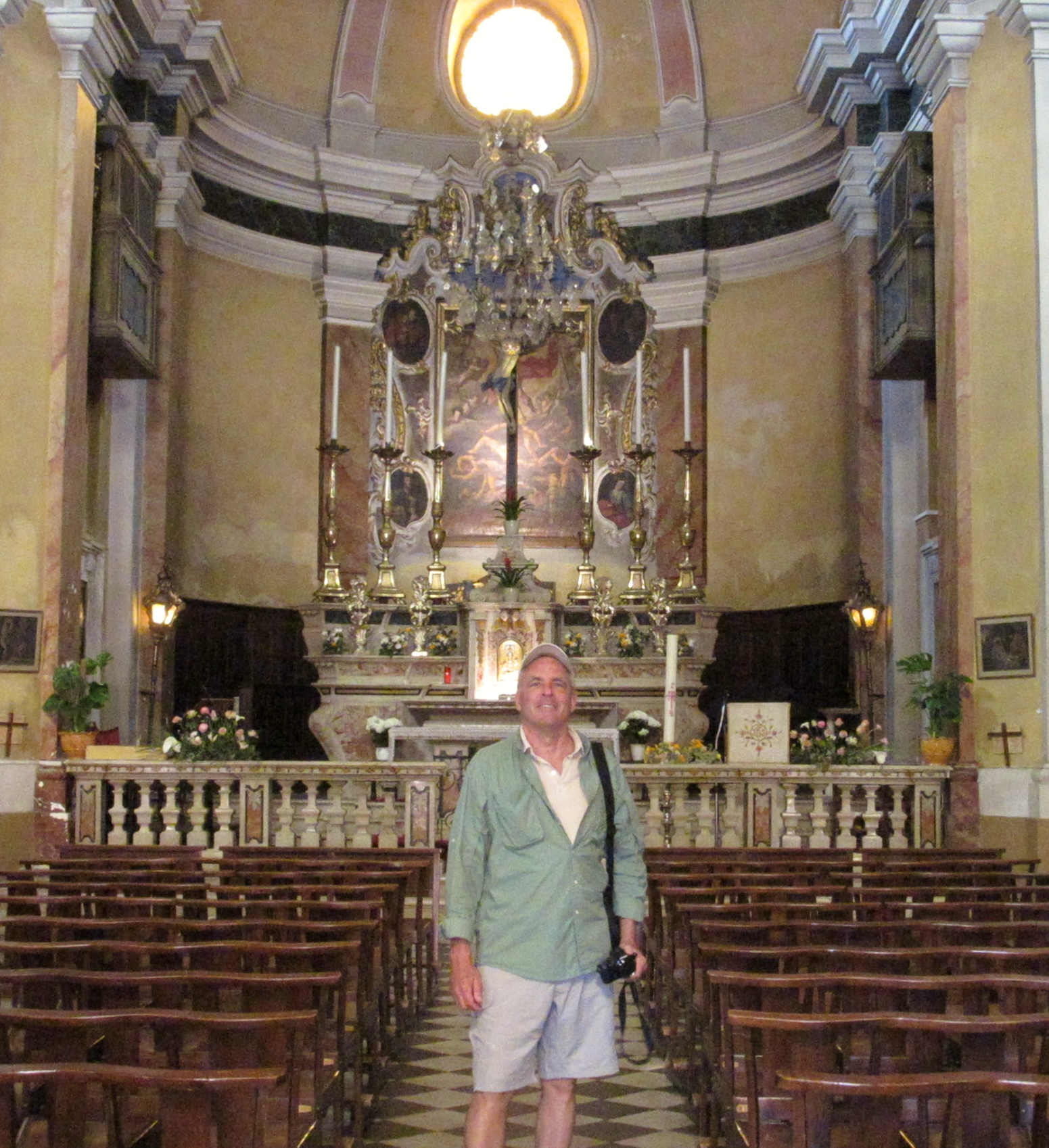
Our Michael visits another church with his name.

IMG_5490

The ceiling colors remind us of the reds and yellows of the ocher at Roussillon.

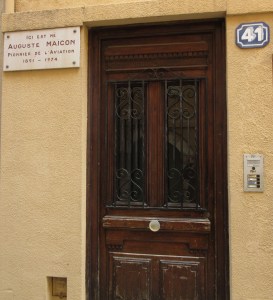
In a small world moment, we found the birthplace of a man with a connection to the Finger Lakes area. In 1914, the Northcliffe prize of £10,000 was offered for the first team that could fly across the Atlantic Ocean in one flight. Glenn Curtiss of Hammondsport (on Keuka Lake) jumped to the challenge, planning to use his “flying boat.” If the flight had to touch down in the ocean, the wings could be jettisoned and the plane would become a boat with a screw for propulsion. The French connection is that Auguste Maicon of Villefranche-sur-Mer also entered the competition. We’ll never know who would have won, since the breakout of World War I delayed the competition.

2015-04-10 042

Auguste Maicon’s birthplace. He lived to be 81 despite his daredevil trick of flying beneath a low and narrow bridge in Nice.

You can read about this and observe early seaplanes at the Glenn Curtiss Aviation Museum in Hammondsport. Curtiss went on to provide extensive support for the US Navy with innovations for seaplanes, bombers, and more. He cashed out of his company for $32 million at age 42 and retired. He died 10 years later. Maicon outlived Curtiss by 44 years and died just as the SST was enabling flights between US and Paris in just 3.5 hours.

Back to France…

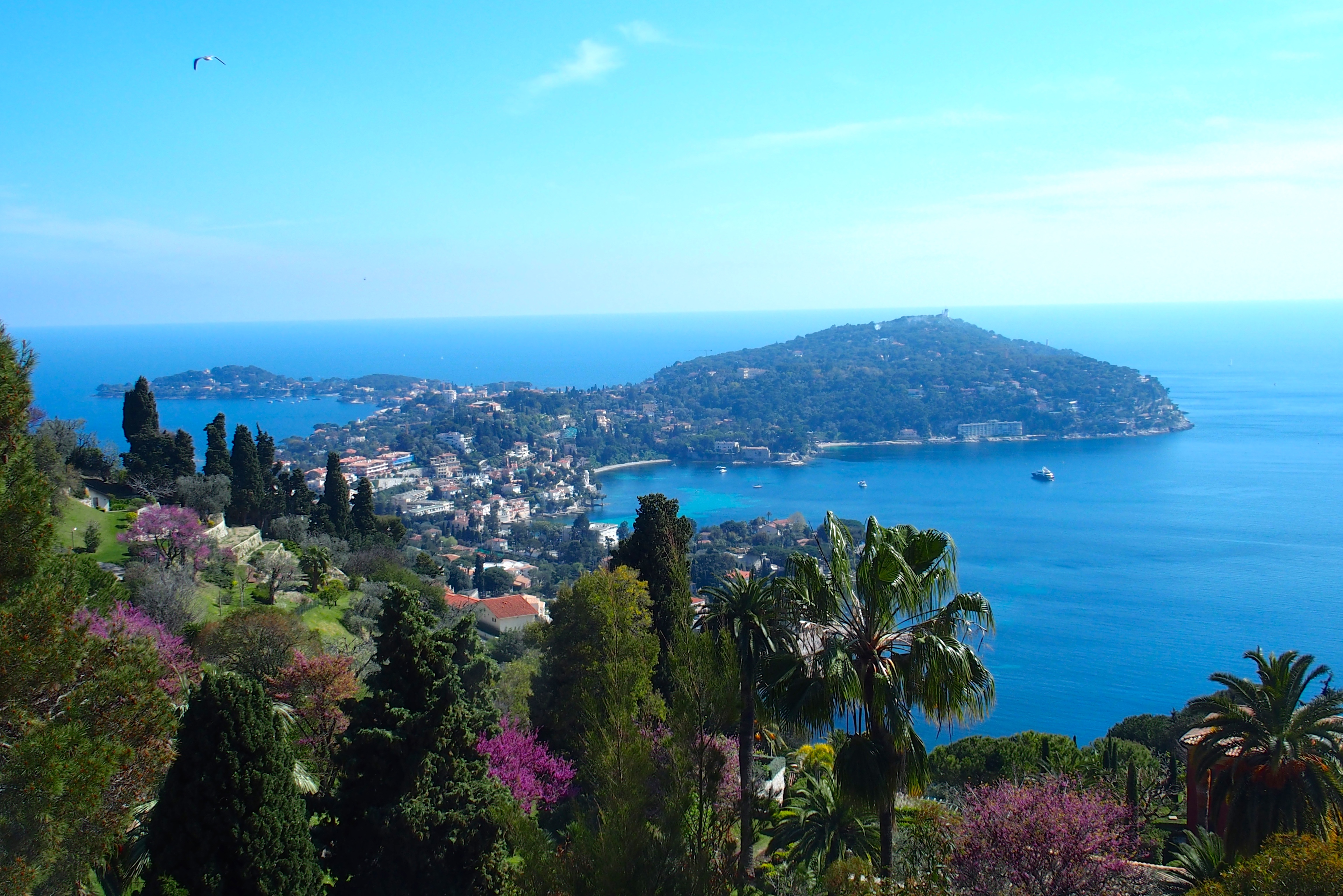
The point of land jutting into the ocean is Cap Ferrat, a playground of the rich and famous.

OLYMPUS DIGITAL CAMERA

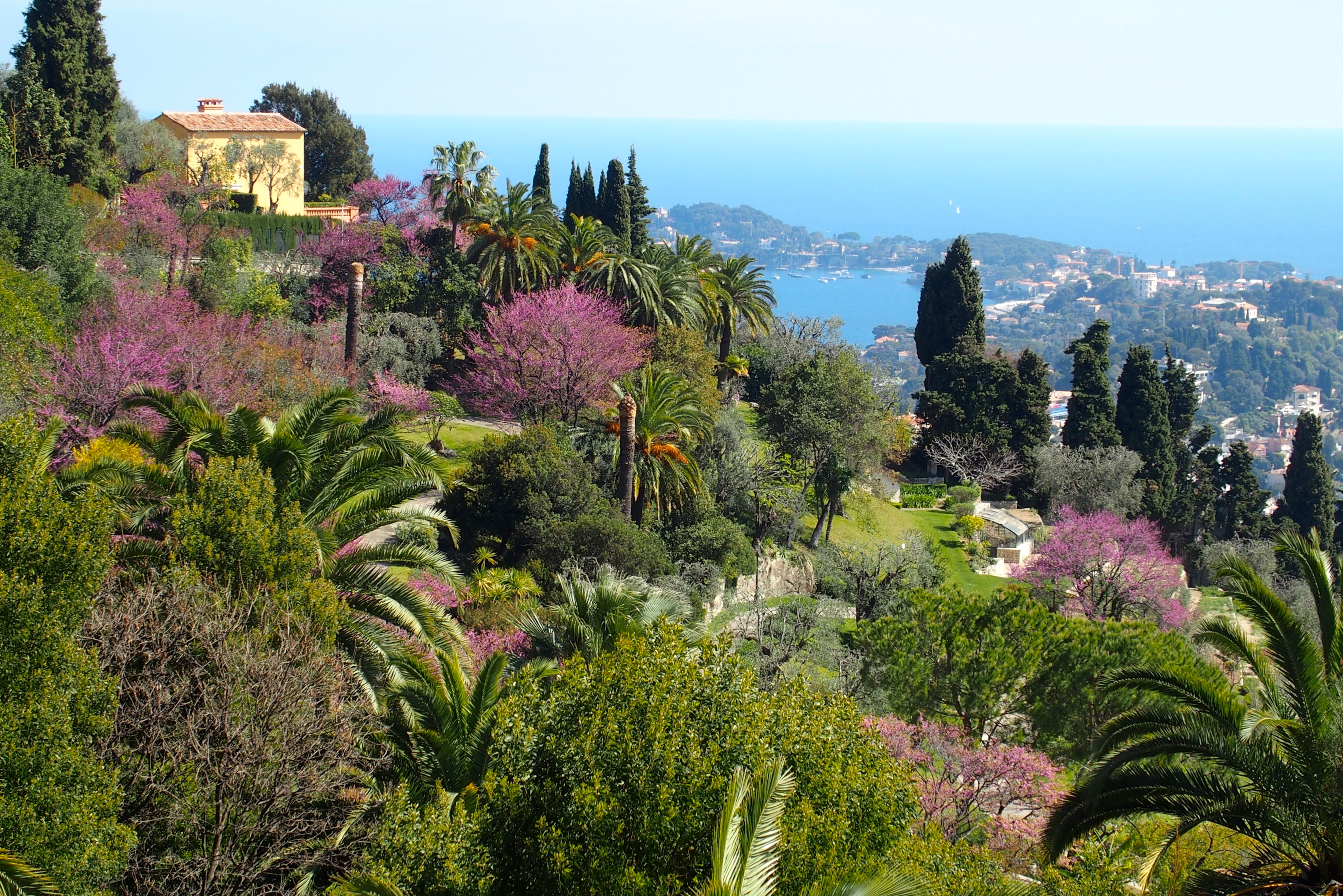
This private garden overlooking the harbor is starting to show its spring beauty. The building in the upper corner is a small section of Villa Leopolda, perhaps the most expensive mansion in the world.

From the high vantage point of Fort Mont Alban, we could look down on Villefranche-sur-Mer to the west and also on Nice to the east.

2015-04-10 102

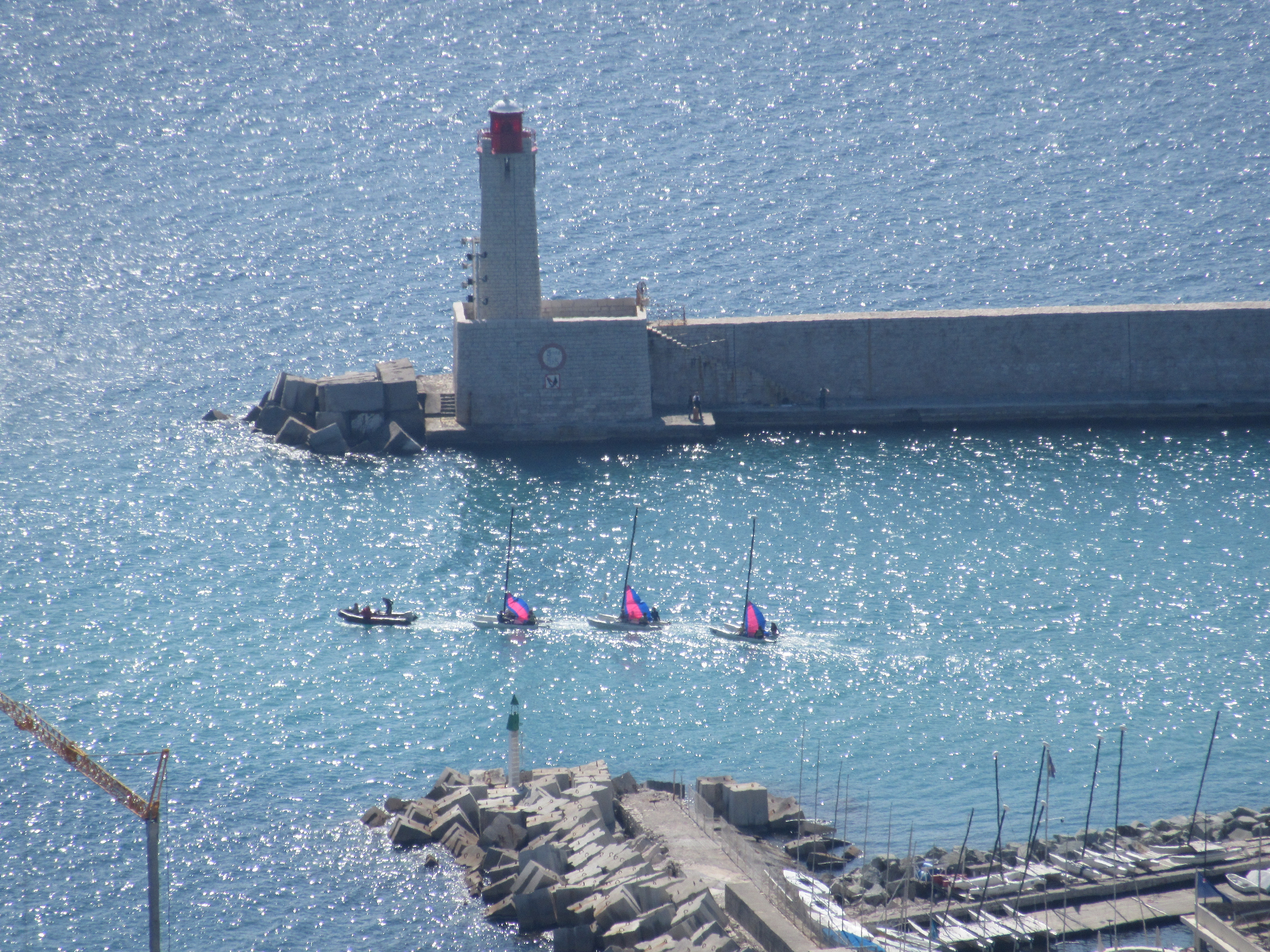
Part of a fleet of sailboats are towed beyond the entrance of the port of Nice for a colorful regatta.

We will be getting a close-up look at Nice later.


Posted in Travel Journal | Tagged , , , , , , | 1 Comment

The perfect little town of Saint-Rémy-de-Provence

We love the little town of Saint-Rémy-de-Provence. The name is almost bigger than the village! It has an old town center with narrow streets, lovely little shops, flowers, and statues.

2015-04-04 003

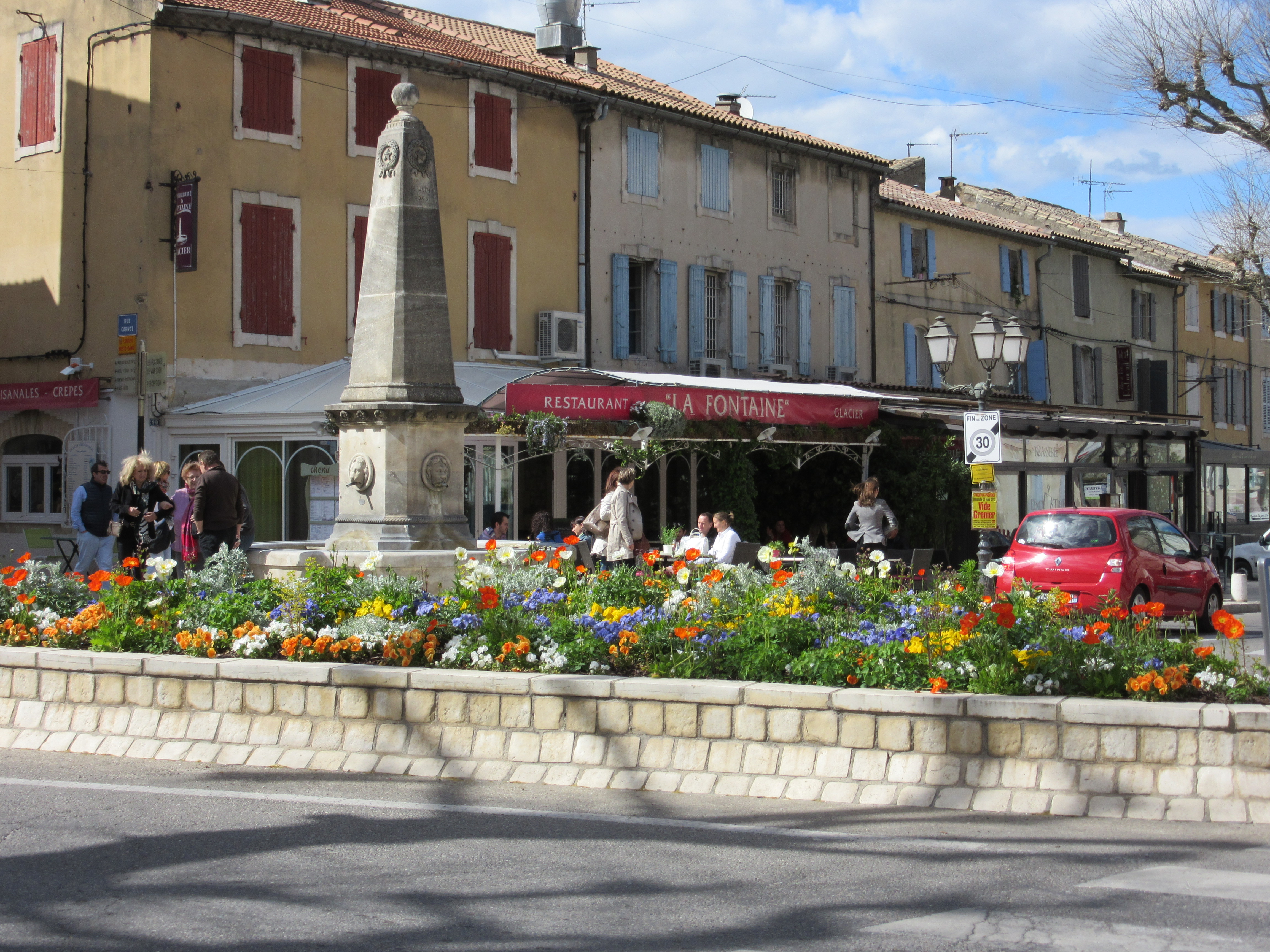
Springtime in the center of town.

We are definitely in France. Many people here do speak English and everyone has been friendly, but we are having great opportunities to practice speaking French. Even if we’ve forgotten most of French 1 from high school and mix up our tenses, no one seems to mind.

IMG_5369

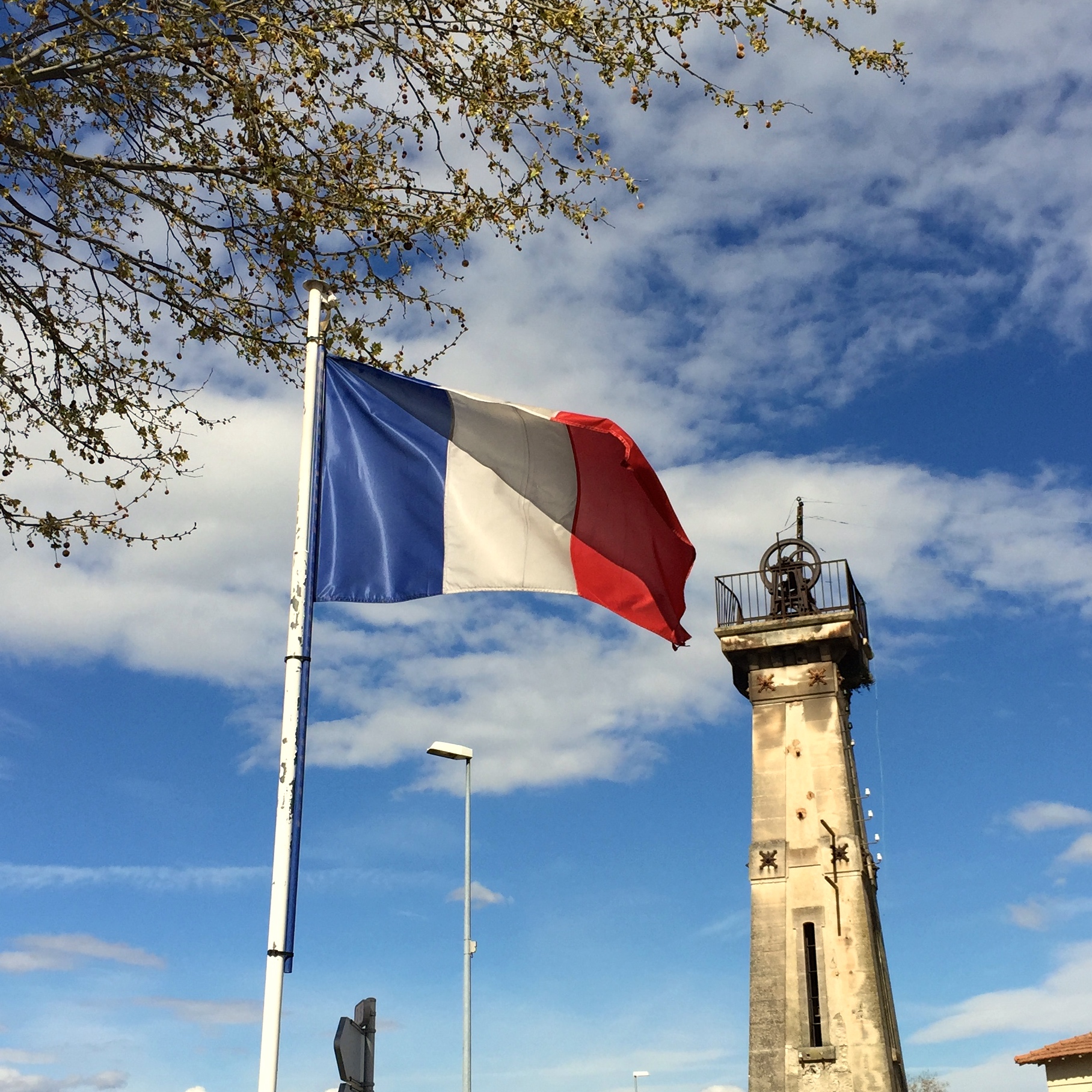
The French flag flies over Place General de Gaulle.

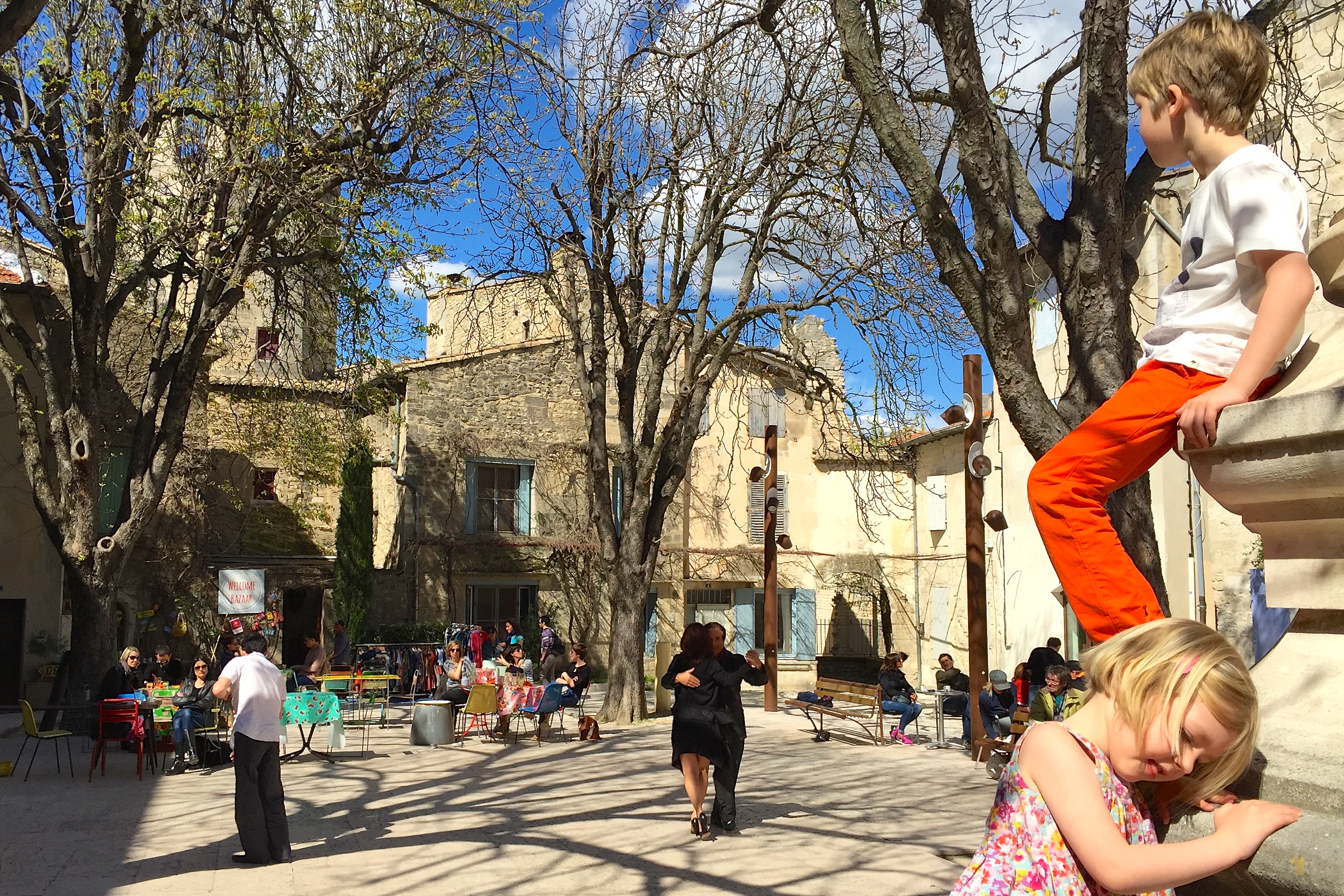
The town has festivals throughout the year with the Fête de la transhumance when herds of sheep run through the town toward the highlands in June, the feria including running of the bulls in July, and artist festivals throughout the summer. We saw a bit of Argentine tango during the Easter celebrations.

IMG_5361

The Melonga, Argentine dance party in the same square where we bought olives at the Wednesday market. The original multi-use facility!

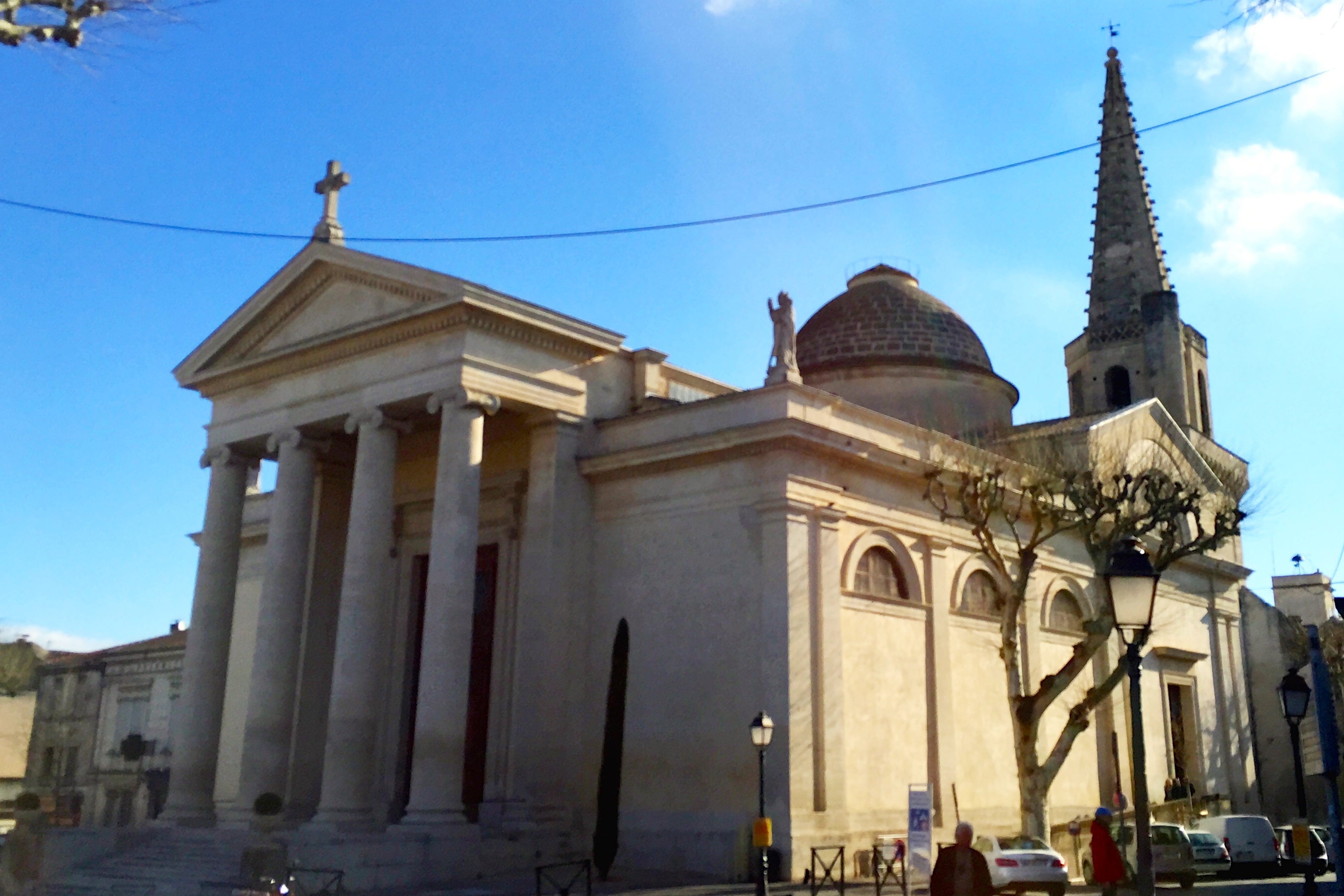
Saint-Remy’s church is a prominent structure in the center of town. We attended the Easter service. Although we couldn’t understand the priest’s sermon, Alleluia was familiar.

IMG_5390

Collegiate Church Saint Martin in Saint-Remy-de-Province

IMG_5387

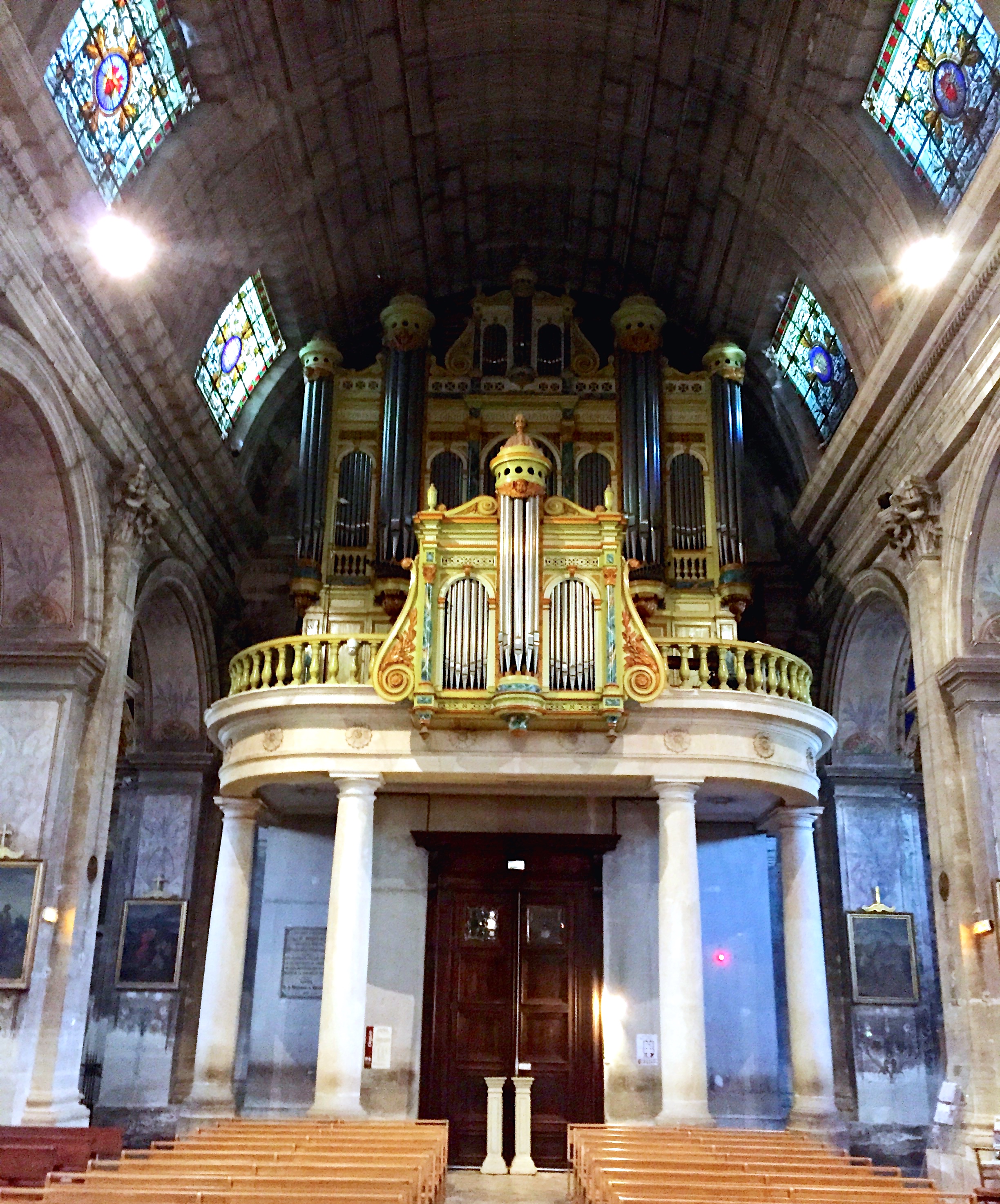
The church proudly offers concerts throughout the summer featuring the beautiful organ, restored in 1983.

IMG_5379

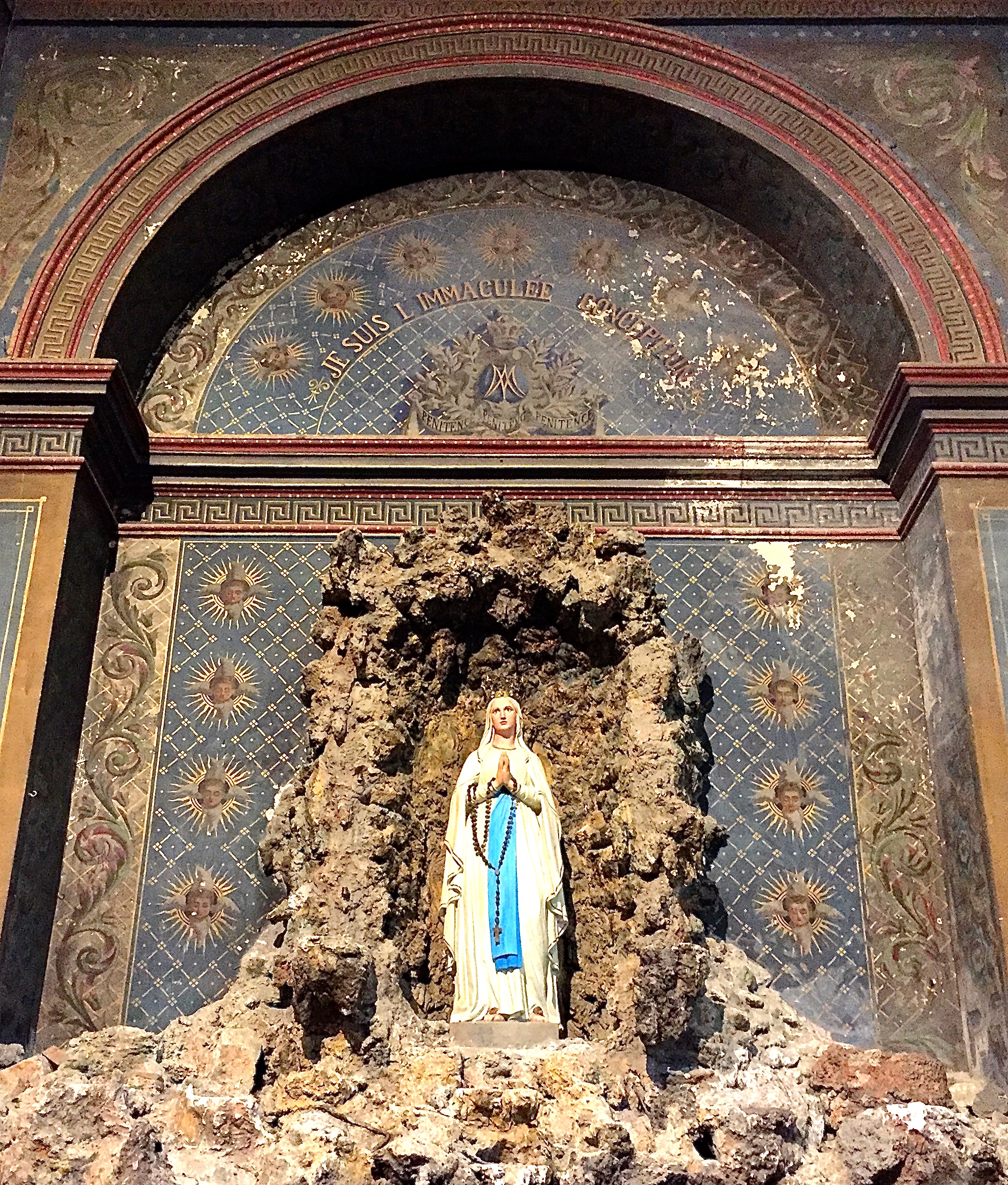
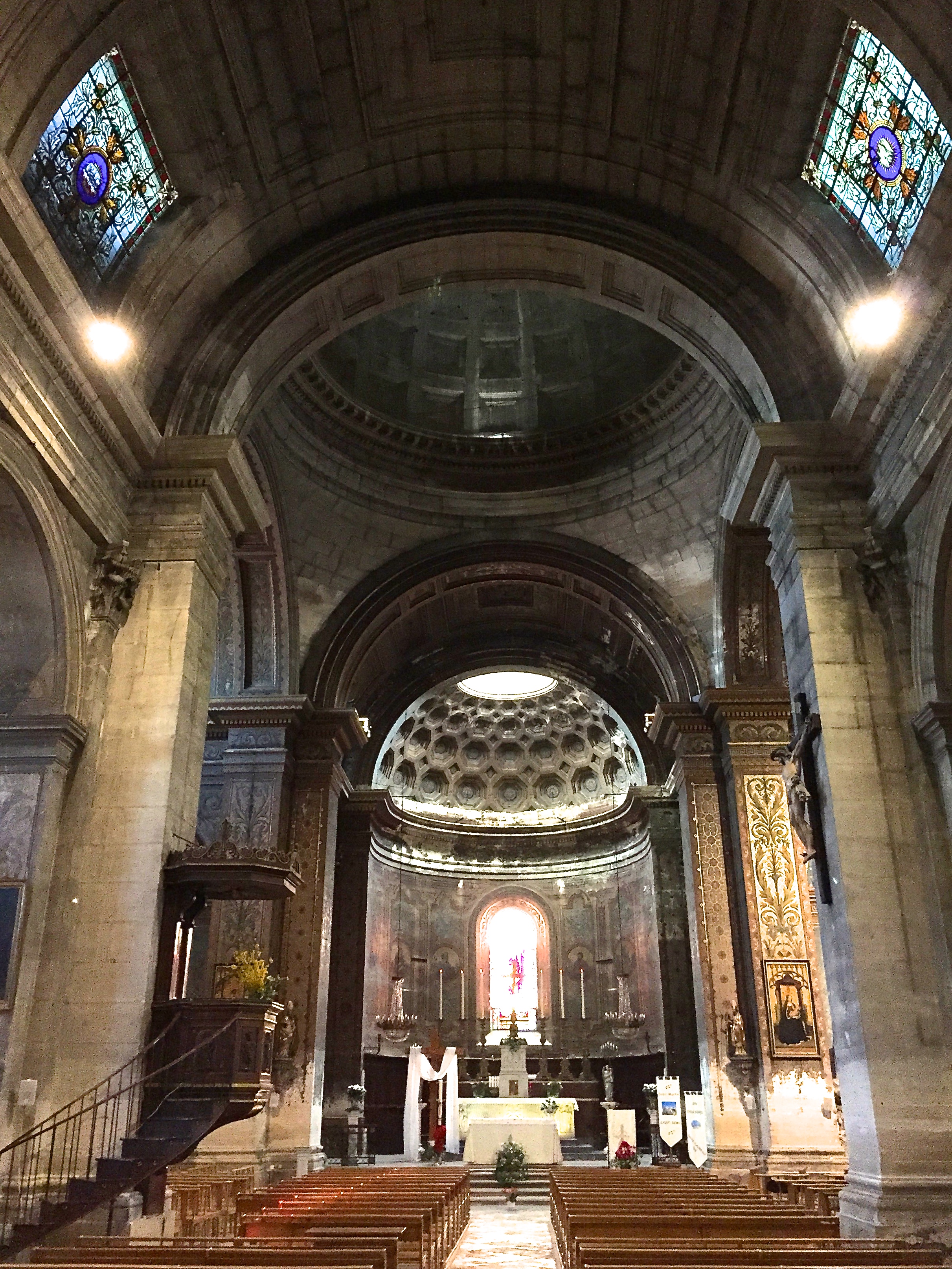
The plain block exterior gives no indication of the beautiful artworks inside.

IMG_5377

Saint Martin’s church was built in 1821.

2015-04-05 001

One of many colorful stained-glass windows at the upper heights of the church

On the other side of the main square, is the school. Note the French national motto, liberté, égalité, fraternité, which means liberty, equality, fraternity. During the French Revolution, protesters raised their fists shoutingliberté, égalité, fraternité, ou la mort, the last bit meaning or death. No need for that morbid thought any more.

2015-04-05 025

School was out for Easter holidays.

2015-04-06 008

Even the pruned trees seem to be showing the spirit of liberté, égalité, fraternité!

2015-04-04 016

Decoration at the gates of a Saint-Remy home

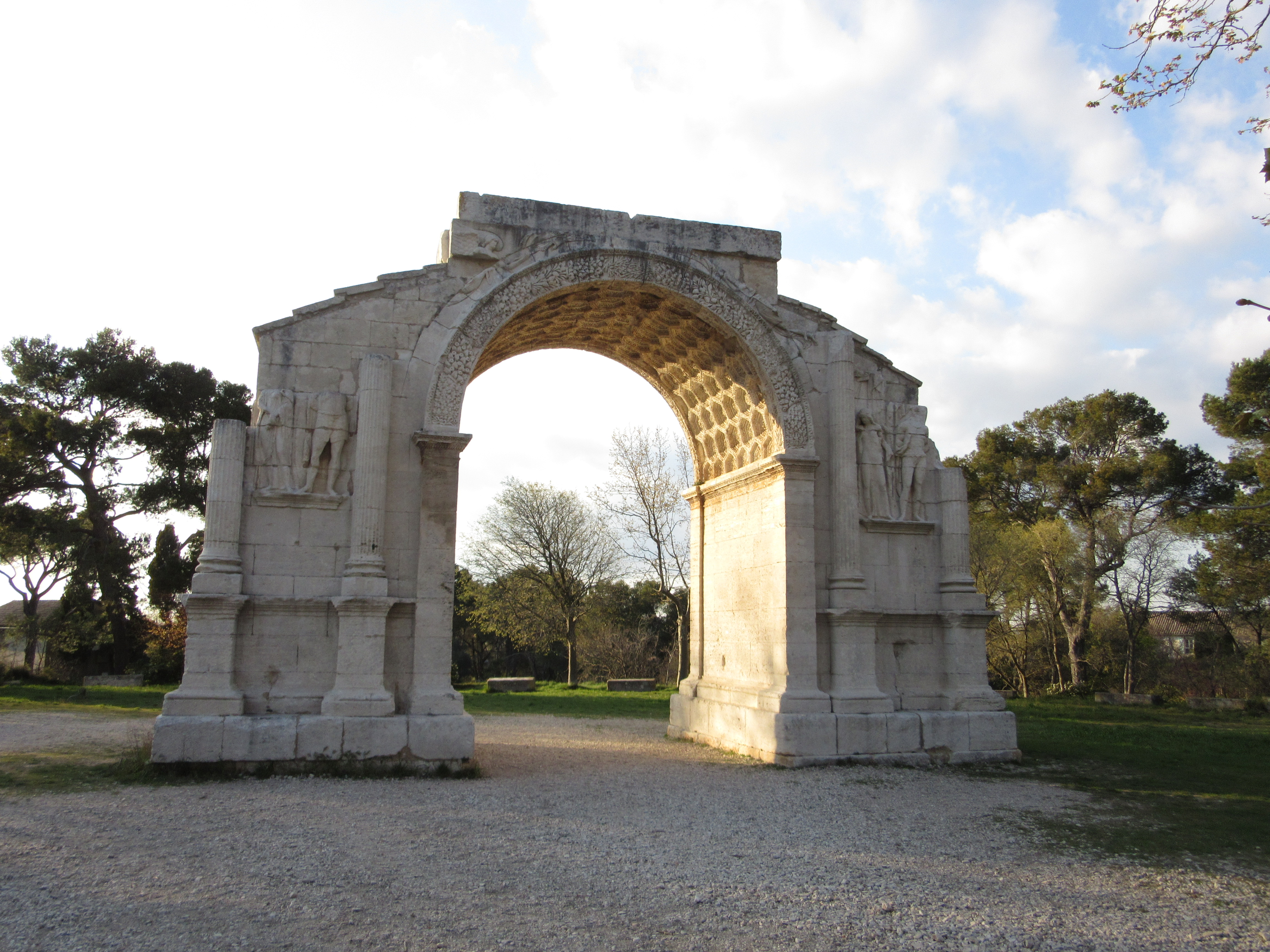
Saint-Remy has archaeological artifacts from Roman times. Les Antiques is a combination of a triumphal arch and a tall mausoleum. This is outside the ancient town of Glanum, under excavation.

2015-04-07 203

The Arch de Triomphe in Saint-Remy.

2015-04-07 208

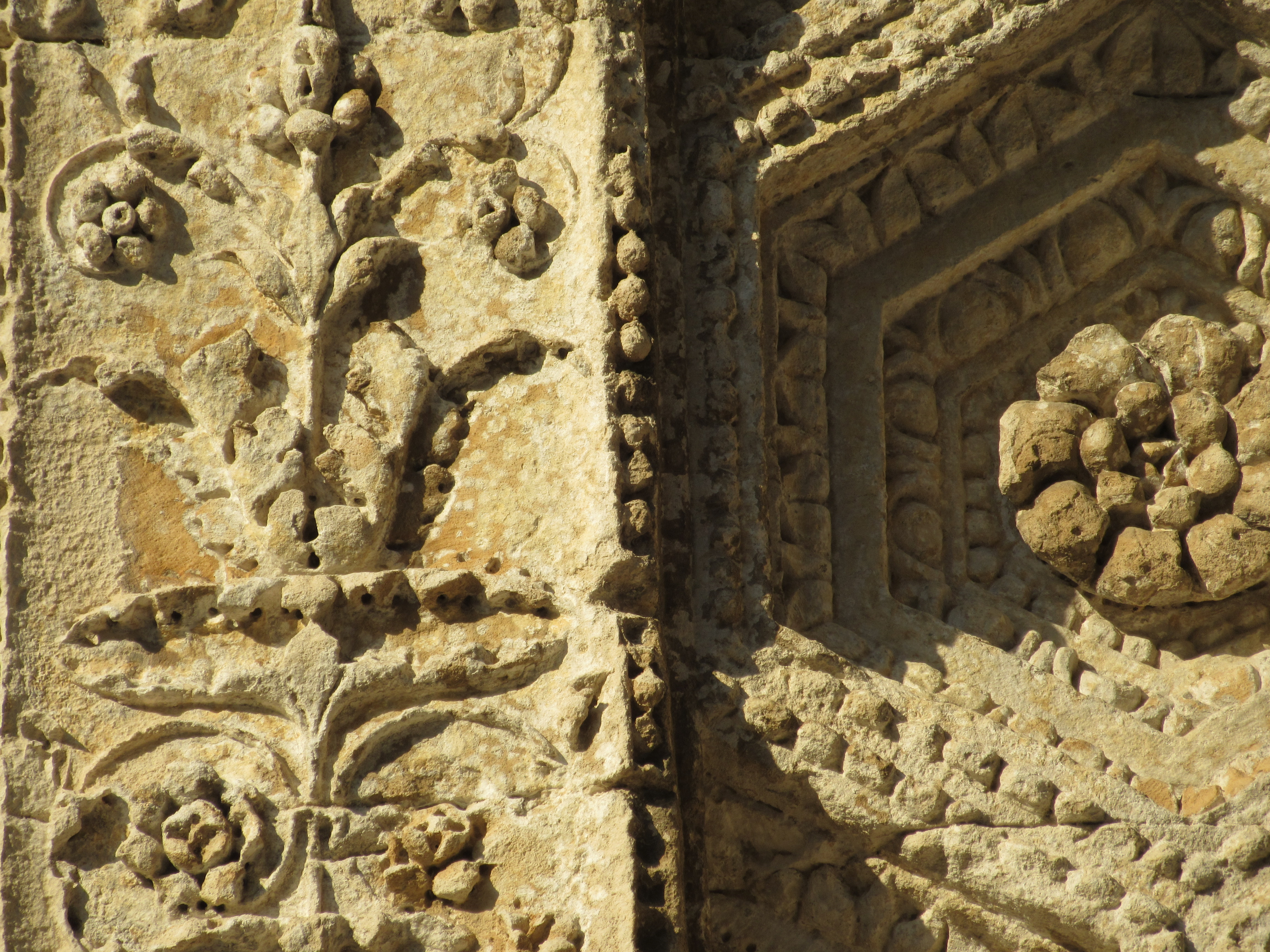
Details of the arch sections.

OLYMPUS DIGITAL CAMERA

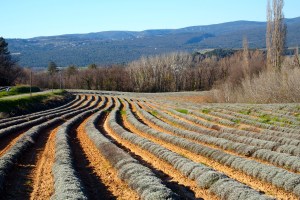
We’re waiting for the lavender fields to move from this green-gray color to…lavender.

Just beyond Saint-Remy are Les Alpilles, a small range of mountains, not the Alps, but still impressive massifs.

2015-04-07 197

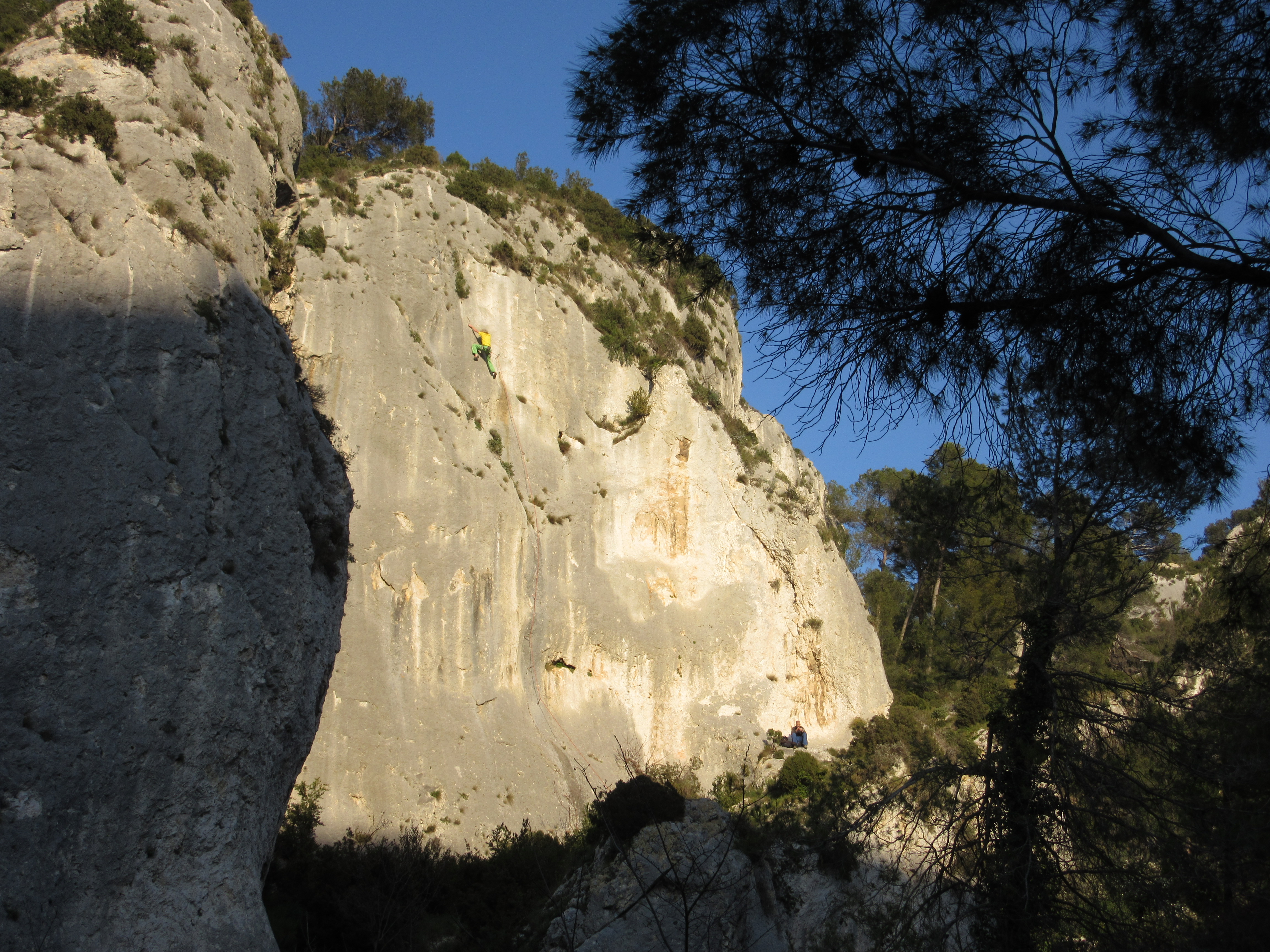
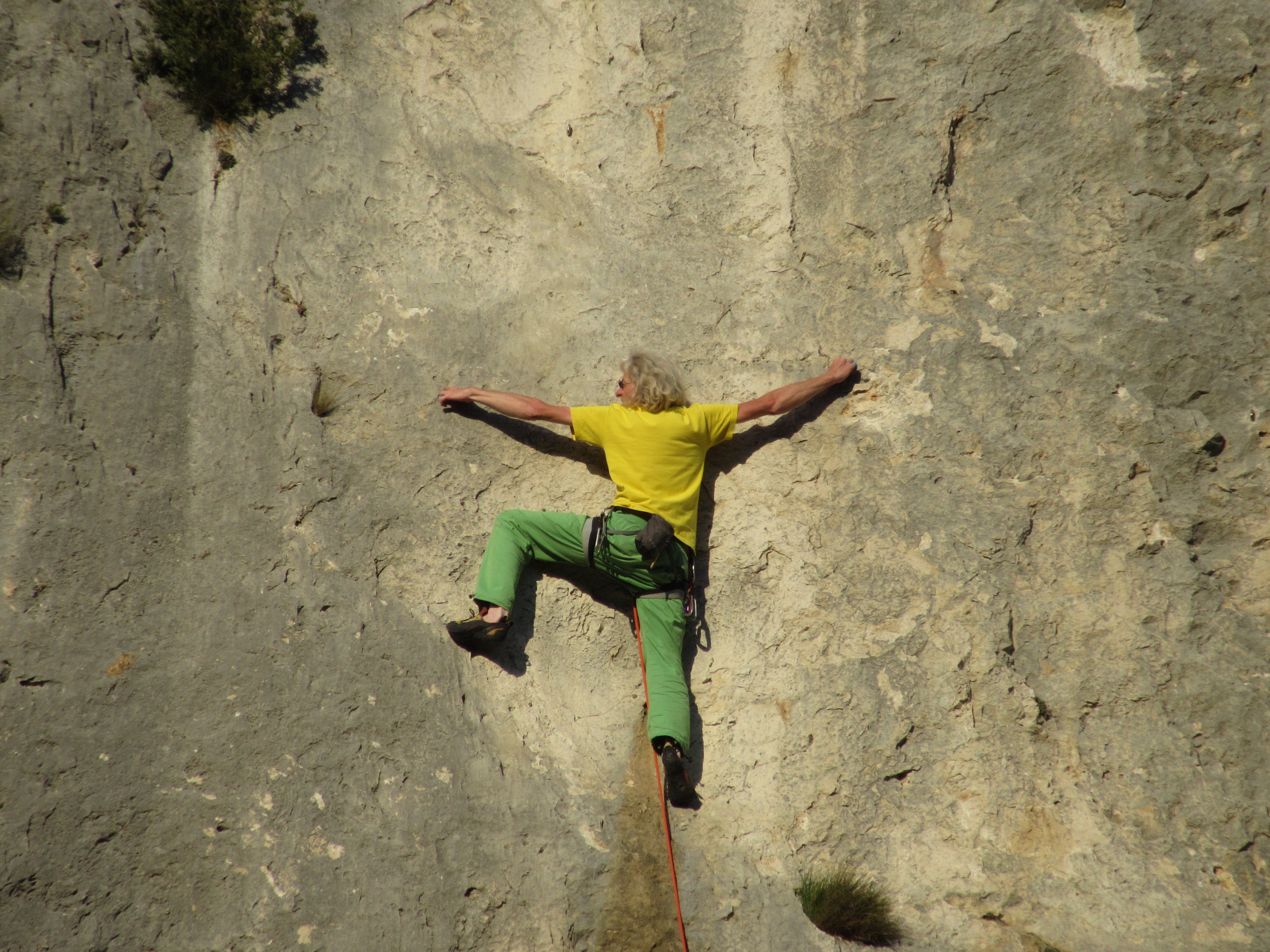
A rock face of Les Alpilles. (Click on the photo to zoom in to see what the yellow dot a third of the way from the top is.)

2015-04-07 193

Soon after this point, the free climber just stopped. He was perplexed about a possible route the last bit of the way to the top.

OLYMPUS DIGITAL CAMERA

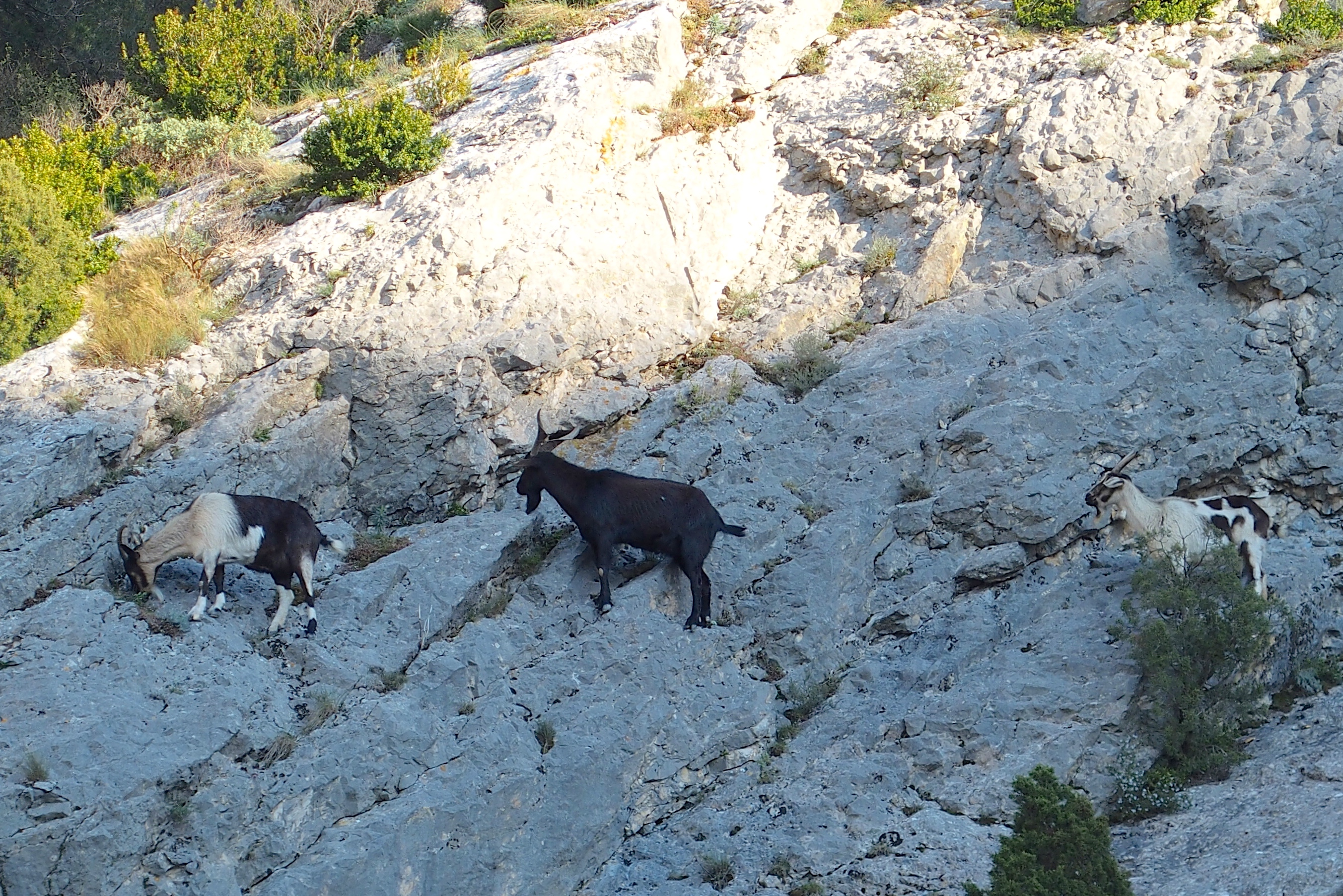
These three billygoats gruff munched grasses on a not-quite-as-steep rock face opposite the human climber.

OLYMPUS DIGITAL CAMERA

Beyond town a farmer plowed a vineyard the old-fashioned way.

This is a spot we could easily return to for an extended stay.

Posted in Travel Journal | Tagged , , | 1 Comment

Avignon, where popes once reigned

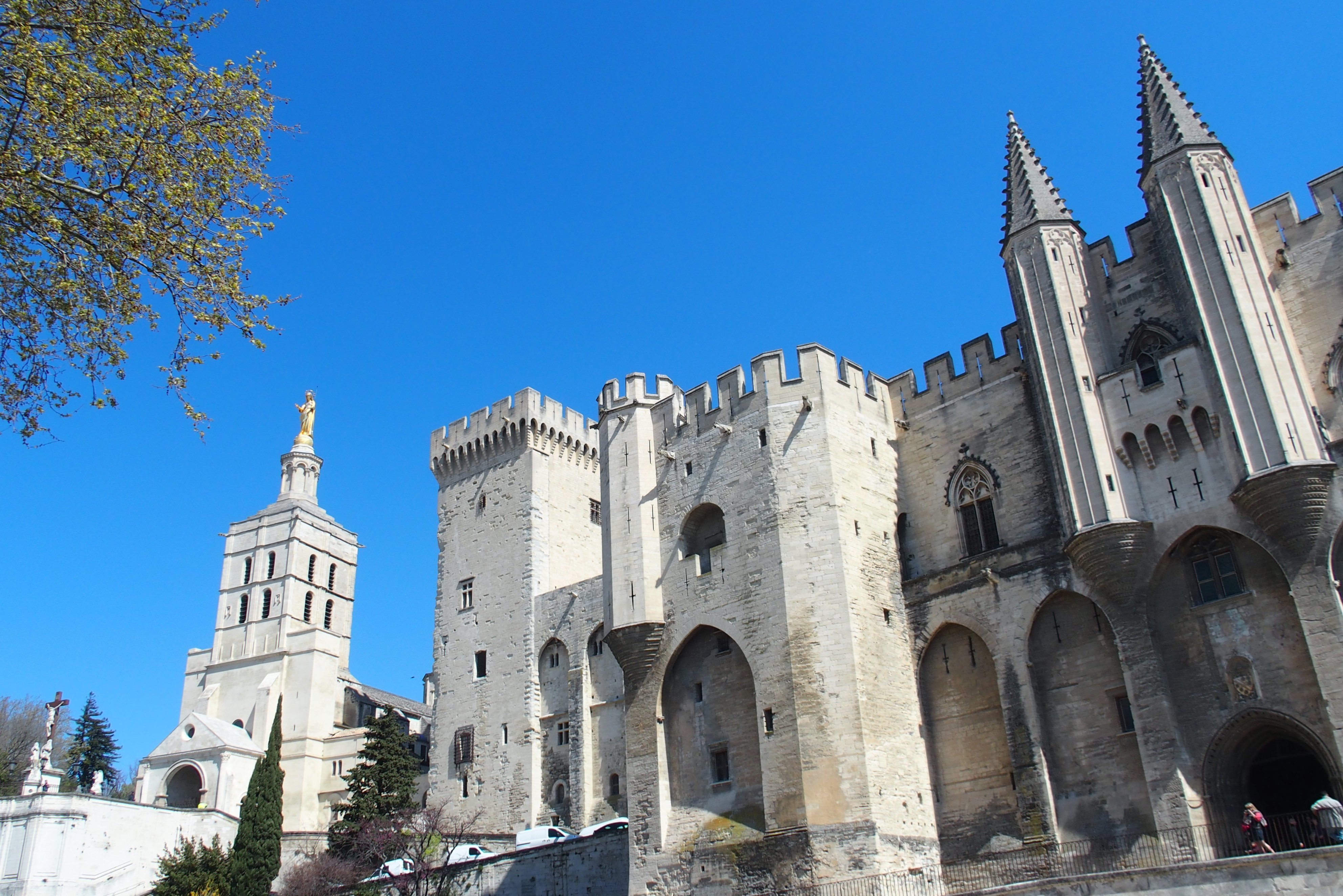
For 68 years during the 1300s, Avignon was the center of the Catholic world. Seven popes reigned from this Provencal location, nearly 600 miles from Rome…and they were French, not Italian. The Palais des Papes, papal palace, still stands as a glorious fortress in the old town of the large city.

OLYMPUS DIGITAL CAMERA

The Palais des Papes has over 160,000 square feet of space, one of the largest Gothic buildings in Europe.

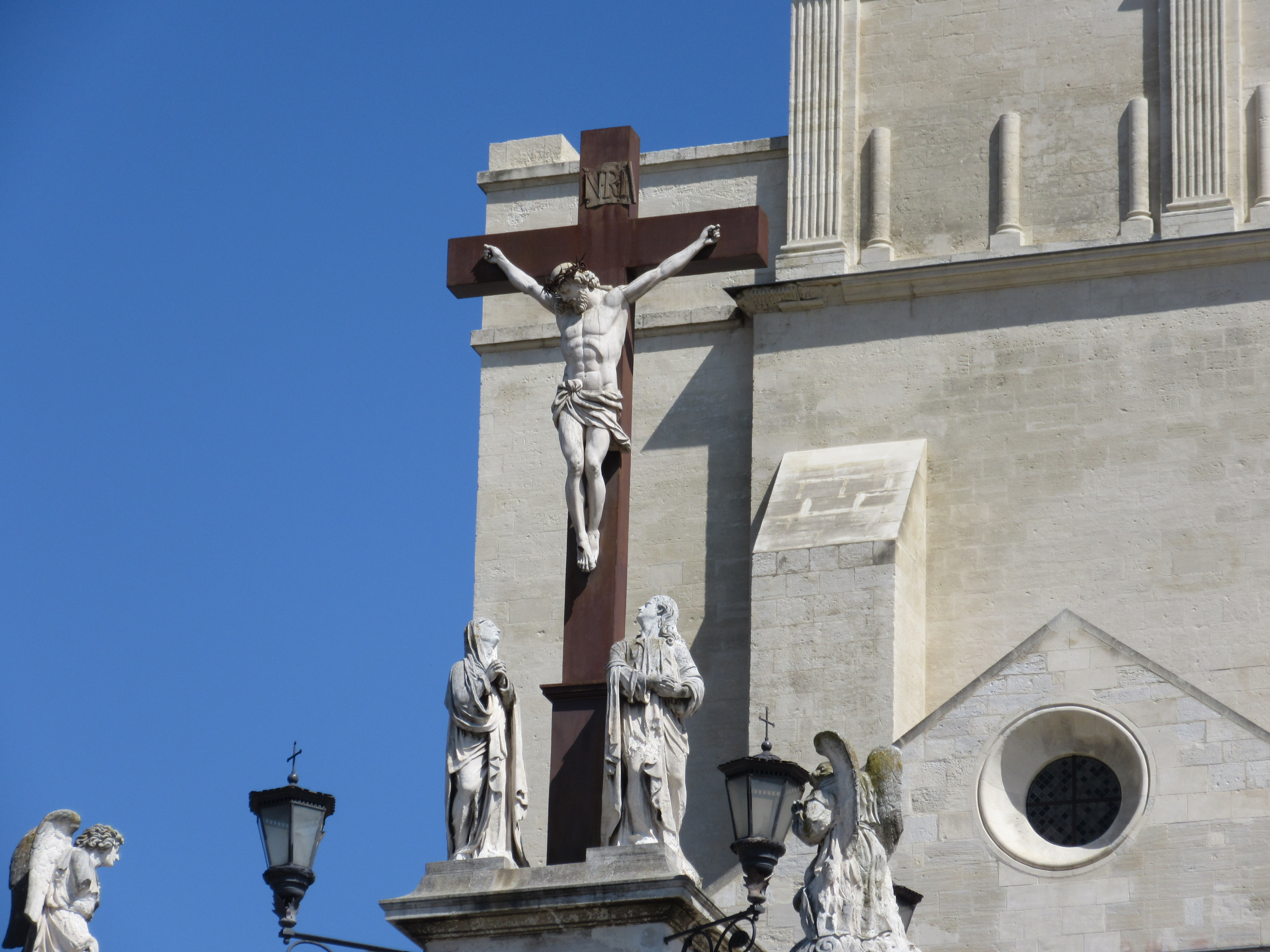
Next to the papal palace is another impressive sight, the Cathédrale Notre-Dame des Doms d’Avignon. The structure was built in the 1100s and has been the home of the archbishop of the Avignon diocese/archdiocese since then.

2015-04-07 066

Christ on the Cross in front of Cathédrale Notre-Dame des Doms d’Avignon

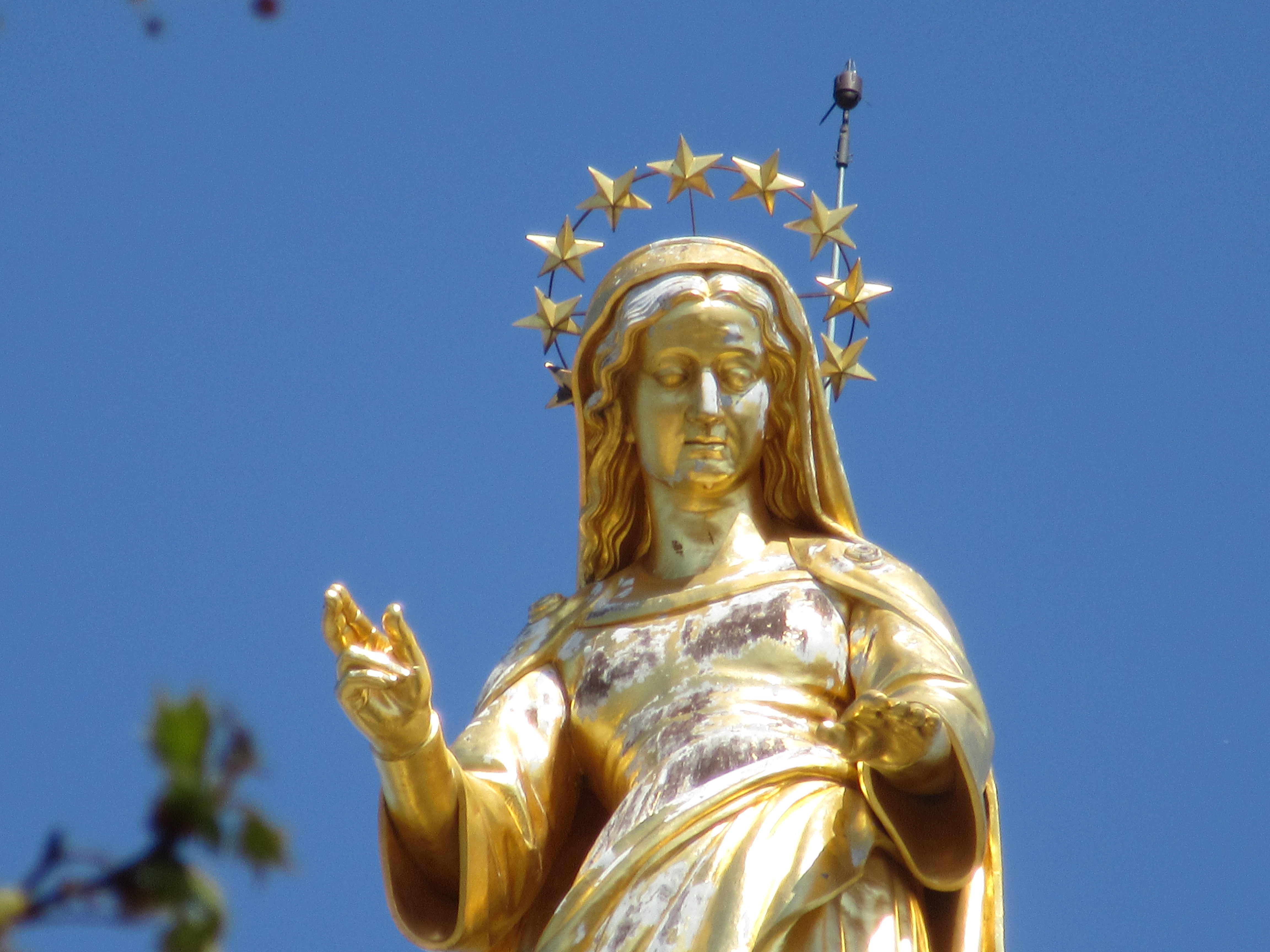
A gilded statue of the Virgin Mary stands atop the bell tower of the cathedral.

2015-04-07 025

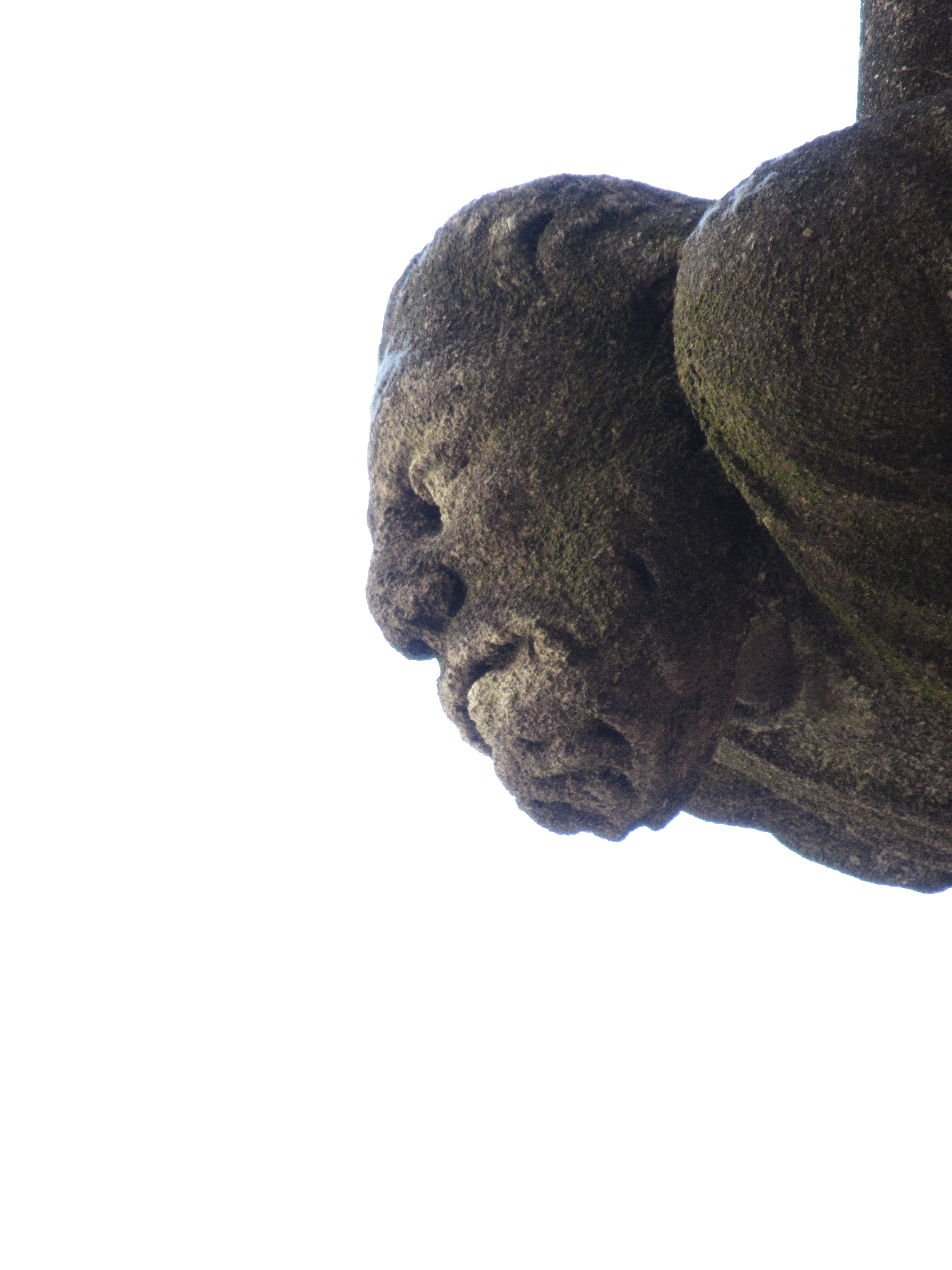
An interesting juxtaposition of a gargoyle on the papal palace and the Holy Mary on the cathedral bell tower just beyond.

2015-04-07 063

The statue of Mary was added in 1859 and the gilding has held up remarkably well.

2015-04-07 028

Some of the original stone gargoyles on the palace are showing wear…or they were not very good-looking to begin.

Avignon’s papal palace is now part of a UNESCO World Heritage Site along with the old town itself and the Avignon Bridge.

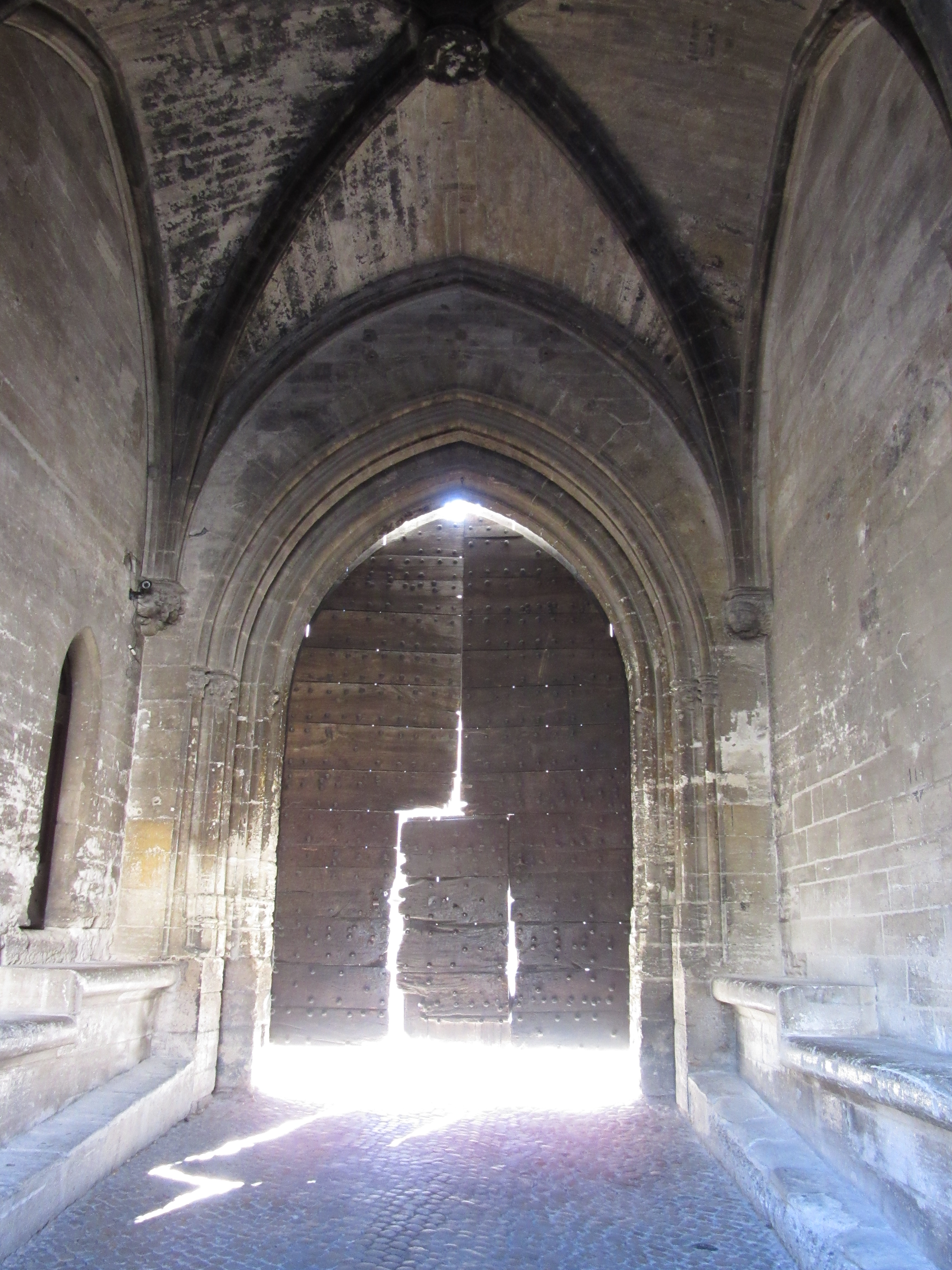
2015-04-07 004

The very large entry door glows with a light from within.

OLYMPUS DIGITAL CAMERA

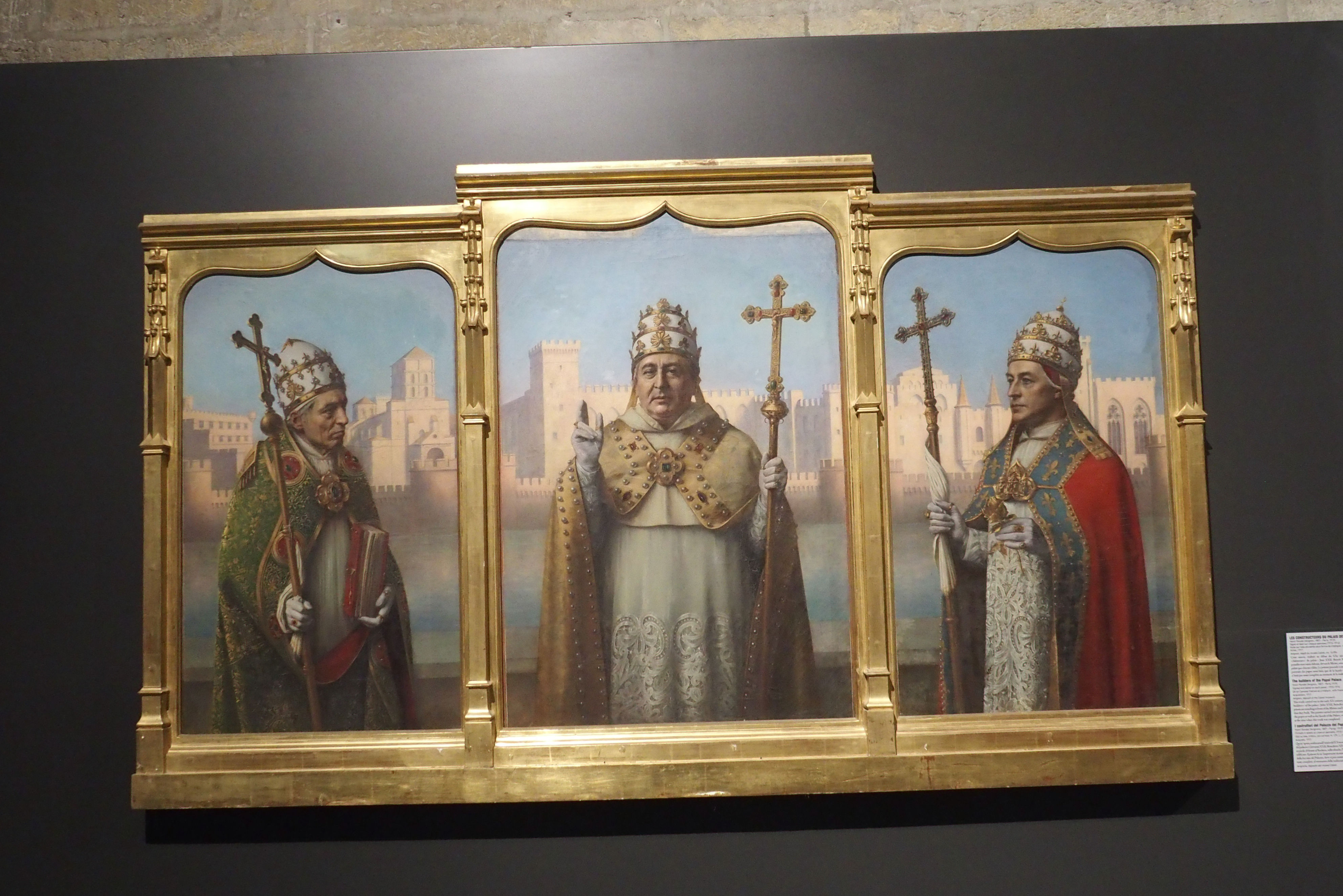
Several of the popes who reigned from Avignon.

2015-04-07 012

This is Louis II of Bourbon, said to be mentally unstable. Interesting that his wife and dogs are here but not named. The wife is Anne of Auvergne and the dogs may be Le Sunny I and Le Sherlock II, ancestors of SBBS’s best sleuthing pups.

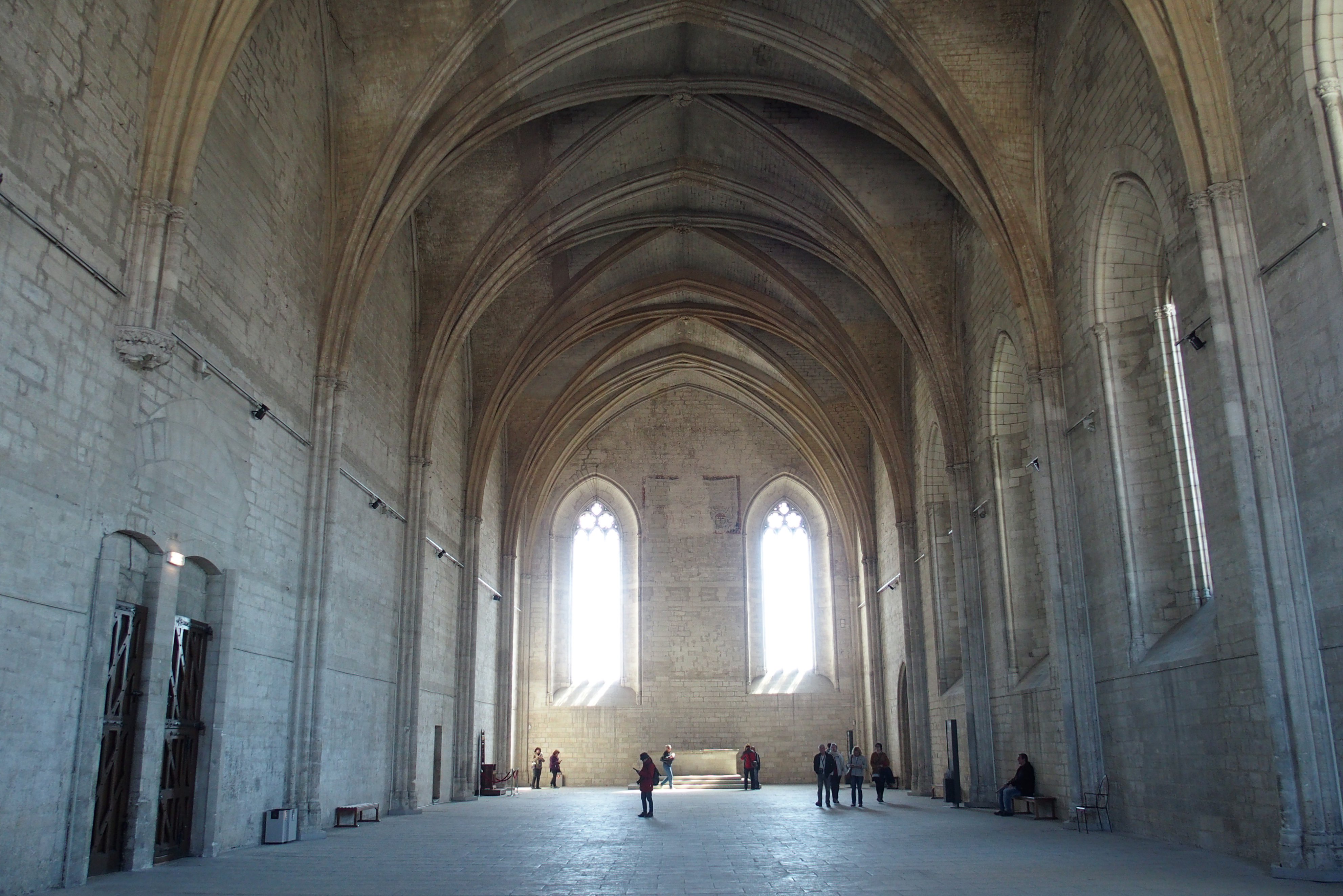
The interior of the palace shows not opulence, but immense size.  The Grand Tinel was used for receptions. Popes were elected in this space.

OLYMPUS DIGITAL CAMERA

A large fire damaged the tapestries inside the Grand Tinel soon after the palace was built. The ceilings are more than 50 feet tall.

OLYMPUS DIGITAL CAMERA

The popes worshiped in the Grand Chapel. Coronations and funerals were held here.

OLYMPUS DIGITAL CAMERA

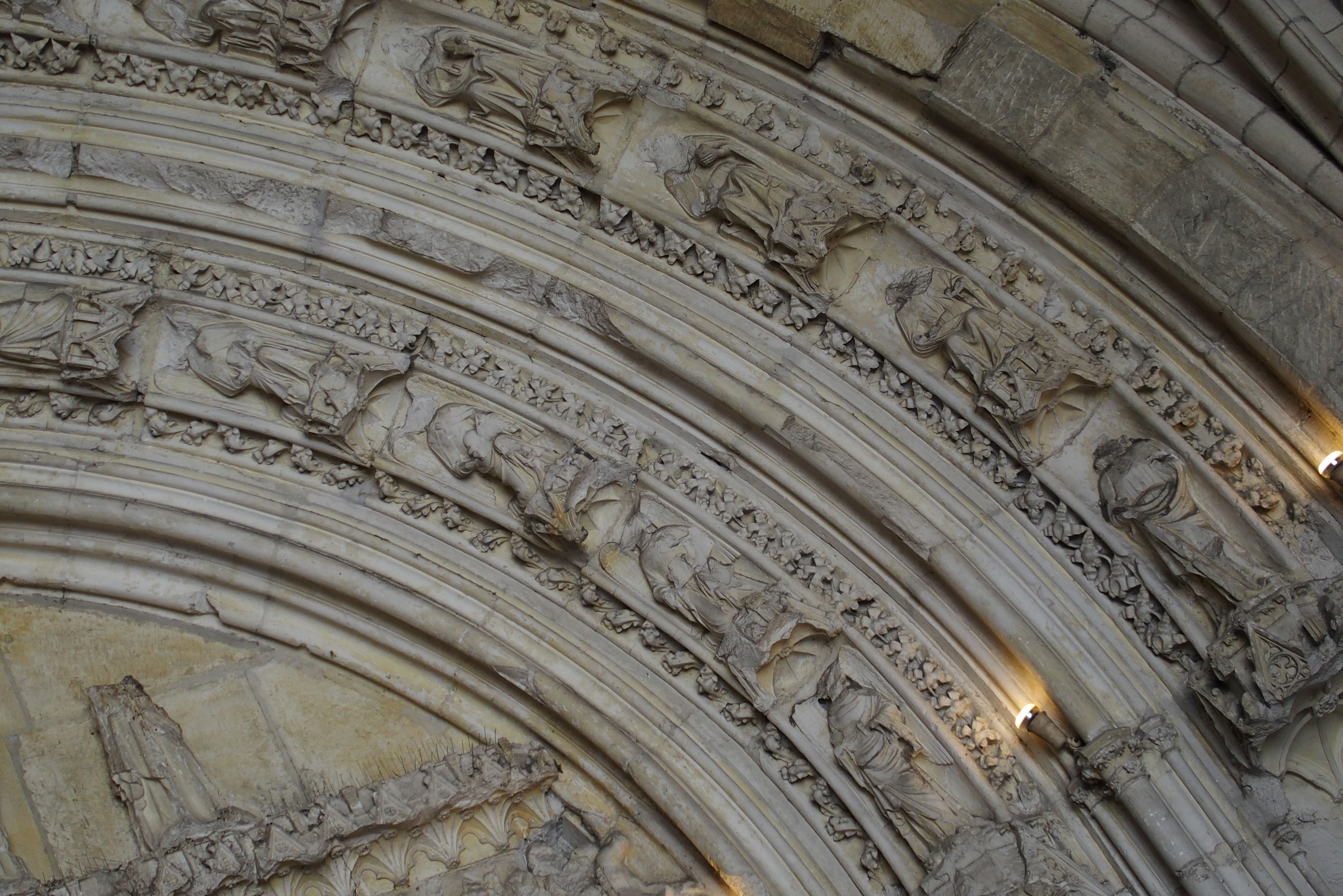
Much of the detail of the stonework remains in the huge arches, but many of the heads were knocked off during the time of the French Revolution.

OLYMPUS DIGITAL CAMERA

Inside the palace are many friezes, some remaining from the original decoration.

2015-04-07 005

The palace door offers humble access to the outside world.

In 1378, the papacy returned to Rome. But in the 39 years now known as the Great Schism, Catholic leaders in both Avignon and Rome claimed to be popes. By 1417, the schism was ended with the excommunication of the reigning Avignon pope. Later the Avignon leaders during the schism were declared as antipopes.

Avignon now has a population of over 90,000 people, making it one of the largest communes in Provence.

2015-04-07 087

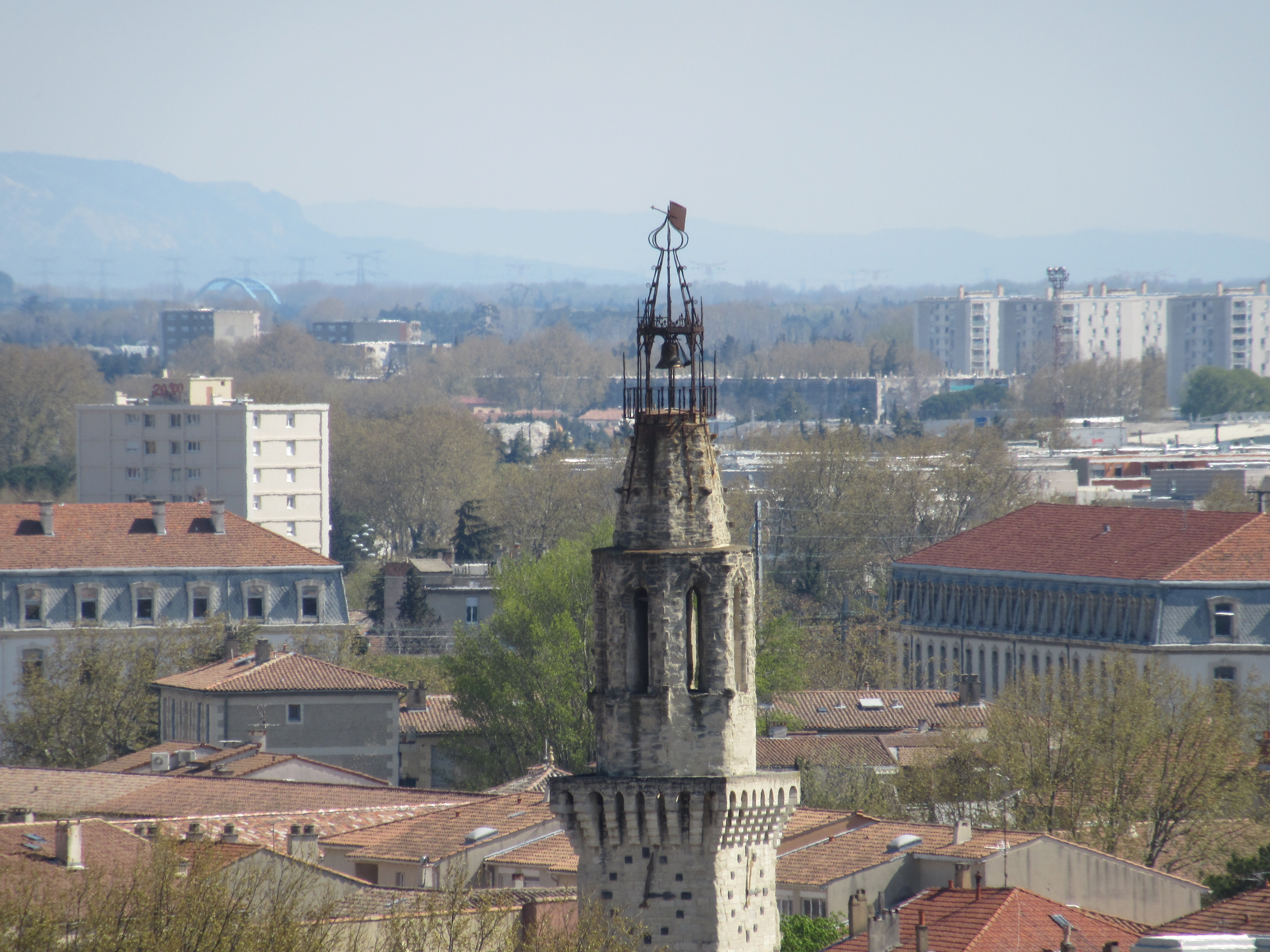
Like other Provencal towns, Avignon has a mistral bell.

2015-04-07 098

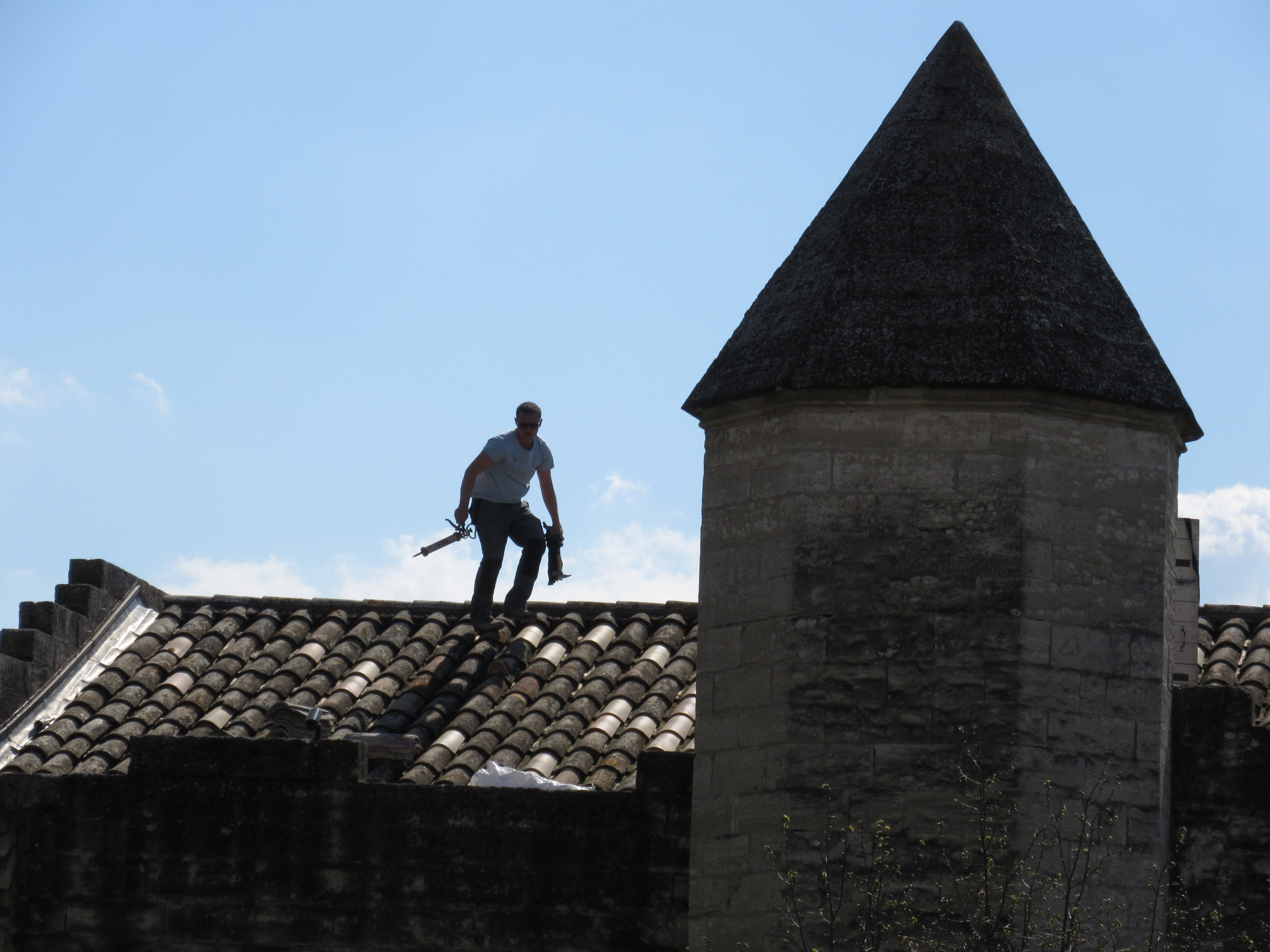
A workman makes repairs on an orange-tiled roof near the palace.

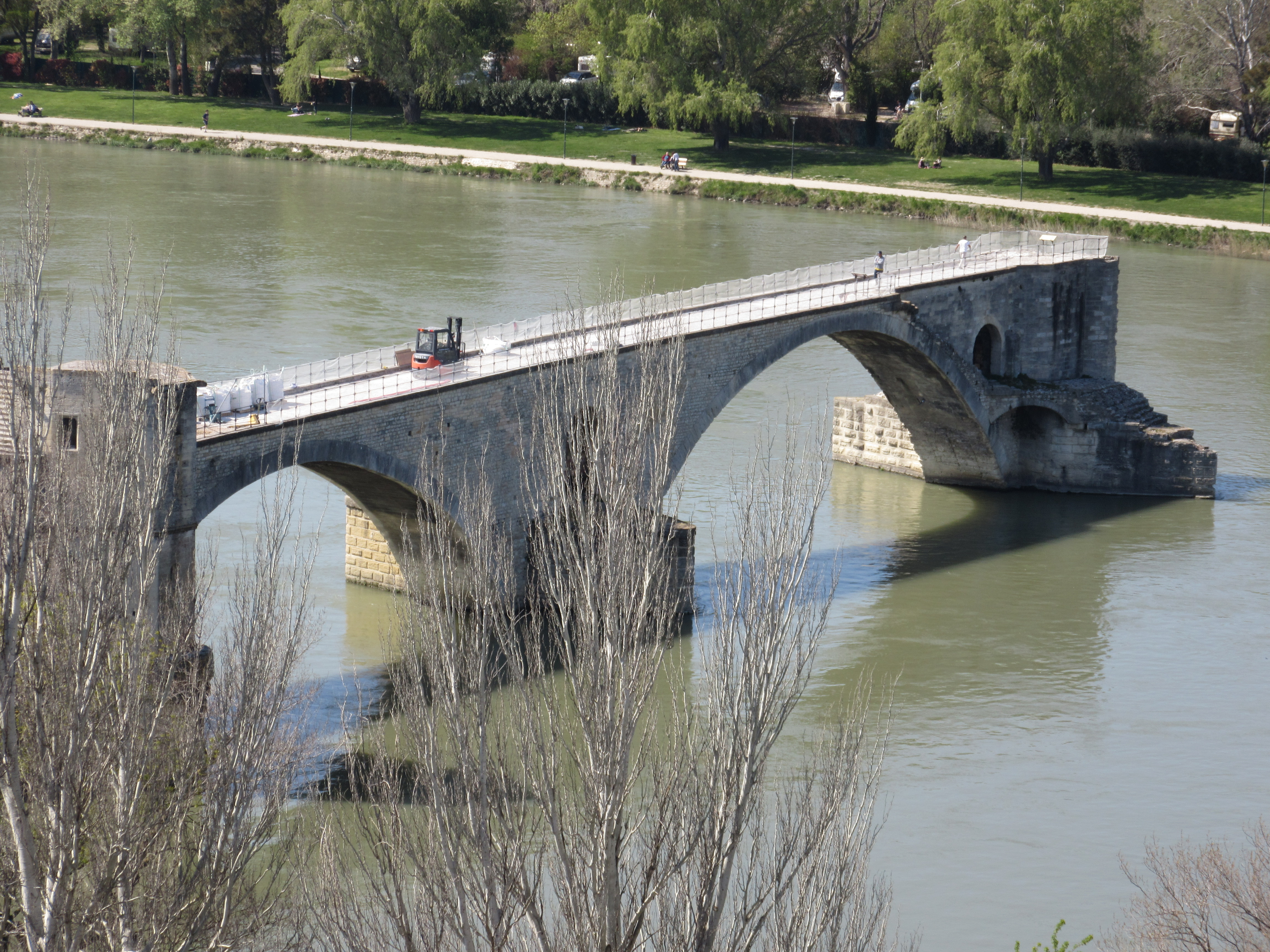
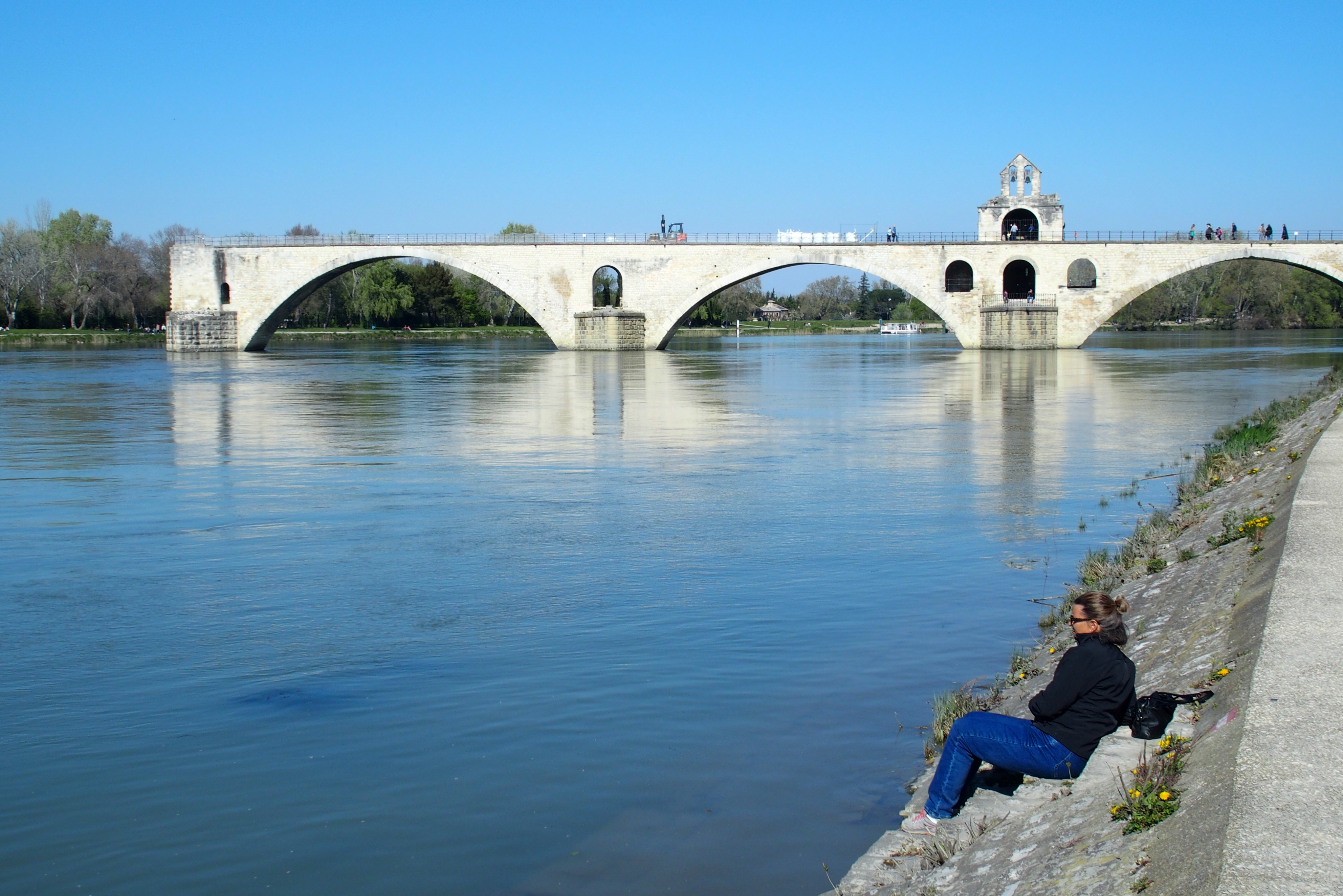
From the garden near the palace is a perfect view of the Pont d’Avignon or Pont Saint-Bénézet. The story of this bridge is that a young shepherd, Bénézet, received instructions from Christ to build a bridge across the Rhone River. The original bridge was completed in the late 12th century. Bénézet was granted sainthood for performing not three, but eighteen miracles, one of which being the lifting of the first very heavy stone to start the building of the bridge. The bridge was rebuilt once after flooding destroyed parts of its 22 arches. When it was partially destroyed again, the western side was abandoned.

2015-04-07 081

Some of the remaining arches of Pont Saint-Bénézet over the Rhone River in Avignon.

OLYMPUS DIGITAL CAMERA

Bénézet was originally interred on the bridge. After the bridge was damaged, his remains were removed for safekeeping. His body was incorrupt, showing no signs of decay.

2015-04-07 110

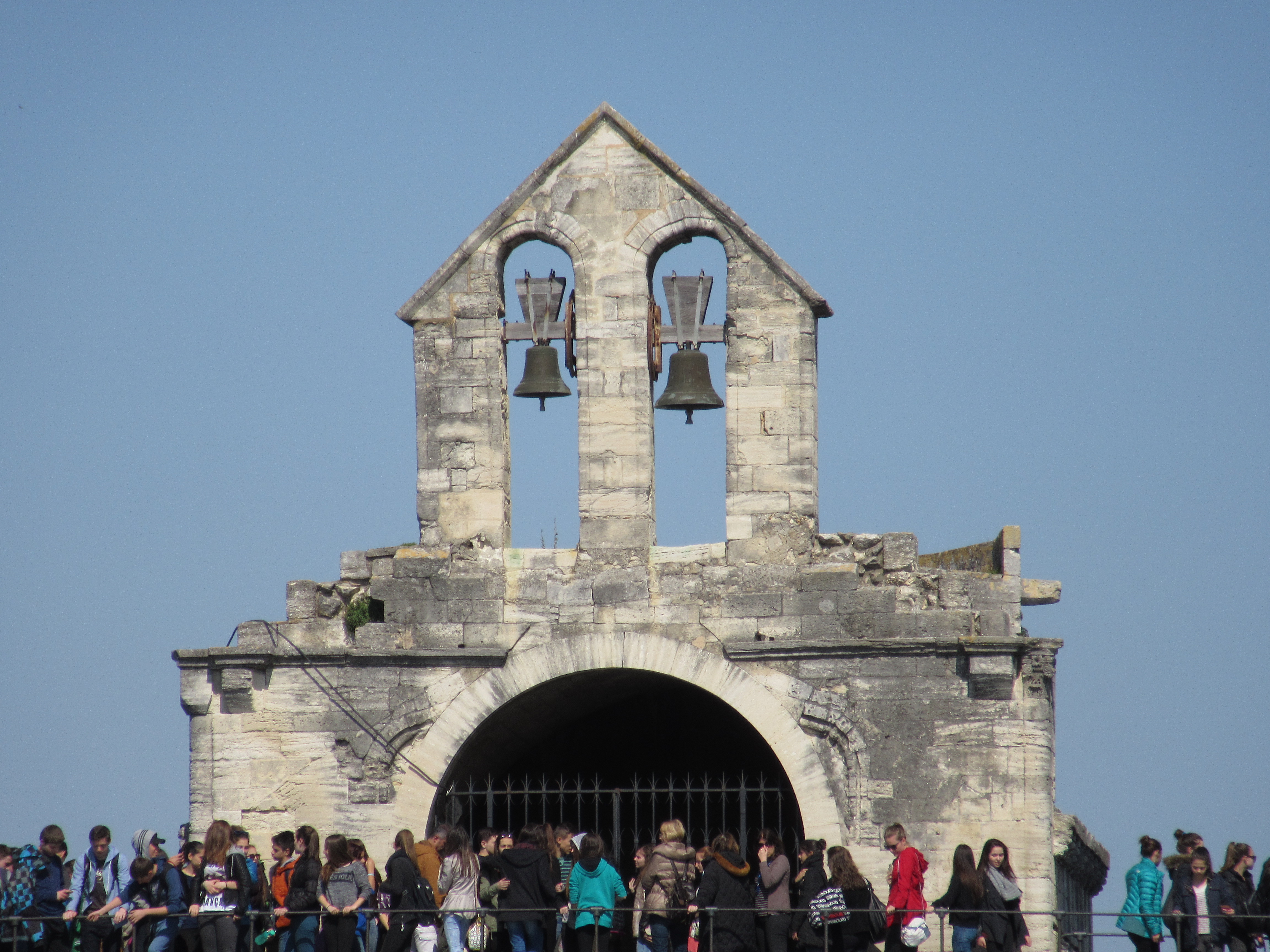
Many  worshipers make a pilgrimage to the small chapel on the bridge.

2015-04-07 043

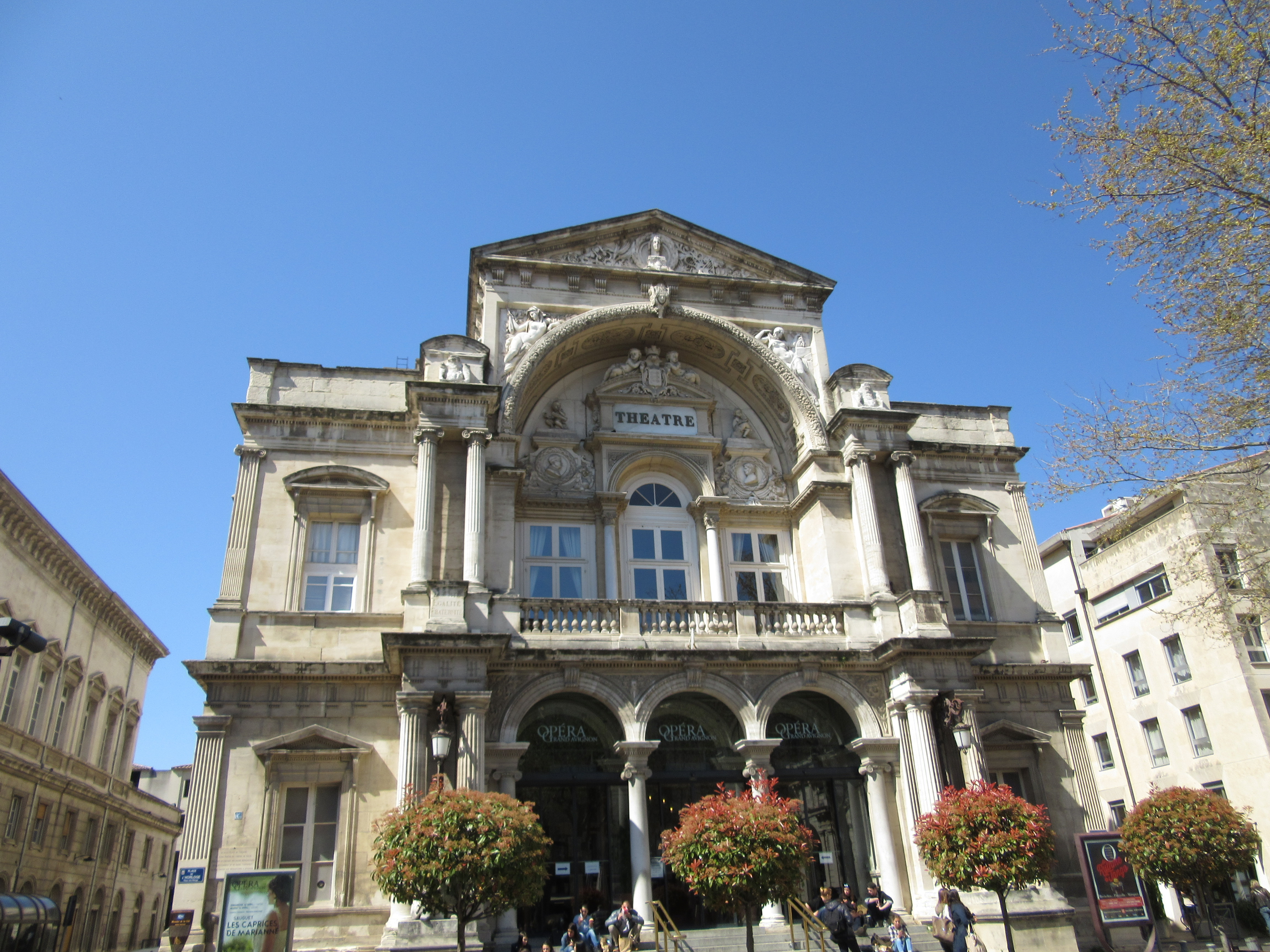
Avignon’s  Grand Opera, built in 1846, hosts opera, dance, and other musical performances.

OLYMPUS DIGITAL CAMERA

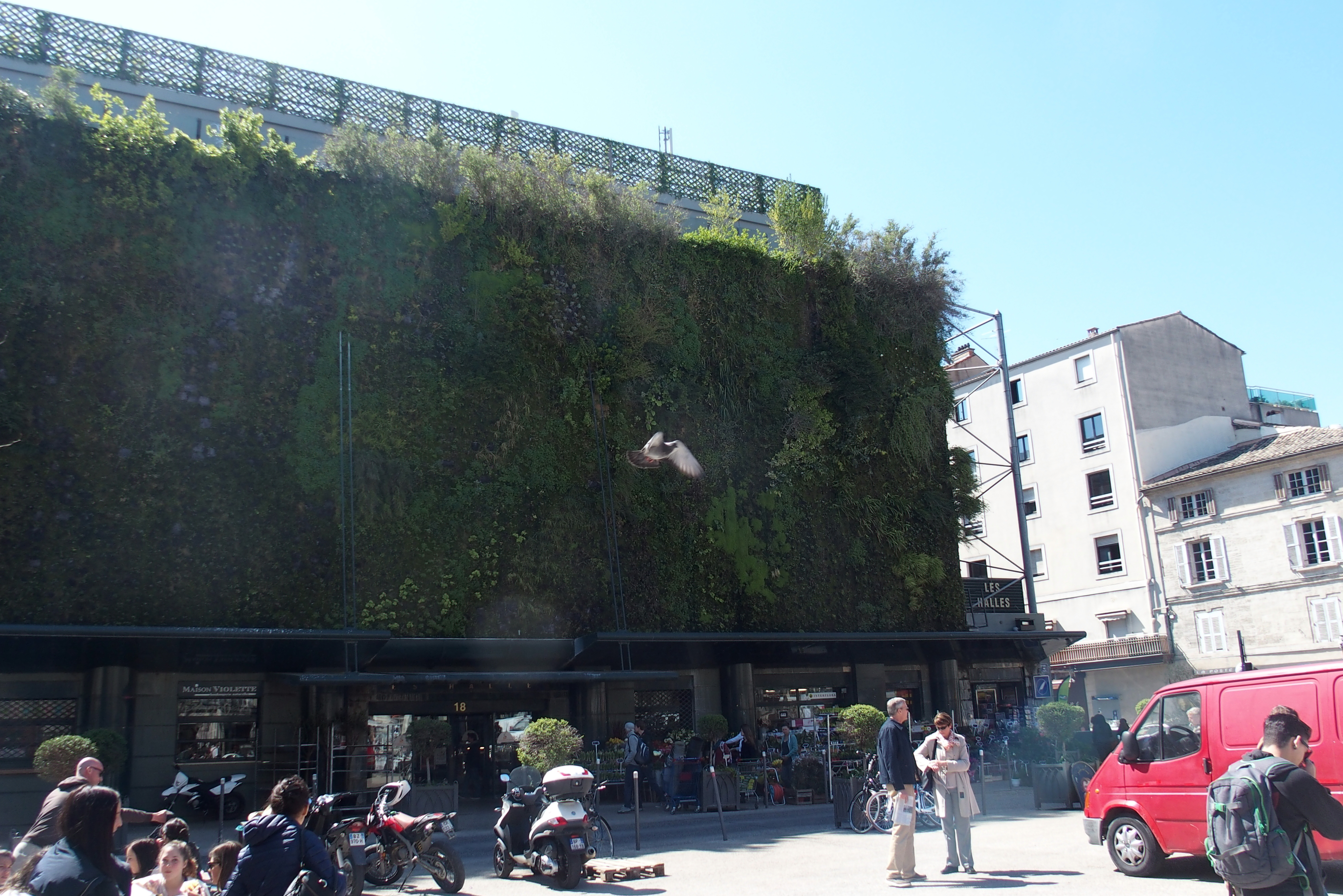
Les Halles, a large shopping market, has an interesting outdoor “living wall” with more than 400 species of plants.

With the ancient buildings and history as a backdrop, Avignon is a great place to simply relax and enjoy Provencal sun.

2015-04-07 090

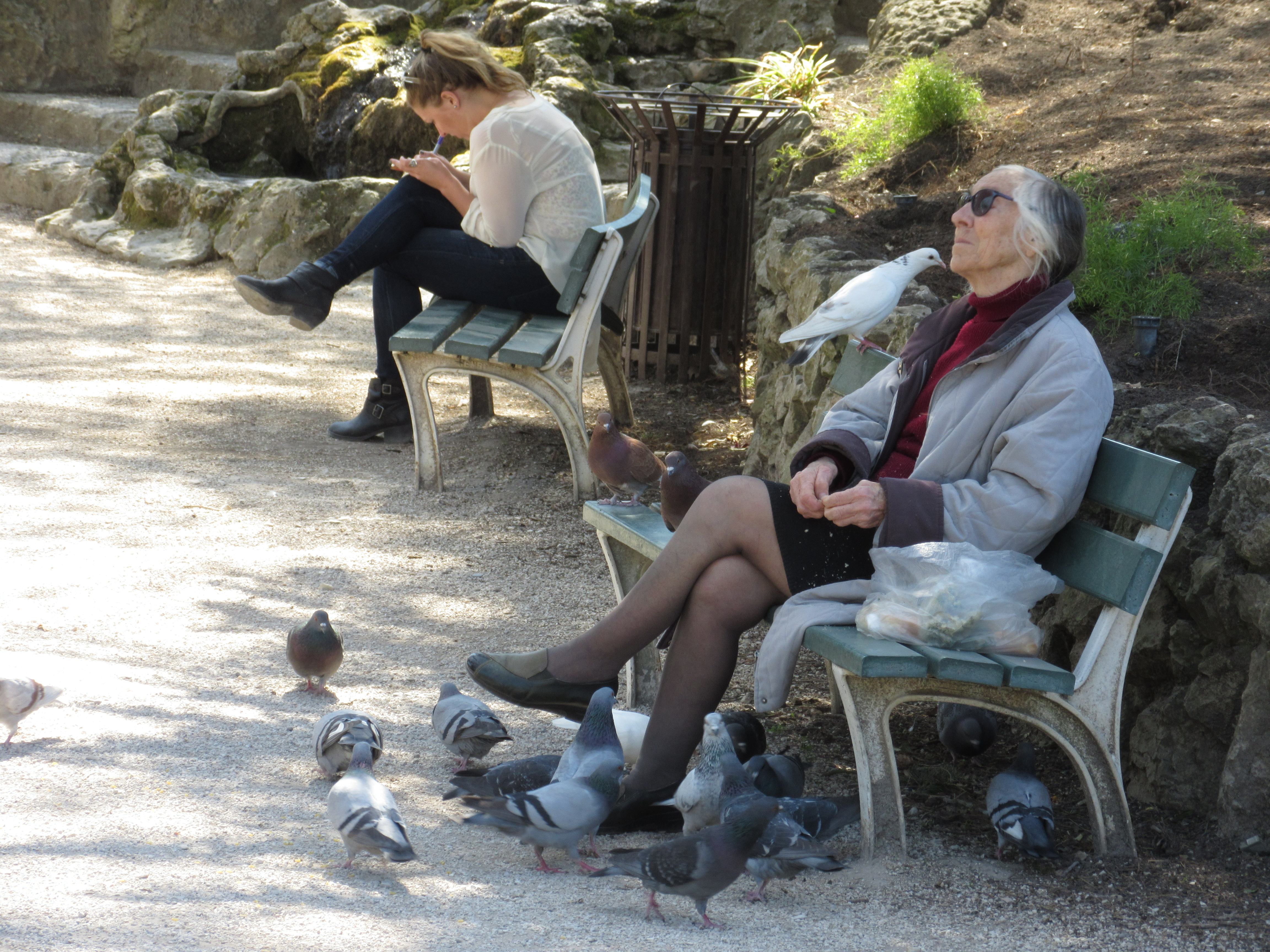
Feeding pigeons in the park.


Posted in Travel Journal | Tagged , , , , | 2 Comments

Ménerbes and l’Isle-sur-le-Sorgue, truffles and treasures

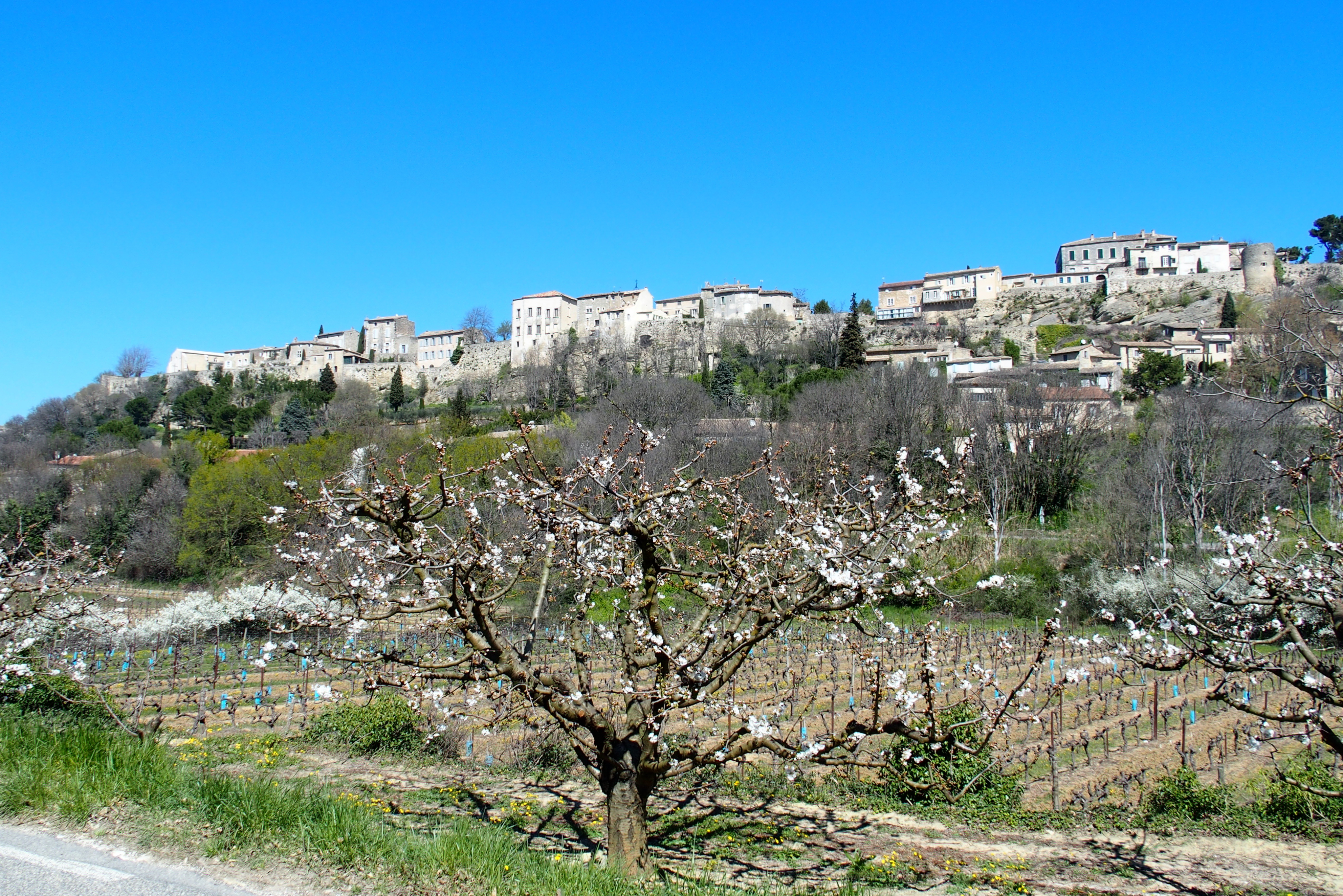
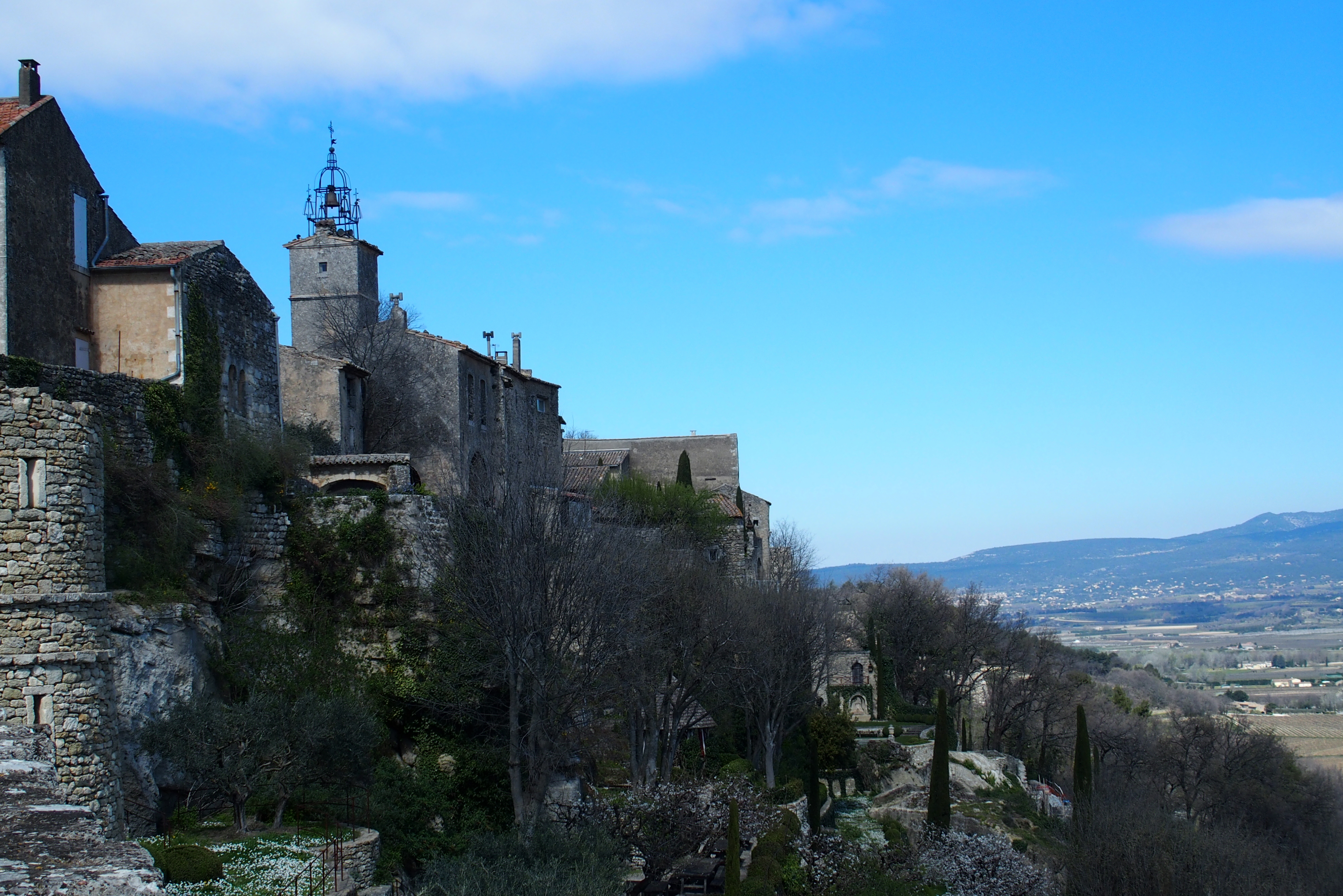
Ménerbes is the small village nearest the spot where Peter Mayle (and his wife!) spent A Year in Provence. We read the book and wanted to see what the appeal was. It’s a beautiful old walled city high on a hill.

OLYMPUS DIGITAL CAMERA

Looking up at Menerbes on the hillside.

This area has been inhabited since prehistoric times. Picasso once owned a villa in Ménerbes

OLYMPUS DIGITAL CAMERA

The town is inspirational for painters.

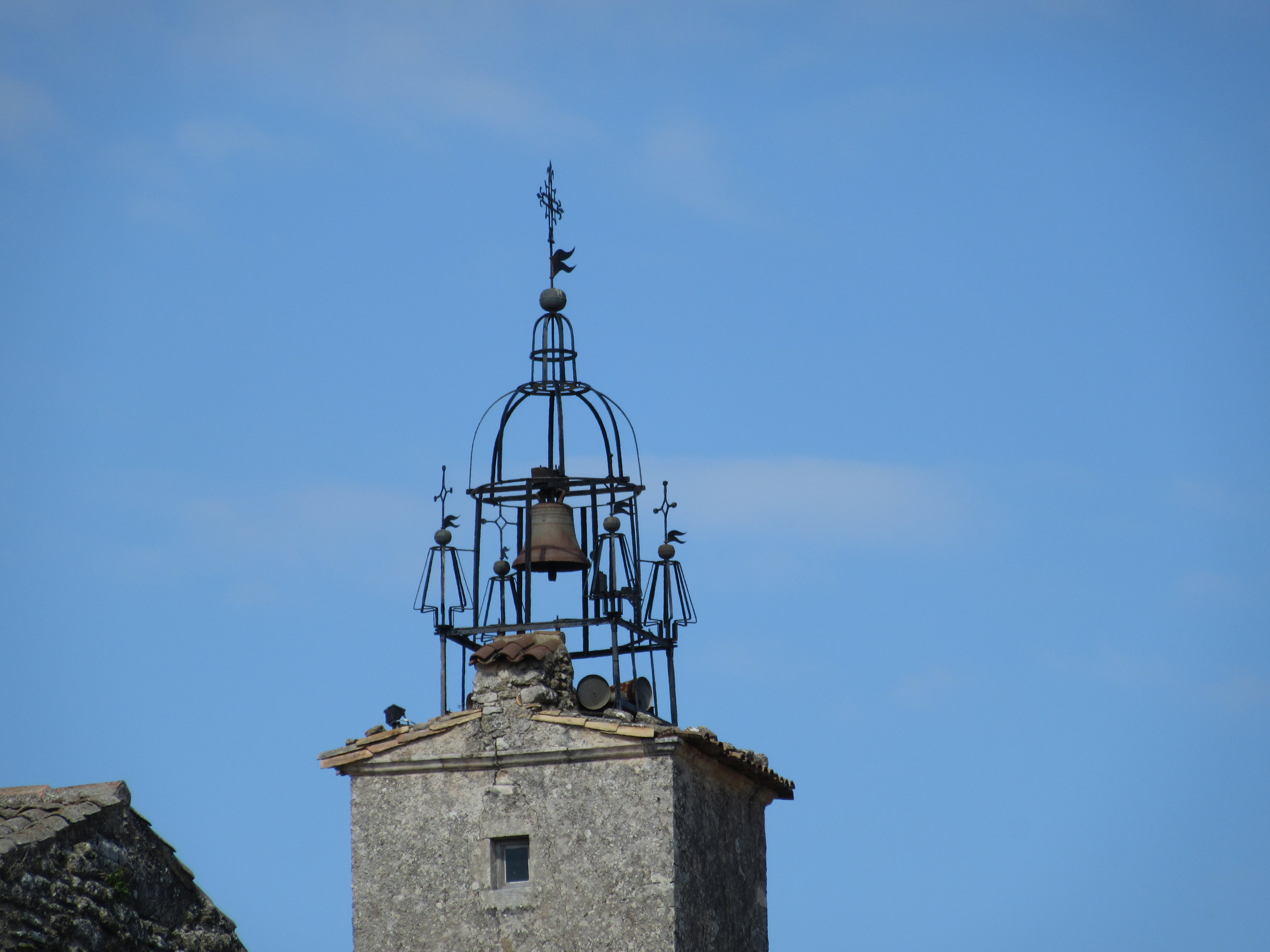
As we saw in Roussillon, Ménerbes has a mistral bell. We know how strong the winds of the mistral are from our experiences in Saint-Tropez, when we were almost lifted off our feet. With the open ironworks, Ménerbes villagers won’t have to worry that the bell will come tumbling down on their heads.

2015-04-06 014

Menerbes mistral bell

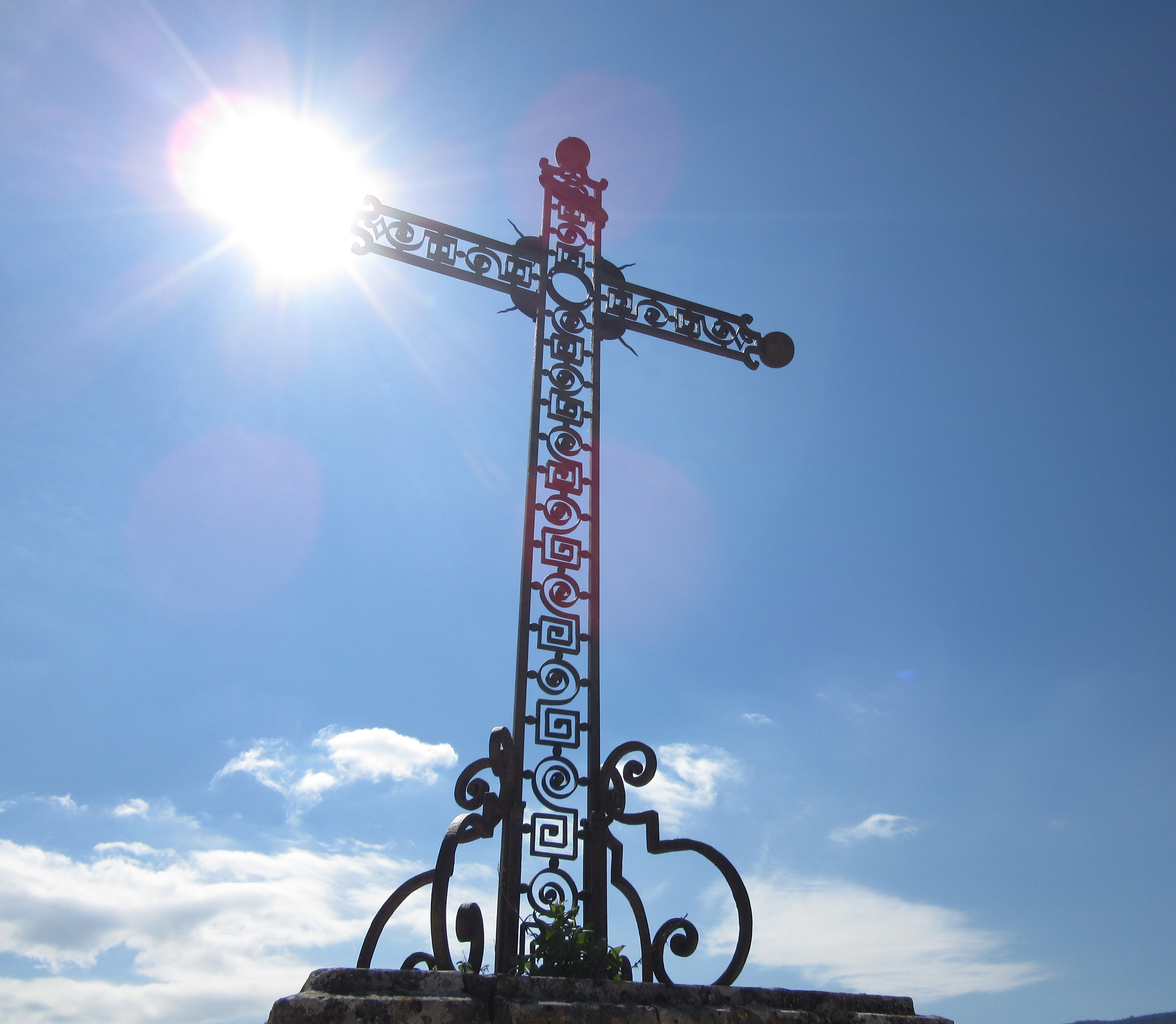
We were struck by the beauty of the giant cross outside St. Luc’s Church.

2015-04-06 029

Outside l’Eglise St. Luc

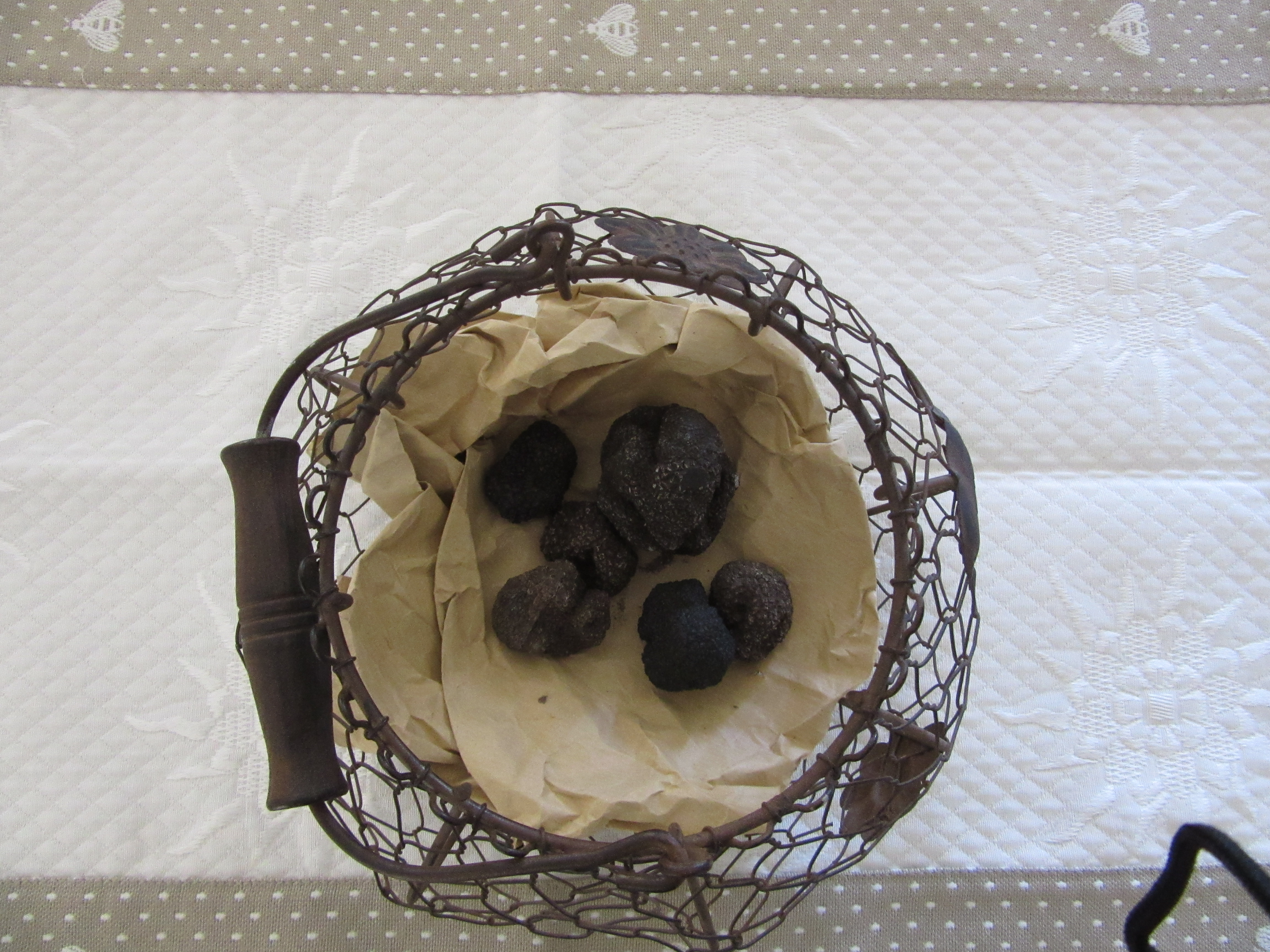
Peter Mayle went on and on about truffles, specifically about the secretive process of finding them, often with the help of pigs who can smell this delicacy so the “farmer” can gather these fungi and sell them for an exorbitant price. Typically a single truffle might cost more than $30. Some have sold for as high as $1,000 per pound.

2015-04-06 038

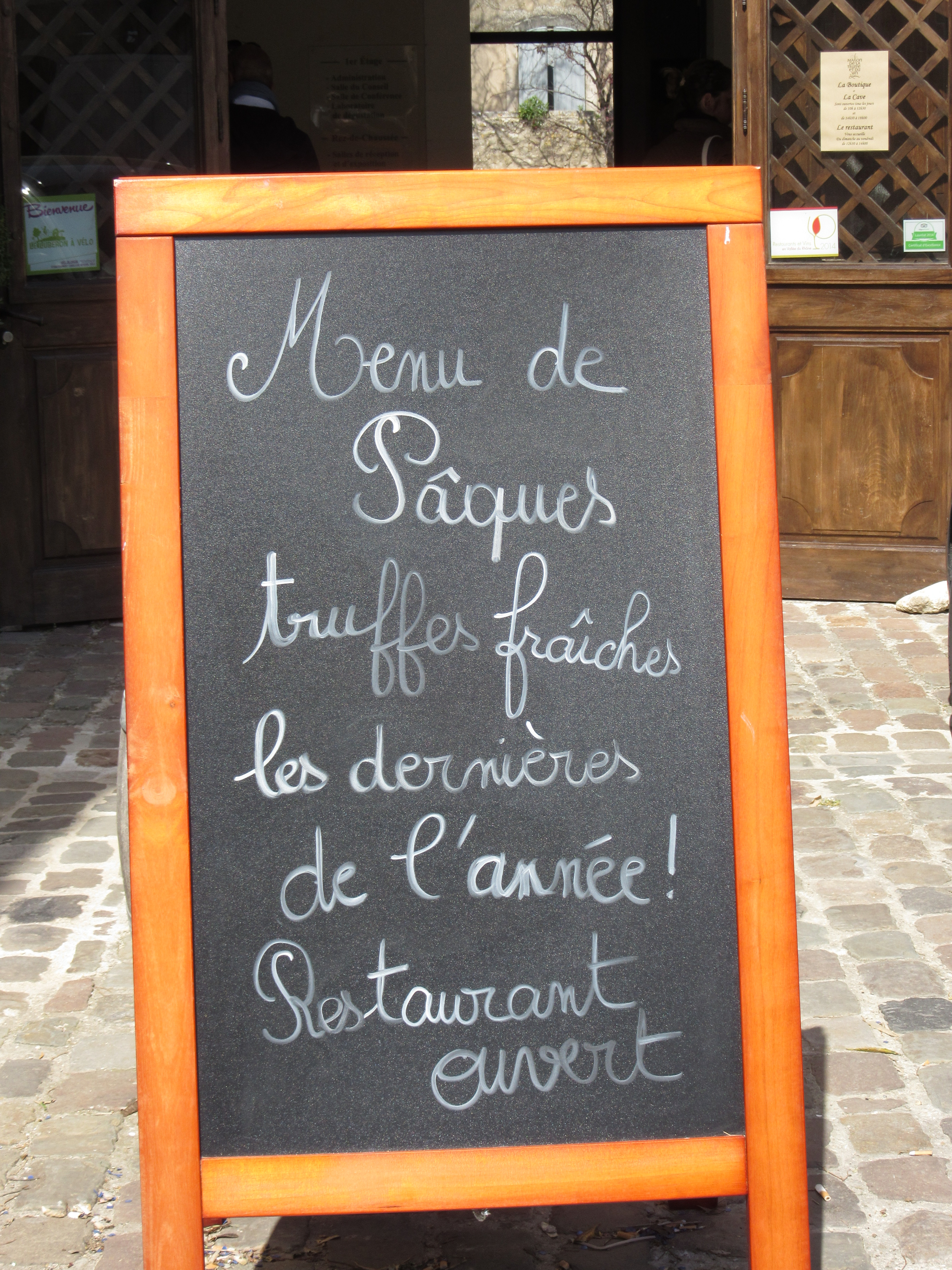
Easter menu, fresh truffles, the last of the year! Restaurant open.
At Maison de la Truffe et du Vin du Luberon, the last of the season’s truffles were available for lunch, but we had already eaten so we skipped this special opportunity. At the gift shop we had a chance to smell fresh truffles and weren’t sure why the pigs find them so appealing.

2015-04-06 035

A basket of last year’s truffles, now hard as stone.

After our visit we learned that  the nearby winery La Domaine de la Citadelle has a museum with over 1,200 corkscrews! We may have to return to see the wine openers and taste the wine. By the way, a Frenchman invented the corkscrew. The rest of the world seems to be going to screw caps, but the French are hanging on to their corks.
###

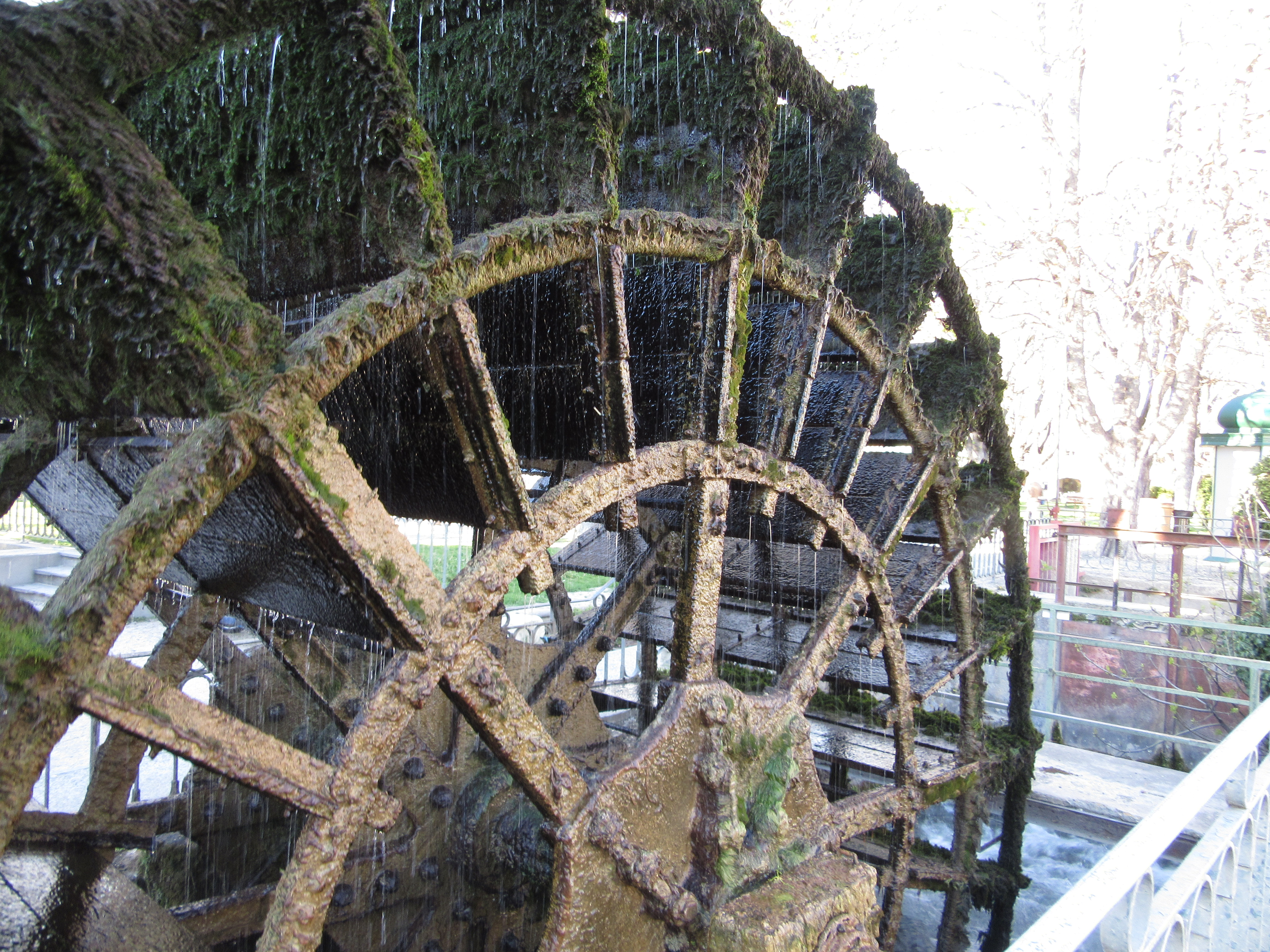
L’Isle-sur-la-Sorgue is another small village nearby. It is famous for its waterwheels and antique shops, over a dozen of the first and 300 of the second. On Sundays, the town holds an antique flea market.

“l’Isle sur la Sorgue” means island on the Sorgue River. It is just that. Two channels surround the village, forming protective moats. Now instead of separating the center of town from the outside, numerous pedestrian bridges cross the narrow channel, offering access to many restaurants.

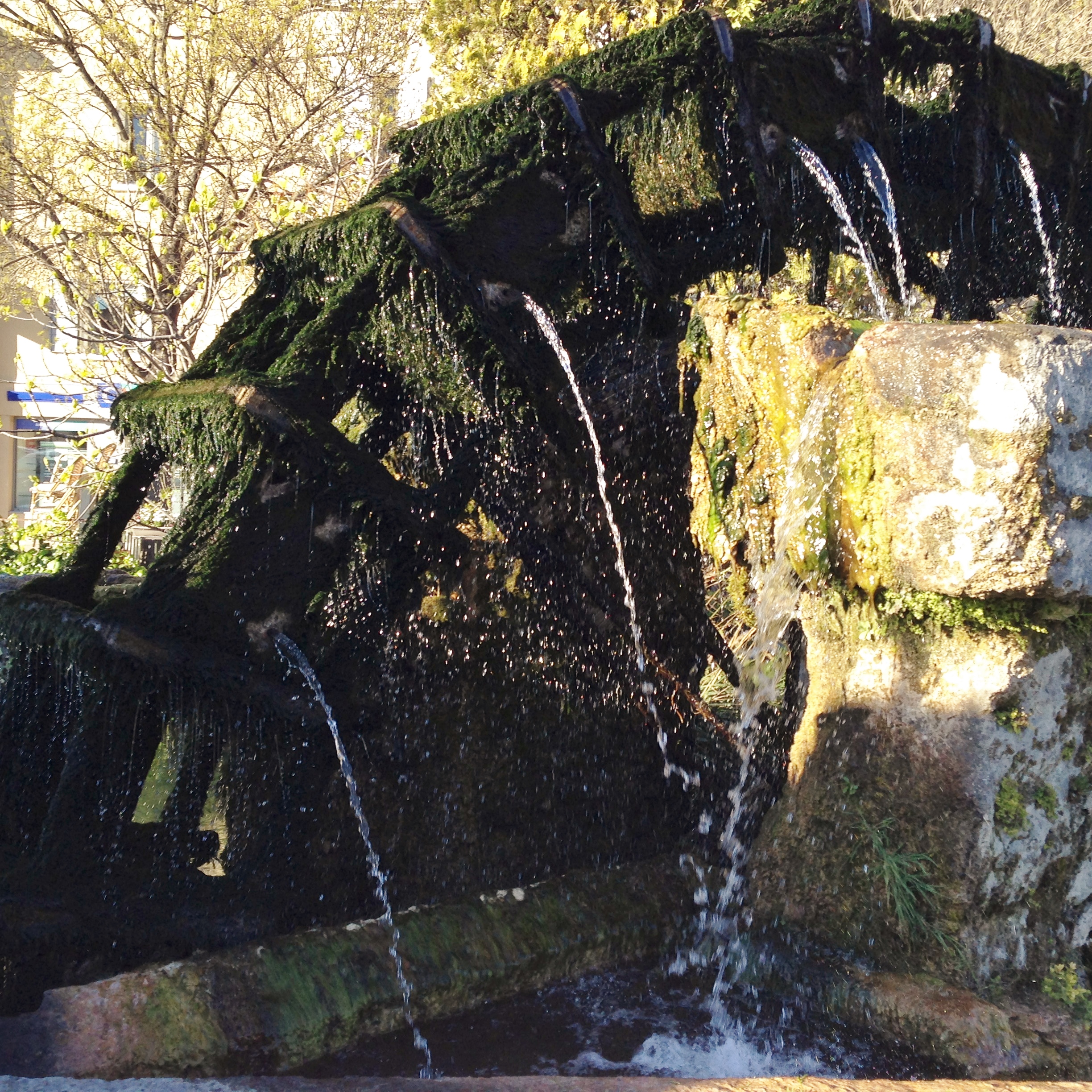
The waterwheels were once used to provide power for mills to grind wheat, looms to make fabric, and other early industrial applications.

2015-04-06 149

Covered with algae, but still spinning.

Now “Certaines roues fonctionnent toujours, mais pour le seul plaisir des passants…” Some of the wheels still function, but solely for the pleasure of passersby.

waterwheels

The mistral winds even blew a little spray off the waterwheel.

2015-04-06 166

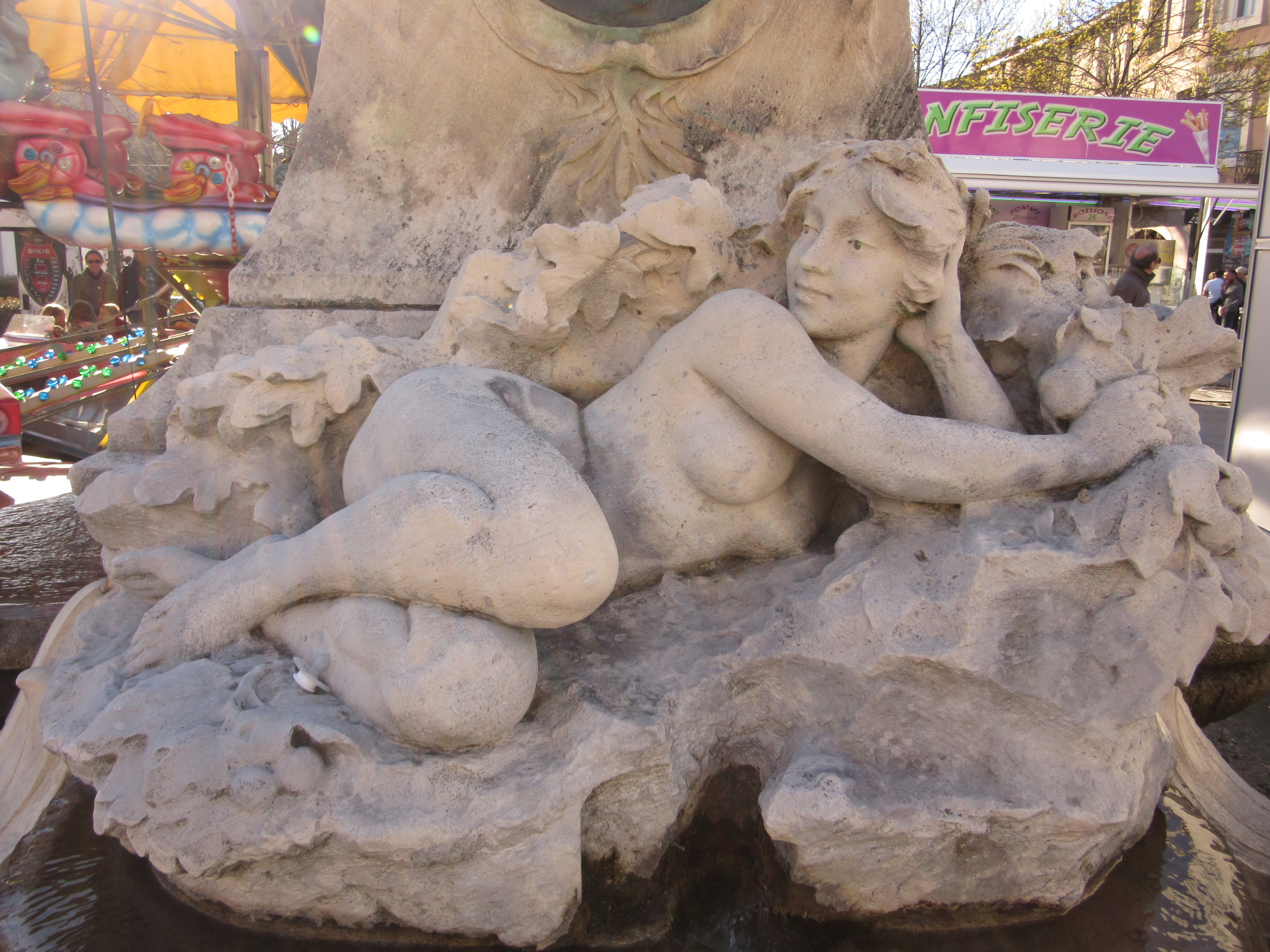
A statue near the river seems to be studying the passersby.

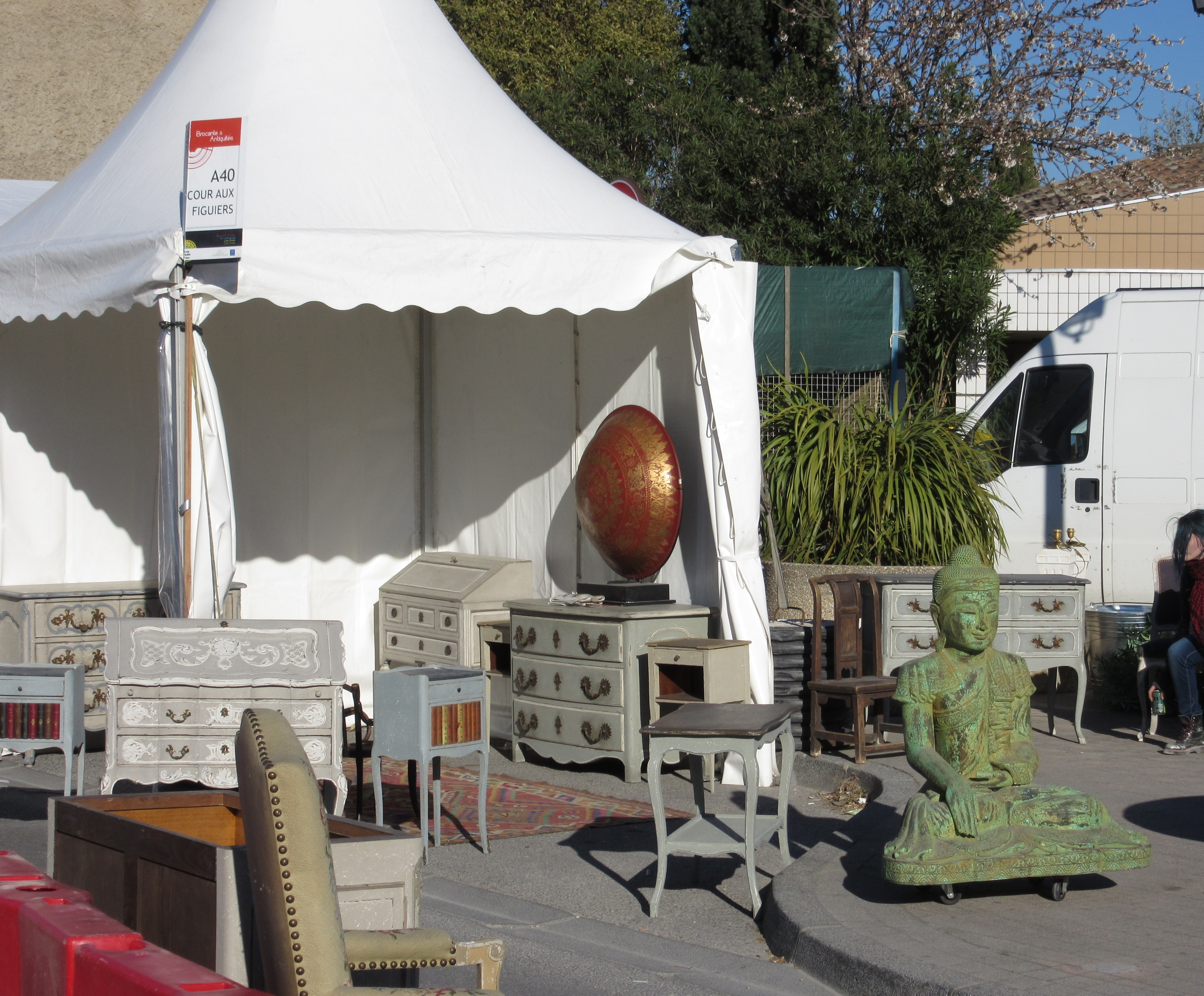
We happened to hit the village on one of its most highly visited times of year, the Easter antique market. Instead of 300 shops, over 500 vendors participate! Bargain-hunters are encouraged to come to find hidden treasures.
2015-04-06 164

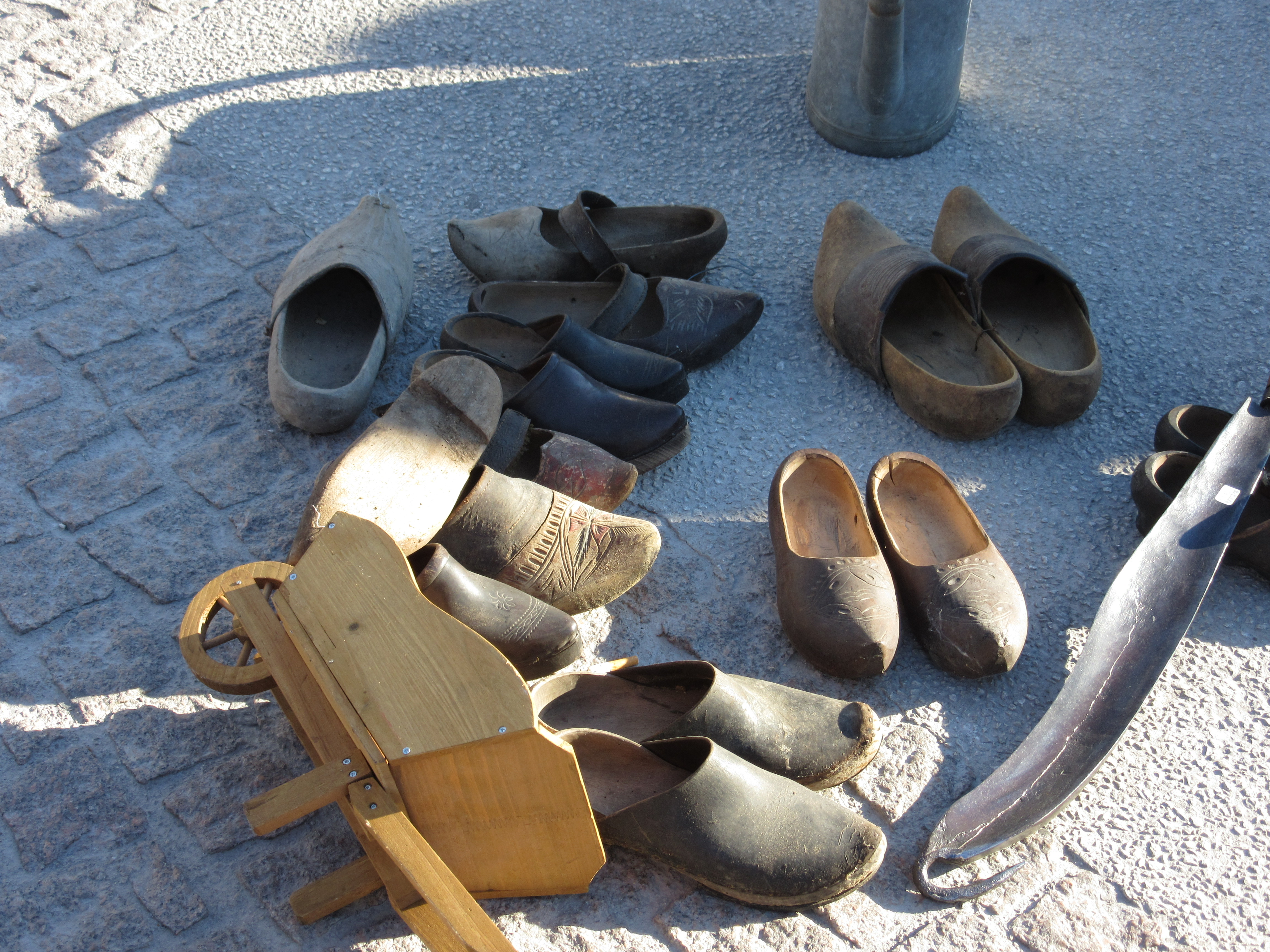
I do need new shoes, but I’m not sure how comfortable these would be.

2015-04-06 165

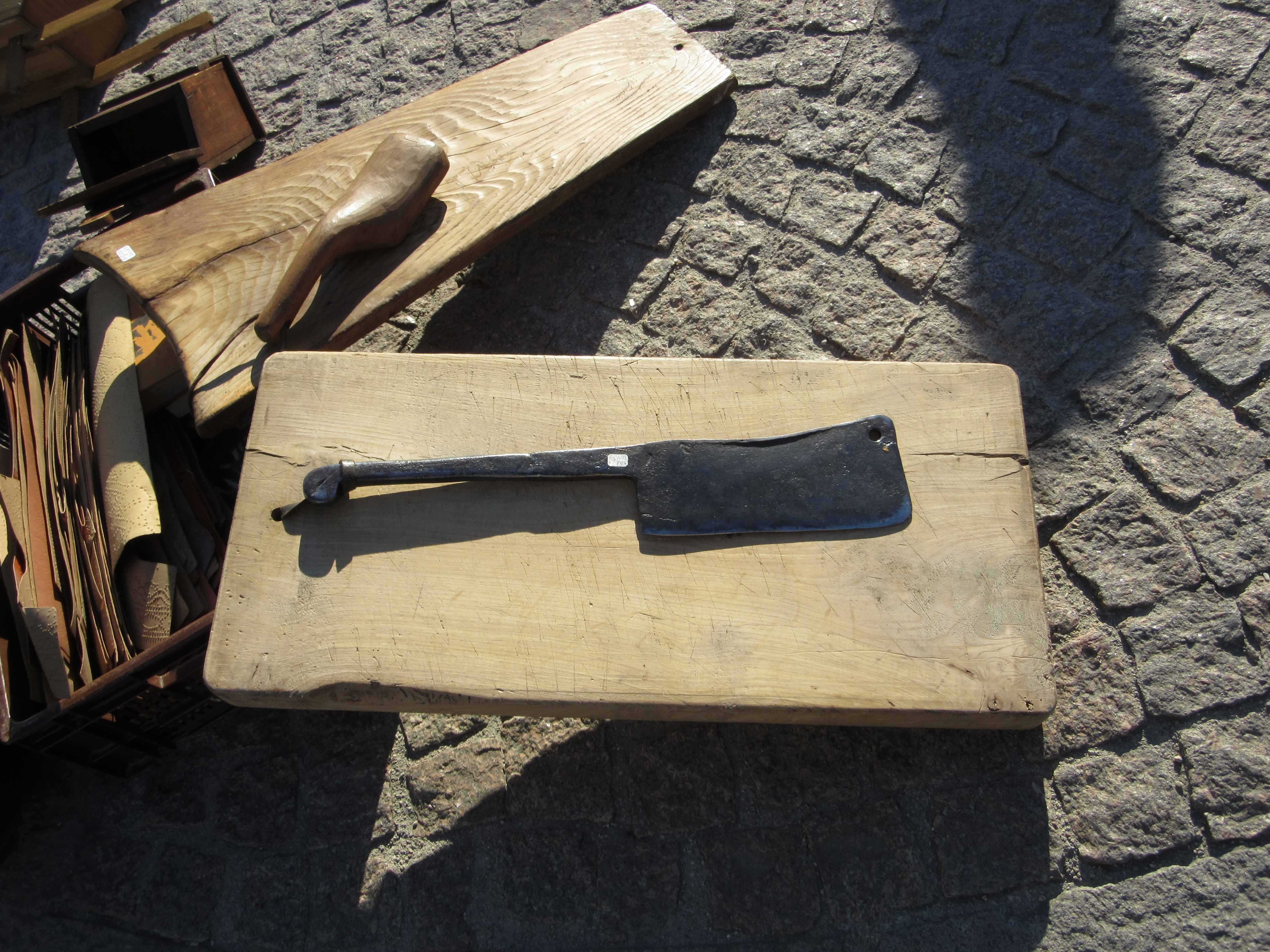
A cheeseboard and machete? Or something more sinister?

2015-04-06 154

…and an unusual mix of treasures.


Posted in Travel Journal | Tagged , , , , | Leave a comment

Roussillon, a very colorful town!

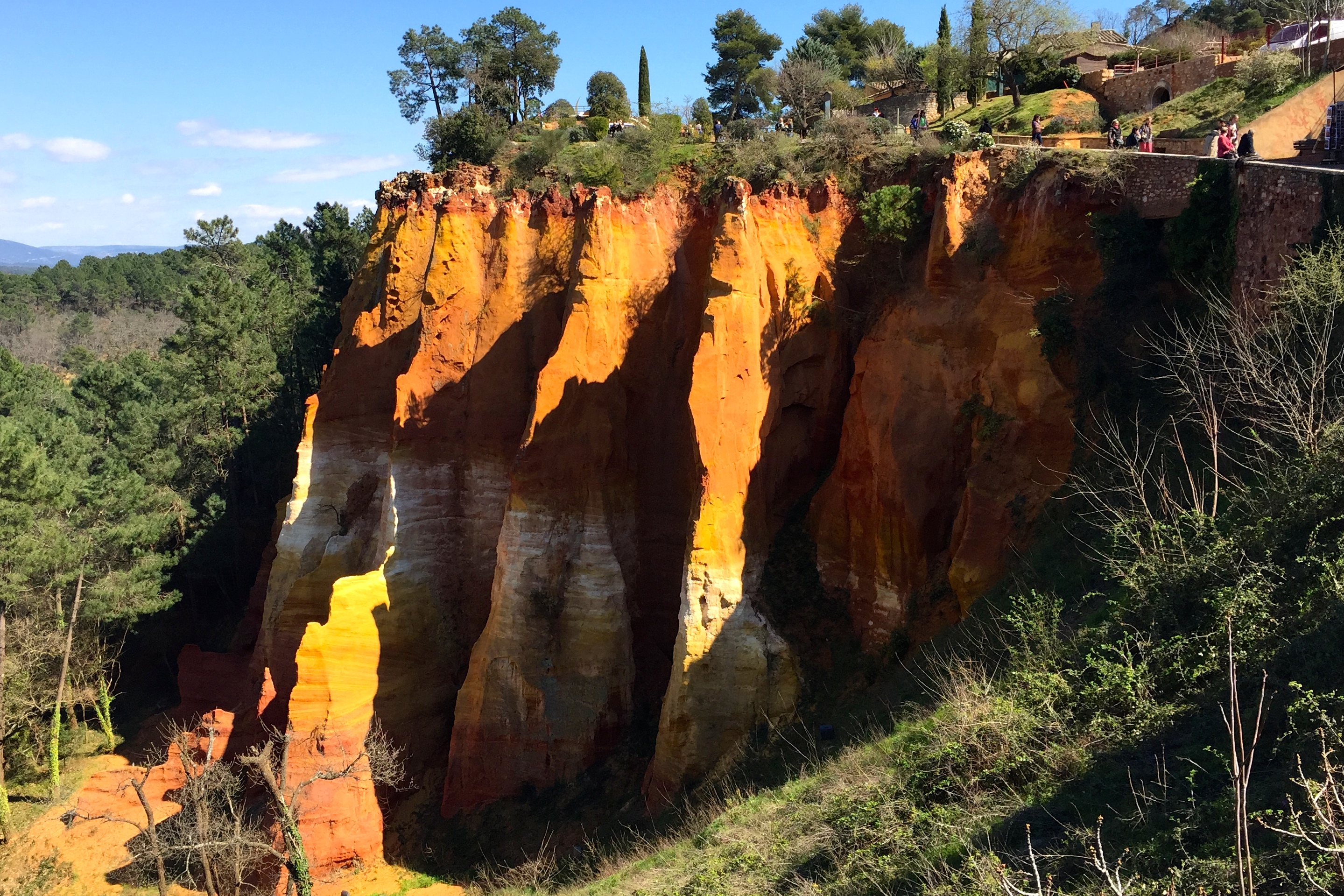
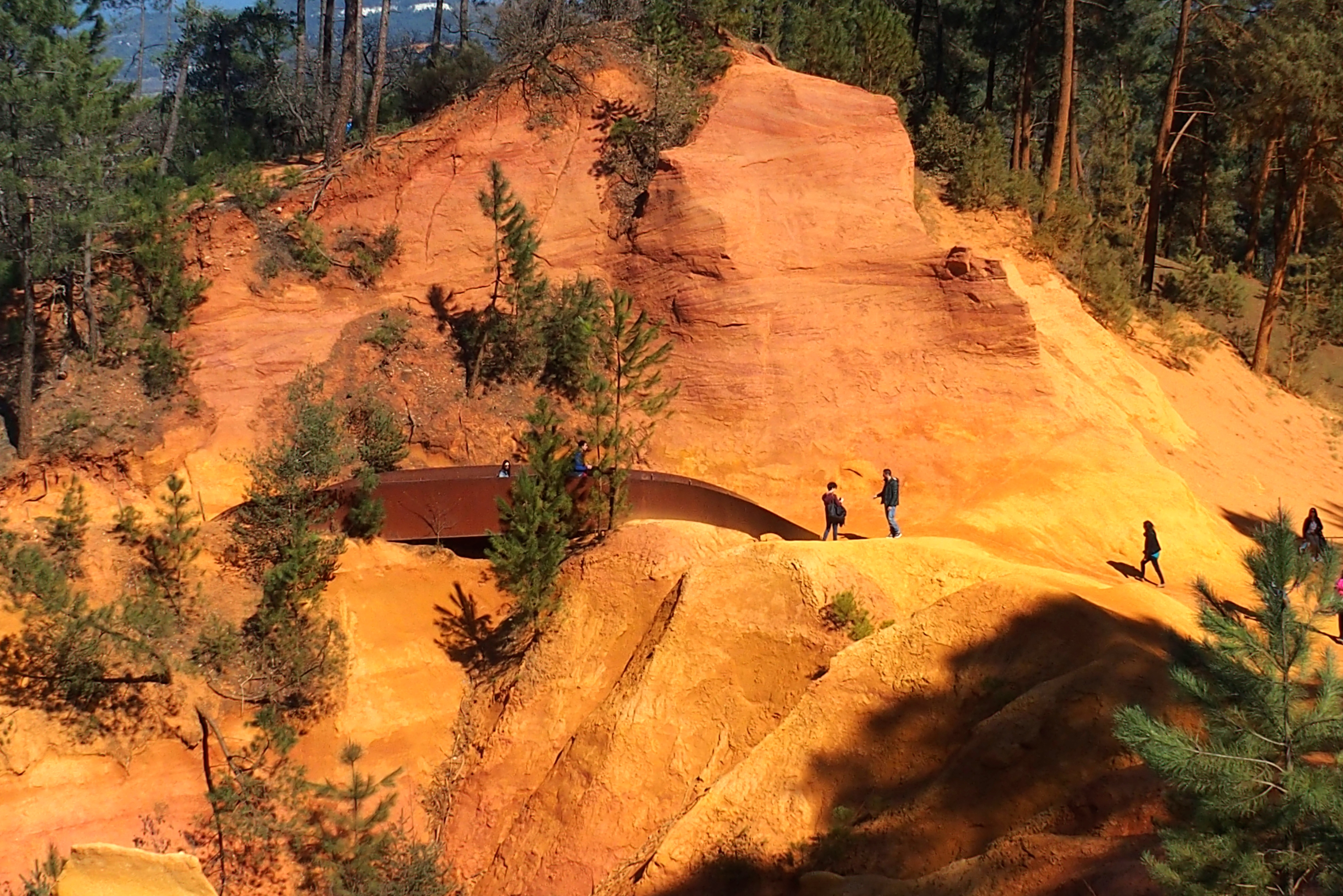
Roussillon is north of our home base of Saint-Remy-de-Provence in the Luberon region of Provence. It’s another small town, but it has a unique and colorful history. For many year’s, this was one of the main sources of “ocre,” the red or yellow pigments made from the clay deposits of the area’s mountains.

IMG_5432

Seen from the main street of Roussillon, the ocher hillside.

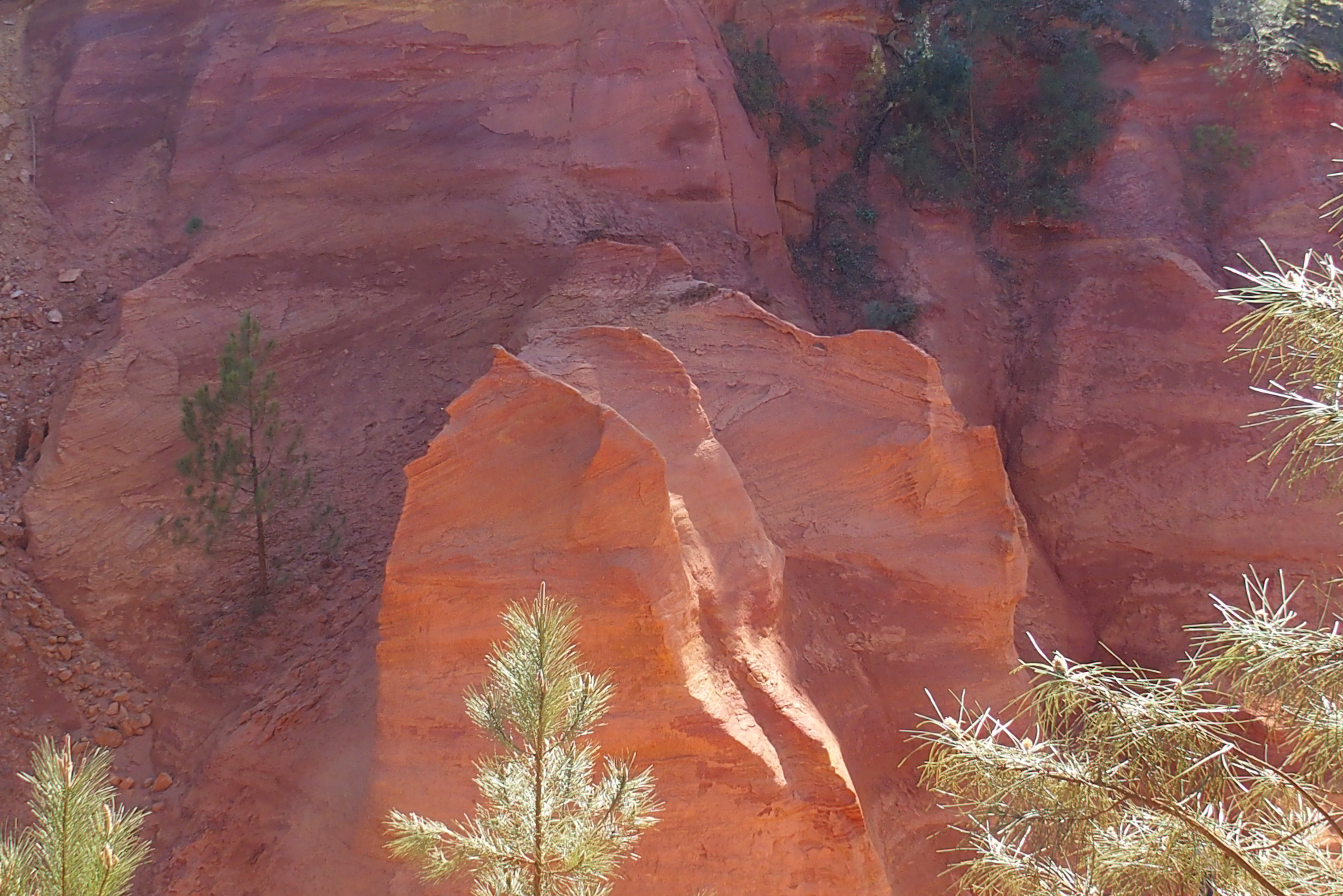
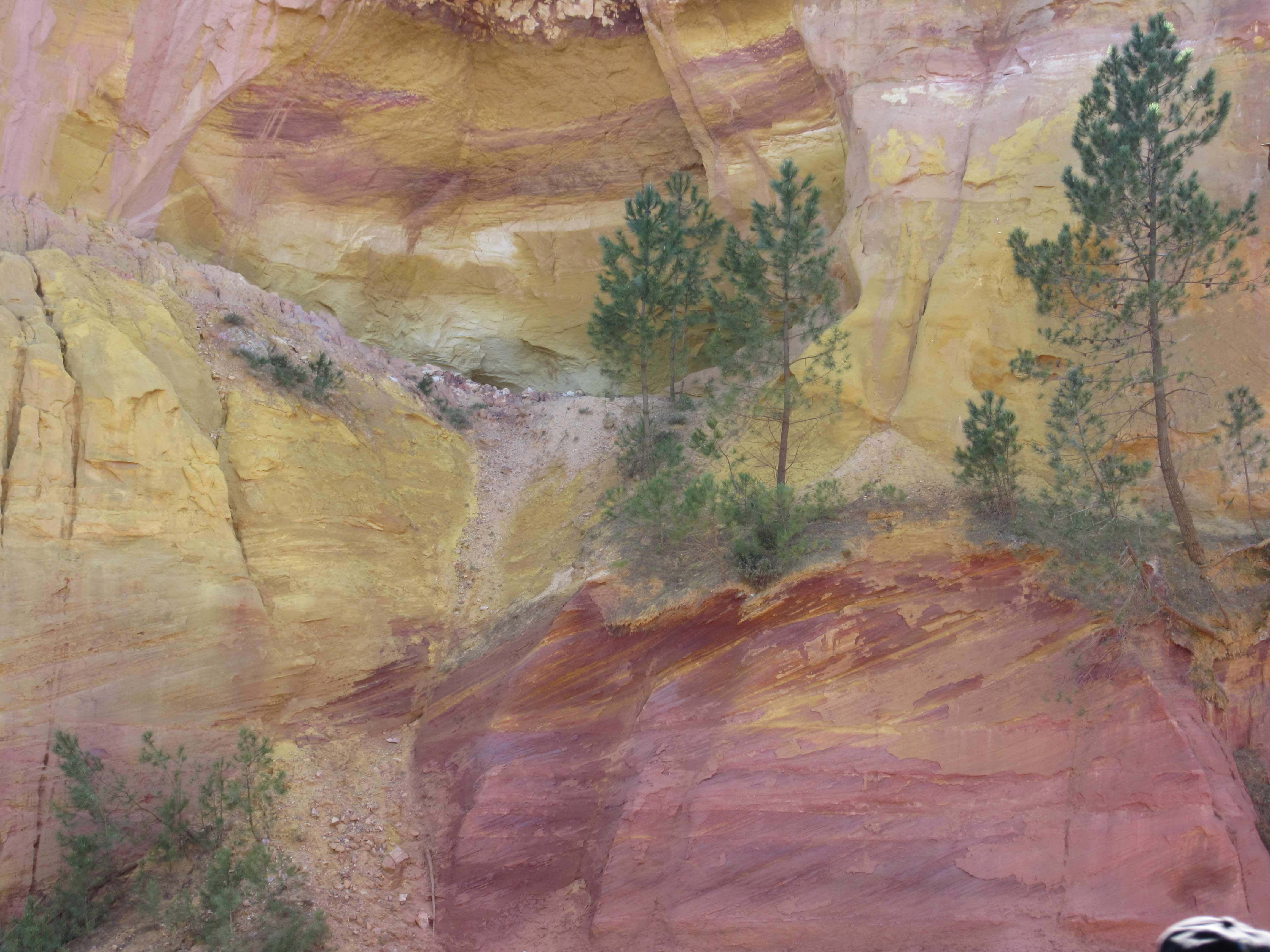
These ocher deposits were formed when the area was under the sea. Iron makes the soil look red, just like the iron rust gives the Golden Gate Bridge its distinctive red color.

OLYMPUS DIGITAL CAMERA

The rusted bridge is a good match for the iron-rich soil of Roussillon.

In the late 1700s, Jean-Étienne Astier, a Frenchman from Roussillon, developed a process to extract, concentrate, and dry the pigment from the clay soil to make materials that could be used effectively for artists’ paints.

OLYMPUS DIGITAL CAMERA

Many gallons of pigment were probably made from the clay from this site.

2015-04-06 099

With the natural red and yellow coloration, the hillside takes on the appearance of an Impressionist painting.

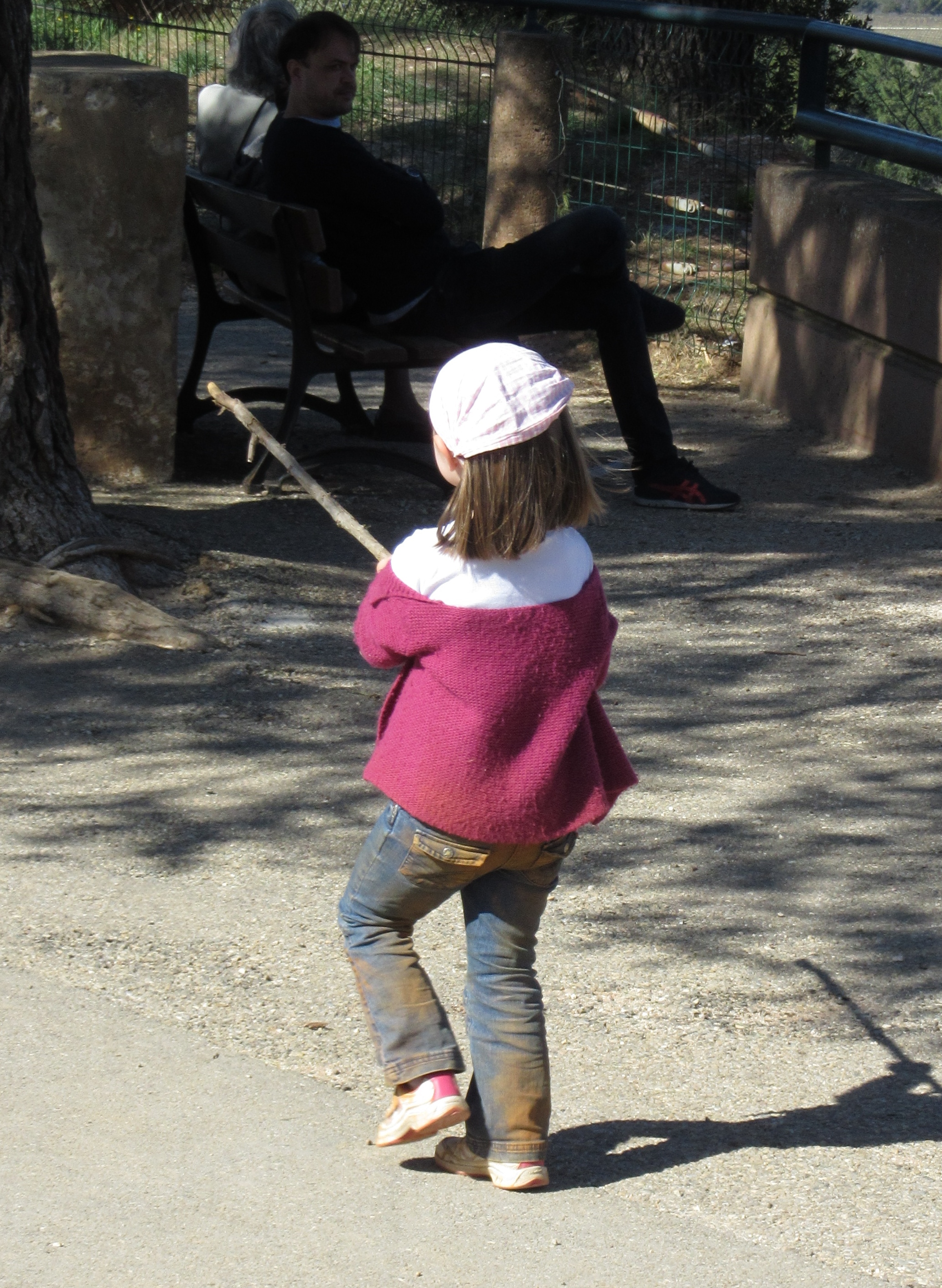
With the advent of capabilities to create synthetic ochers, Roussillon’s original eight ocher “mines” have been shut down. Now the town’s main industry is tourism for all those interested in seeing the beautiful colorations. A scenic walk allows kids (and adults!) to climb the red walls and play in the sands. At the end of the day the kids depart with red pants.

2015-04-06 102

Going home from a day in Roussillon’s colored sands. This is 2015, but the red cliffs have had the same appeal for kids for hundreds of years.

2015-04-06 130

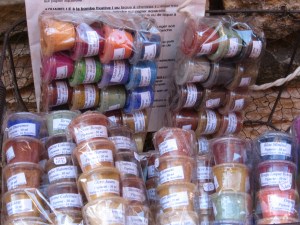
Small samples of ocher paints.

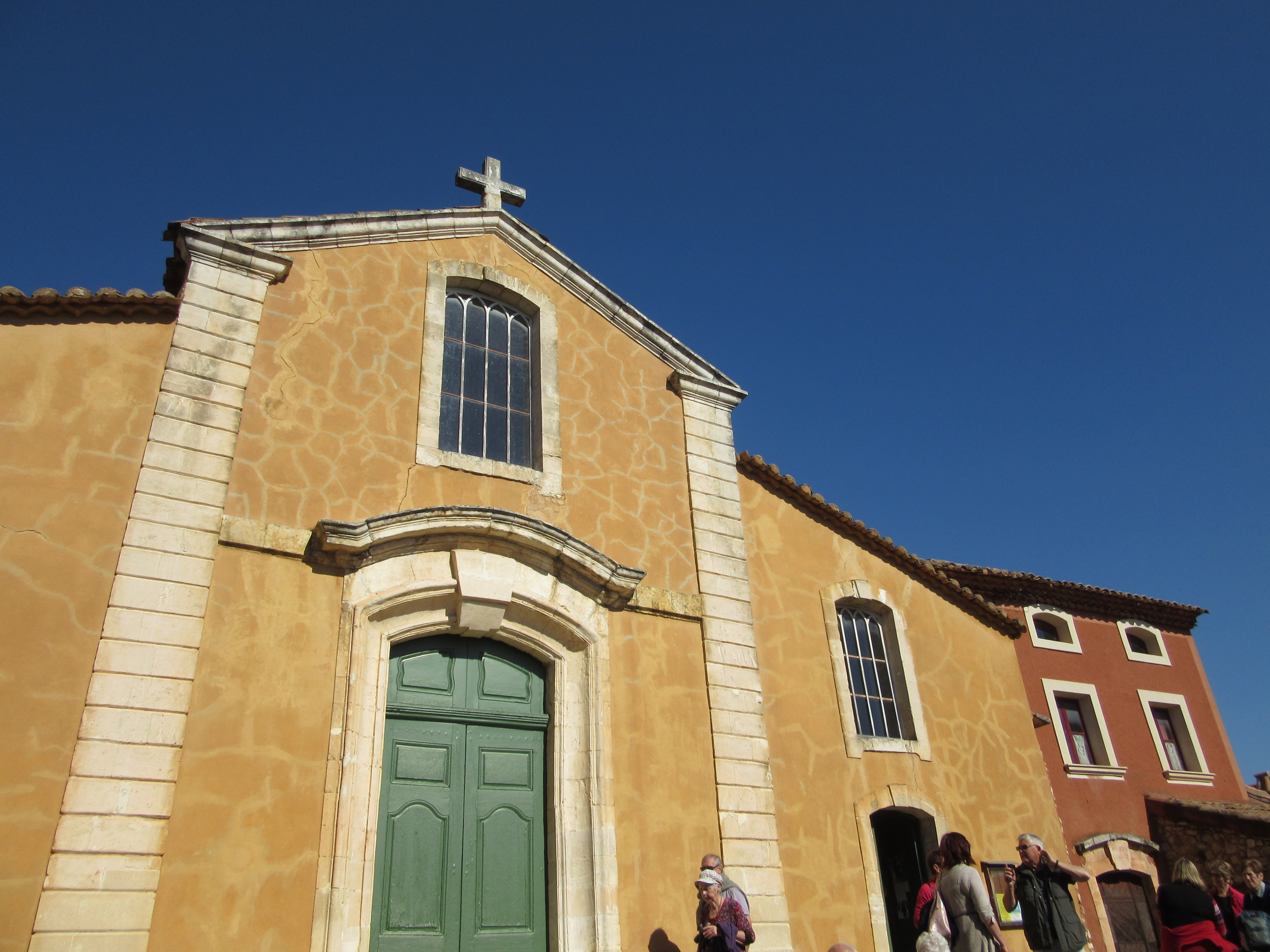
What else is there to see in Roussillon? A climb up the narrow streets  leads to Roussillon’s St. Michael’s Church.

2015-04-06 125

Interestingly the church has both yellow and red ocher tints on the outside.

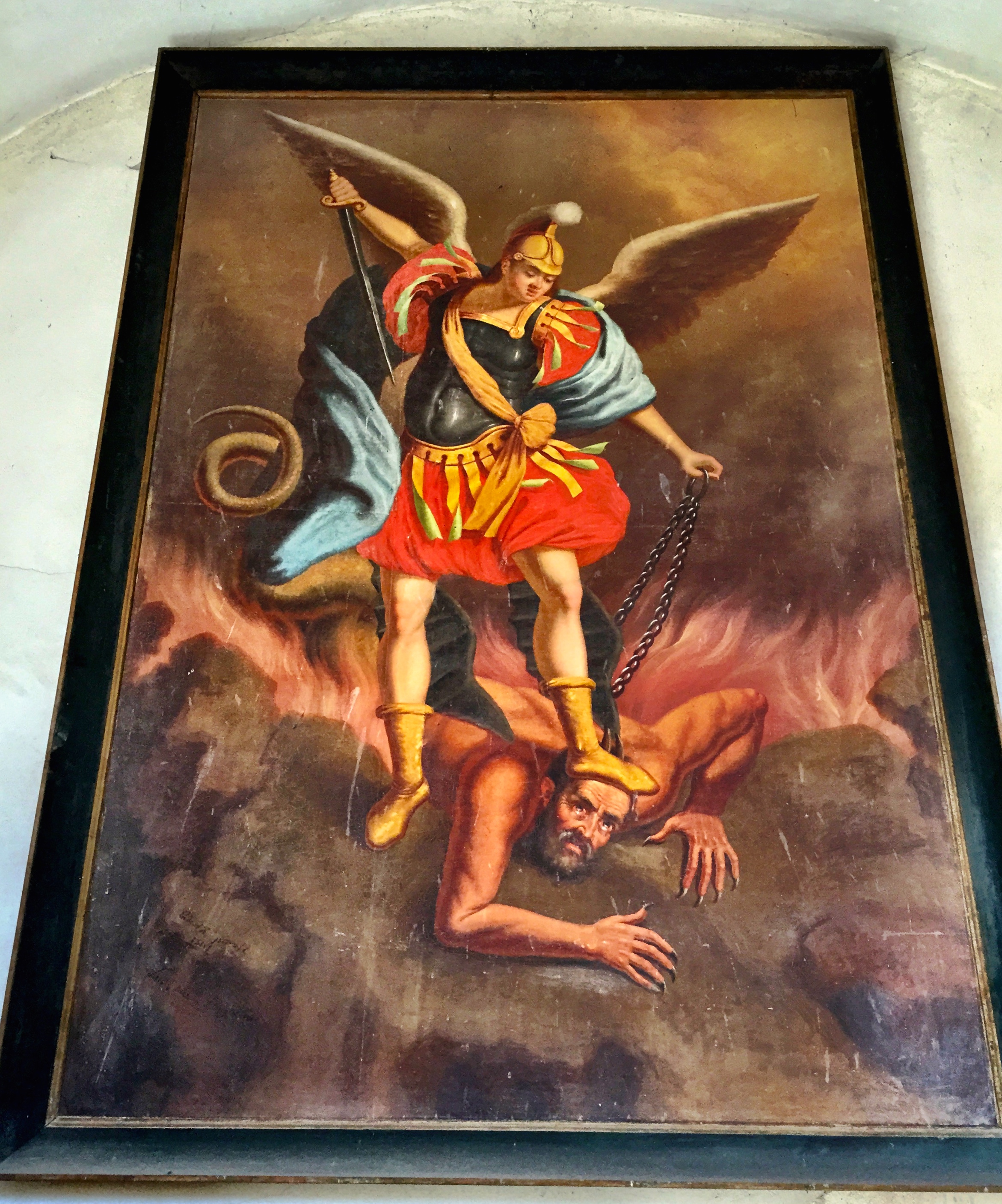
On the inside, some of the religious artwork uses ocher coloration.

IMG_5445

The Archangel Michael slays Lucifer.

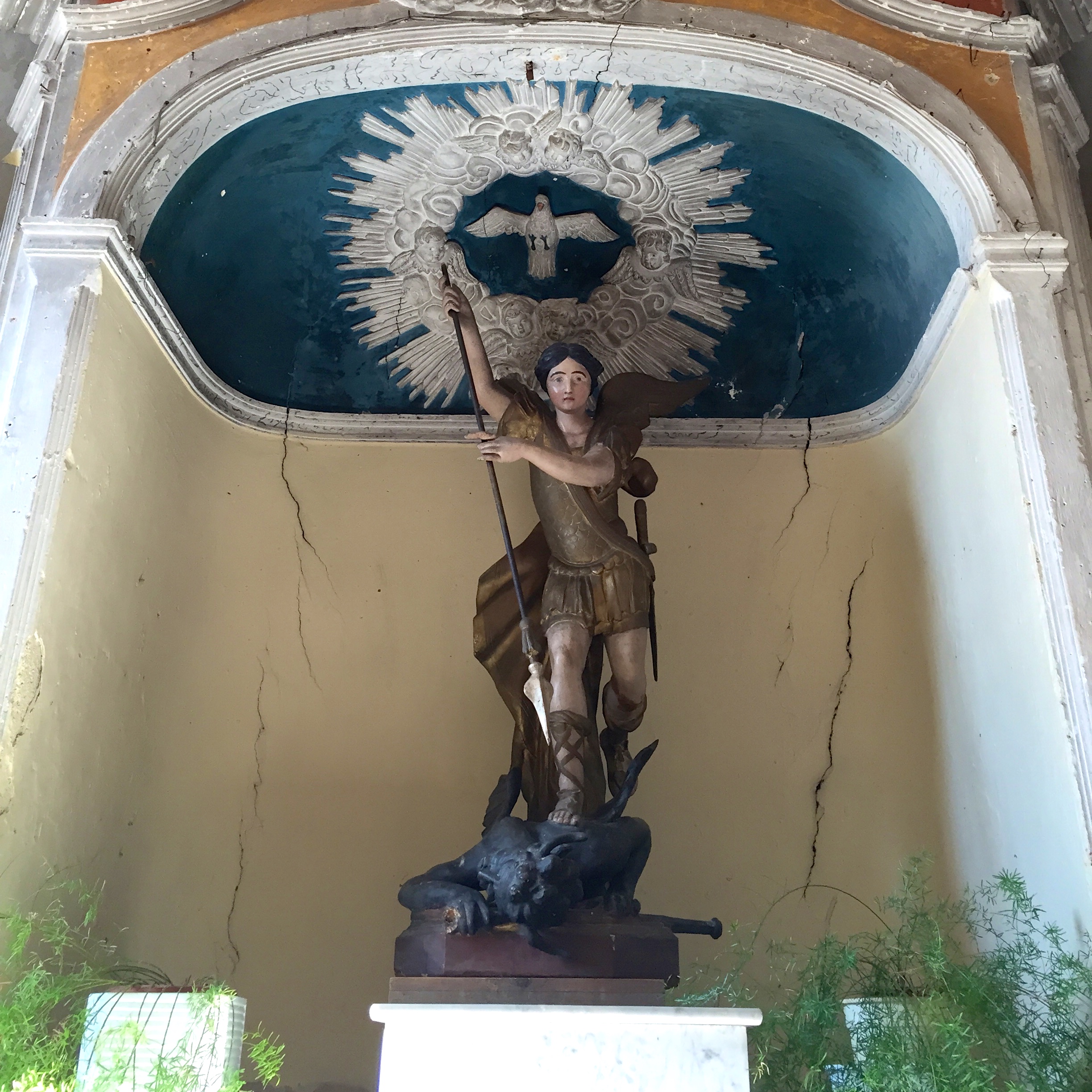
IMG_5447

Another version of Saint Michael slaying Lucifer, this one an almost life-size sculpture.

Back outside are colorful flowers.

2015-04-06 126

Flowers outside the church repeat the red and yellow theme.

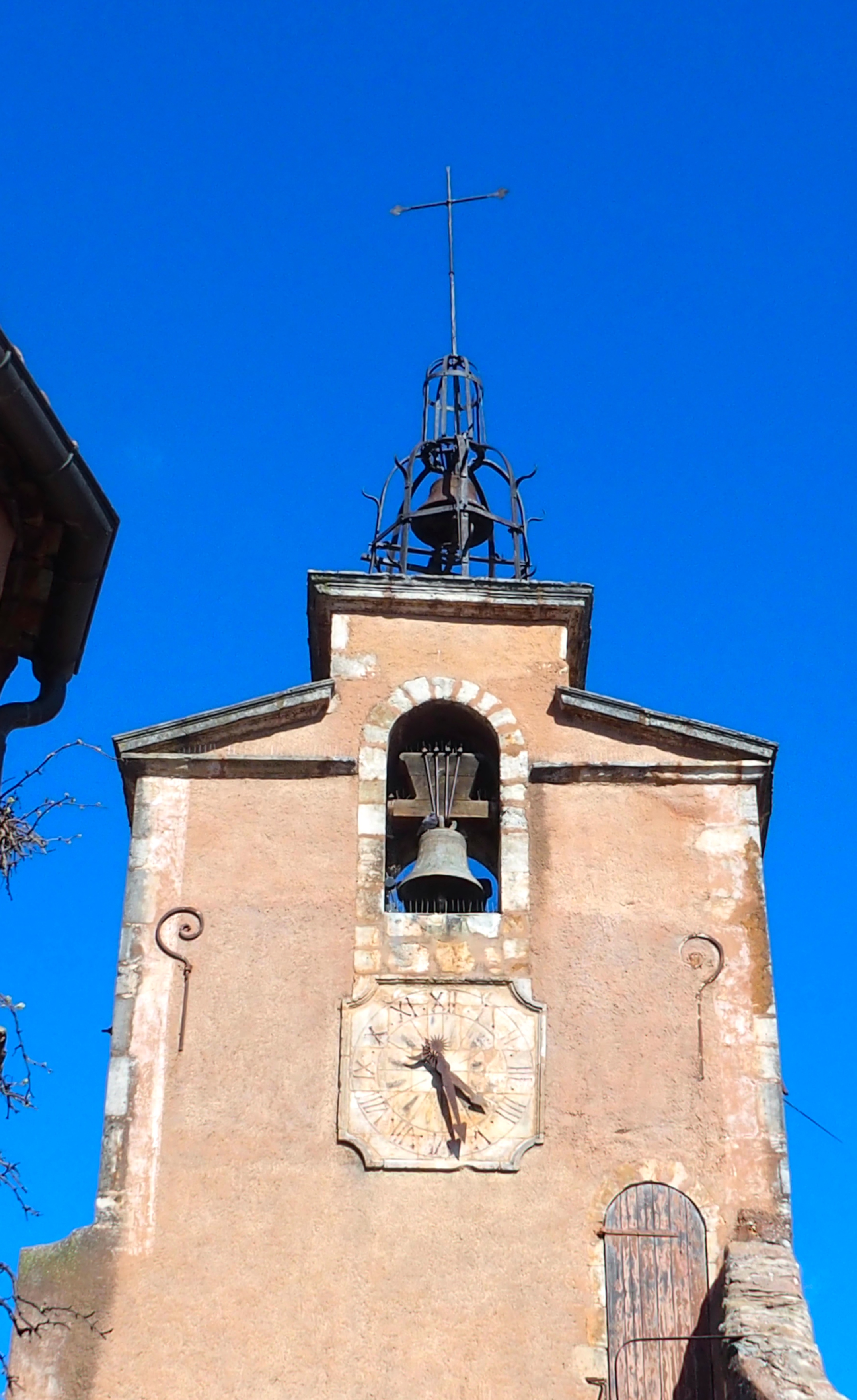
Down the street is Roussillon’s bell tower, with open ironwork to let the mistral winds blow through.

OLYMPUS DIGITAL CAMERA

One of many mistral bell towers we’re seeing in Provence.

We ended the day enjoying a beer in the square and looking up at other ocher-painted buildings.

2015-04-06 129

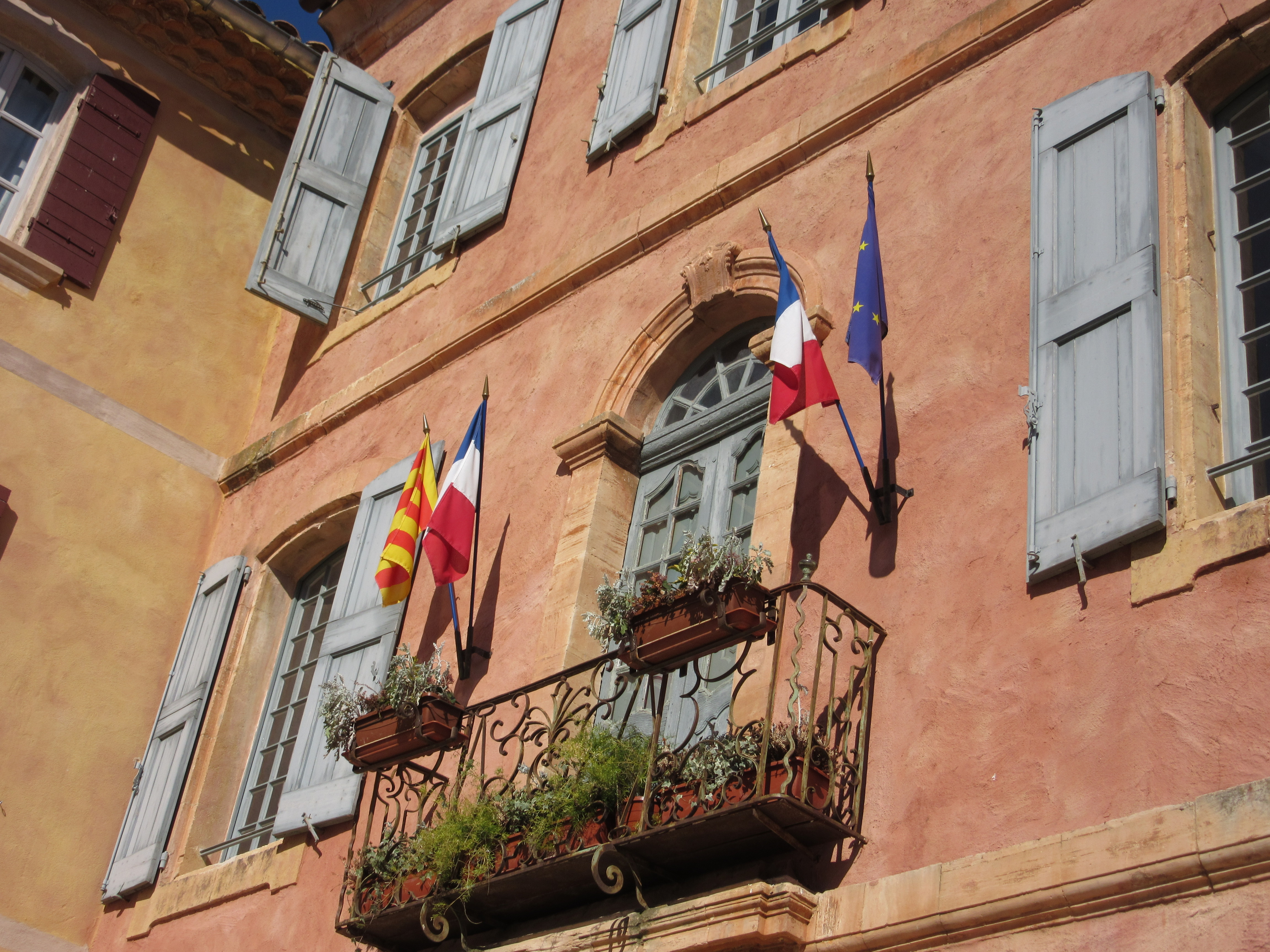
This window has been photographed many times!


Posted in Travel Journal | Tagged , , , , , , | 1 Comment

Van Gogh’s Asylum, Saint-Rémy-de-Provence

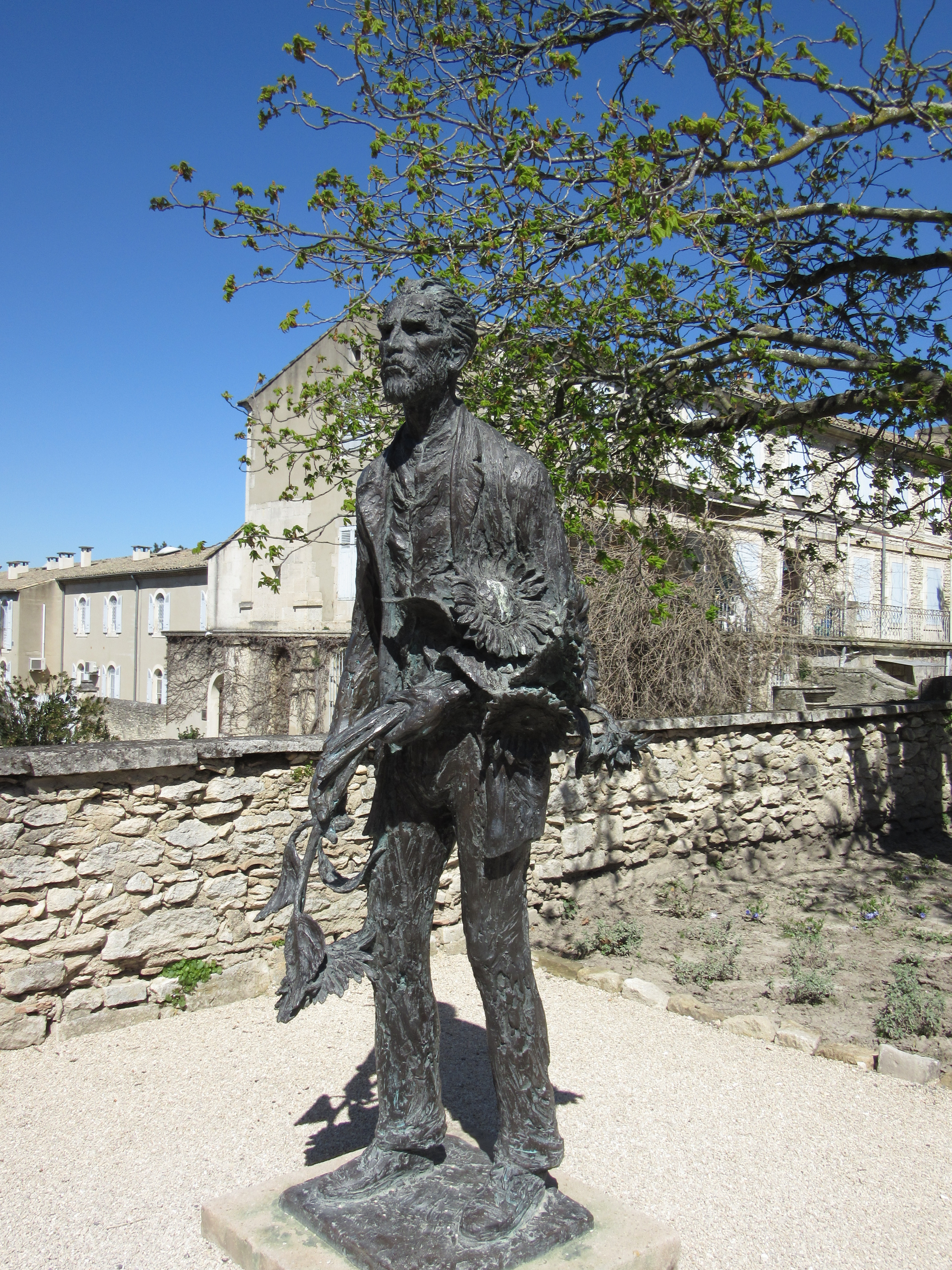
He was the thief of sunflowers, gathering them via rapid brushstrokes. Vincent van Gogh was one of the most prolific and influential of the Post-Impressionist painters, producing over 2,000 paintings and drawings in just over 10 years in the late 1800s.

When he lived in Arles, van Gogh painted canvas after canvas of sunflowers. He had vases with three, five, twelve, or fifteen of the blooms with backgrounds of different colors. These striking images didn’t earn him great recognition—or wealth—at the time, but one sunflower painting was auctioned for $39 million in 1987.

2015-04-05 091

Van Gogh, the Sunflower’s Thief, a statue by Gabriel Sterk outside the van Gogh museum in Saint-Remy.

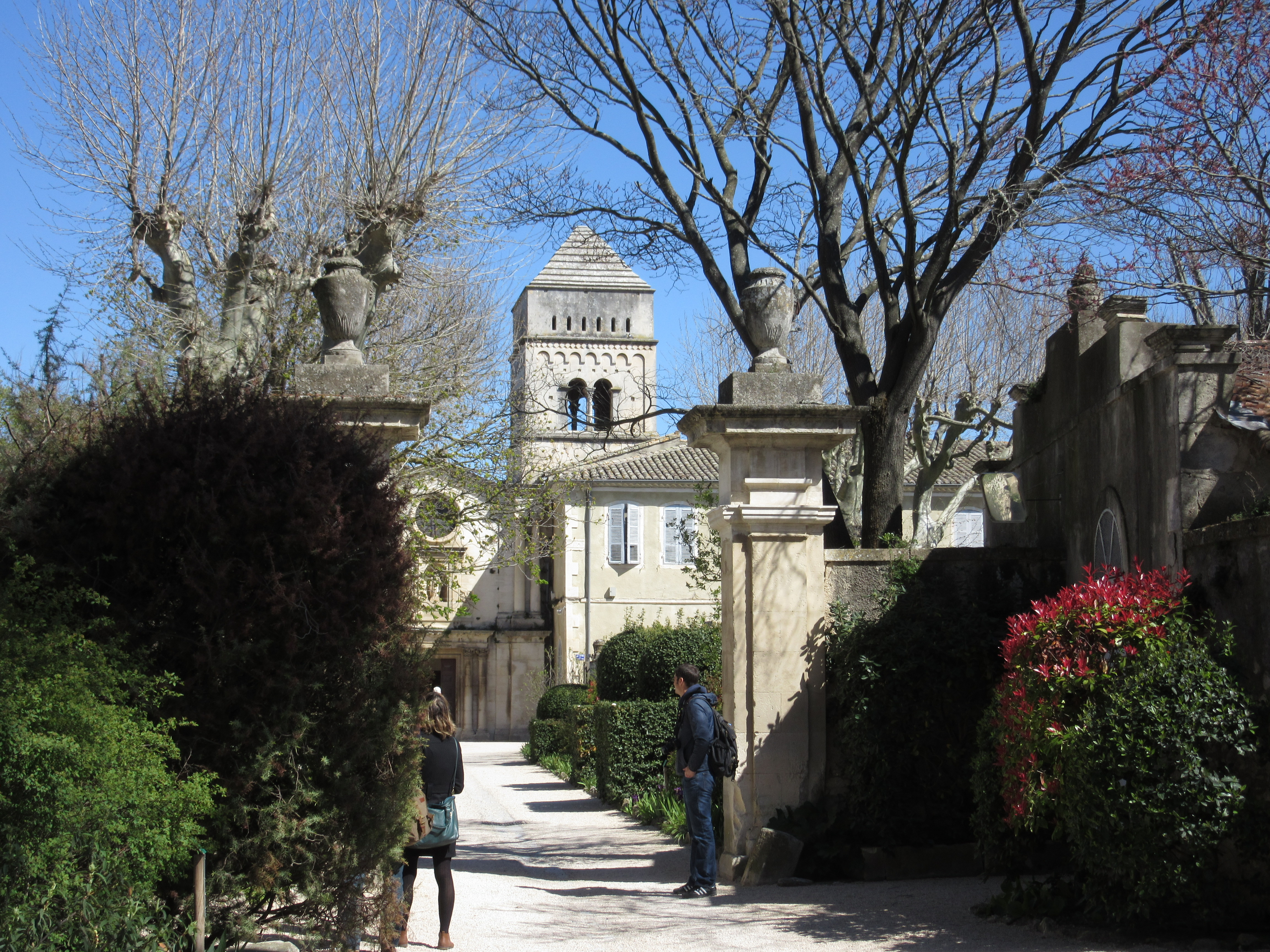
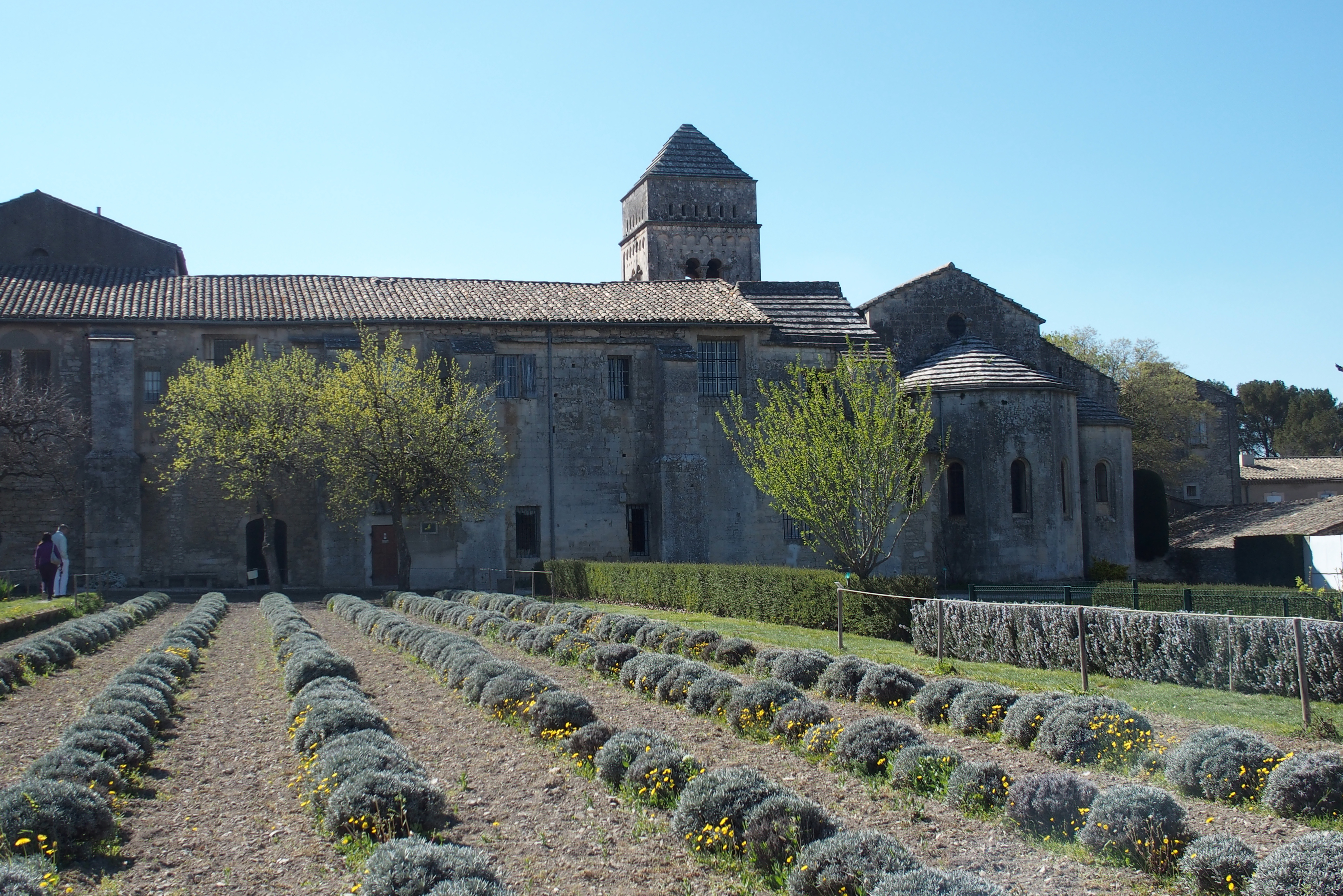
Van Gogh spent a year in Saint-Rémy-de-Provence, self-committed to the Saint-Paul de Mausole mental home for treatment of depression.

2015-04-05 087

Saint-Paul de Mausole hospital and asylum

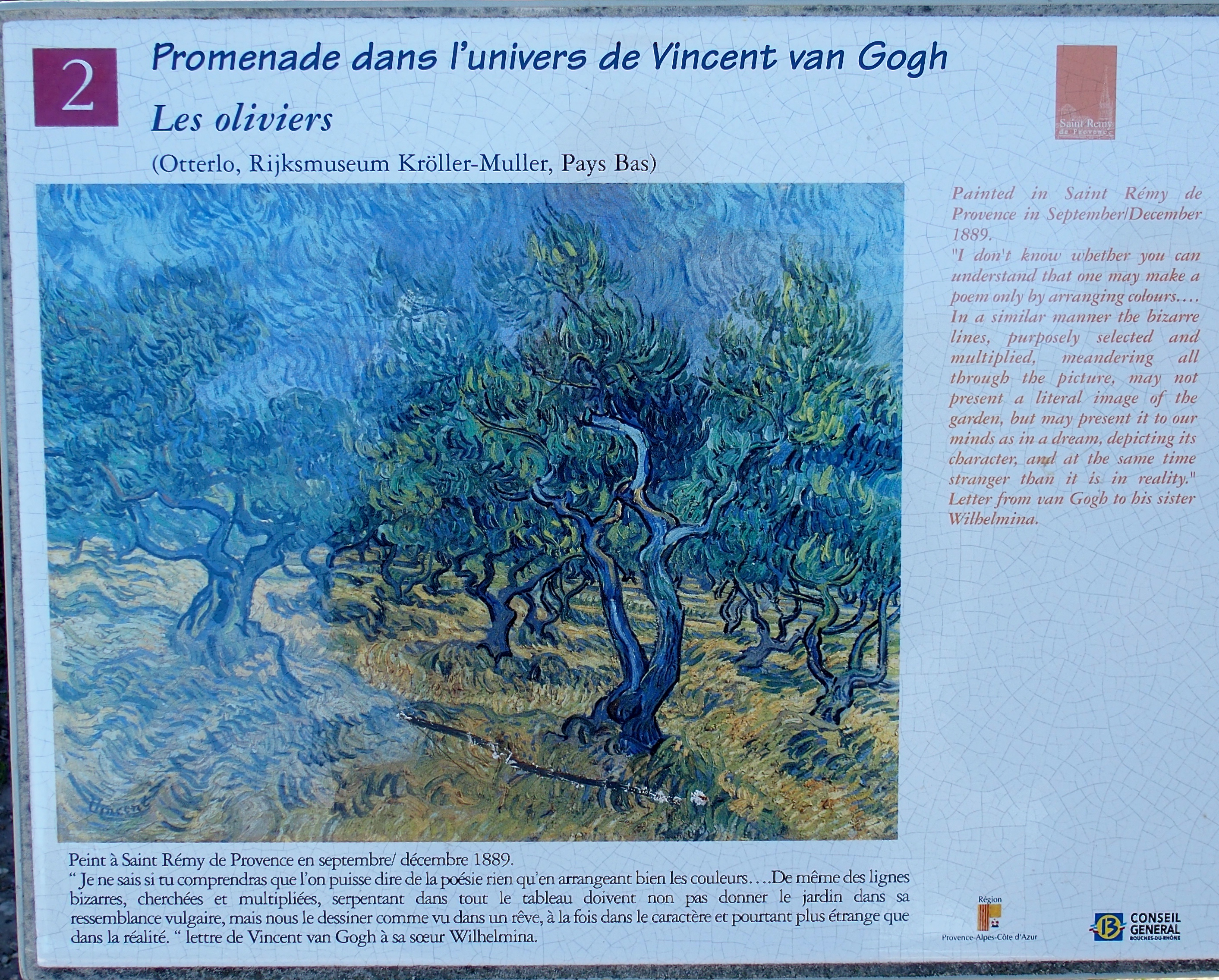
Here amid olive orchards, cypress trees, and flowering gardens, he painted some of his best known works. Along Avenue Vincent Van Gogh, posters of his most famous works are displayed on the way to the asylum as an art appreciation walking tour, “Walking in the universe of Vincent van Gogh.” Naturally, we followed the walk, trying to imagine ourselves in the artist’s footsteps.

OLYMPUS DIGITAL CAMERA

The olive trees. France had and still has many of these trees.

OLYMPUS DIGITAL CAMERA

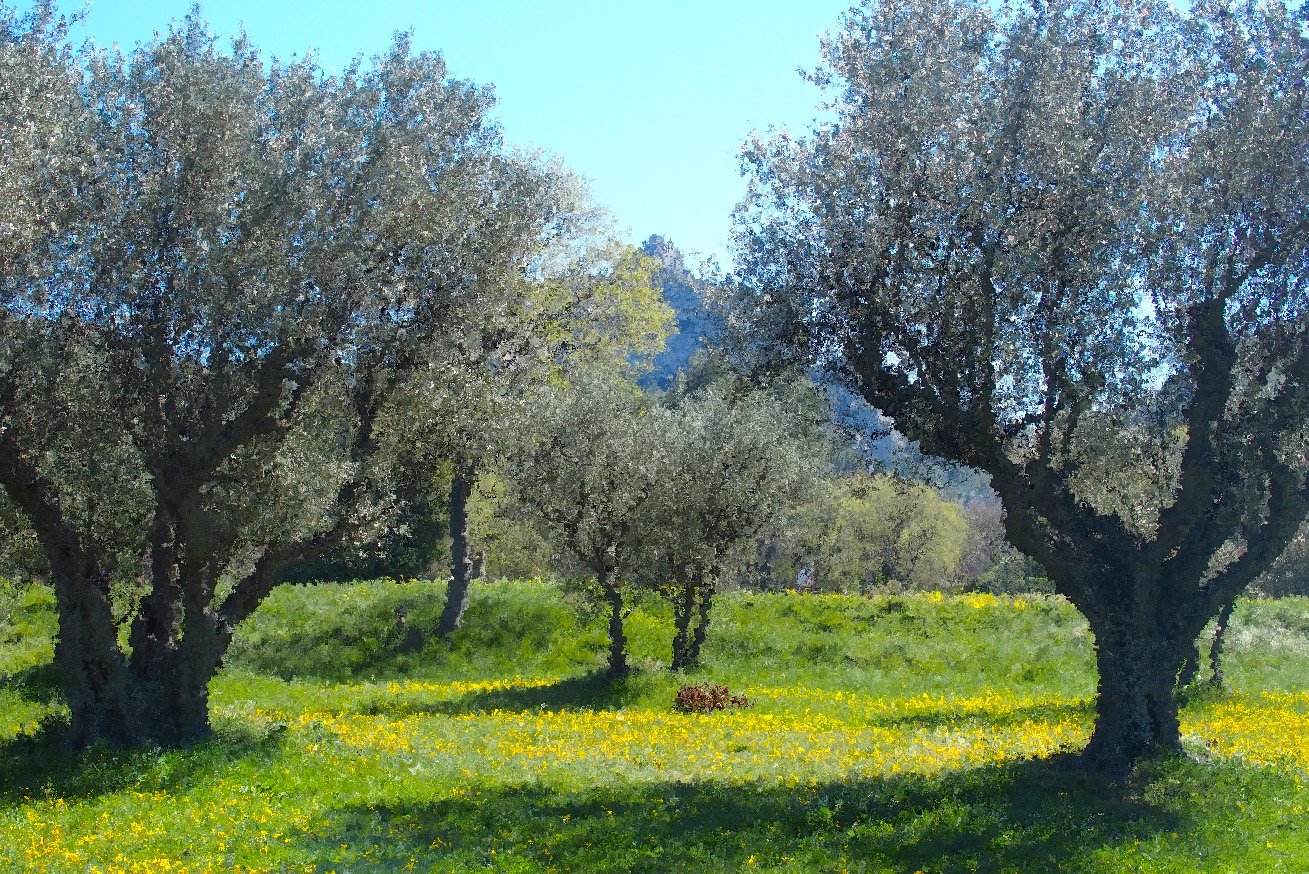
Here are some of the actual olive orchards van Gogh may have seen. With a bit of help from digital manipulation, they start to take on an Impressionist appearance, even in photos.

2015-04-05 075

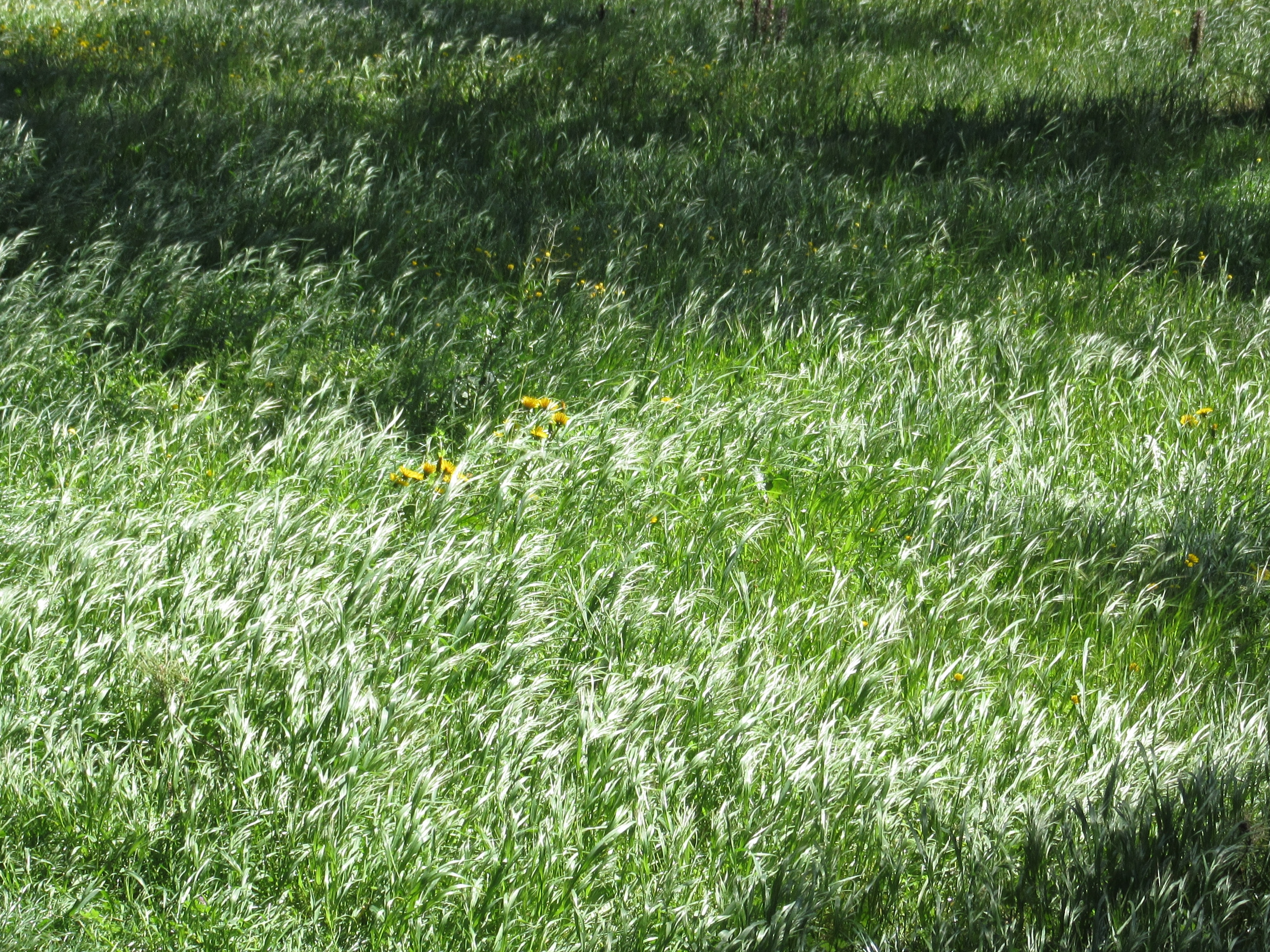
The winds, perhaps remnants of the mistral, blow the grasses and flowers, creating brushstrokes in nature. Is this what influenced van Gogh’s characteristic swirls?

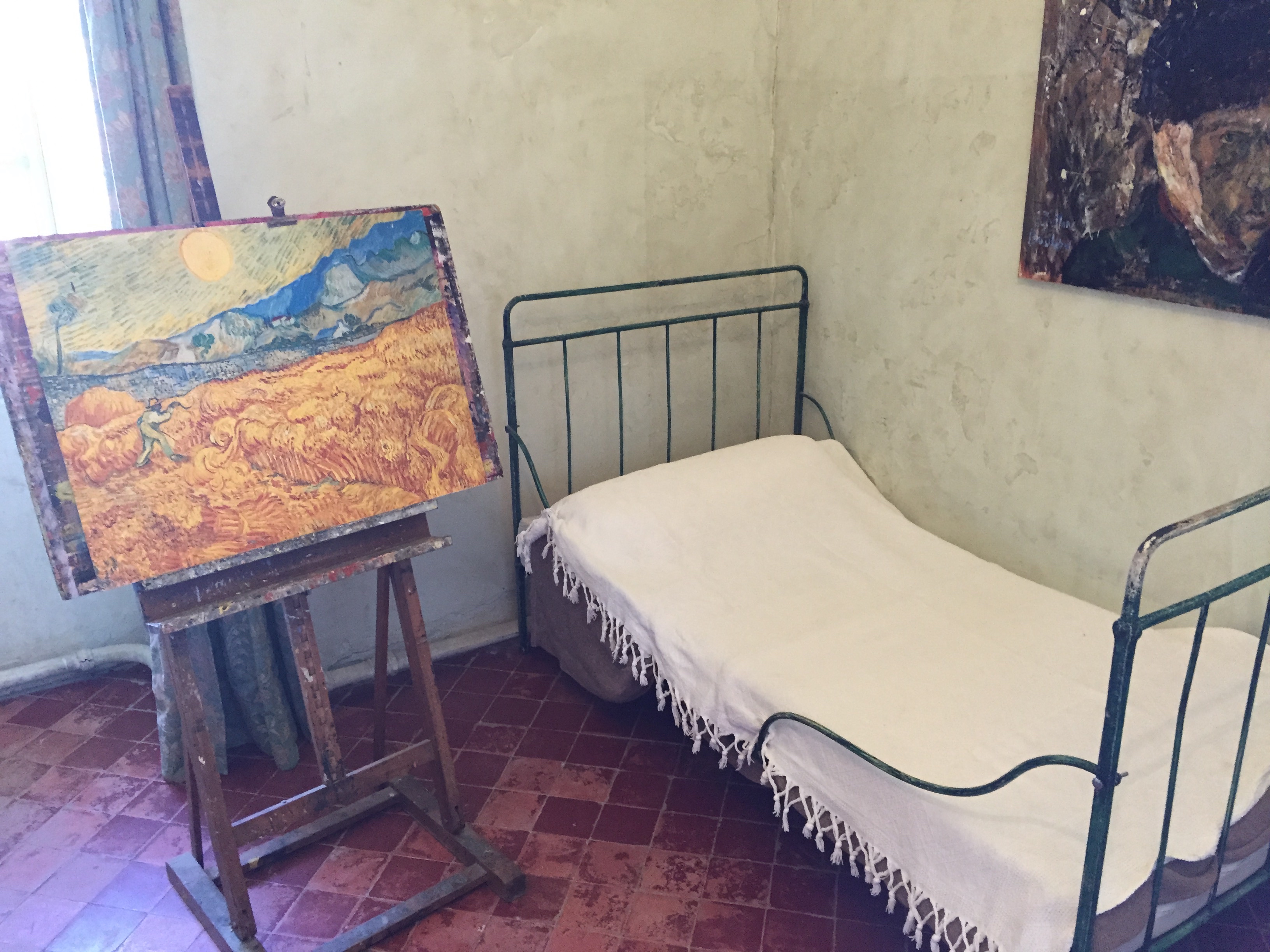
Van Gogh lived in a single room at the asylum, but since the building wasn’t full, he had plenty of space to paint and store his supplies in a second room. He was allowed to paint in his room and in the gardens and travel up to an hour’s walk away in the countryside for inspiration. Think of it as early “art therapy.”

2015-04-05 116

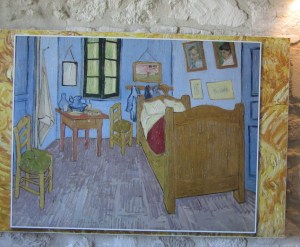
This is van Gogh’s painting of the room he had occupied a year earlier in Arles.

IMG_5405

The room in the Saint-Remy asylum was small with very sparse furnishings, but just enough room to paint, actually quite similar to his room in Arles.

During his time in Saint-Rémy, Van Gogh wrote “Through the window and its bars I can see a square wheat field. A perspective ‘a la Goyen,’ above which I see the sun rising each day in its glory every morning.”

2015-04-05 127

Today’s view out van Gogh’s barred windows.

OLYMPUS DIGITAL CAMERA

The view back toward the asylum and van Gogh’s bedroom on the upper floor. The lavender will blossom in a month or two.

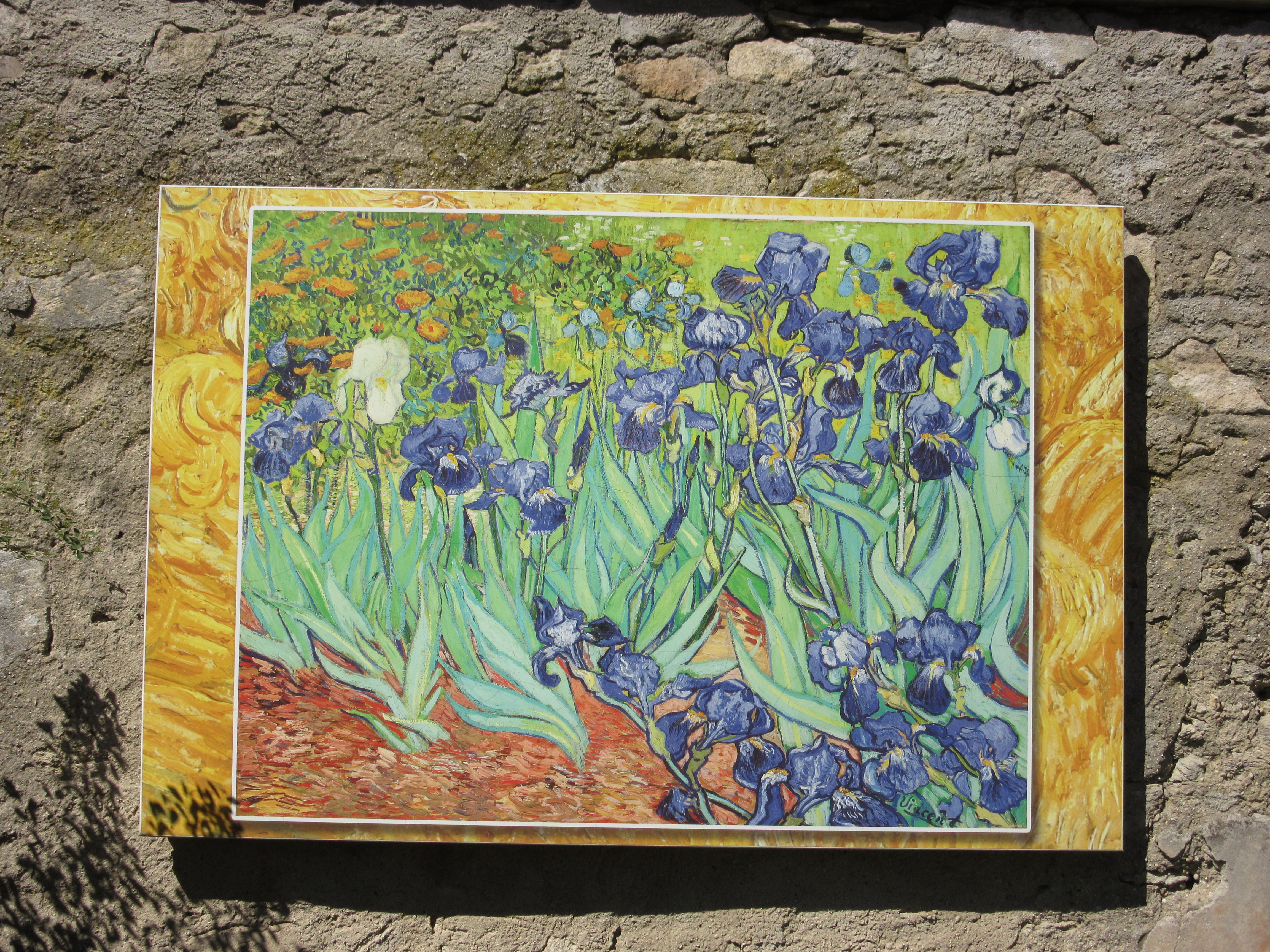
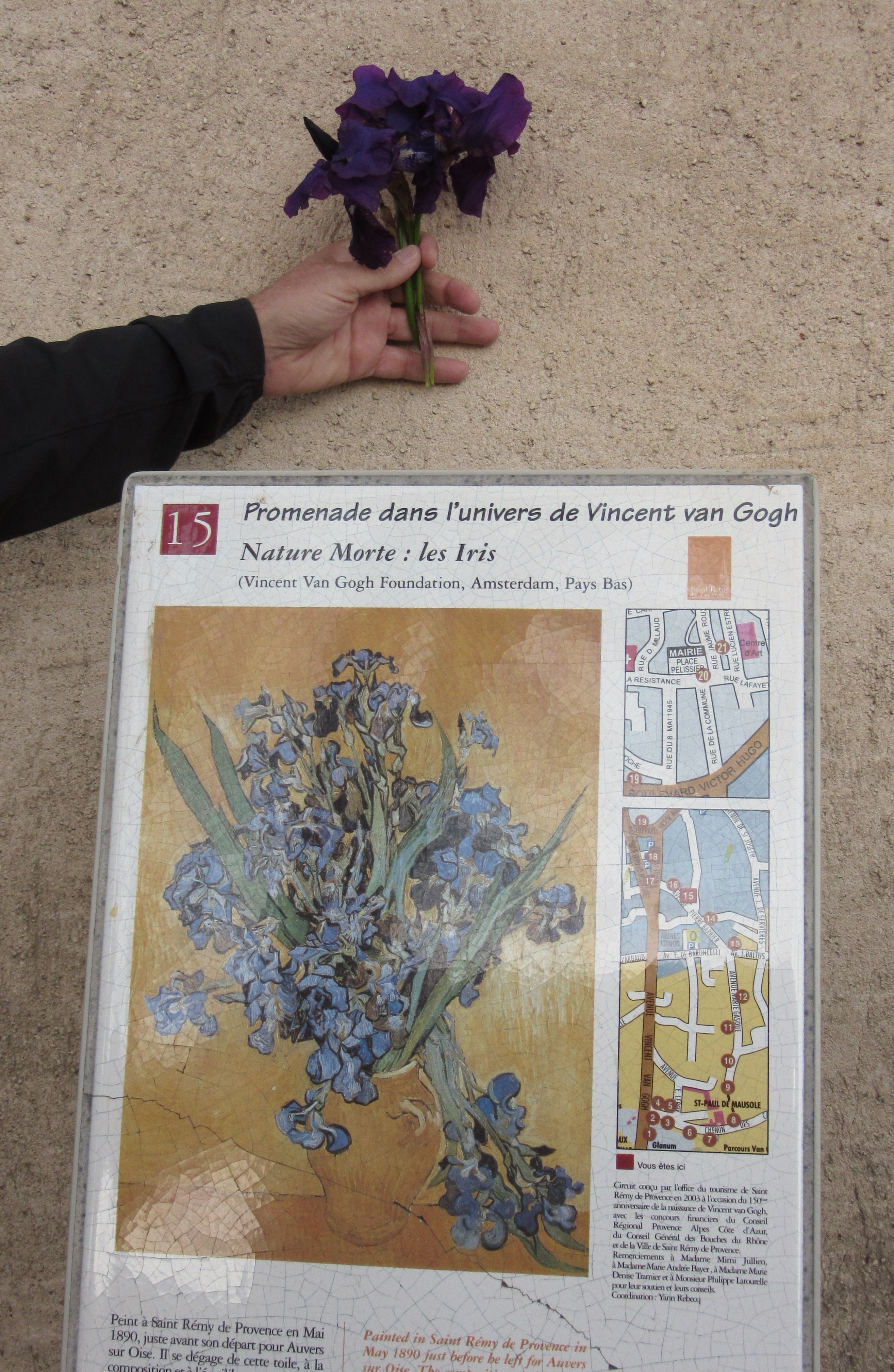
Even more popular and expensive (now) than van Gogh’s sunflowers are his irises, also painted in Arles. This painting sold for $54 million in 1987.

2015-04-05 082

With van Gogh’s brushstrokes, the irises came to life on canvas.

2015-04-05 093

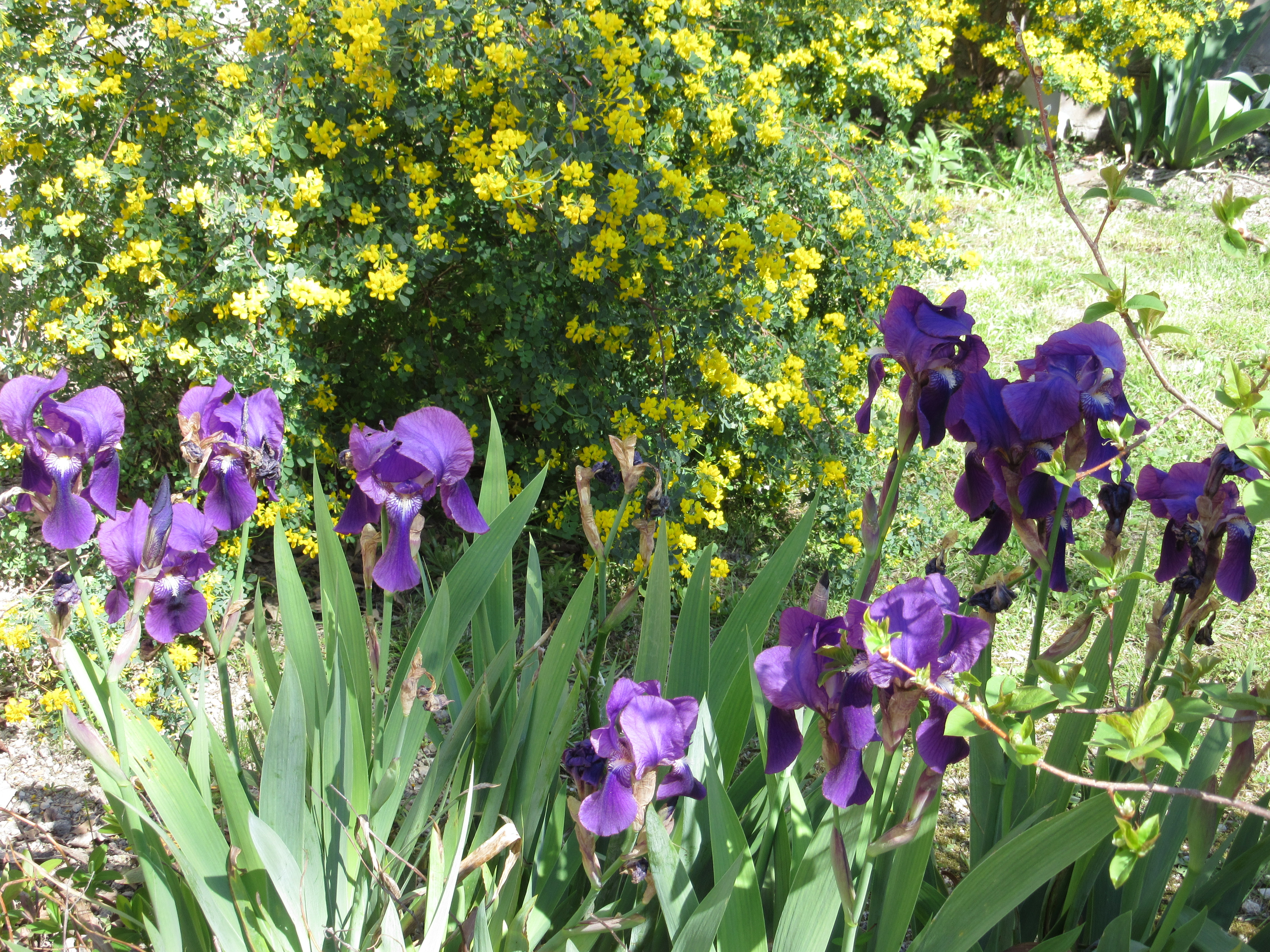
Now the irises are in bloom in early April in Saint-Remy.

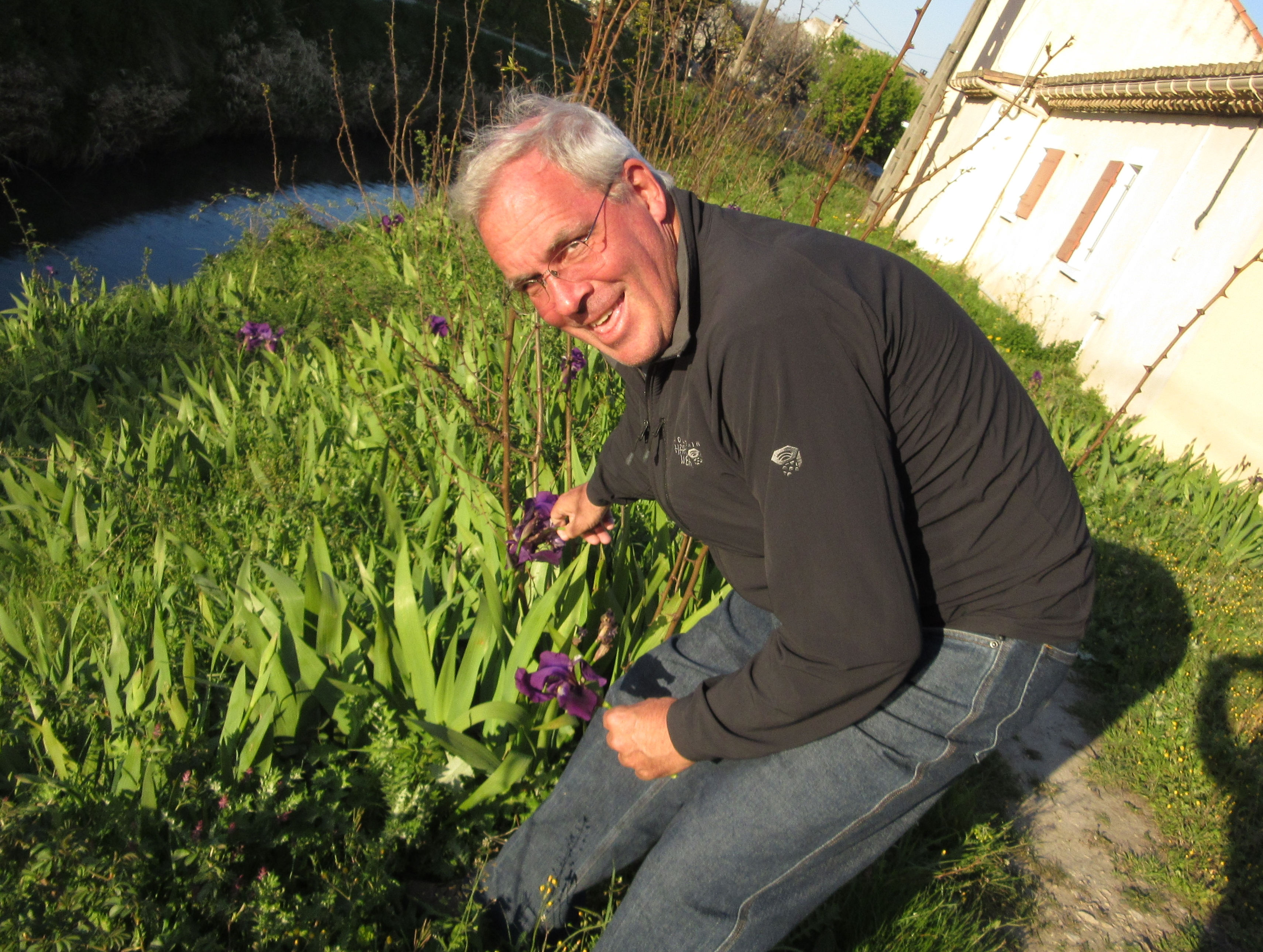
We found a modern-day thief of irises in Saint-Rémy-de-Provence.

2015-04-08 025

But where is your paintbrush, Monsieur Artist?

2015-04-08 035

Ah. You have copied the grand master in 3-D.

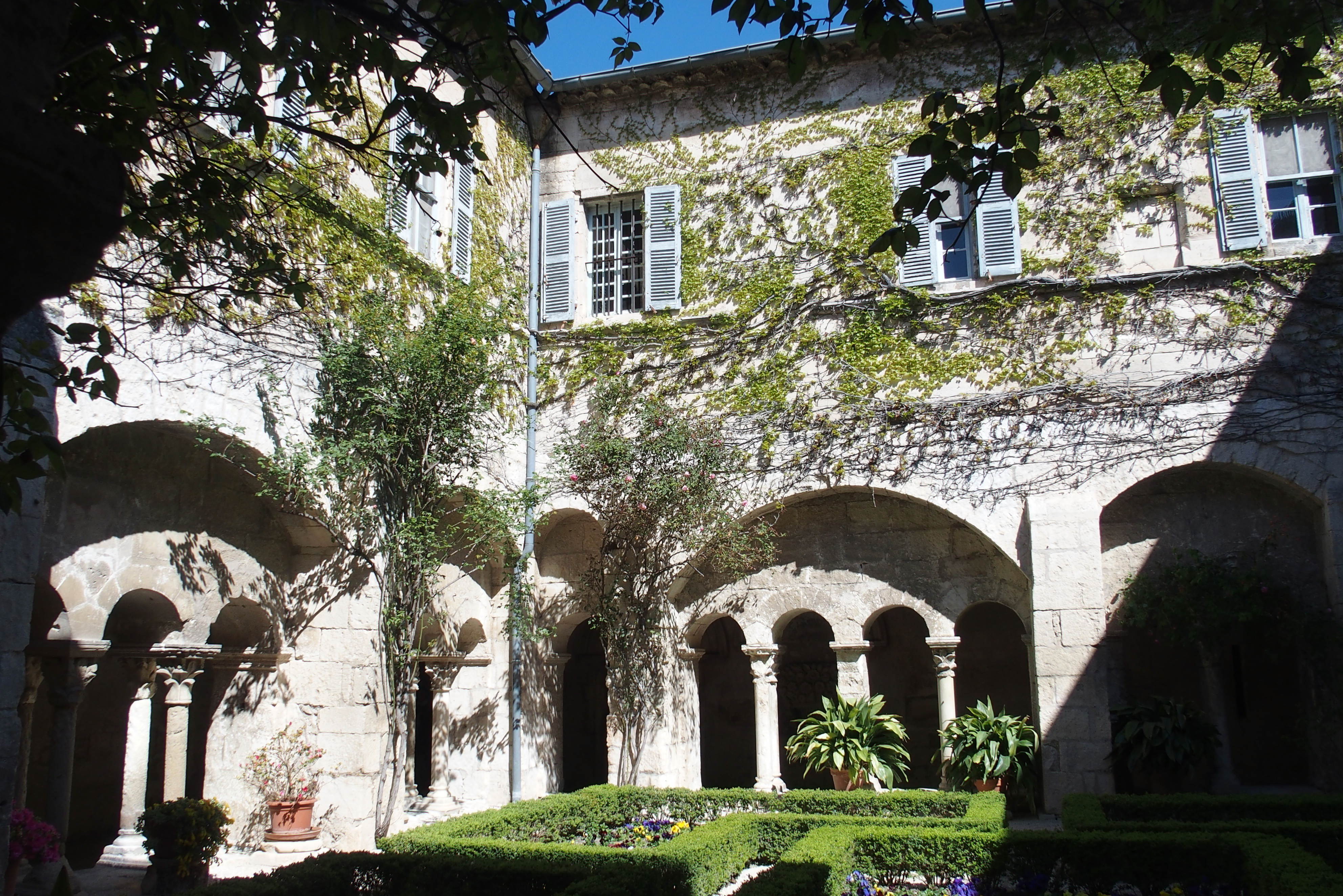
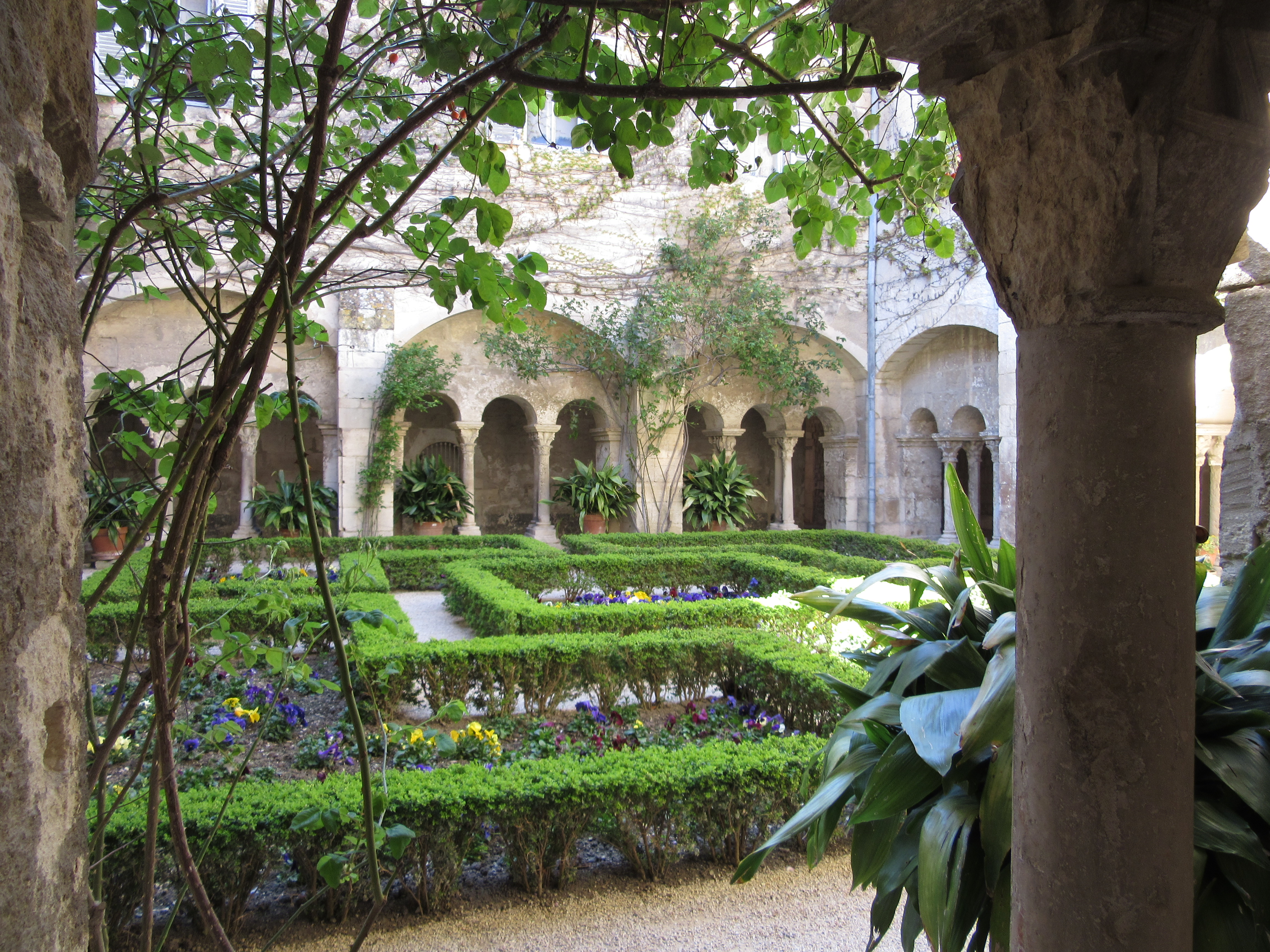
Van Gogh’s asylum today has a beautiful setting with a central courtyard filled with colorful flowers.

OLYMPUS DIGITAL CAMERA

2015-04-05 113

Yet in this quiet, tranquil place van Gogh still suffered from depression and melancholy. He wrote: “Sometimes I feel desperately hopeless,” and “Except for a sense of melancholy, the nightmares no longer torment me.”

2015-04-05 096

Outside the entrance, this ghoul, reminiscent of Edvard Munch’s Scream, stands behind bright flowers, perhaps symbolizing van Gogh’s inner torment behind the beauty of his paintings.

Along with his melancholy and despair, at times he felt euphoric. He wrote to his brother, “During my delirium so many pleasant things go through my mind.” Whether experiencing a melancholy or pleasant phase, he created this masterpiece while in Saint-Remy.

2015-04-05 097

The cypresses and the glorious Provencal skies of van Gogh’s Starry Night

Van Gogh eventually felt that he had recovered and was ready to return to society. He left the asylum in May of 1890 and continued painting at Auvers-sur-Oise, where he completed a painting a day for 79 days. Then in July he shot himself and died within two days. He sold just one painting during his 37 years on earth, but will live forever in history as one of the world’s greatest painters.

2015-04-05 051

Shining spots along Avenue Vincent van Gogh.

Posted in Smell the Roses | Tagged , , , , | 3 Comments