Glacier National Park – Oct 9 and 10 (Days 38 and 39)

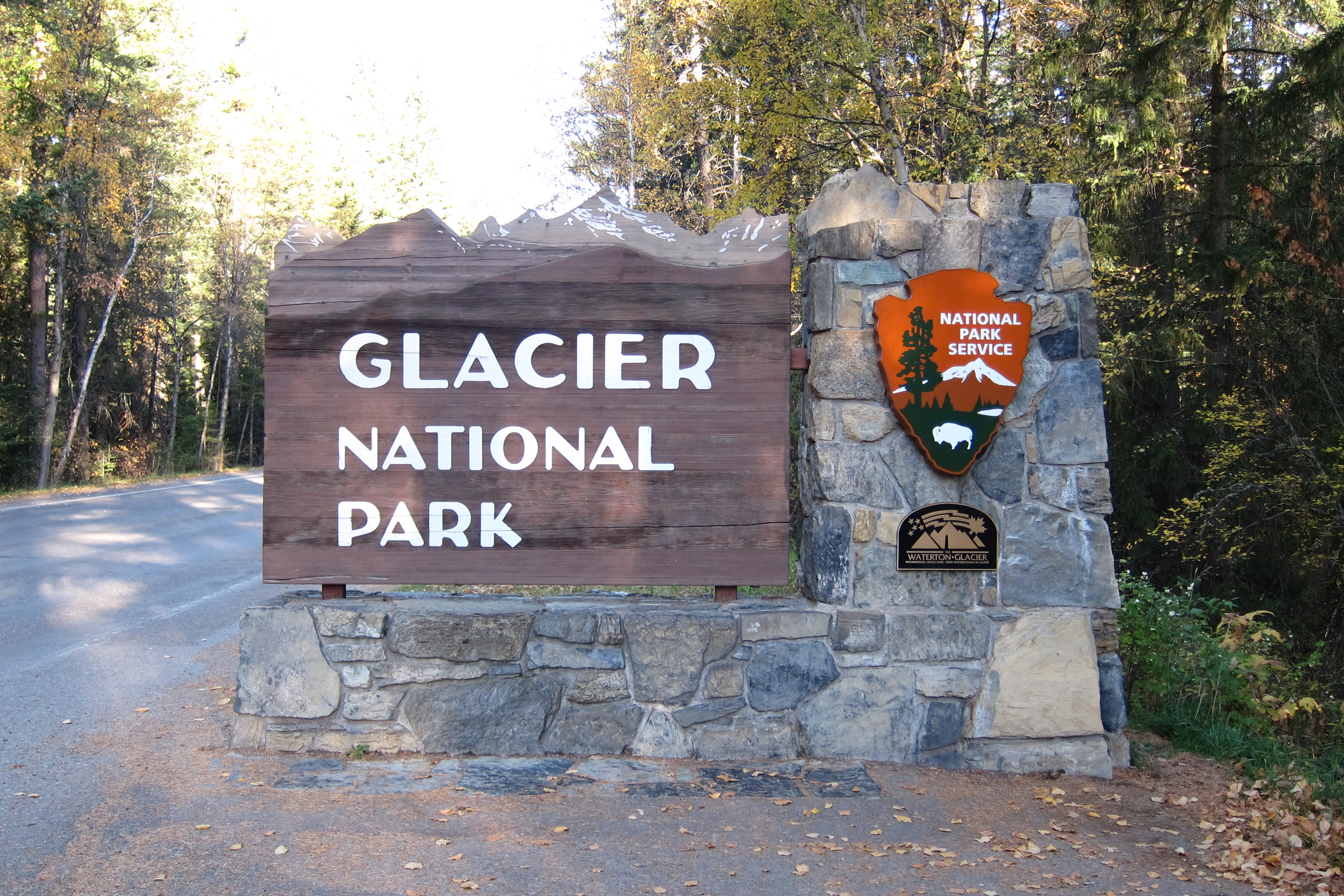
Welcome to Glacier National Park, our fourth national park in two weeks. We’re not going for a speed record, but we’re amazed at how much beautiful country we’re finding in these preserved areas.
IMG_4067

Have we said this before? We have found the best postcard-worthy spot in the world:
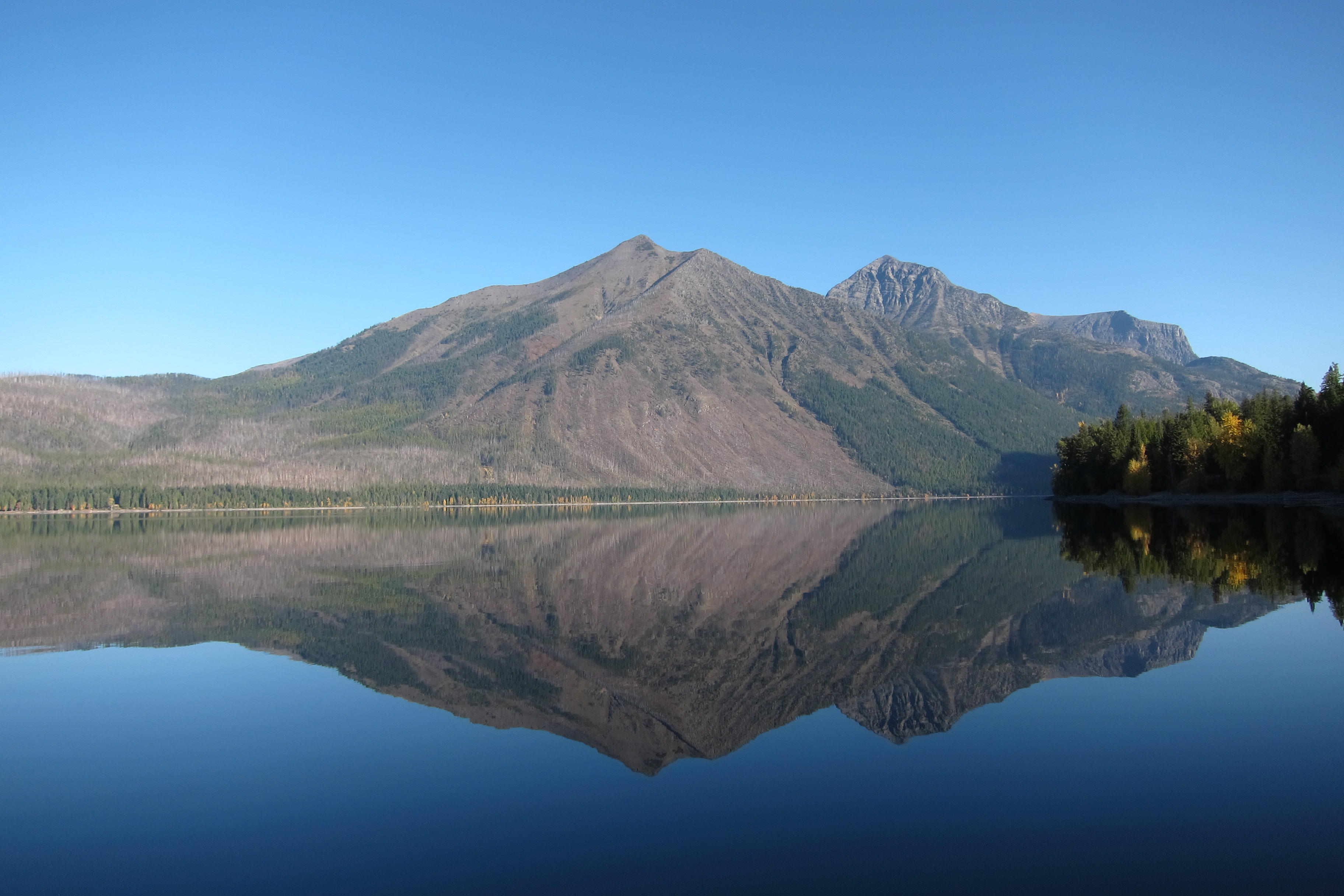
McDonald Lake in the morning

McDonald Lake in the morning

That was our view across McDonald Lake as we headed into the west side of Glacier National Park. Heavenly.

The road through the park, called Going to the Sun Road, was etched along the edges of massive mountains, taking four years to build, from 1928 to 1932. It’s amazing that people in that difficult economic period had the inspiration and dedication to construct this road; we’re glad they did.
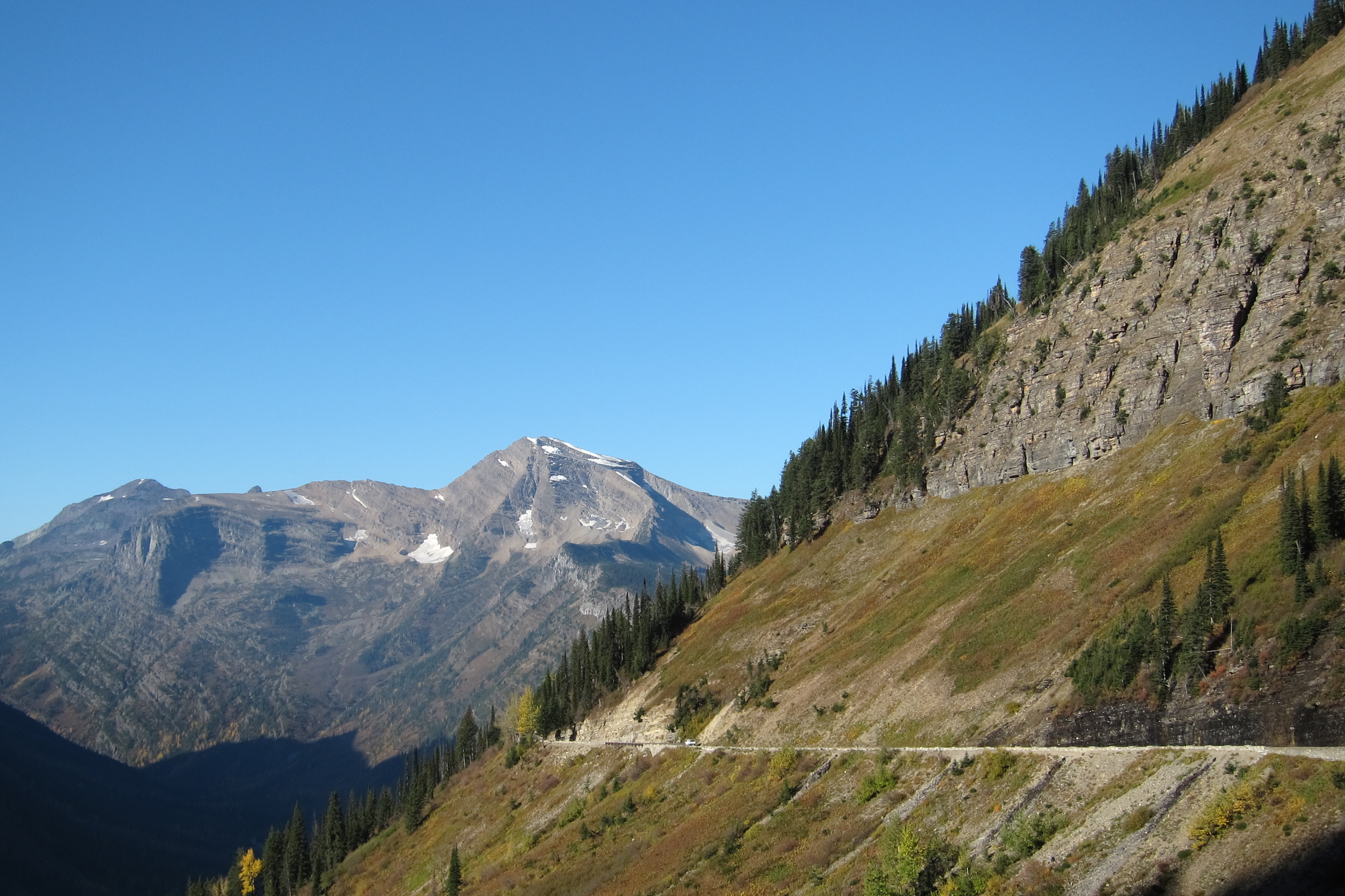
Follow this road to go to the sun.

Follow this road to go to the sun.

From Logan’s Pass at the top, we hiked along Highline Trail. Michael always tries to find trails that are fairly easy, with minimal elevation change. I don’t like climbing hills! So Highline is fairly flat, unless you look—or step!—inches to the side and then the drop is precipitous.
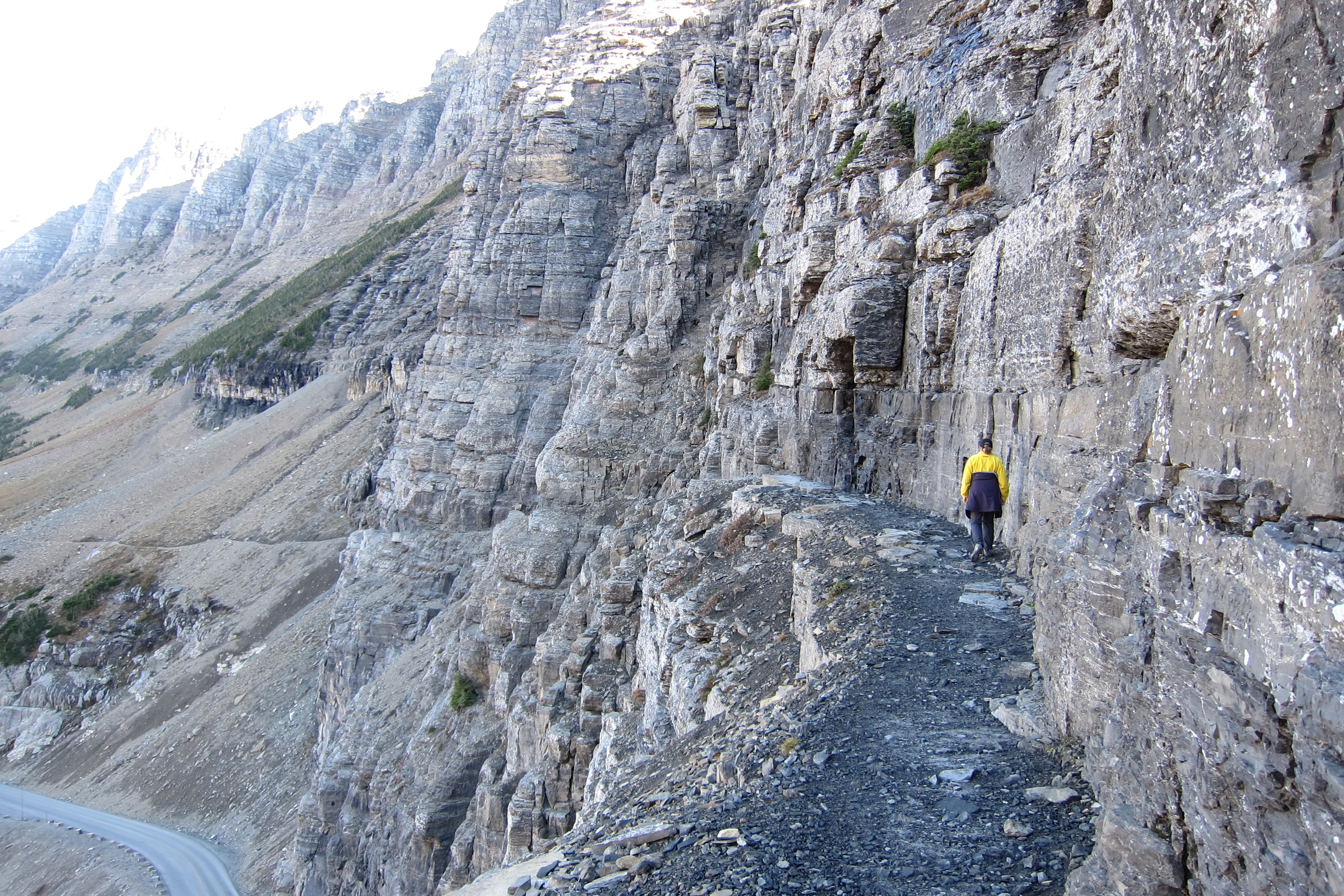
The easy walk Michael picked out.

The easy walk Michael picked out.

During summer season, the National Park Service provides a cable hand rail for the faint of heart. Naturally as we are continuing our October adventures, we are catching Glacier as it closes. The guardrail has been removed and lies neatly coiled on the hillside.
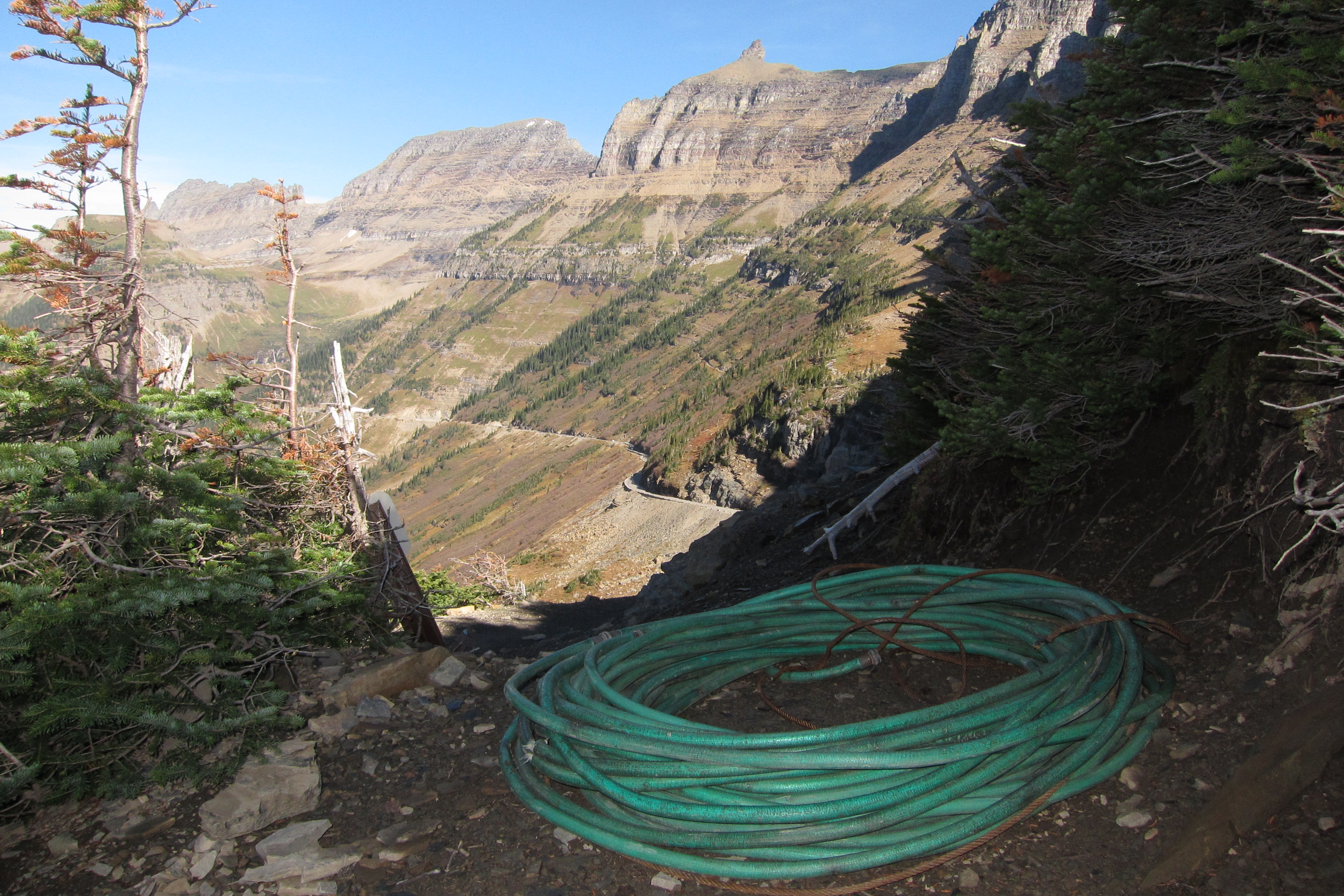
A lot of good it does us up here!

A lot of good it does us up here!

At least the cable pins were available every 20 feet or so.
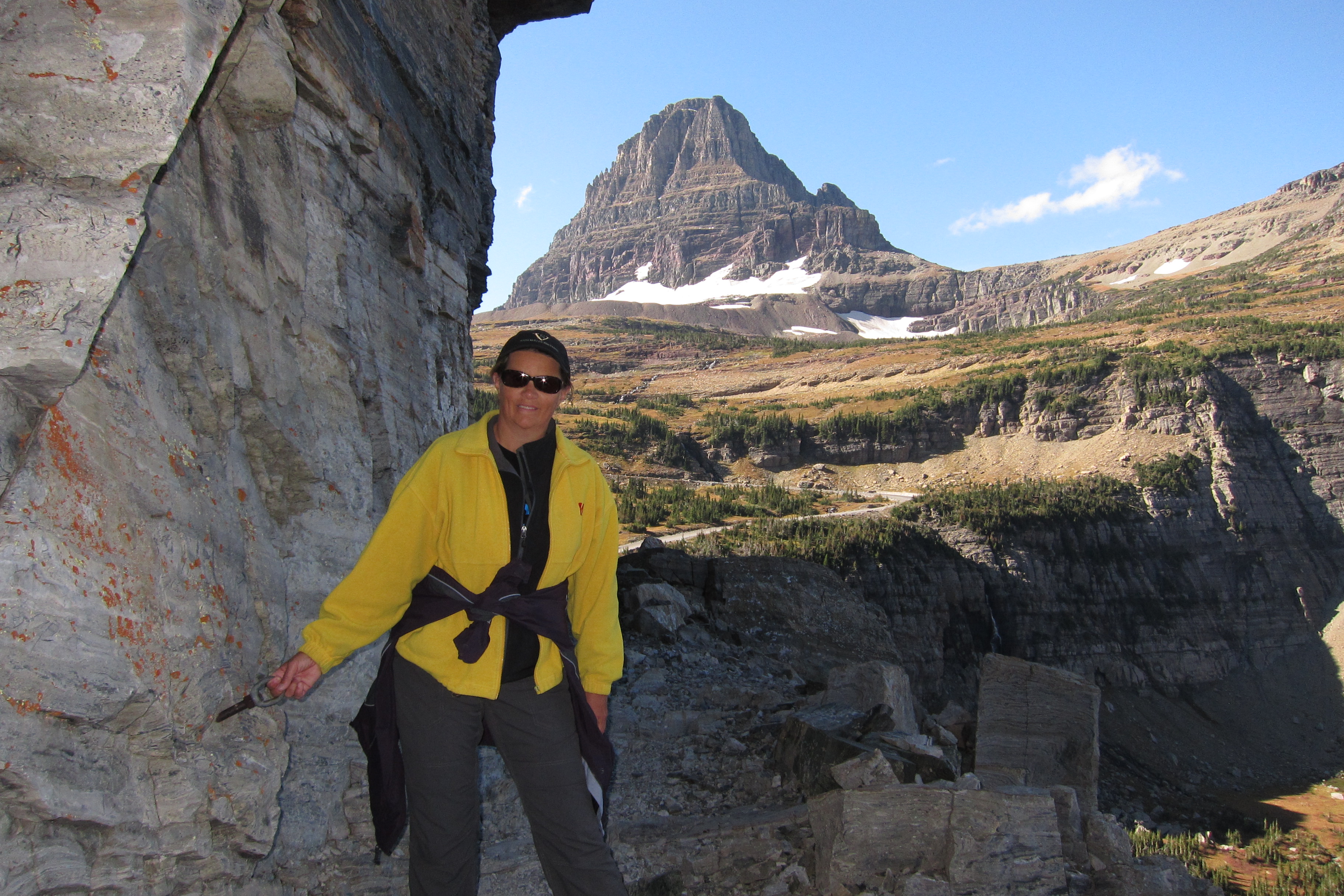
Holding on to the cable support for dear life.

Holding on to the cable support for dear life.

Experience the hike yourself, if you dare, in this video.


We weren’t the only nimble hikers on the mountain. This is  a bighorn sheep. Both male and female have the amazing curled horns.
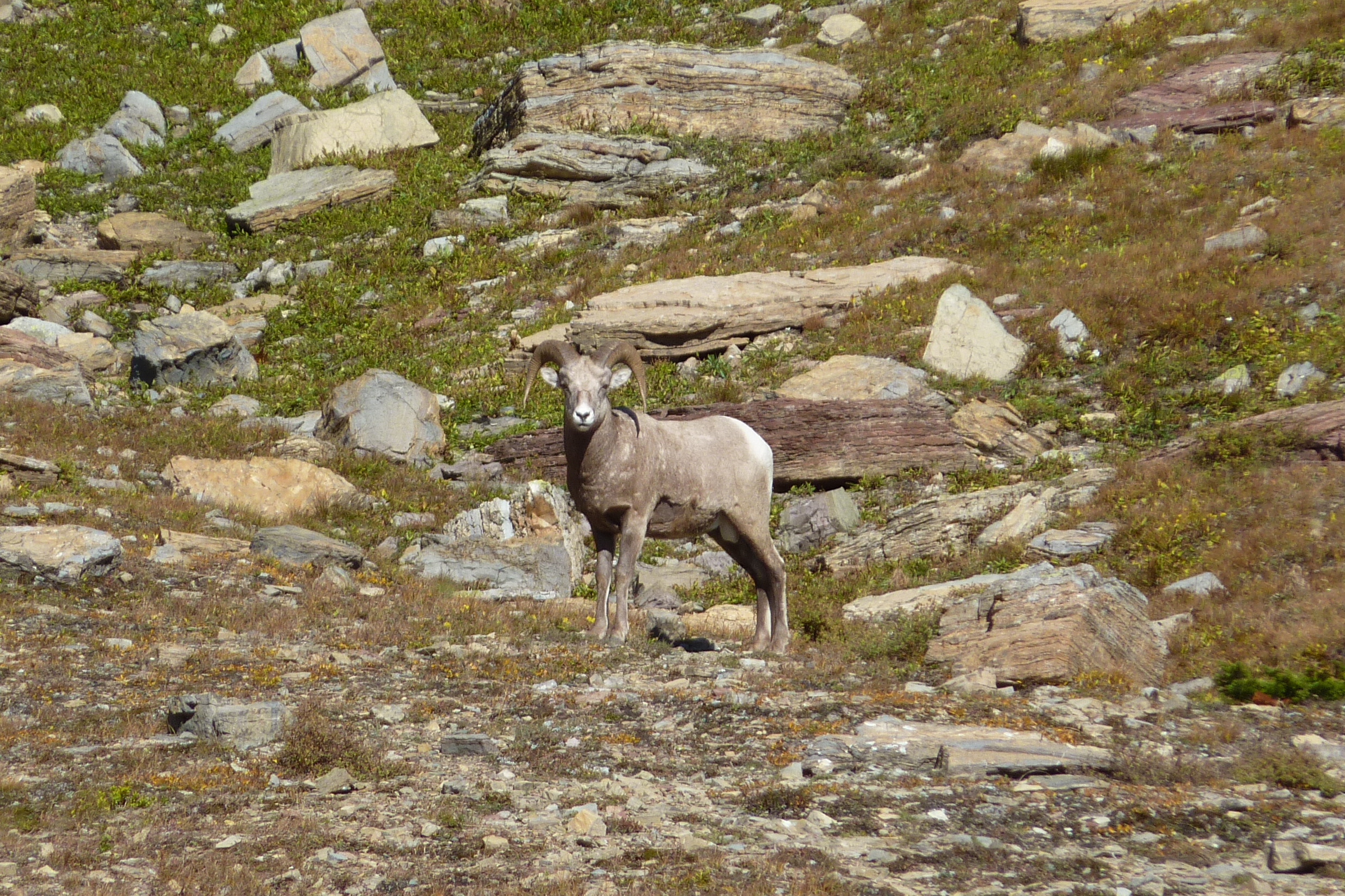
Sighting of another one of the major wildlife species here in the mountains.

Sighting of another one of the major wildlife species here in the mountains.

On our way down the mountain we stopped once more at McDonald Lake and enjoyed an even better view. It was mid-afternoon, the lighting had changed, and a few clouds had come up.  Even more perfect than the morning.  Can’t you just imagine this as a beautiful painting?

Perfection!

Perfection!

Imagination became reality. We stumbled upon an artists’ enclave of a half dozen ladies doing plein air oil paintings of the view, each a bit different from the others and each one beautiful. Members of the group have taken some classes together and frequently find themselves in the same spots enjoying the peaceful views and creating masterpieces.
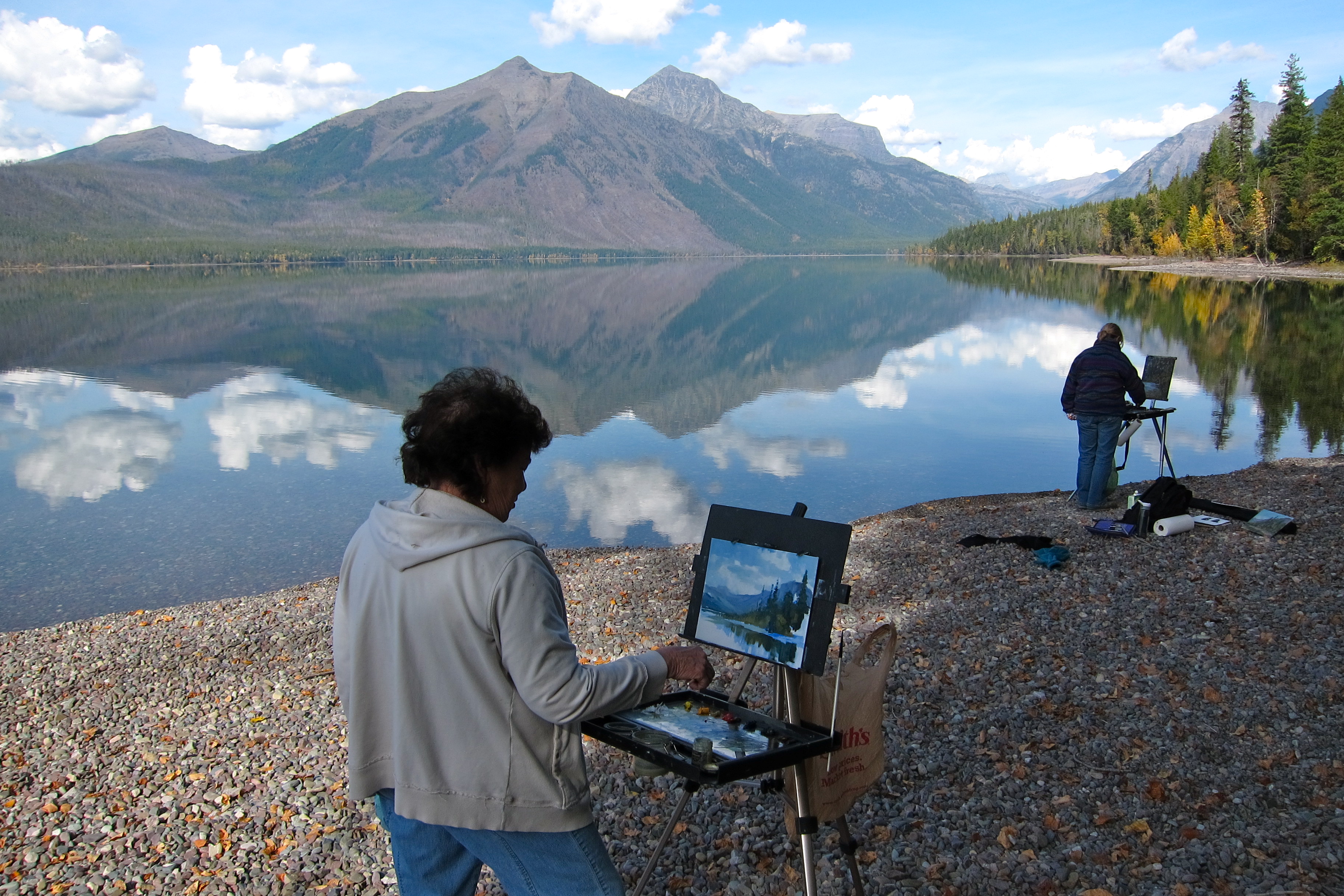
Joann Steadd at the easel.

Joann Sleadd at the easel.

We discovered a connection with this painter, Joann Sleadd, in an actual Kodak moment. She spent many years in the photographic industry, working as a retoucher. (Think back to how good your high school yearbook picture looked, all blemishes and stubble removed; that is thanks to the painstaking, detailed care of a retoucher.) Joann started working with black-and-white portrait retouching and was one of the early and very best in adapting to color work. She was so good that Kodak hired her to create a training film for the industry; she spent several months in Rochester doing this work. That was about the time Nancy started her Kodak career. In later years, Joann and Nancy both attended PMA and PPA, the big trade shows in the industry, crossing paths, but never meeting until now. It is a small and very beautiful world, made more beautiful by the art these ladies create. Thanks for sharing.

Day 2 in Glacier was the east side. Because the Going to the Sun road is closed beyond Logan’s Pass for pre-snow construction work, we took the long way around the outside of the park and reached Many Glacier. As we listened to people talking about this spot, we thought they were saying Mini Glacier. In fact, some of the glaciers have had so much melting that they look more like large melting snowdrifts than glaciers. Experts predict the last of these will melt away by 2030.
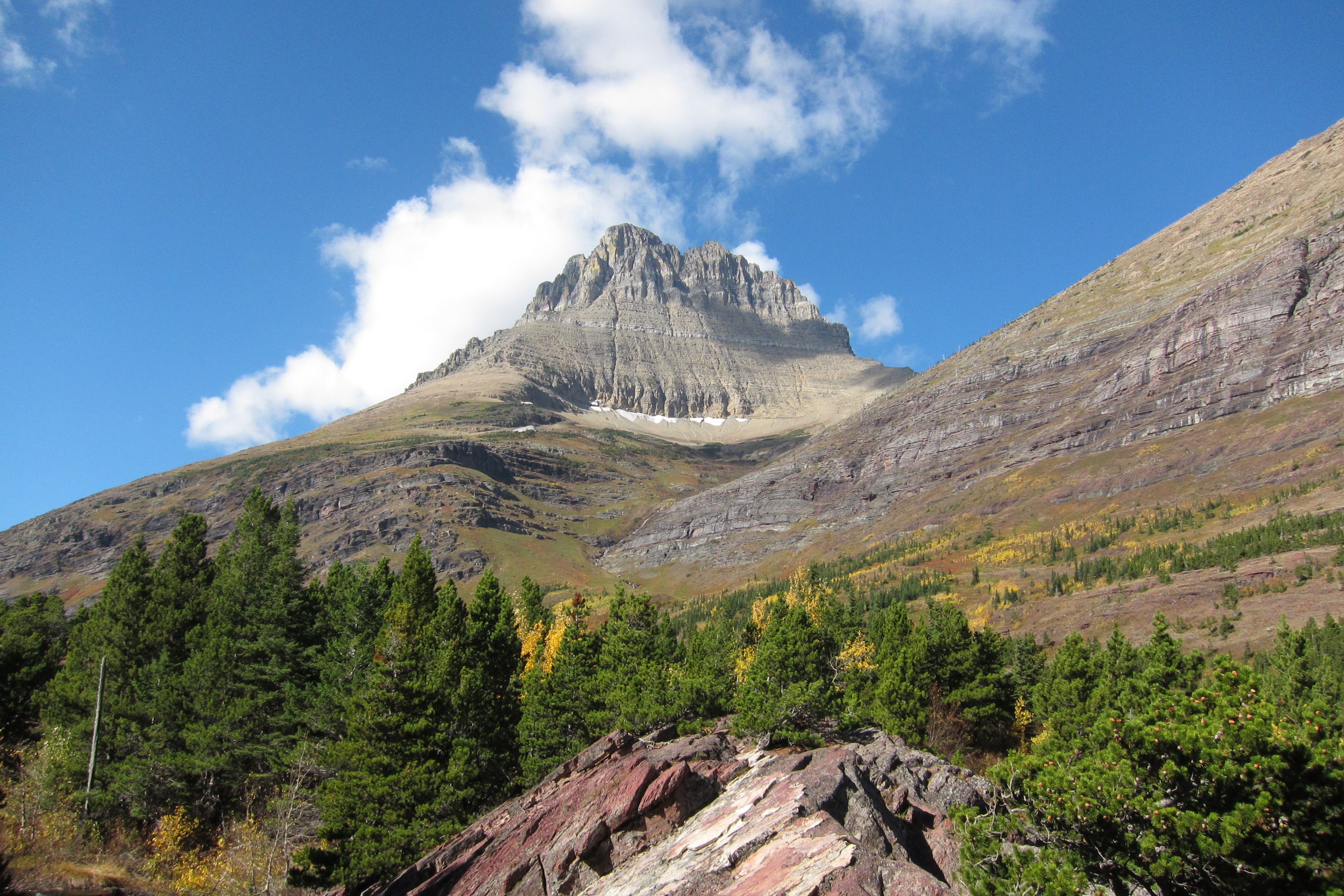
Diminishing glaciers. Many to mini

Diminishing glaciers. Many to mini

We were sure that somewhere up in these hills, mountain goats were scampering around.
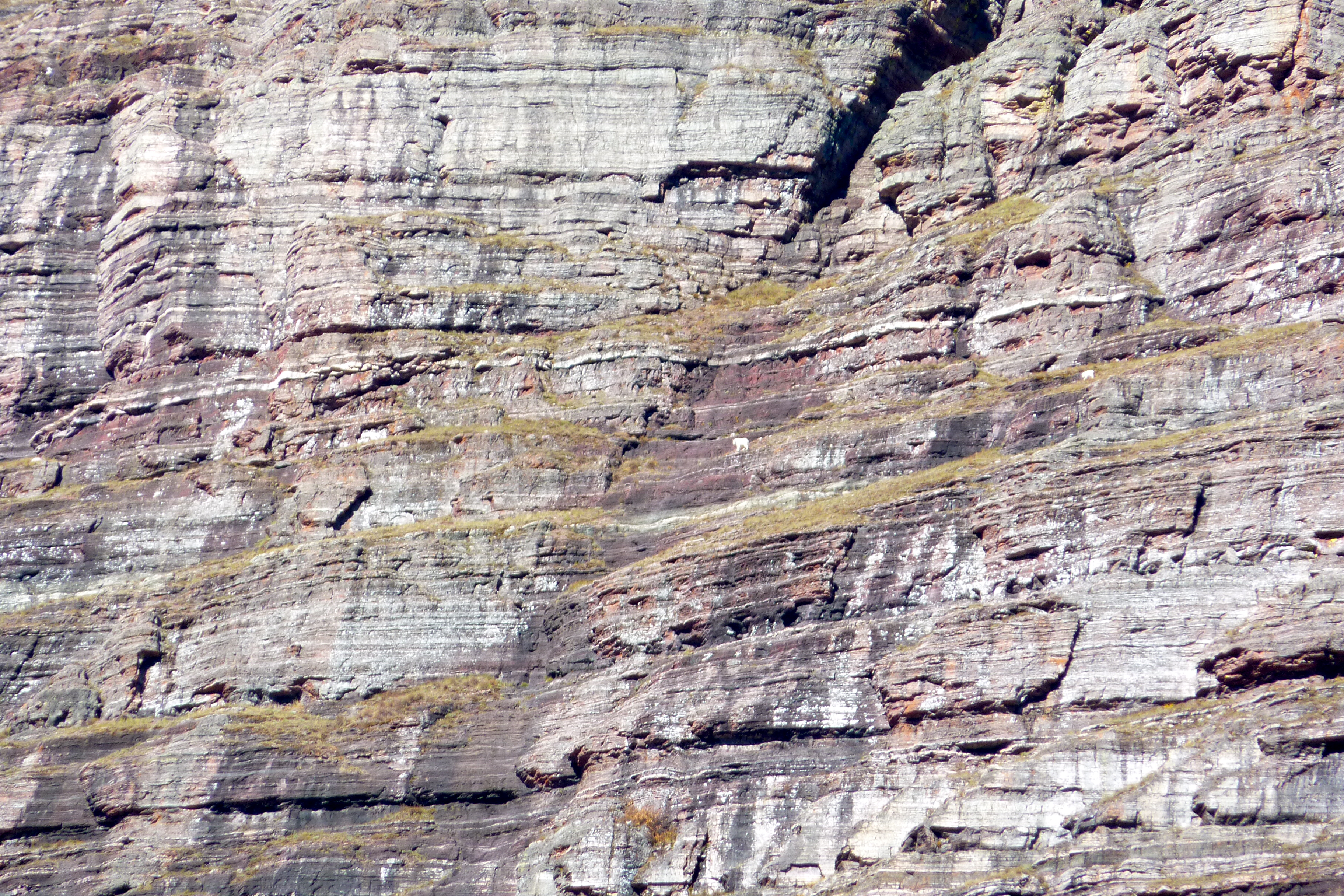
Can you see the mountain goat here?

Can you see the mountain goat here?

Sure enough, we spotted three and captured them with our little point-and-shoot camera…over a mile away.
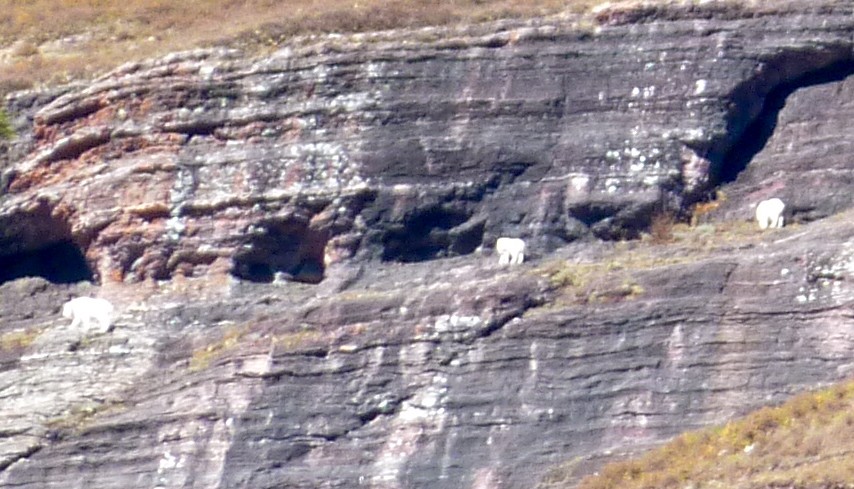
Now can you find the mountain goats?

Now can you find the mountain goats?

With a really great lens and a closer vantage point, we would have seen this.
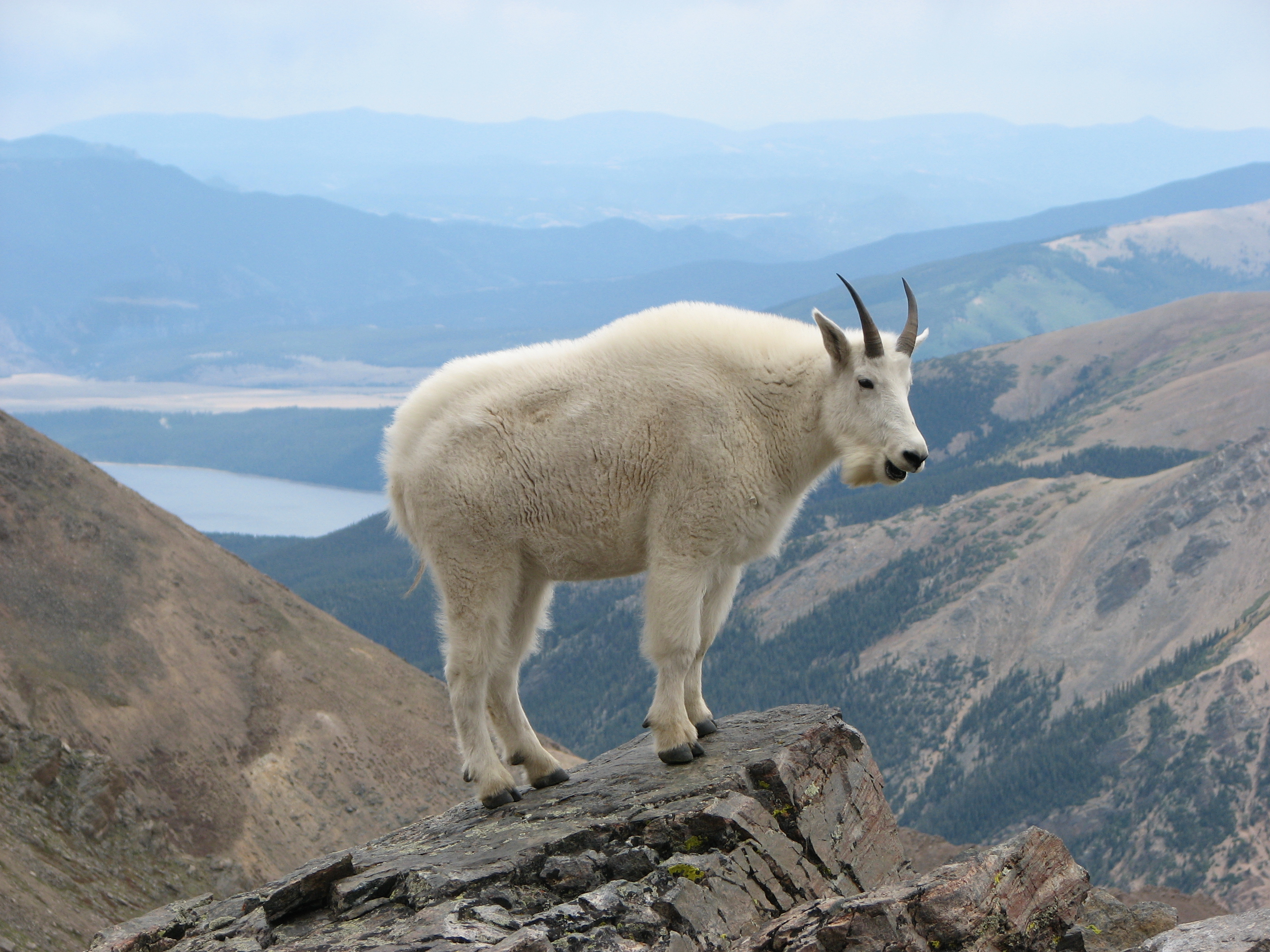
Photo by Darklich 14, not us. (Darn it.)

Photo by Darklich 14, not us. (Darn it.)

Despite the late season, the aspen here still held all their leaves, creating vibrant splashes of yellow.
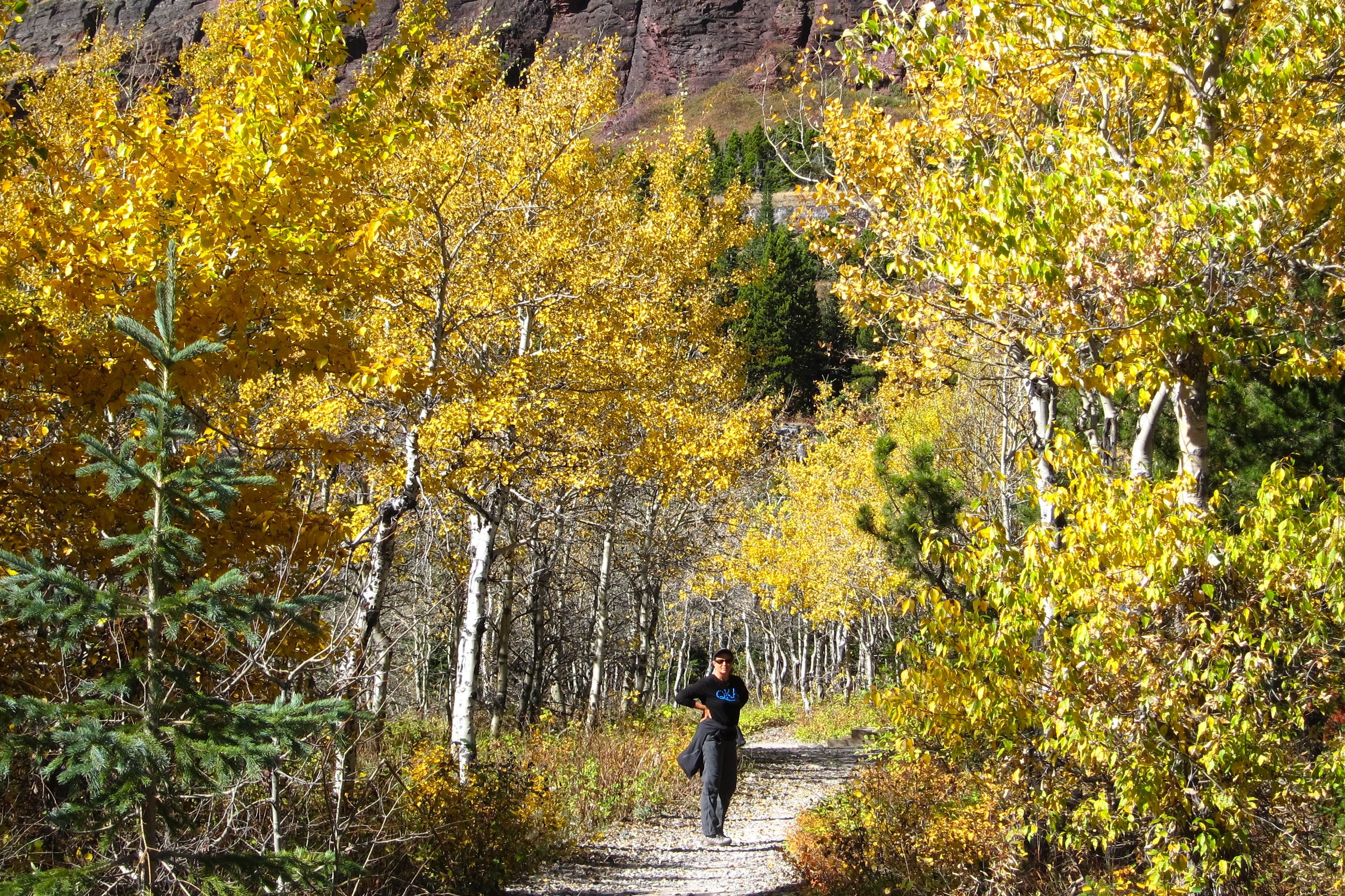
Michael has found his perfect aspen! By the dozen.

Michael has found his perfect aspen! By the dozen.

And we have another beautiful reflection, this time in Two Medicine Lake.
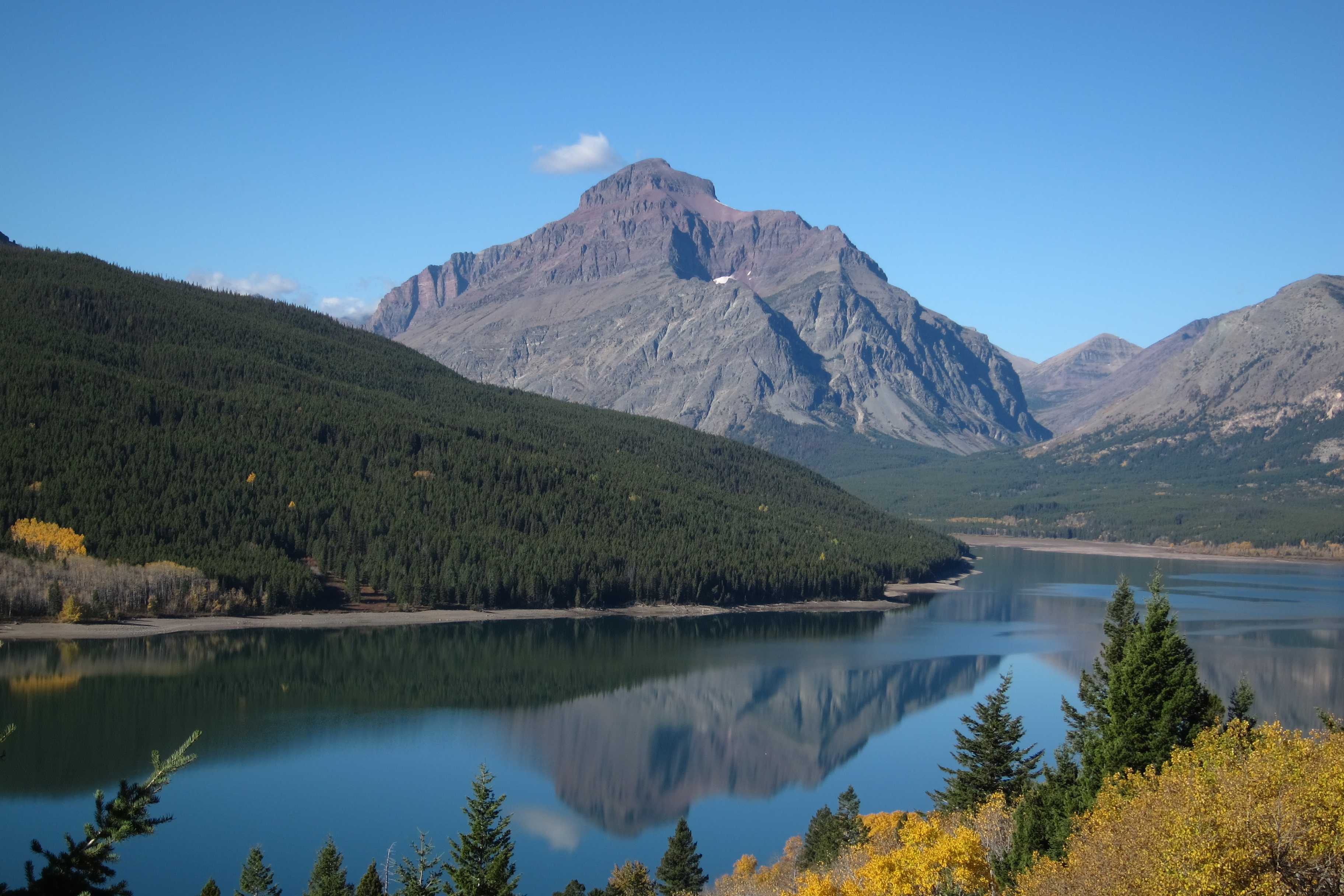
East Glacier National Park, Lake

Rising Wolf Mountain behind Two Medicine Lake

Glacier connects with Canada’s Waterton Lakes National Park, forming the joint International Peace Park World Heritage Site. From our spot at the northeastern part of the park we had a choice: Retrace our path south 2 1/2 hours around the park to head to Idaho…or go north into Alberta Canada. With the beautiful weather, we’re stampeding to Calgary Canada, an unexpected treat.
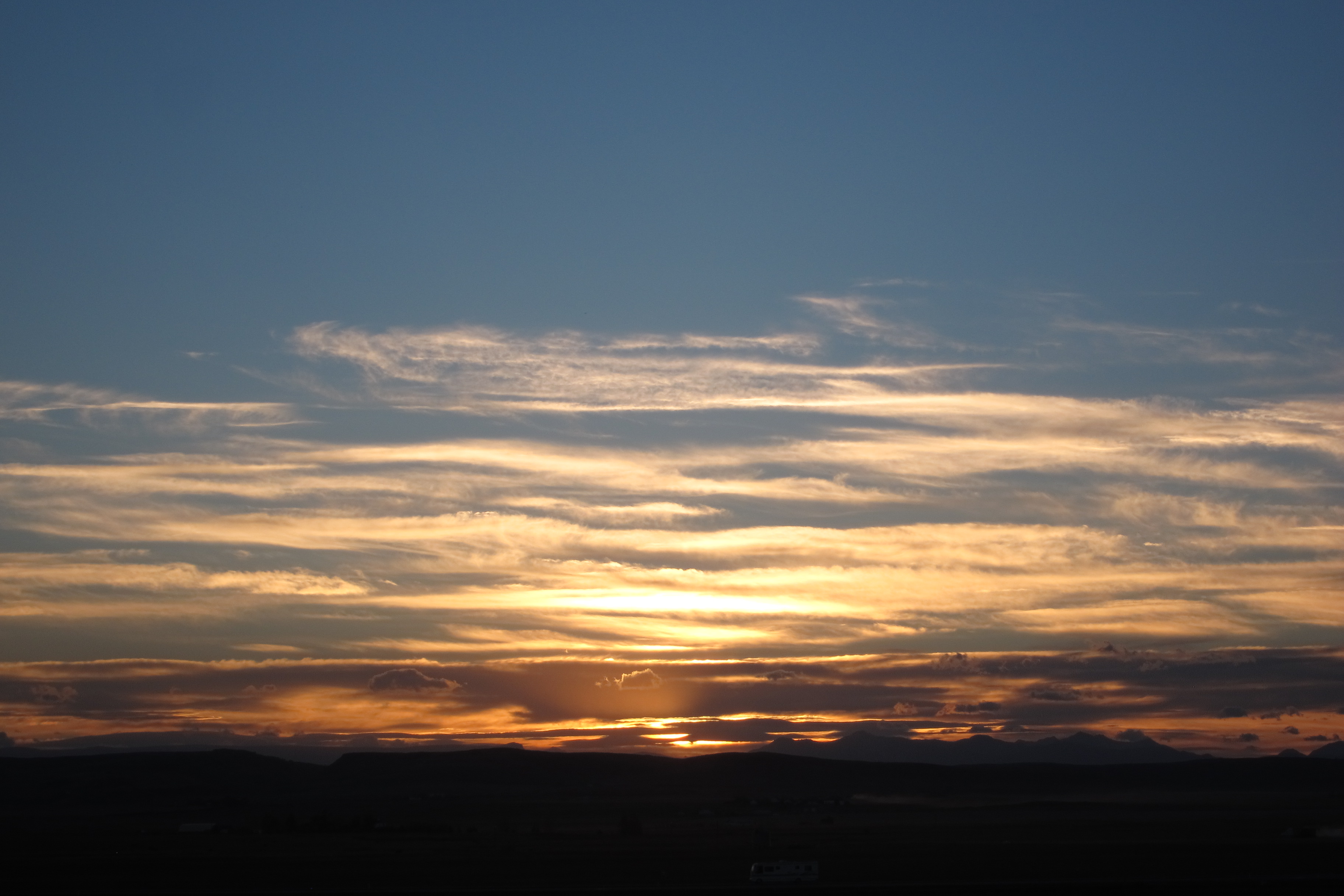
Sunset over the Calgary range

Sunset over the Alberta range


Posted in Travel Journal | Tagged , , , , , , , | Leave a comment

More Yellowstone, more wildlife – October 7 (Day 36)

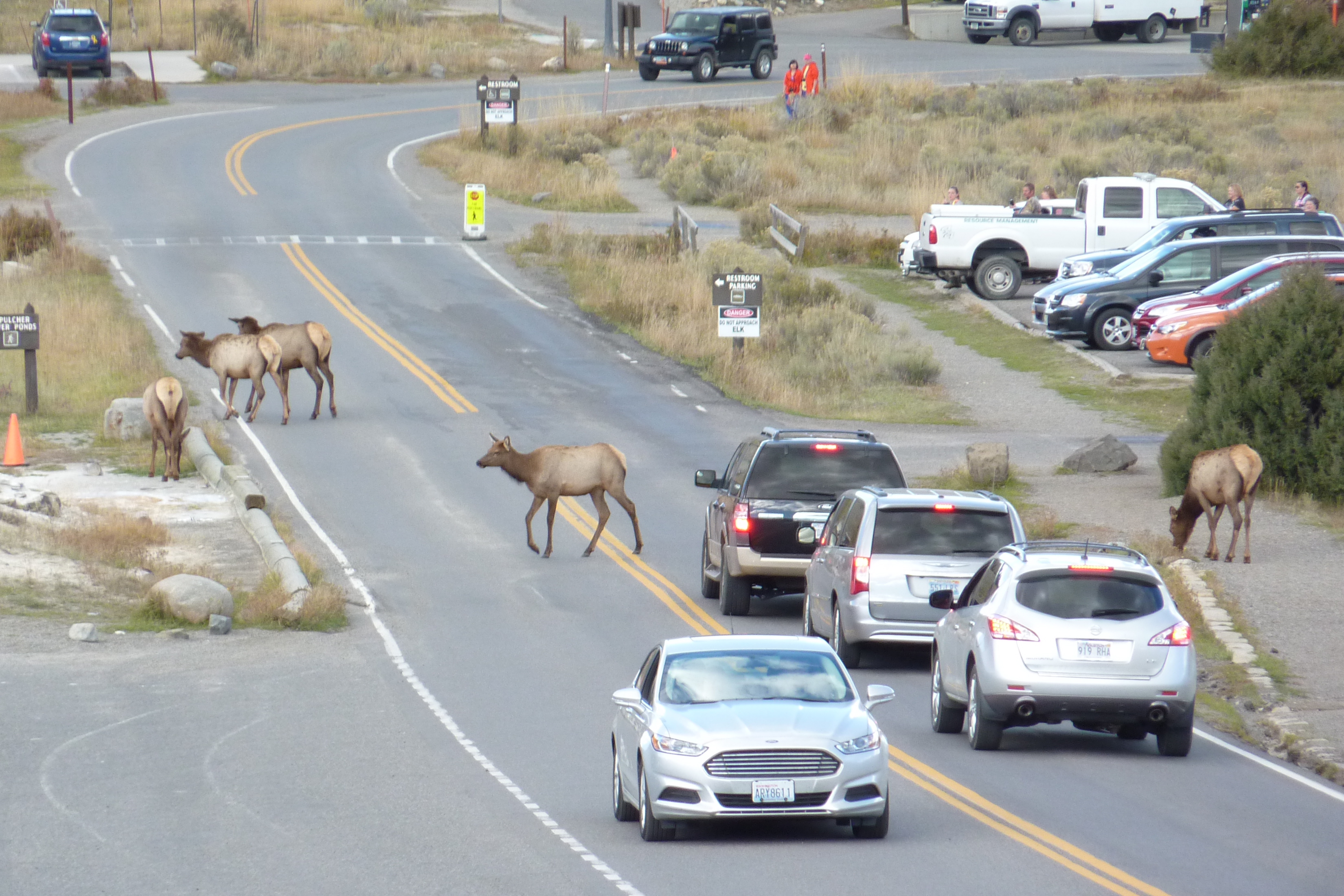
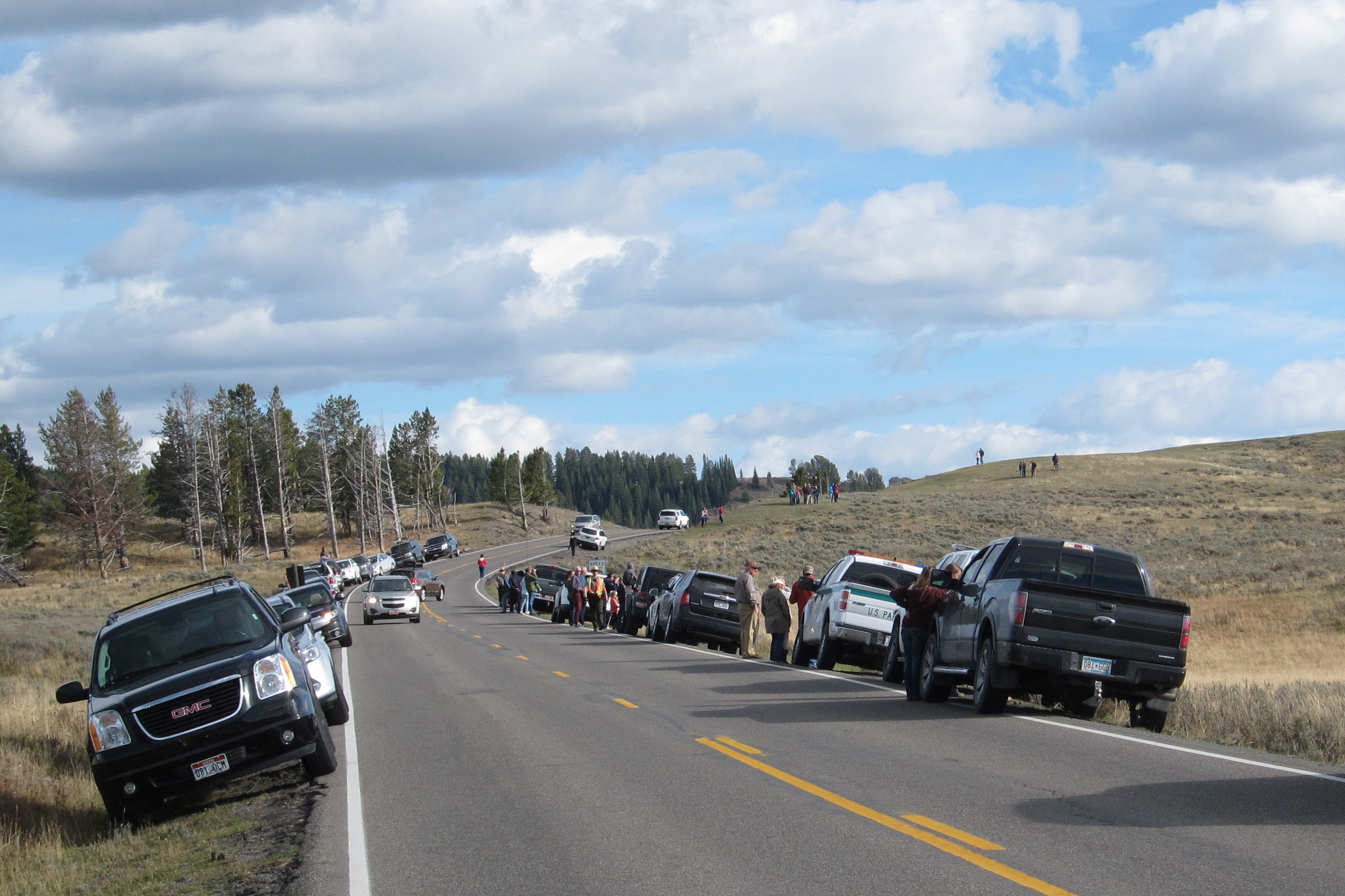
Day 2 of Yellowstone and we have a bit of a traffic jam. Not only are cars stopping on both sides of the road to allow wildlife photography, but the animals oblige by stepping right up to the roadside to make it easier for us to get their close-ups.

P1060175

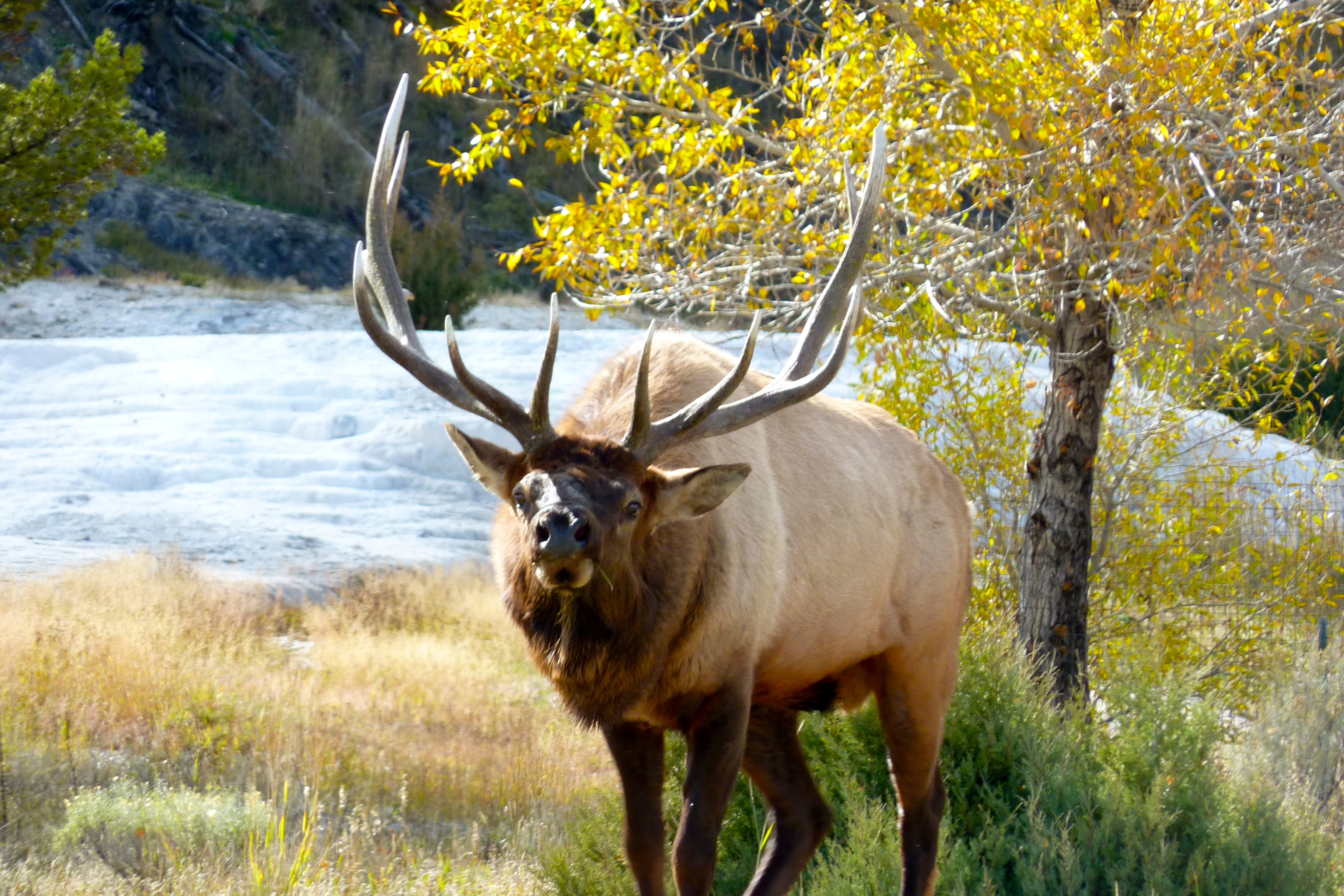
This bull elk was expressing a bit of road rage.

Some animals even compete for road use.

Why does an elk cross the road? To get to Mammoth Springs.

Why does an elk cross the road? To get to Mammoth Springs.

And others could be charged with moving violations on the highway. (Click to play video.)

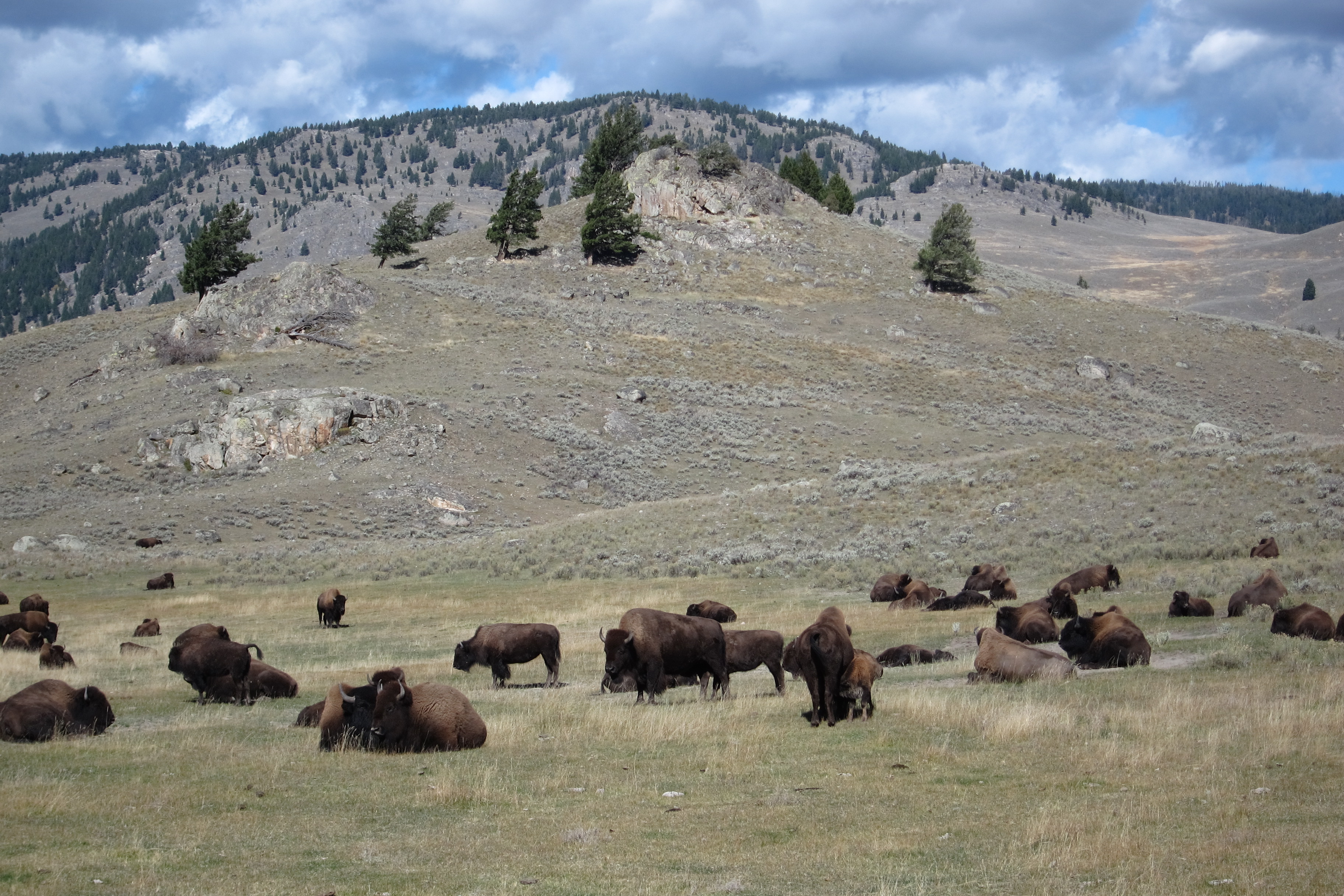
We went to the Lamar Valley, the Serengeti of Yellowstone, known for its abundant wildlife.

IMG_4019

Bison are an everyday sight.

P1060139

Reminds us of a safari from Wild Kingdom.

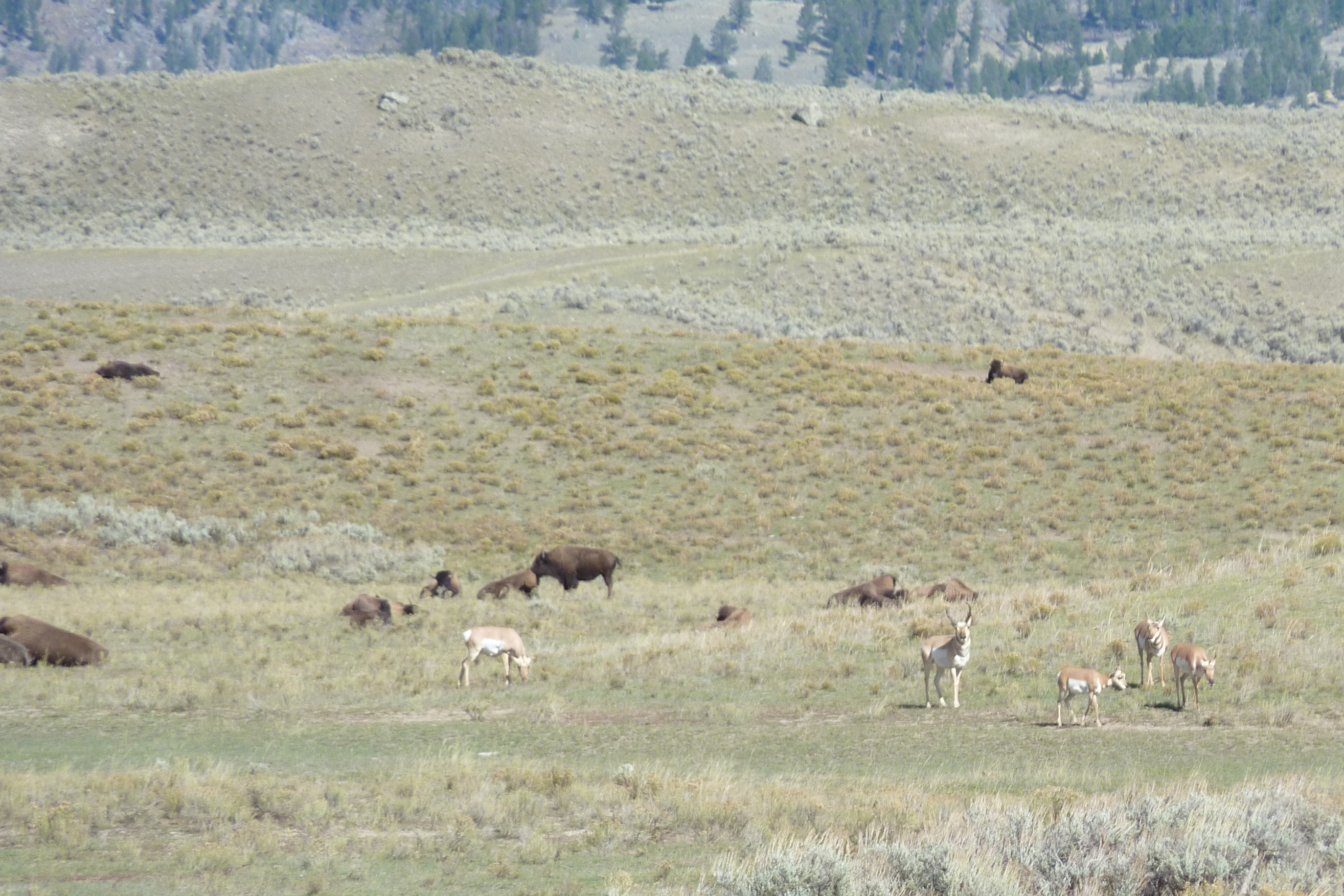
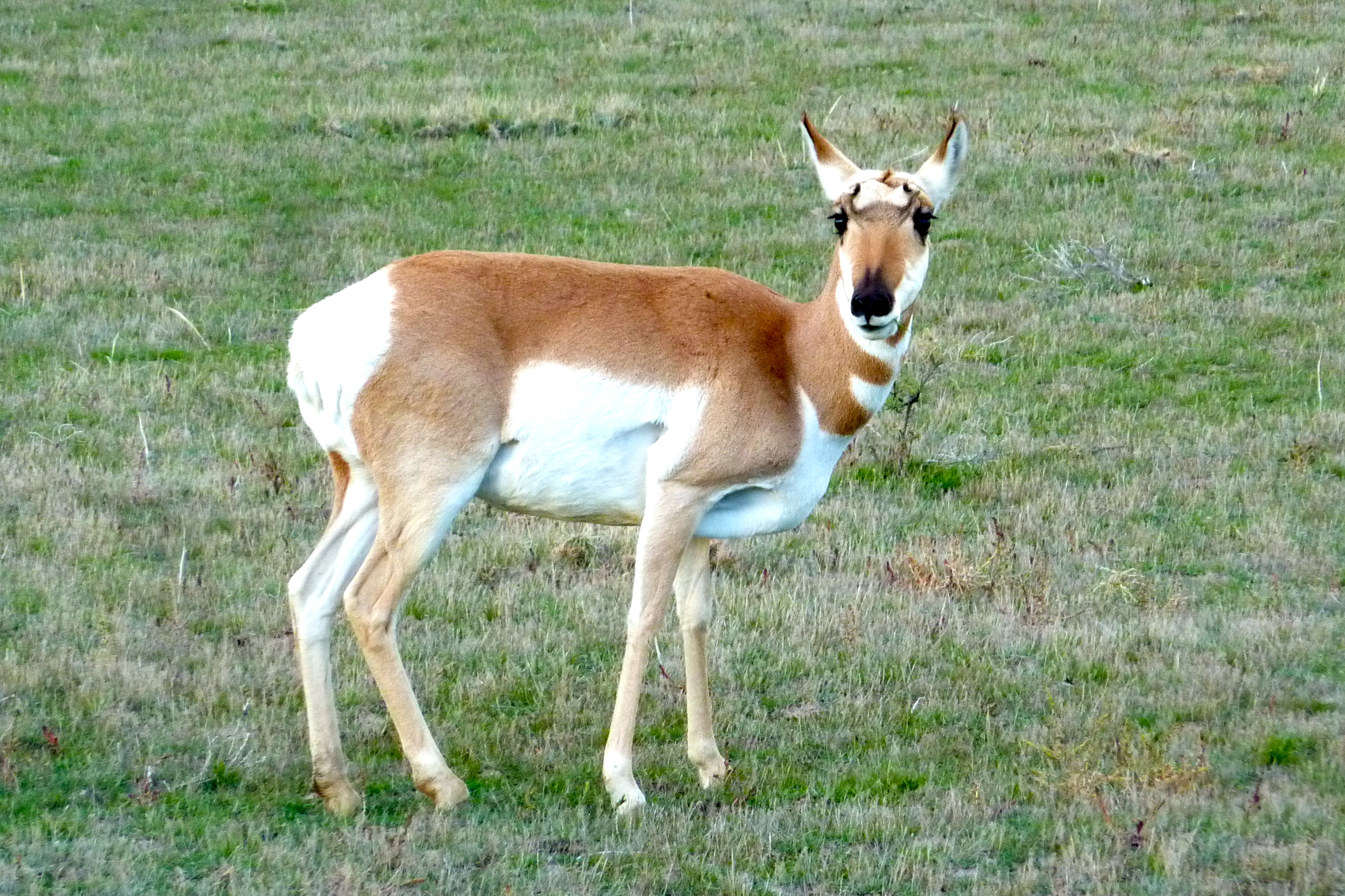
Another to add to the list: a pronghorn

Another animal to add to our list of sightings: a pronghorn

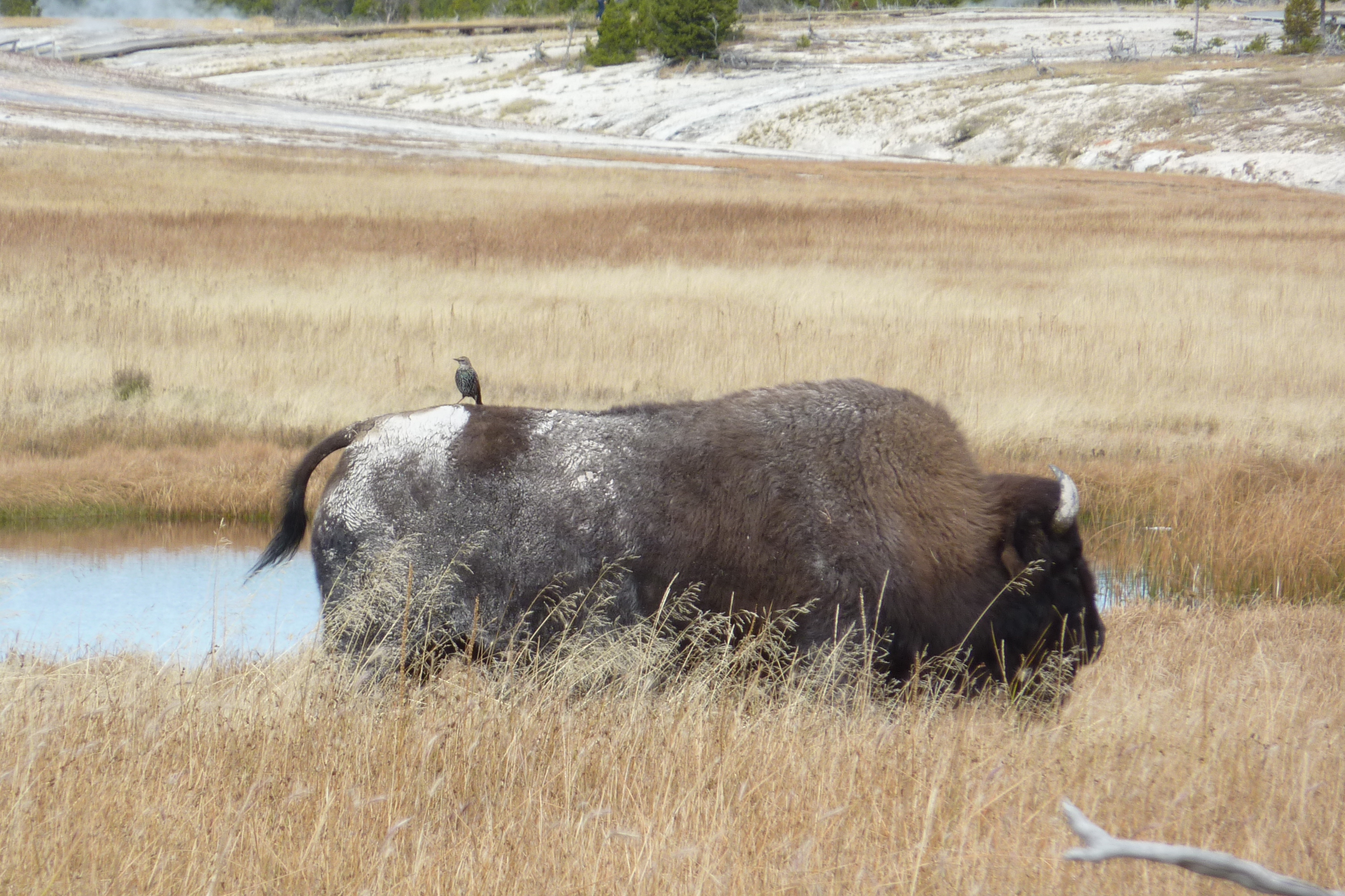
A bit of wildlife symbiosis. The bird eats bugs off the bison's back and gets a free ride.

A bit of wildlife symbiosis. The bird eats bugs off the bison’s back and gets a free ride.

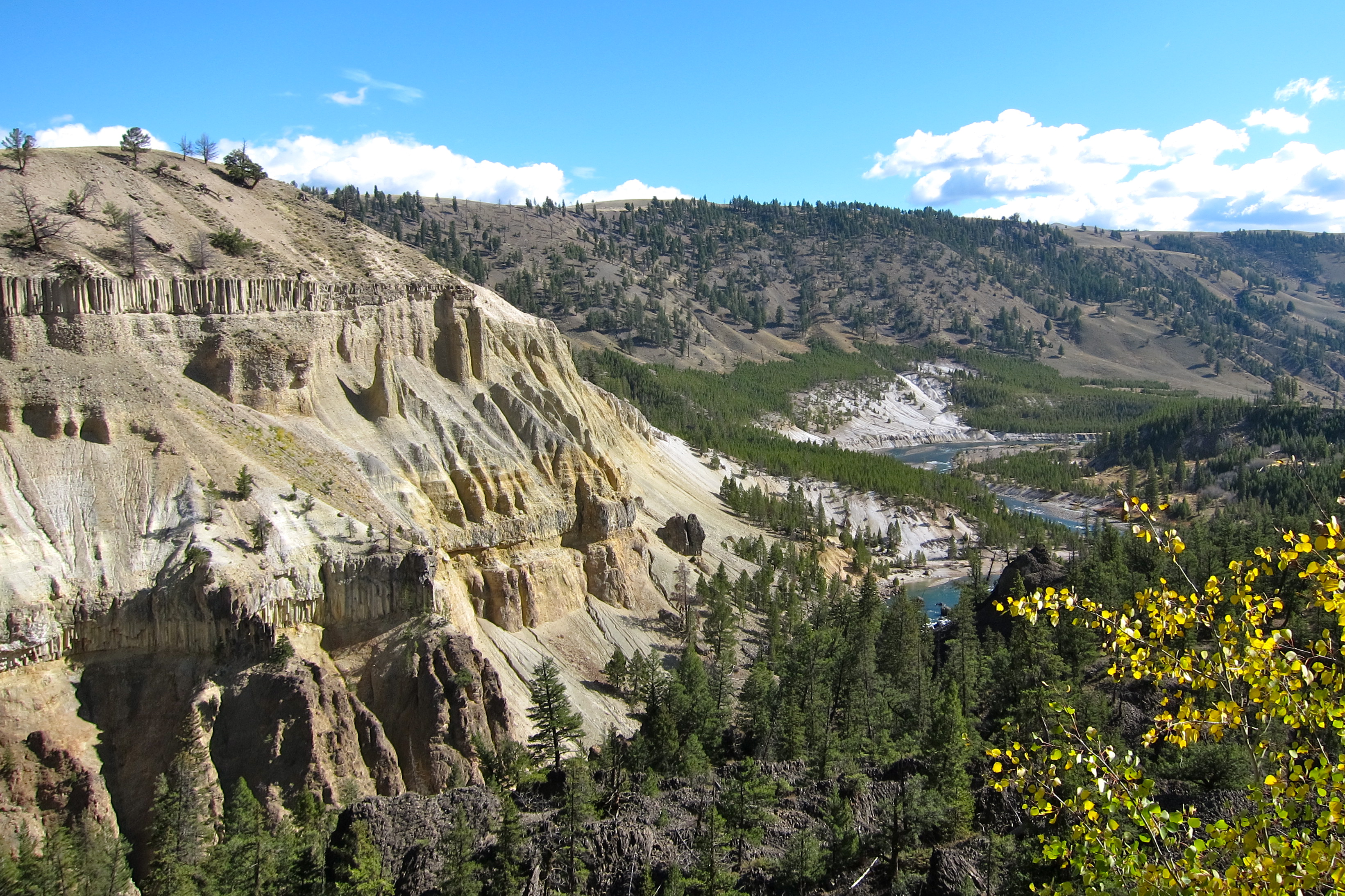
Moving from Lamar to Canyon, we saw that Yellowstone gets its name from its yellow stone. Duh! This is caused by the thermophiles, colorful heat-loving organisms that somehow find nutrients in the sulfur-rich waters coming out of the ground nearly everywhere, including the Grand Canyon of the Yellowstone River.


The yellow stone of the Grand Canyon of Yellowstone

The yellow stone of the Grand Canyon of Yellowstone

IMG_4001

More colorful rock near Canyon, Wyoming. The rough ridge circling the top was actually formed by volcanic venting.

IMG_4006

Calcite Springs at the lower end of Yellowstone’s Grand Canyon.

Look closely

Look closely at the base of Calcite Springs to see the puffs of steam just above the river. (Click to enlarge.)

We can’t ignore Old Faithful, which goes off fairly regularly every hour and a half to two hours. Rangers predict the timing, height, and duration based on observations of the most recent eruptions. The park conveniently provides rows of benches for geyser-watchers to wait comfortably and then ooh and aah over the magnificent spectacle. It is grand, although we first watched the eruption of another very active geyser nearby called Grand Geyser. Being here is a bit like Whack-a-Mole; one geyser pops up and dies down and then another pops up in a different spot. There’s no stopping them.

P1060006

Thar she blows. Note another geyser going off in the background at the same time.

Many of the 500+ geysers have been named, including Old Tardy, apparently less reliable than desired. Spasm Geyser is one of our favorites.

P1060082

We don’t see anything like this Spasm near Keuka (QKA).

Geysers here have their own cult following. We saw an eruption at Great Fountain Geyser. After it stopped, we were about to leave and a bearded man behind us said, “You might want to wait.” How long? “Maybe 15 minutes.” So we waited. Sure enough, the next phase of the eruption came a few minutes later, more spectacular than the last. The adage, “Where there’s smoke, there’s fire,” becomes “Where there’s steam, there’s geyser” in Yellowstone.

IMG_3954

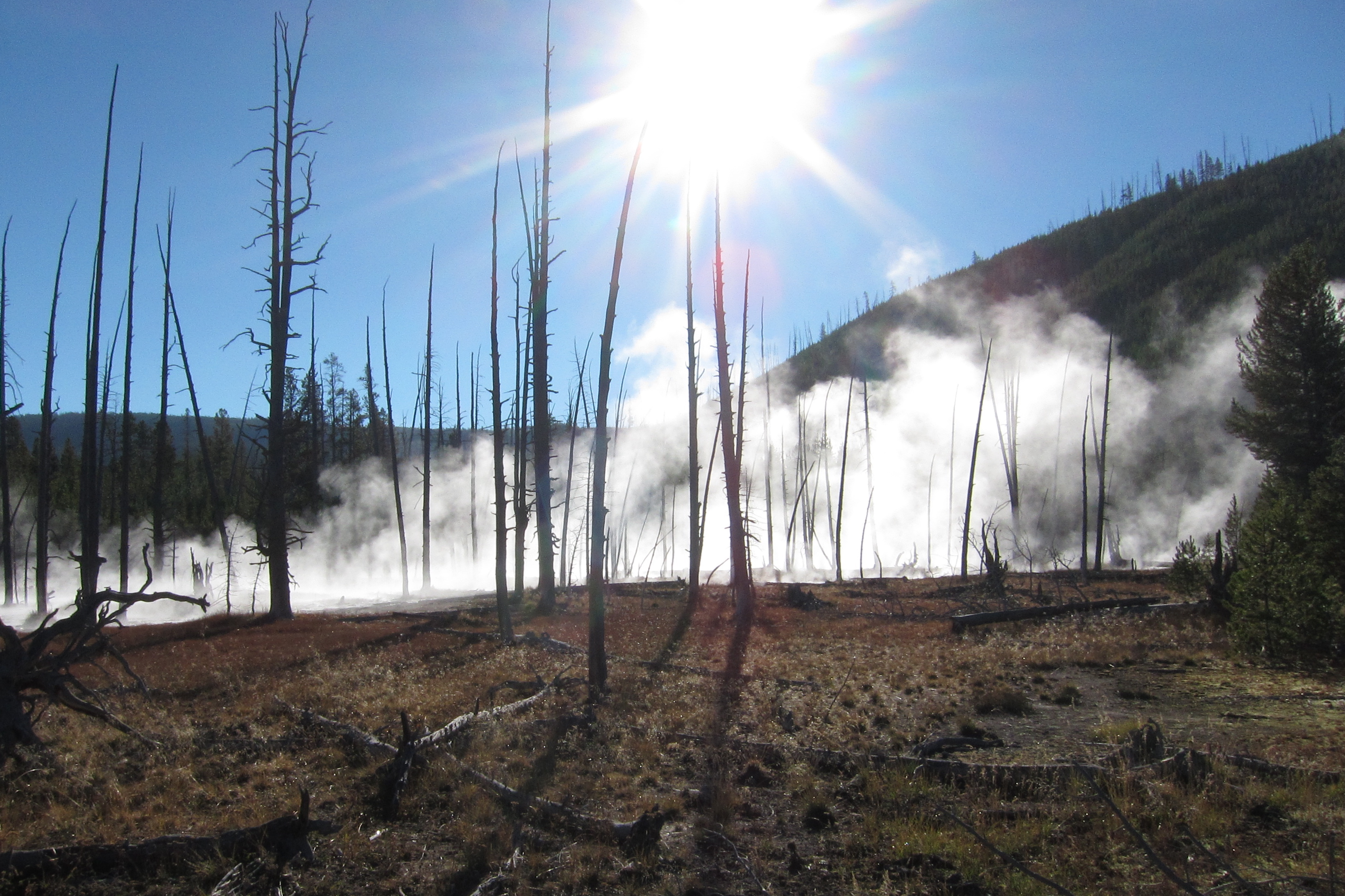
One of over 10,000 thermal features in Yellowstone. Intense surface heat has killed the trees.

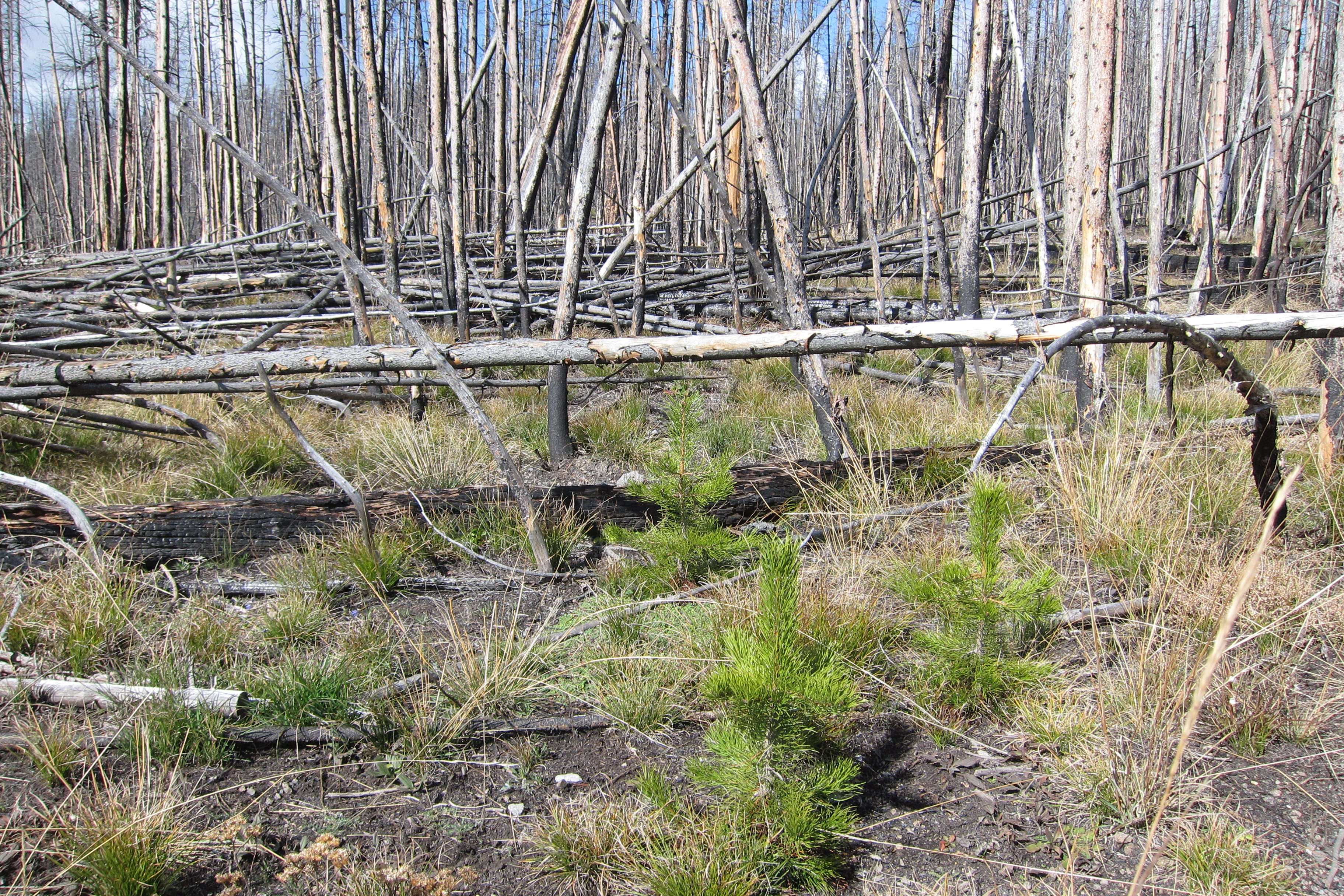
There have, of course, been real fires in Yellowstone. In fact, fire is an important factor in the long-term maintenance of the park’s pine forests. Michael did an ecology report in the fifth grade back in Chelmsford describing the metamorphosis of a forest. Now we’re seeing the process live here in Yellowstone’s massive woodlands. Lodgepole pine trees grow tall and thin, holding their small cones tightly closed.

IMG_3790

Millions of trees in Yellowstone’s pine forests.

But then fire hits and leaves burned trunks scattered like Pick Up Stix on the hillsides.

IMG_3985

Thousands of lodgepole treetrunks scattered over the hills.

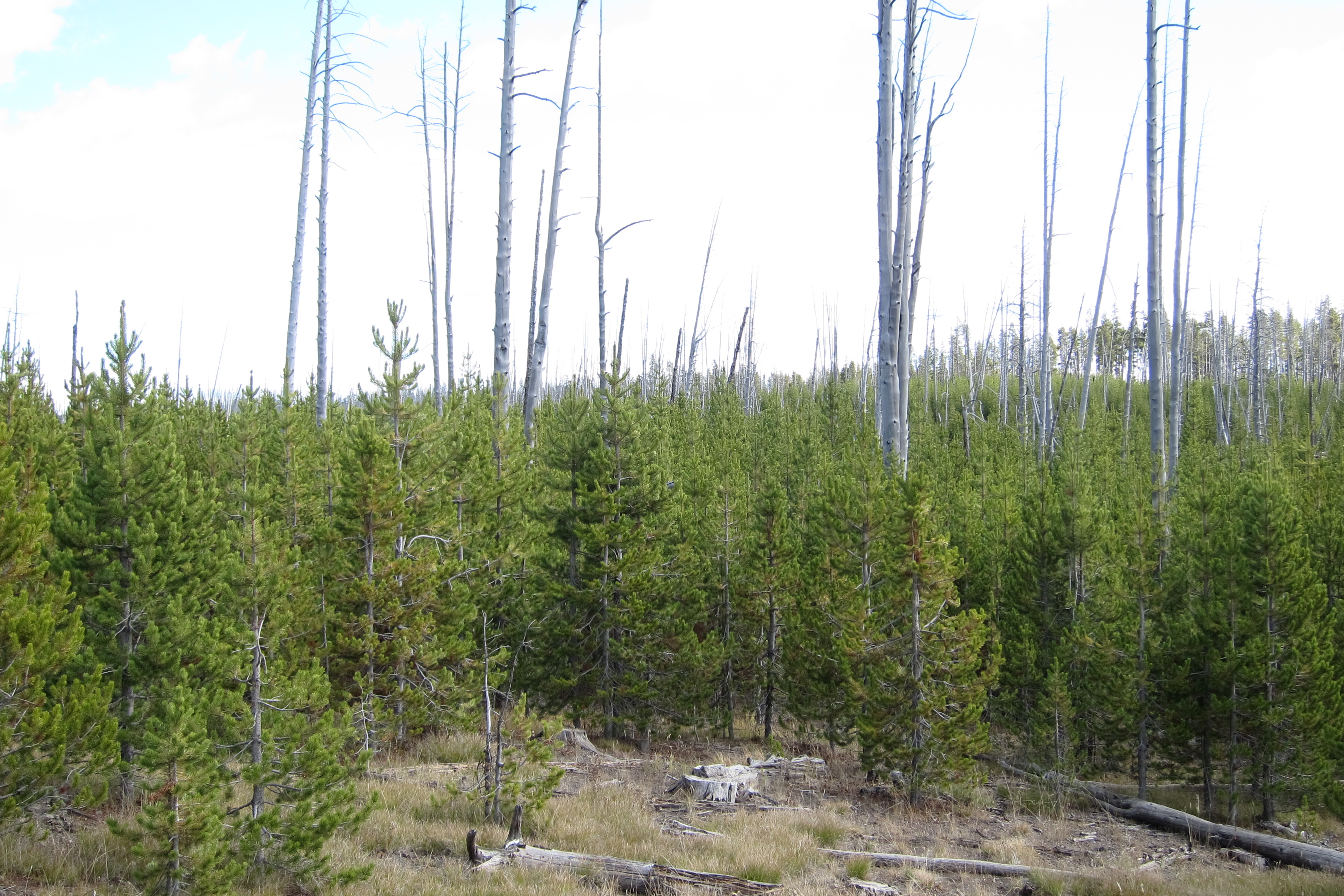
Fires are necessary. Without the intense heat, the “serotinous” cones would not open and release seeds. The fire’s carbon-rich ash provides nourishment for new growth. Within a season or two,  seedlings sprout up to rebuild the forest.

IMG_3811

The cycle continues…

IMG_3800

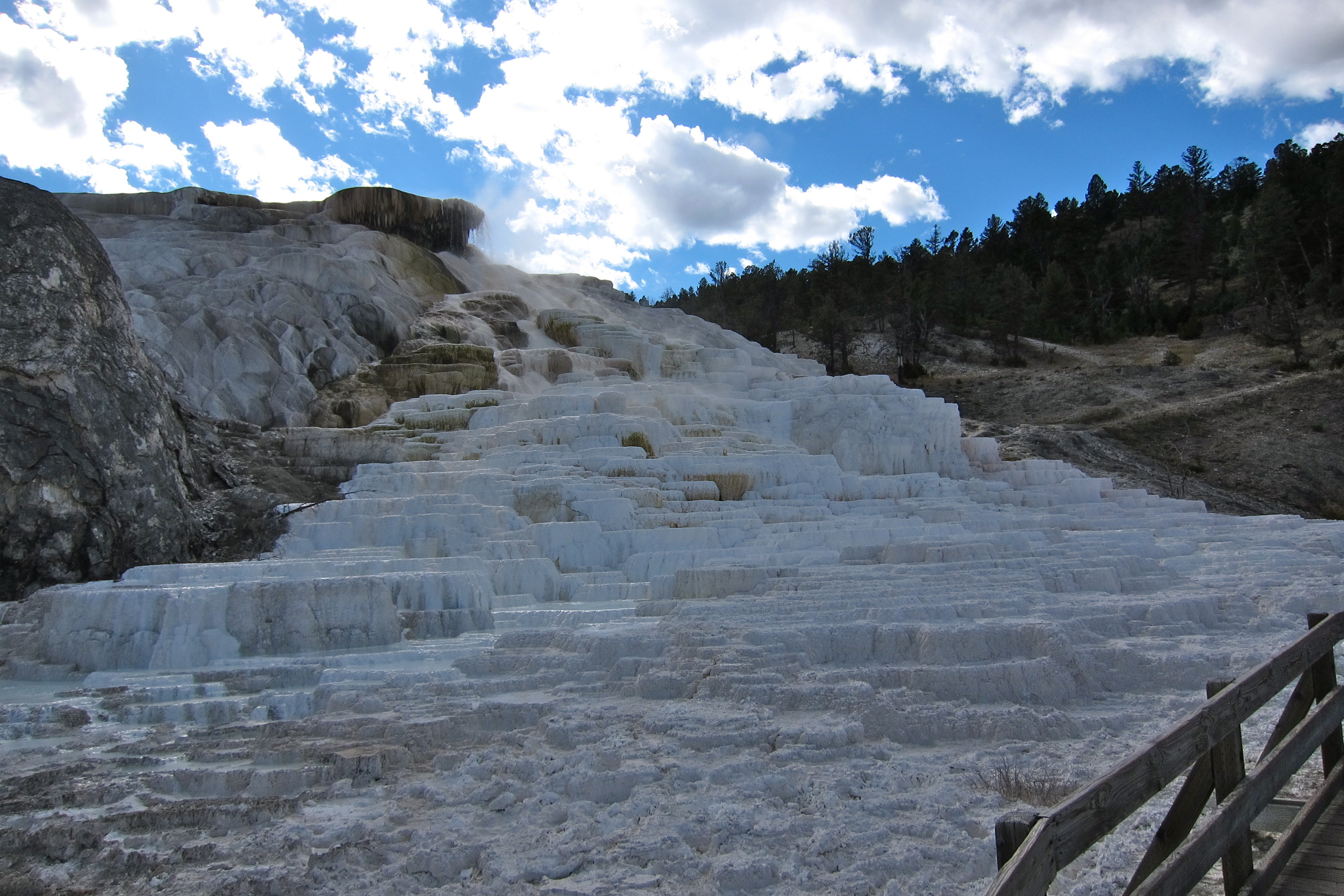
Mammoth Hot Springs is at the very northern end of Yellowstone. Here more thermophiles color the terraced deposits that build from hot water constantly flowing up through the area’s limestone. Elk and a lone bison seem to have made their home here to entertain the tourists or enjoy the warm air. Must be a stunning sight in a snow storm.

IMG_4036

Terrace after terrace of calcium deposits continuously building at Mammoth’s Palette Spring.

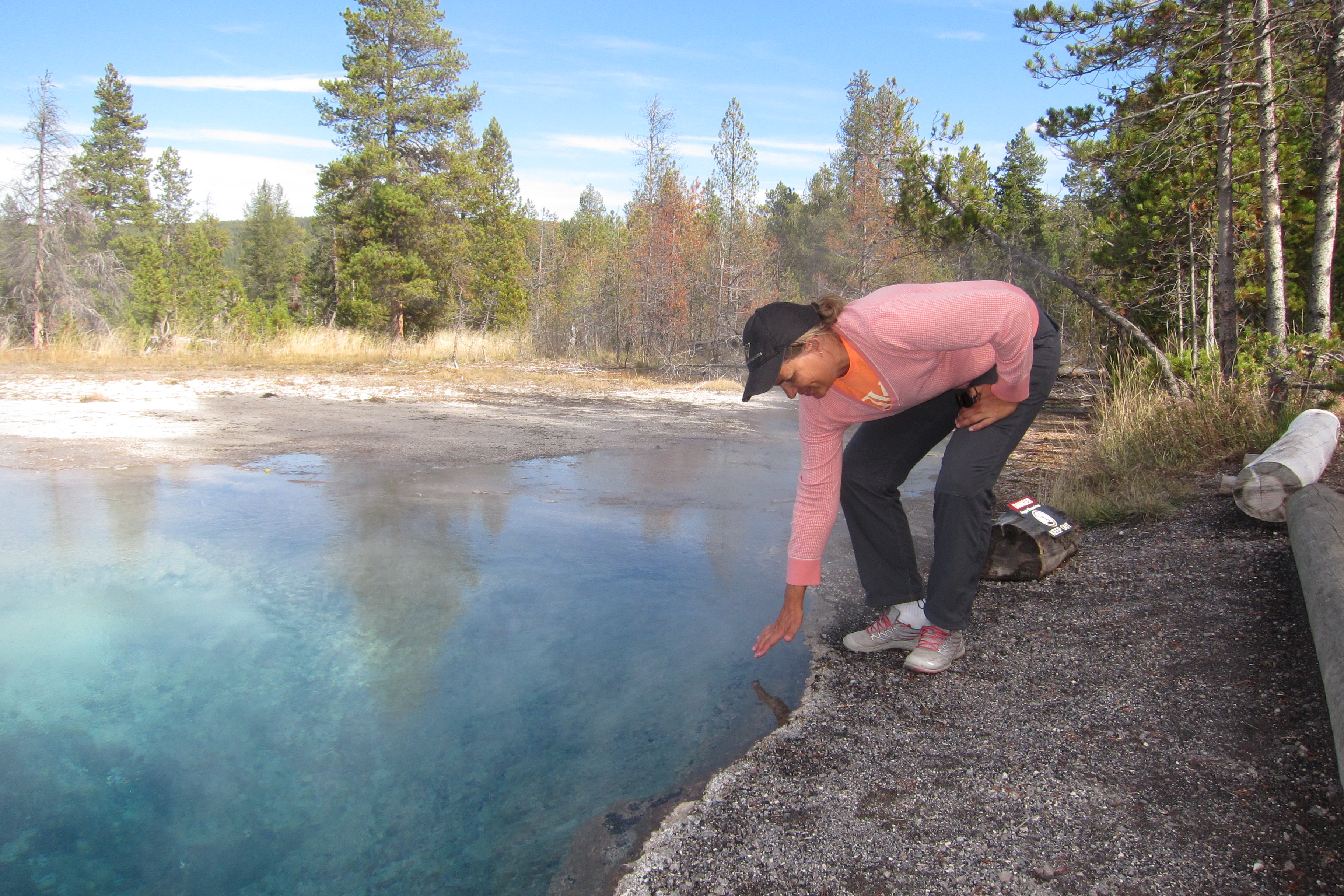
We wondered just how hot the hot spring waters are. Some areas were clearly boiling, so probably over 200 degrees. Do not touch! This isolated thermal pool along a quiet road was probably in the 120 range, hotter than a hot tub, but not quite scalding.

IMG_3904

Not too hot to touch, but not a good idea to jump in.

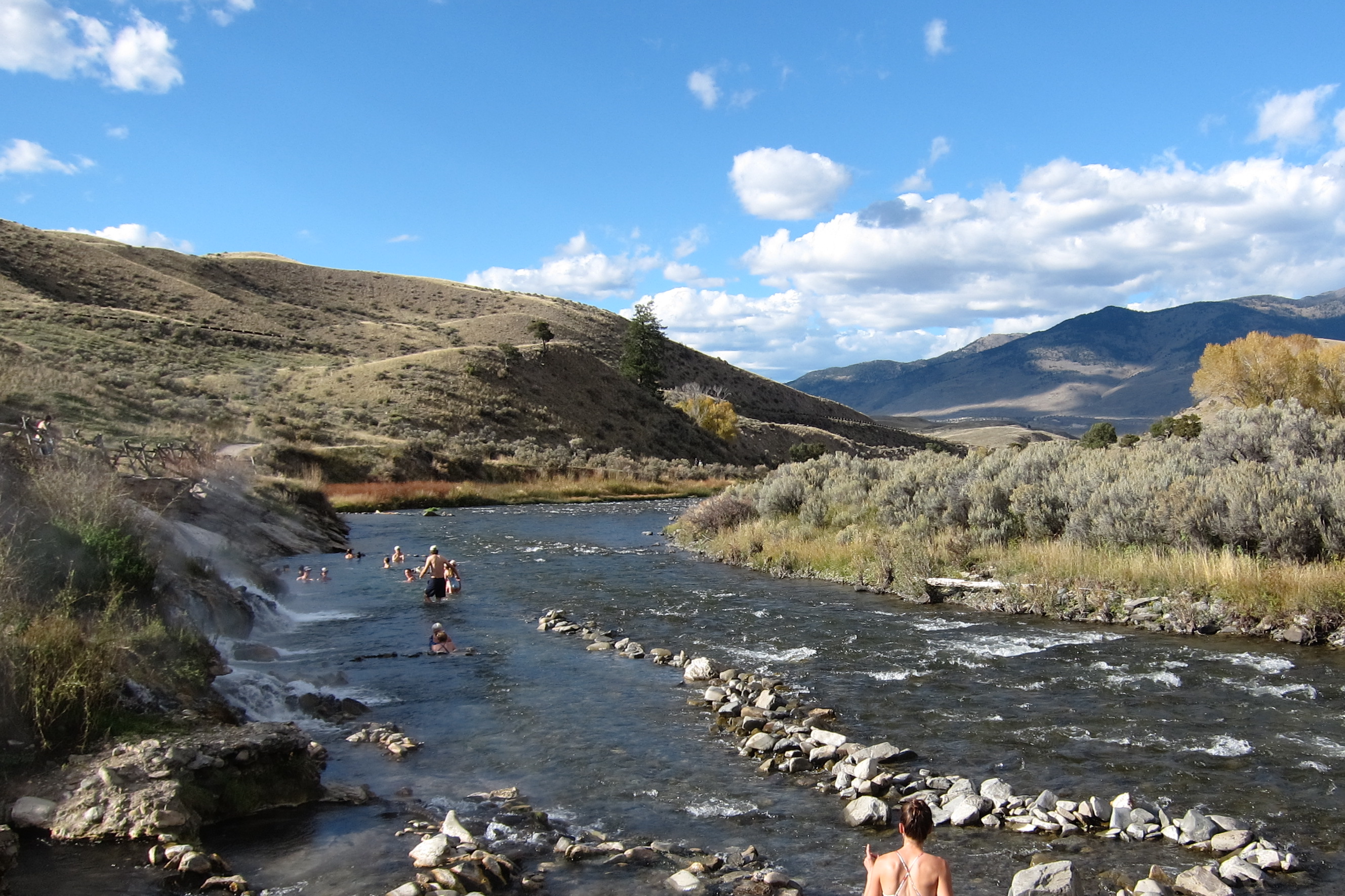
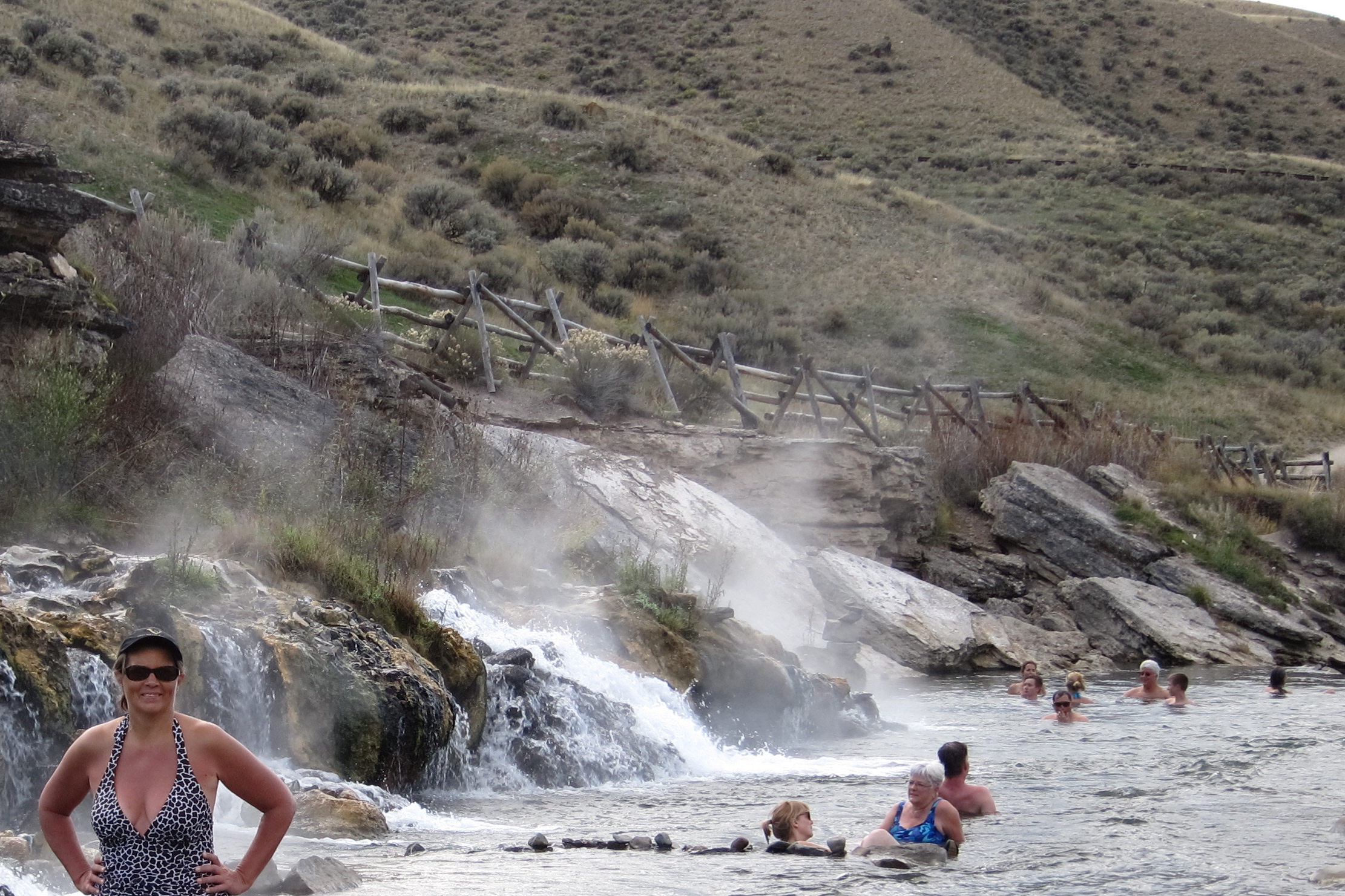
Our last stop inside the park was Boiling River. A hot spring gushes out of the ground next to the Gardiner River and spills into it for about 20 yards along the river’s shore. People have lined up rocks in the river basin to permit just the right amount of cold river water to mix with the hot spring water to make a natural hot tub.

IMG_4045

The average temperature was about 85, but 120 on the left and 50 on the right. Nice if you keep rotating. Michael kept looking for the perfect Goldilocks “just right” spot.

IMG_4050

Really hard to leave…but we must move on.

Everyone we’ve spoken to has congratulated us on the unseasonably great weather we’re having this week. It has been truly fantastic. Tomorrow we head to Glacier to enjoy the last few days of this beautiful autumn and look for mountain goats.


Posted in Travel Journal | Tagged , , , , , , , , , , , | 2 Comments

Yellowstone, October 5, Day 34

Wyoming is like one giant national park. No sooner do you leave the Tetons going north than you land in Yellowstone, America’s very first (and some would say best) national park, established in 1872.

Another great national park...

Another great national park…

This is where we expected to find the real animal treasure trove. We weren’t disappointed. Six hours into our visit we’ve “bagged” seven animal species and barely broken a sweat.

We saw our first grizzly bear. He was actually bounding across the field toward the road, but then he stopped in a hollow, rolled on his back, and waved his four paws in the air. The ranger said she’d never seen anything like it. We could follow this activity with binoculars, but couldn’t get a photo. We did, however, capture the grizzly-hunting crowd of wildlife paparazzi. They’re everywhere. (We are among them.)

If you see a car on the side of the road, stop. There is an animal out there somewhere. (The grizzly, here.)

If you see a car on the side of the road, stop. There is an animal out there somewhere. (The grizzly is off the picture to the right.)

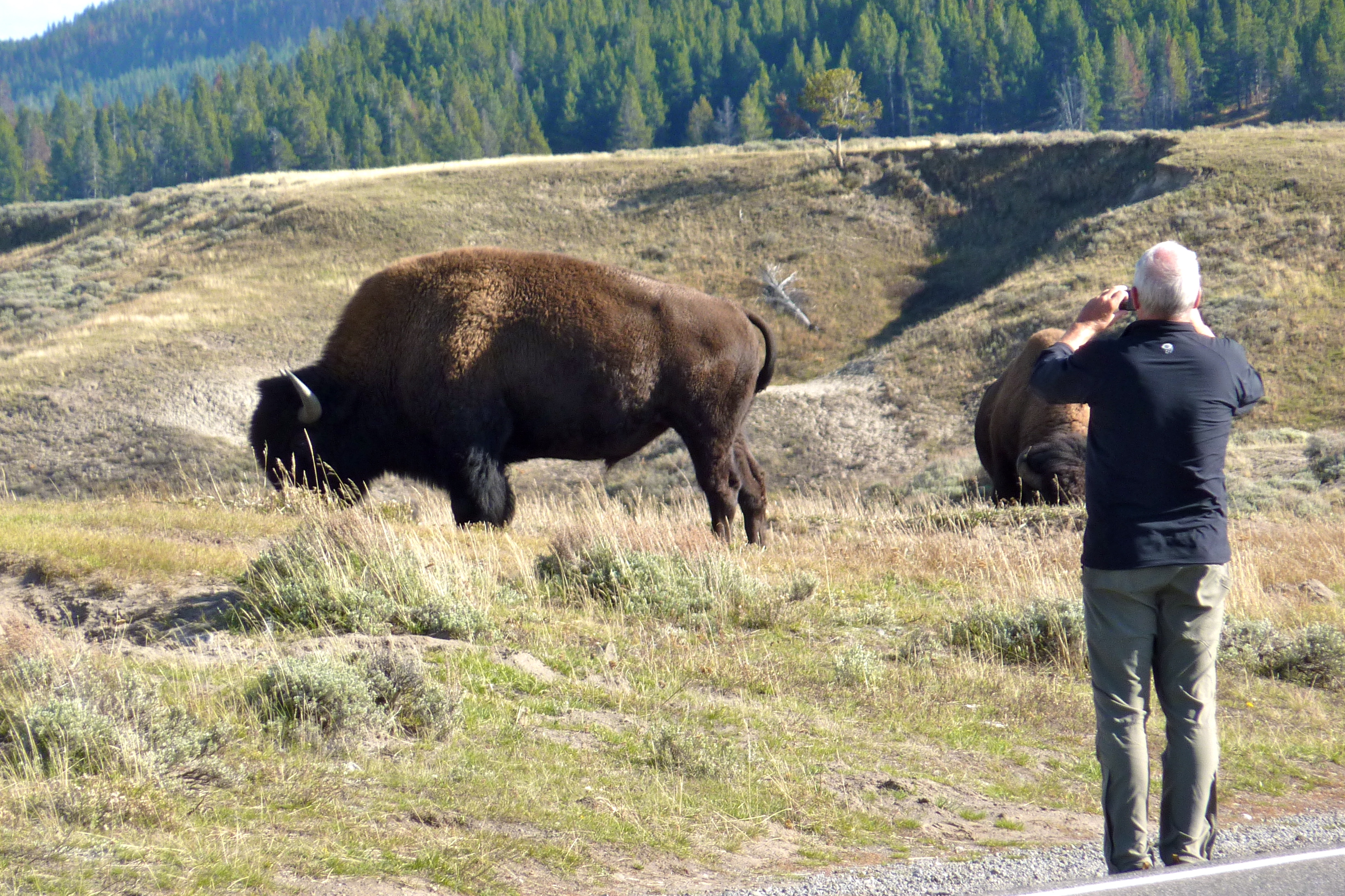
Park visitors are told to stay 100 yards from a grizzly or wolf and 25 yards from a bison. Michael wasn’t exactly following that rule here.

Probably more like 25 feet.

Probably more like 25 feet.

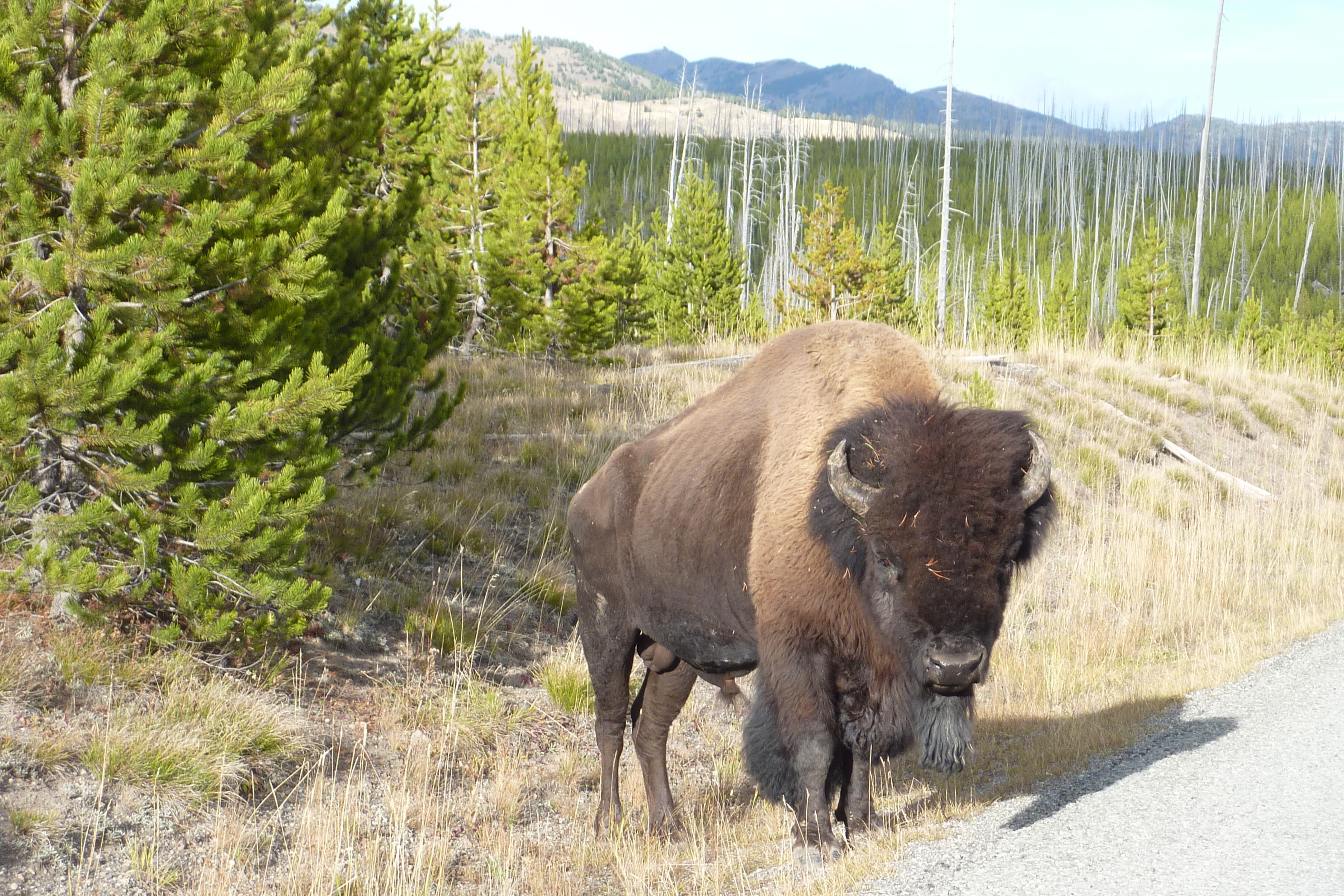
And this is the bison we saw while talking on the phone with Michael’s brother, Daniel, back in Maryland. We rounded the corner and came upon this guy.

Four feet from the car

Four feet from the car. We couldn’t help it, we swear.

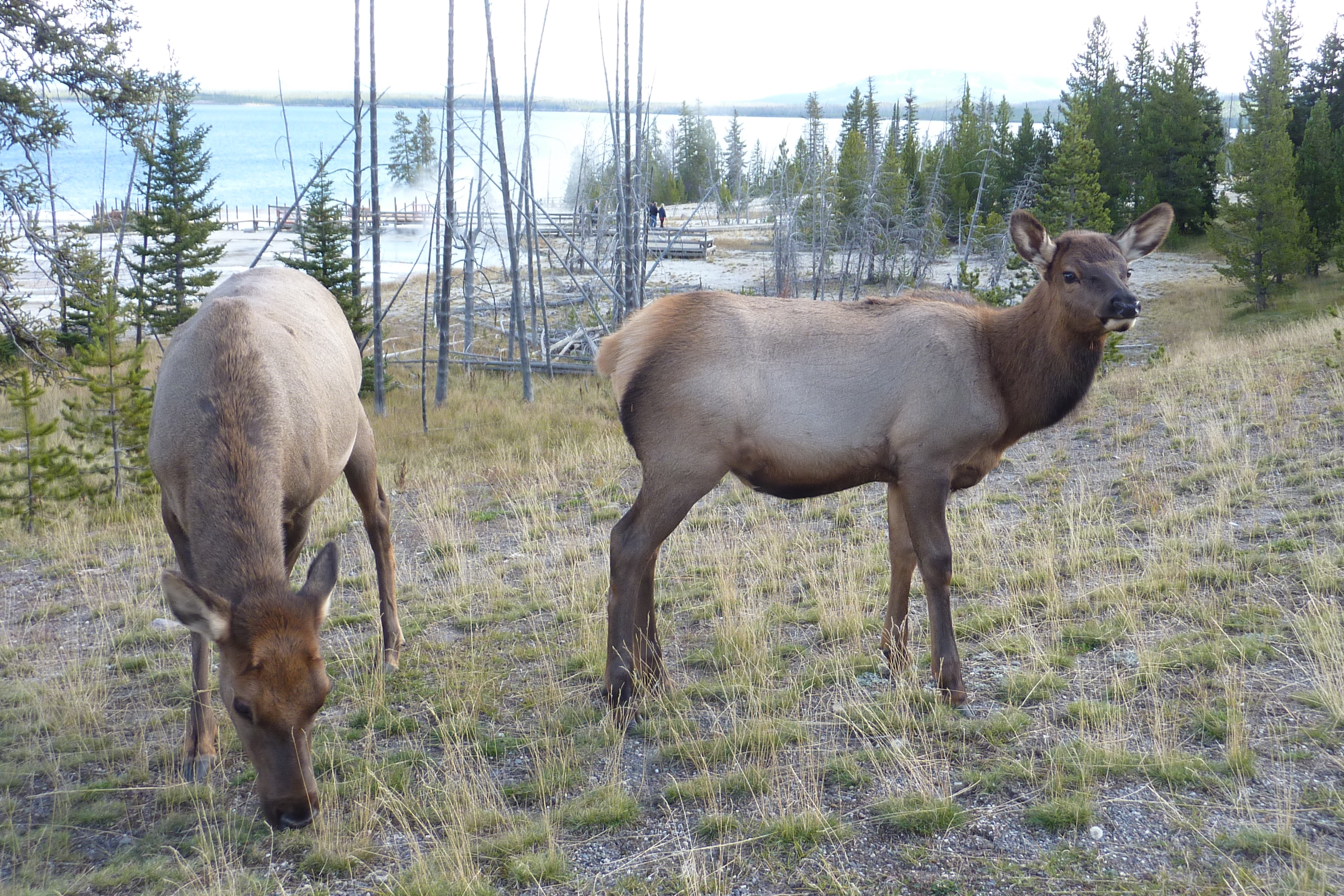
We also saw more elk, much closer this time.

A bull with a rack of ???

A bull with at least an 8-point rack.


And his harem. Note the white hind quarters.

And his harem. Note the light-colored hind quarters.


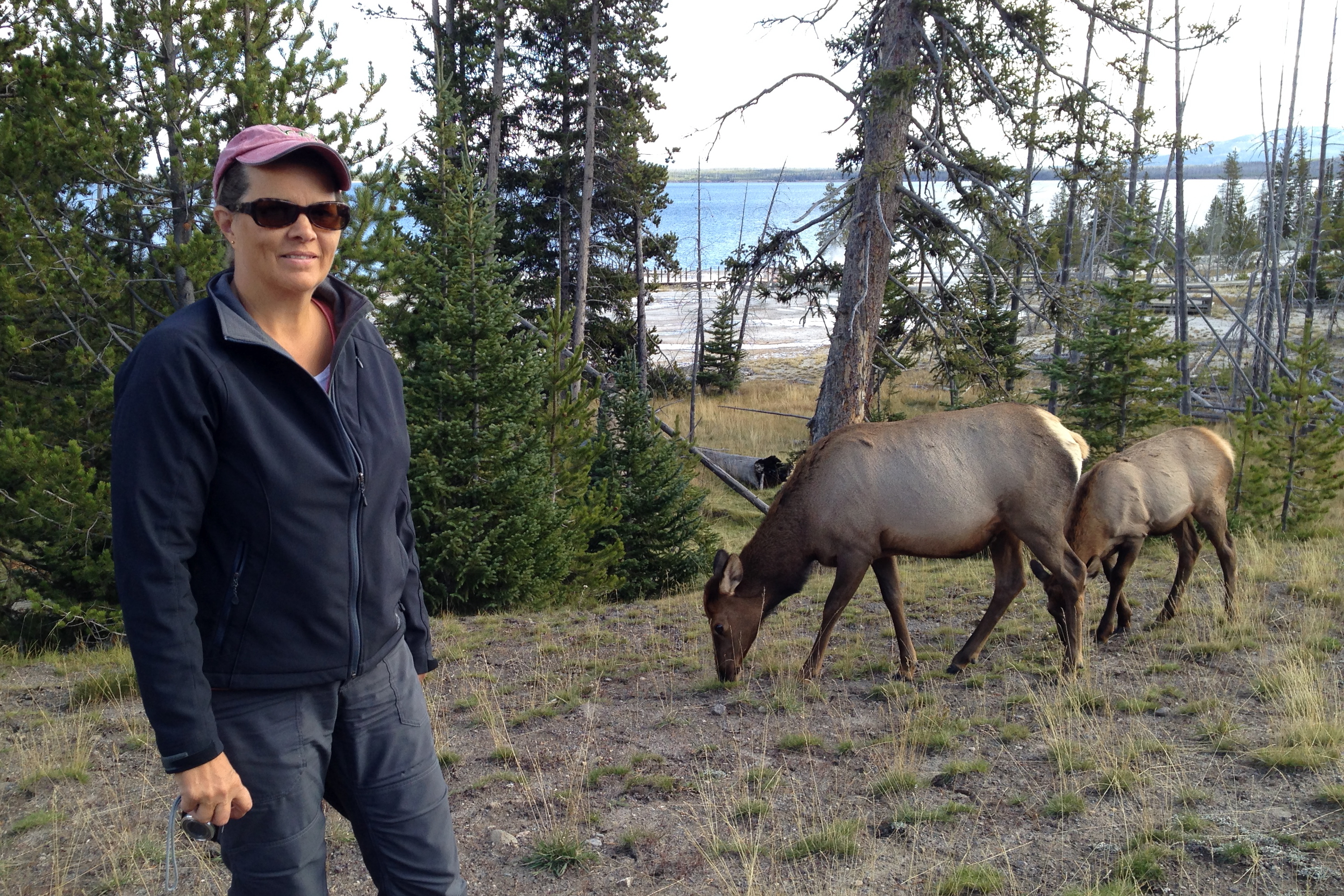
Nancy at least 25 yards away, right.

Nancy at least 25 yards away, right?

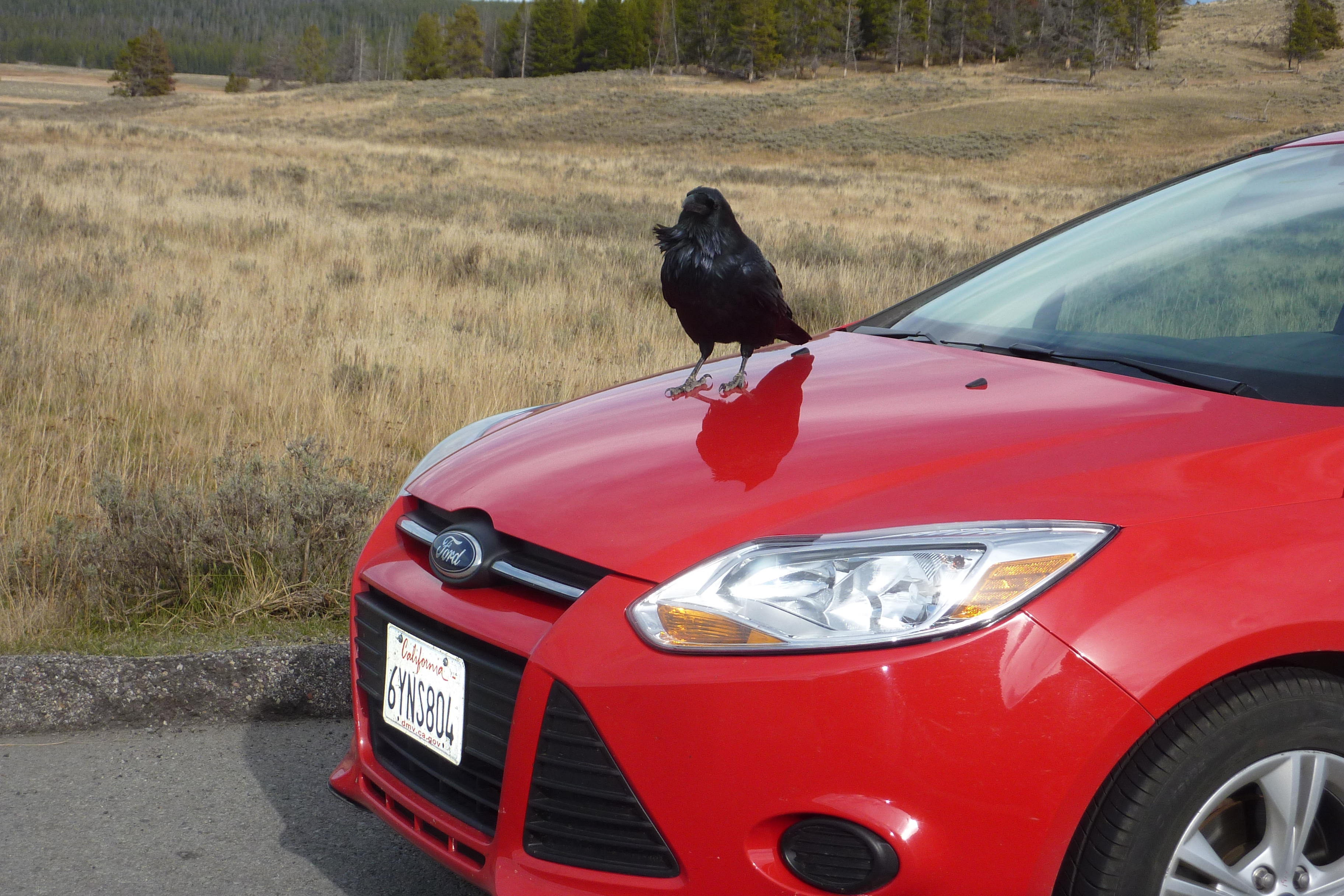
And a personal favorite, this black carrion bird perched on a car near the grizzly sighting. We think this pair of birds were just waiting for the bear to attack and devour the car’s owners. Then the birds would pick their bones clean.

We thought buzzards circled overhead.

We thought buzzards circled overhead.

Besides wildlife, Yellowstone is known for geysers, not just Old Faithful, but over 10,000 steamvents, mudpots, geyers, and sulfurous hot springs scattered throughout the park. In fact, most of Yellowstone is a giant caldera, or cauldron. Brian Williams even reported on the “news” earlier this year that Yellowstone was one giant supervolcano that was going to blow any time and wipe out massive parts of the US. Read the NPS response, saying that it is just a hoax…we hope.

The blue abyss, a sulfurous pool

The blue abyss, a sulfurous pool

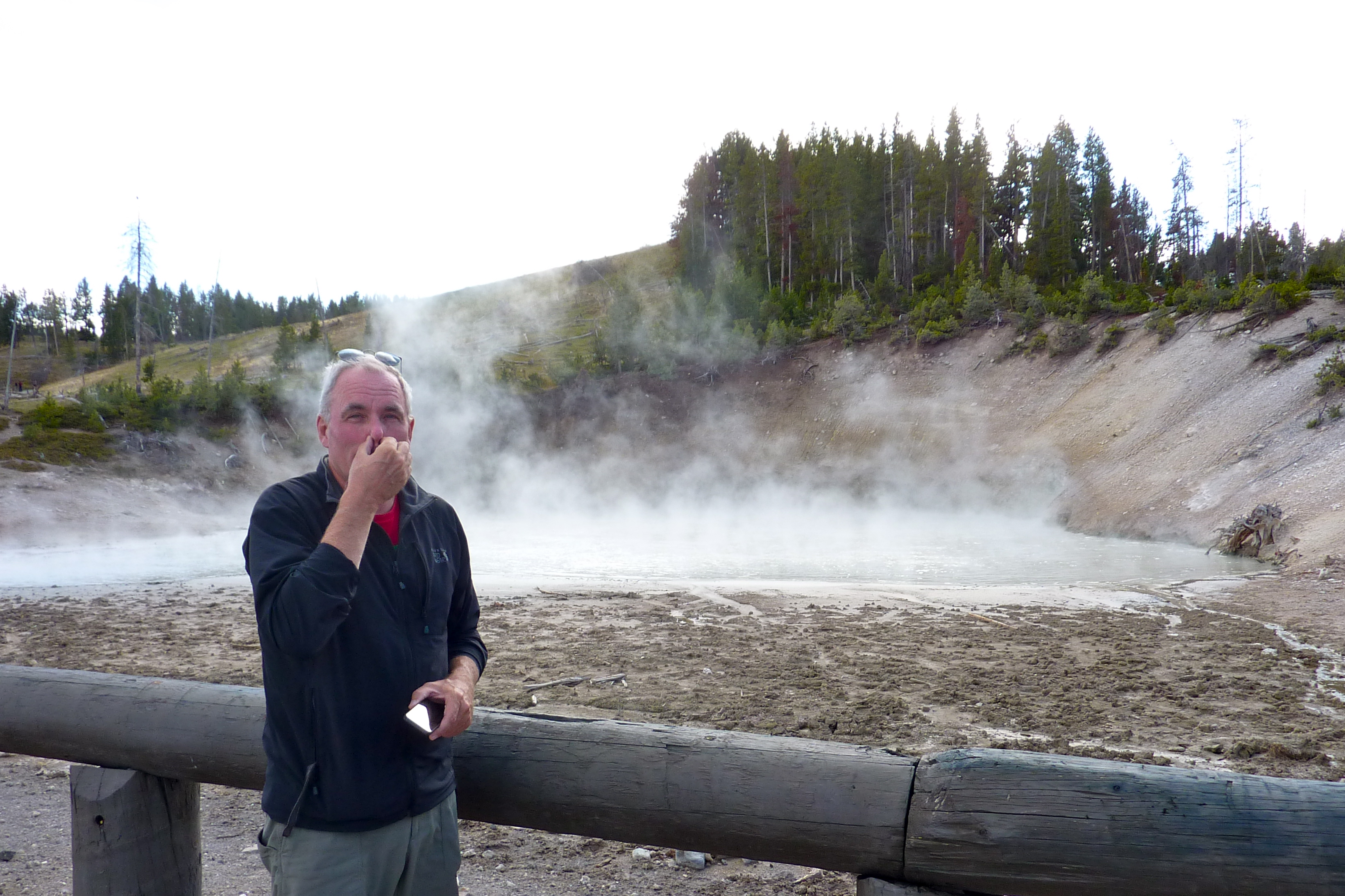
Ready to blow or not, these baths smell like sulfur. They’re actually sulfuric acid at a pH of 1.0, and some are so hot they’re boiling.

Just like Rota Rua, kids.

Smells just like Rotorua, New Zealand.

This thermal activity has wiped out forests practically overnight. The surface temperature away from the geyser reached 200 degrees F a few years ago and killed off a whole hillside of trees.

We can’t capture the smell, but this is what a mudpot looks like. (Click to run the video.)

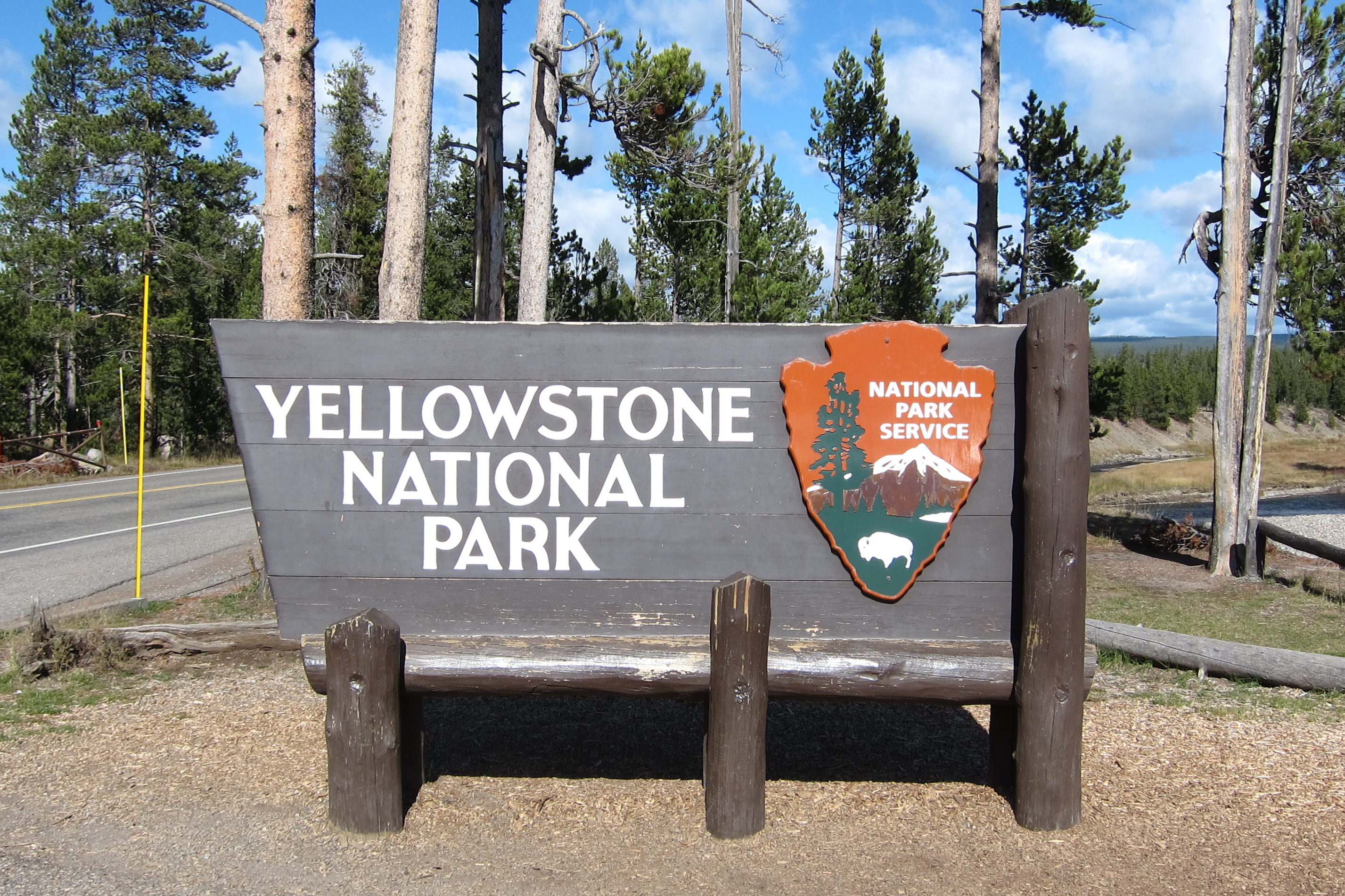
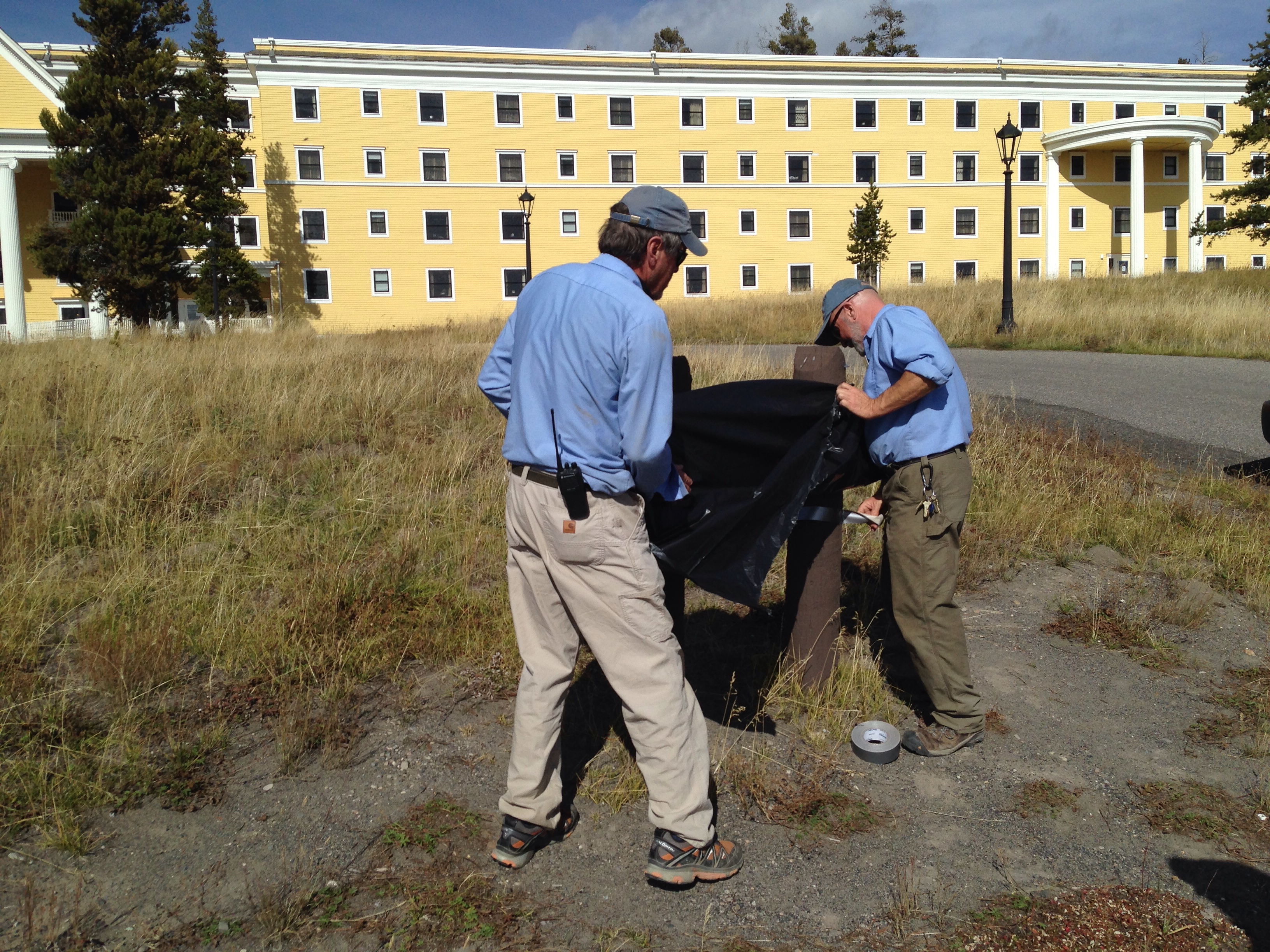
Just as at Teton NP, today was the last day for lodge operations at Yellowstone. We caught the housekeeping staff having a wine toast in front of the Lake Yellowstone Hotel. And two of the groundskeepers were covering the entrance sign just to be sure no one tried to check in. Dale, at the left, stays here year-round, alone, as caretaker. Anyone hearing the theme music from The Shining?

Closed for the season!

Closed for the season!

Maybe next year.

Maybe next year.

The roads will close by the end of November, with access into the park only by snowmobile or snow coach. But we’ll still be here for another day or two for more big game hunting. Emily from Montana suggested a spot for taking a hot springs dip too. But all of that is tomorrow…

Posted in Travel Journal | Tagged , , , , , , | 1 Comment

Teton Post Script, October 5 (Day 34)

It’s just impossible to leave Teton National Park without “one more photo.” We woke long before dawn so we could catch the glorious sunrise. After two days here, we’re so jaded we thought it was just “meh.” Lots more interesting than anything we ever saw in Charlotte, however.

Another ho-hum sunrise

Another ho-hum sunrise

And then, we caught sight of a herd of elk in the breaking dark. A big buck didn’t bellow but made more of a keening sound to keep his herd of 20 lady elk together.

They're out there. An amazing sight to see these animals emerge from the darkness.

They’re out there. An amazing sight to see these animals emerge from the darkness.

Later we saw a lone buck heading off into the hills. Our thinking is that he once had his own harem but lost them to Buck #1 in a dog fight. Elk fight?

This is the National Elk Refuge. In the spring Boy Scouts gather the antlers that have been shed over the winter and sell them in an auction in the square in Jackson.

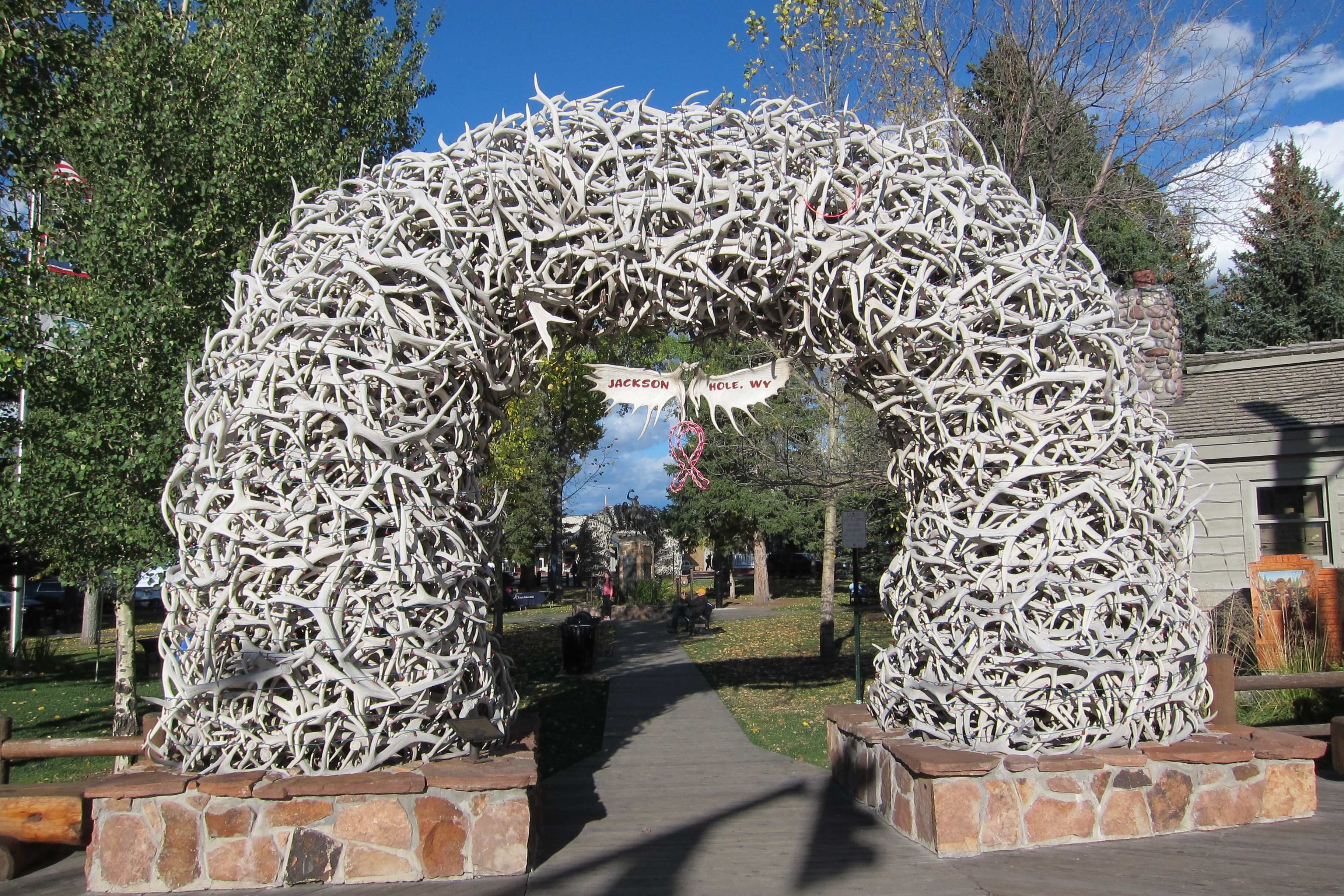
Four of these

One of these is on each corner of the town square and more in other spots in the city.

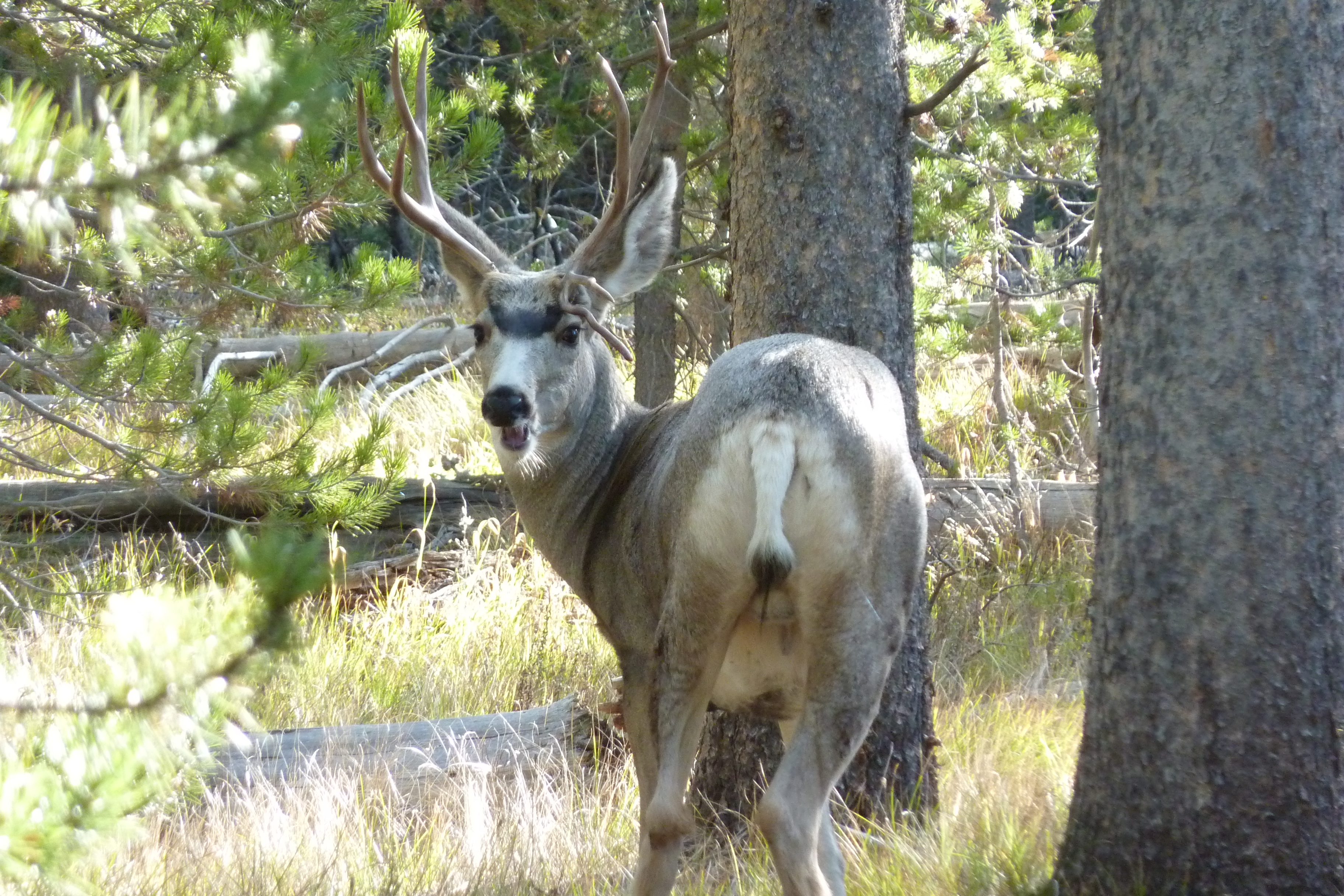
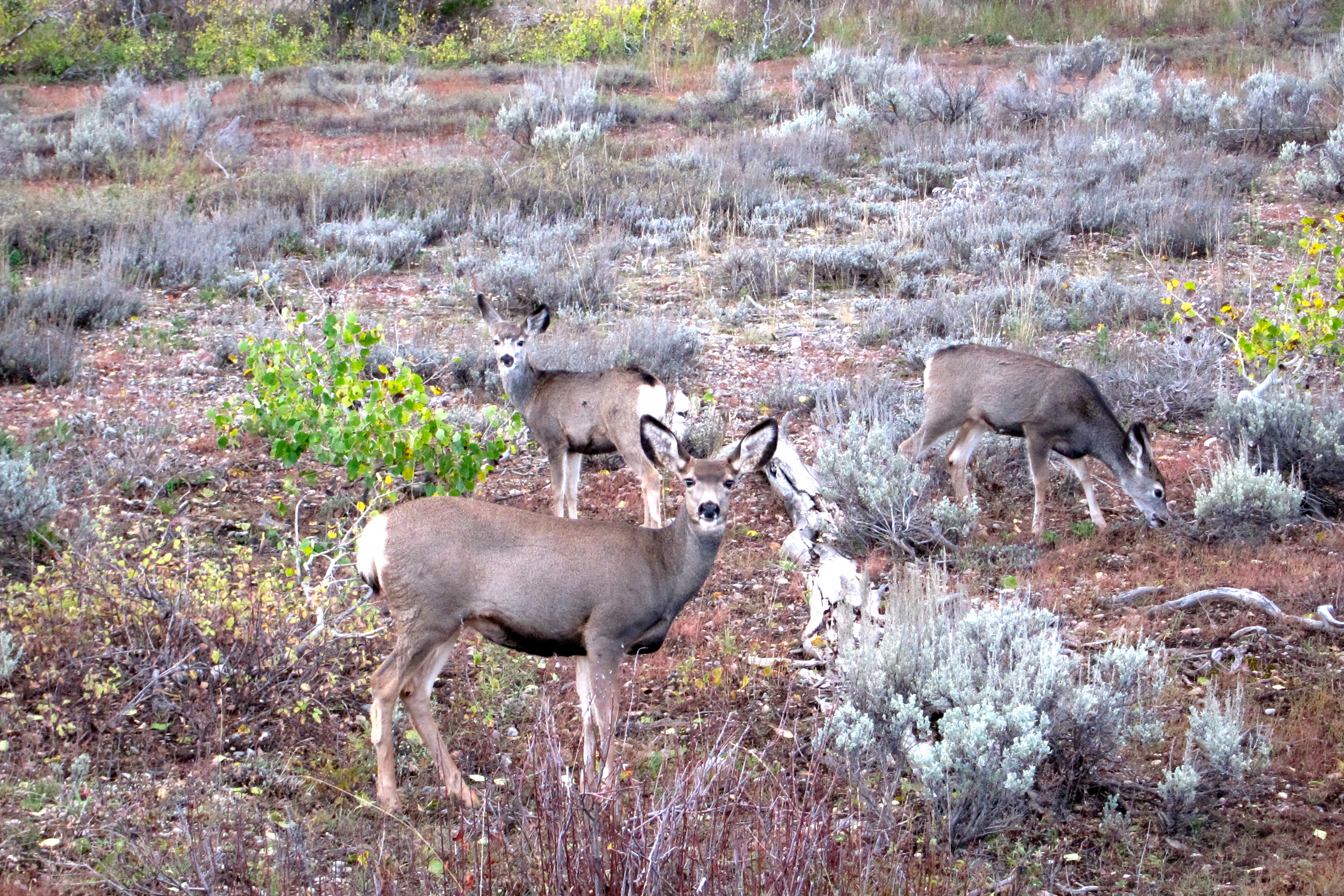
Early morning is the best time for animal sightings. After the elk, we saw a few mule deer.

Mule deer along the roadside

Mule deer along the roadside

Interesting fact, courtesy of the National Park Service: Moose can dive up to 18 feet deep in the chilly rivers. Maybe most of the moose of the Tetons were under water and that’s why we have seen only one. No water on the mountaintop.


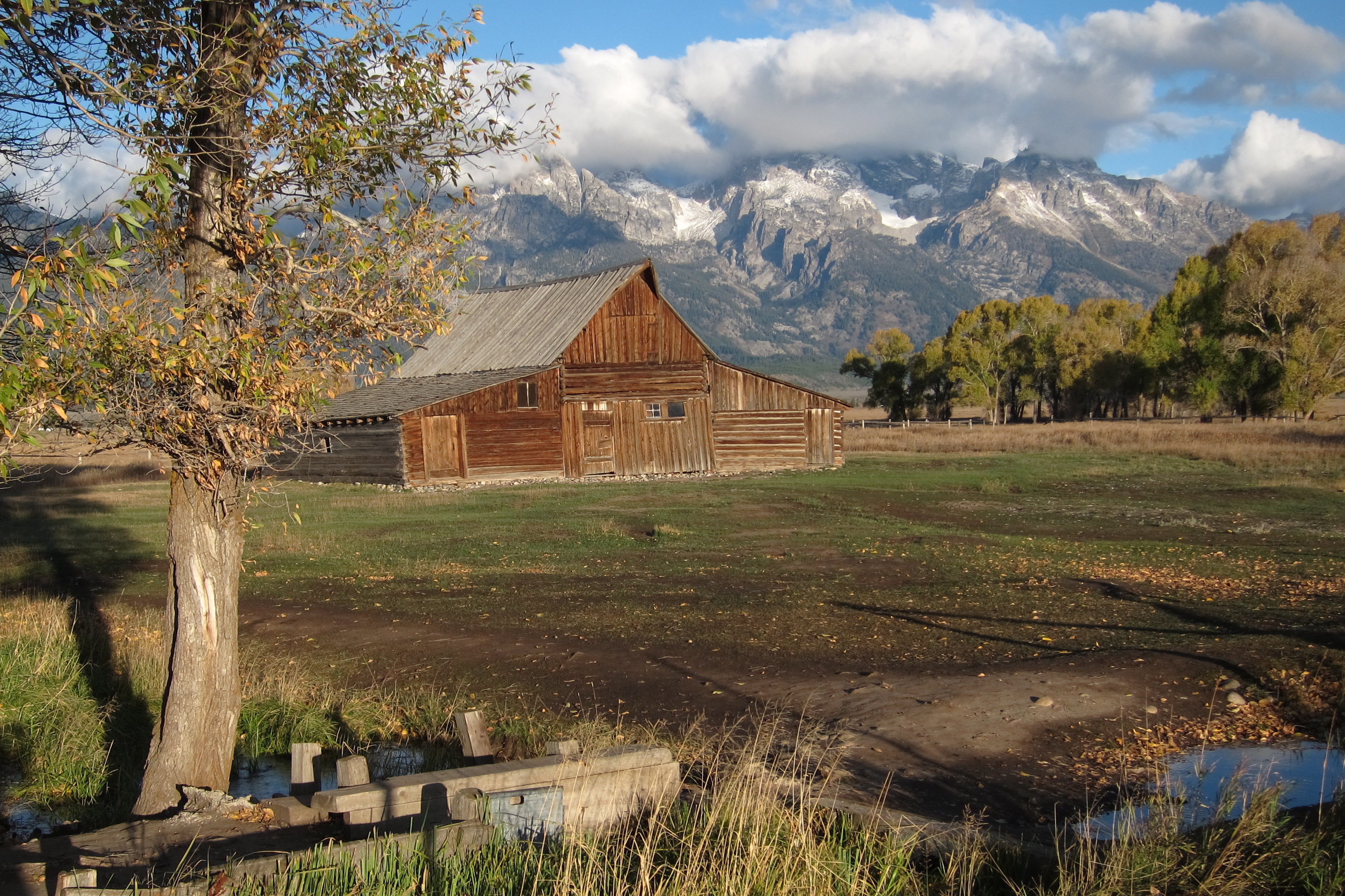
At mid-morning we went to see the T. A. Moulton Barn, the most photographed barn in Wyoming. It was built by a Mormon farmer in the early 1900s and creates a striking image before the Grand Tetons.

A fine imposter

Beautiful old barn on Mormon Row

Only that wasn’t the Moulton Barn. It was an imposter that was surrounded by cars, meaning people taking photographs. The real Moulton was on the opposite side of Antelope Flats Road.

Will the real Moulton Barn please stand up?

Will the real Moulton Barn please stand up?

They do look pretty similar. It’s the Sunday newspaper picture quiz: How many differences can you spot? We wonder how many people have made the same mistake as us and missed the real thing. The only reason we figured it out is that our first pictures didn’t match the postcard.

Then it was on to our last views of the mountains before we leave this wilderness paradise.

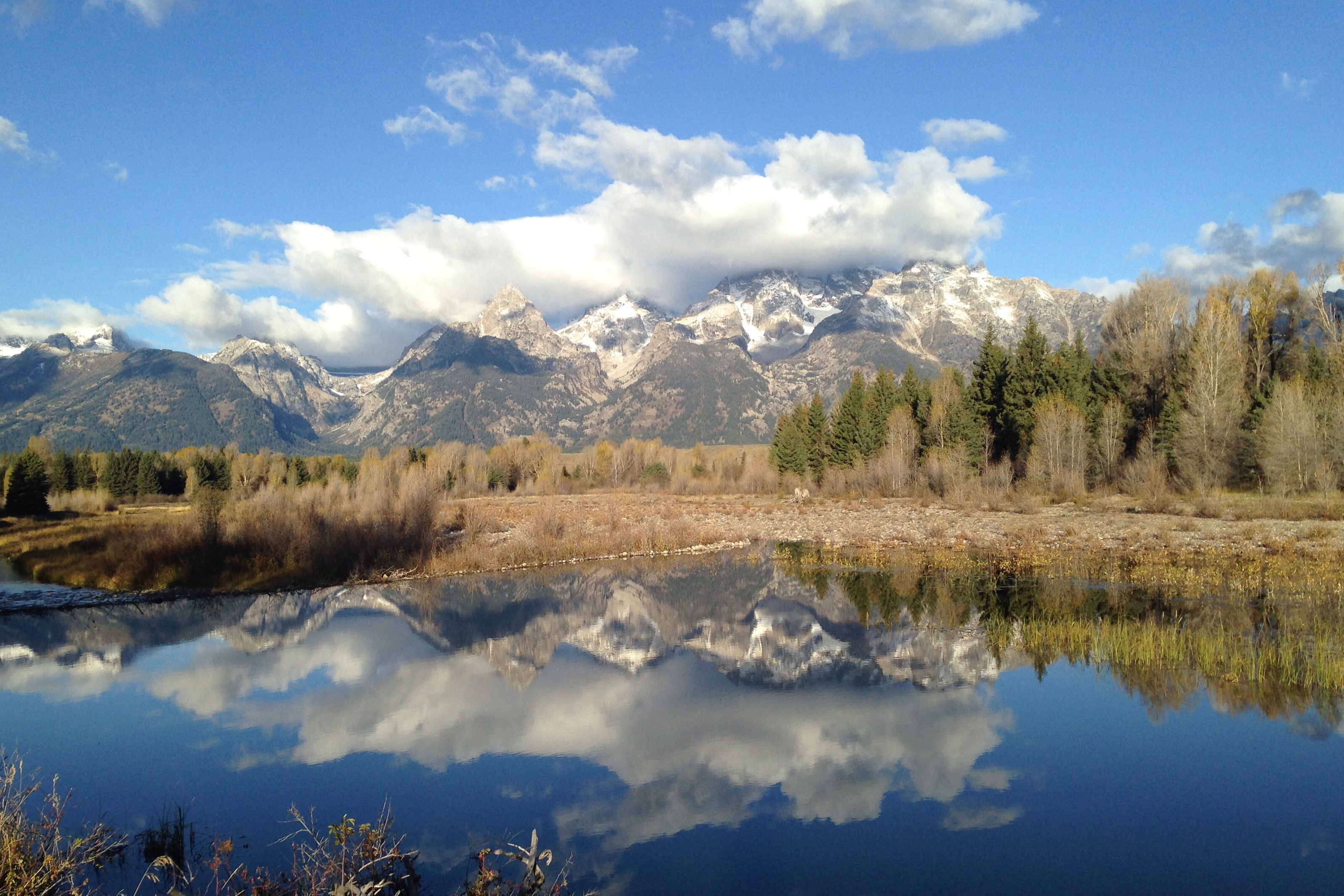
Reflections in the quiet waters of Schwabacher Landing.

Reflections in the quiet waters of Schwabacher Landing.

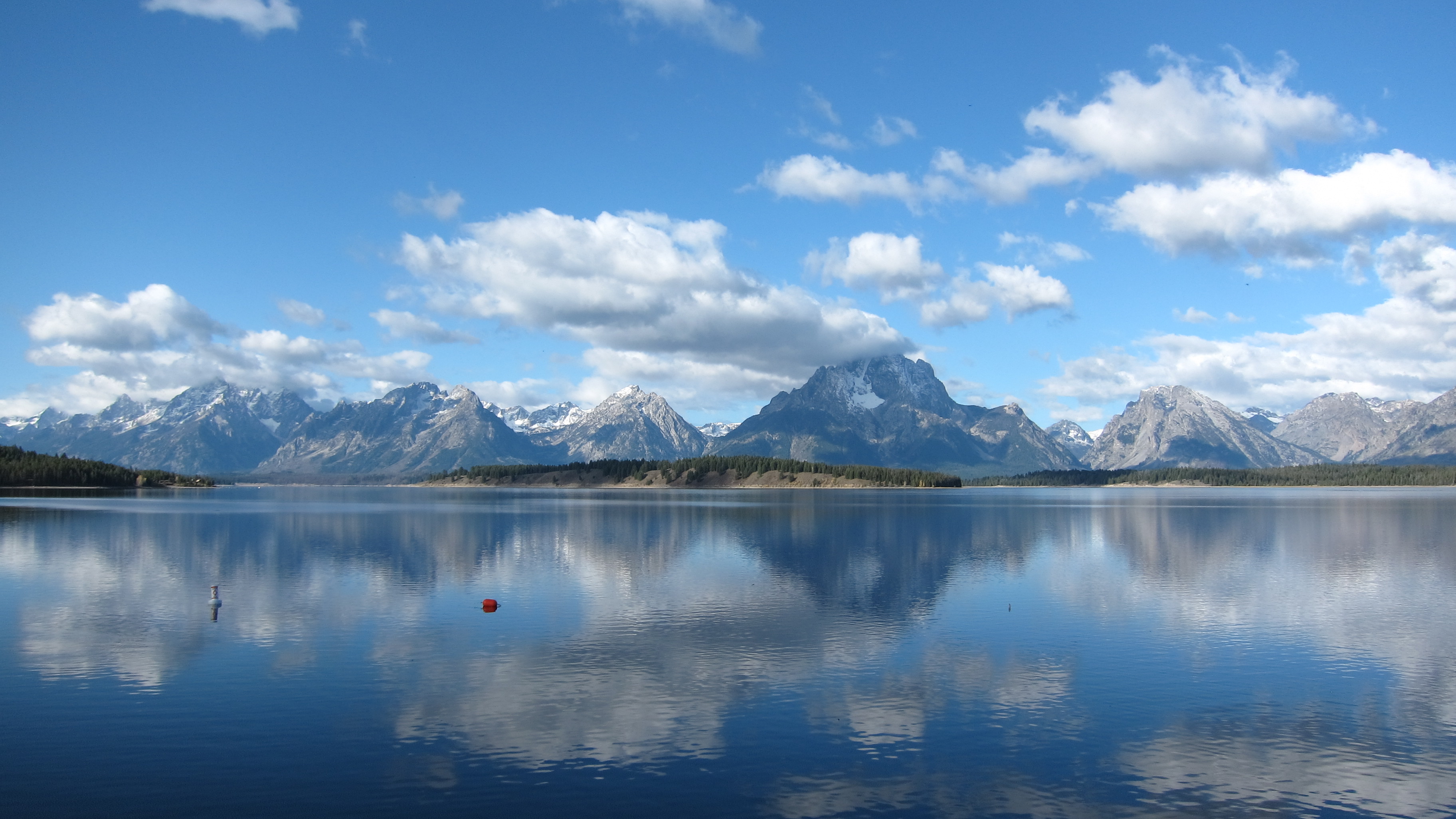
Jackson Lake again. Even prettier than the last time.

Jackson Lake again. Even prettier than the last time.

We stopped for breakfast at 10 at the Jackson Lake Lodge, which was closing for the season at 11 today. (Big staff party at 5PM!) We’ve been impressed with all the lodges in the park and all the men and women from all over the world manning them. Each worker wears a nametag with place of origin. Laura from Argentina, an avid snowshoer, gave us our last farewell at the serpentine grill.

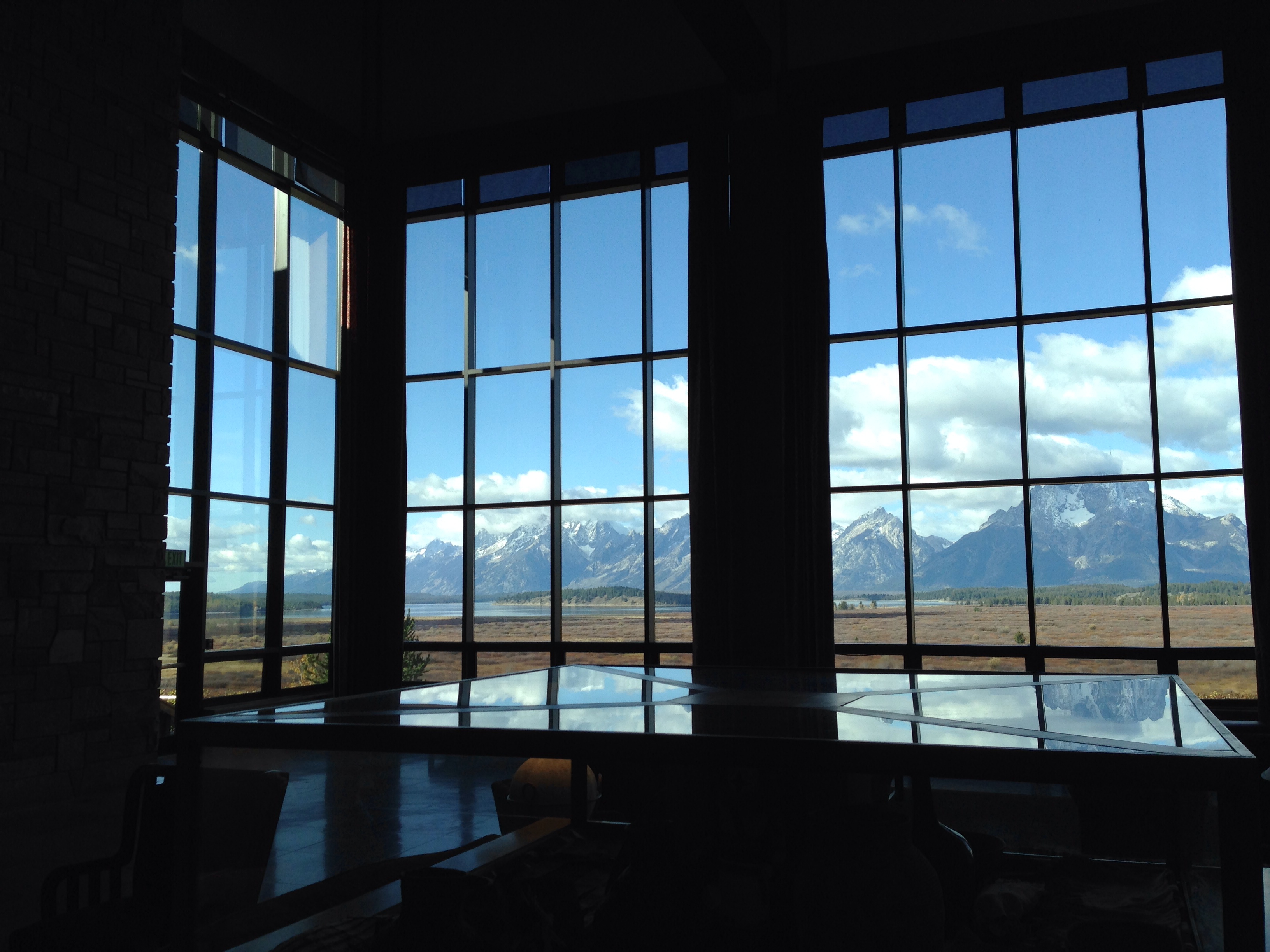
Overheard from a fellow traveler: “The best hotel lobby view in America.” Can’t argue with that.

Jackson Lake Lodge

Jackson Lake Lodge

We’re finally at the northern fringes of Teton National Park so we’re ending our obsession with mountain views…and moving on to animals and geysers in Yellowstone.

Posted in Smell the Roses | Tagged , , , , , | Leave a comment

Teton National Park – All Tetons, All the Time (Days 31 to 33) October 2 to 4

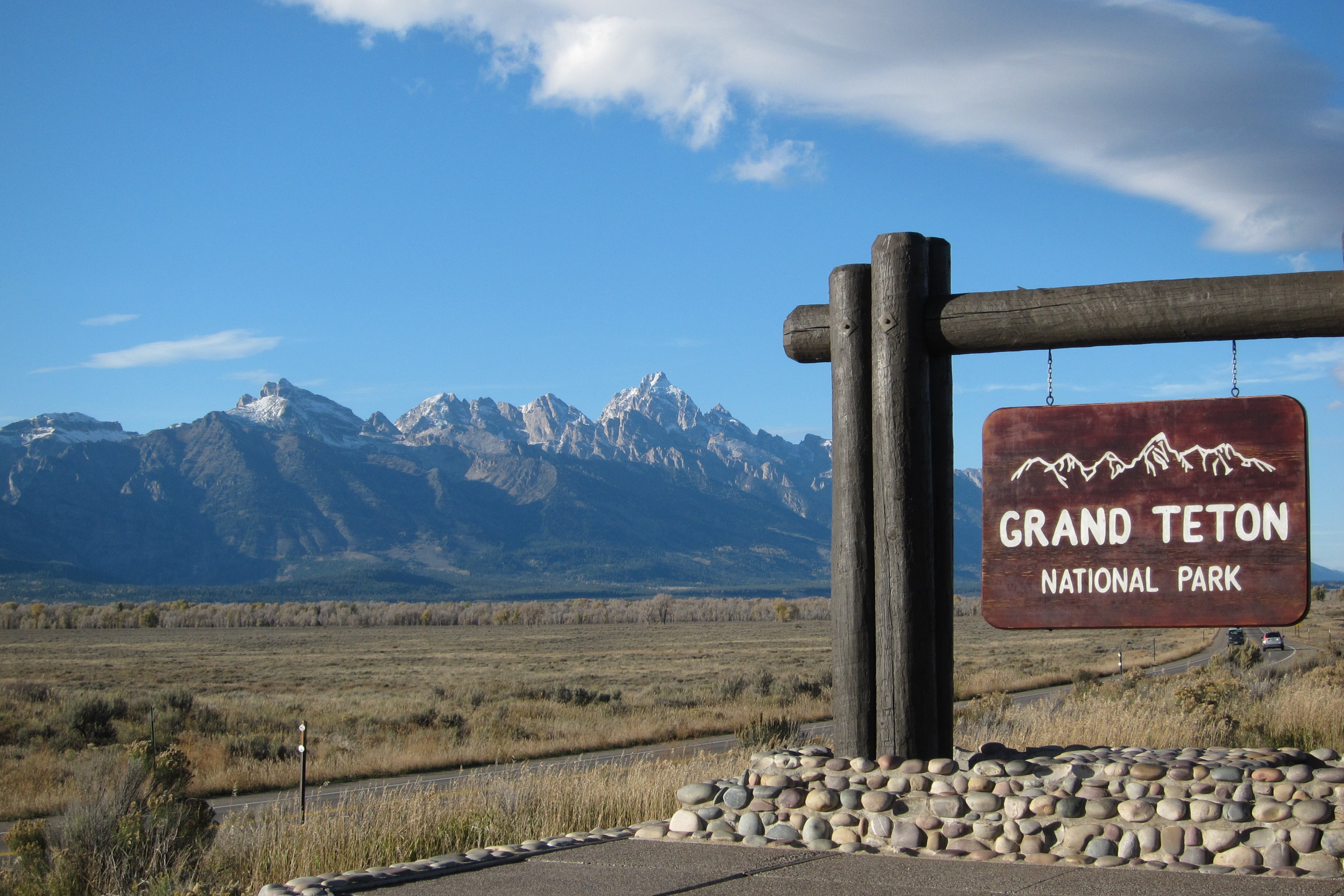
Light your pine-scented candle and join us on our journey up and down the 300,000 acres of Grand Teton National Park.

We love the National Park System!

We love the National Park Service!

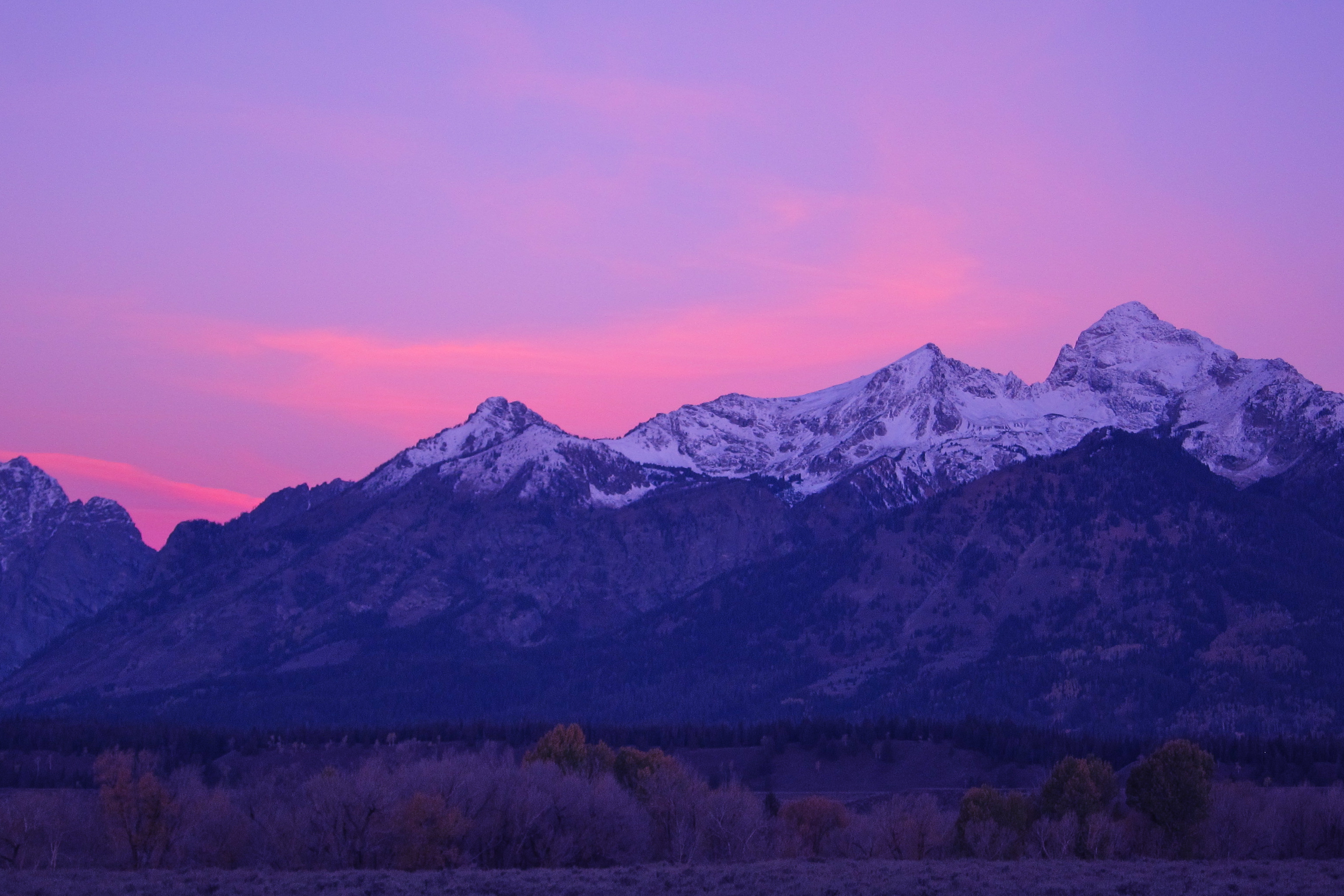
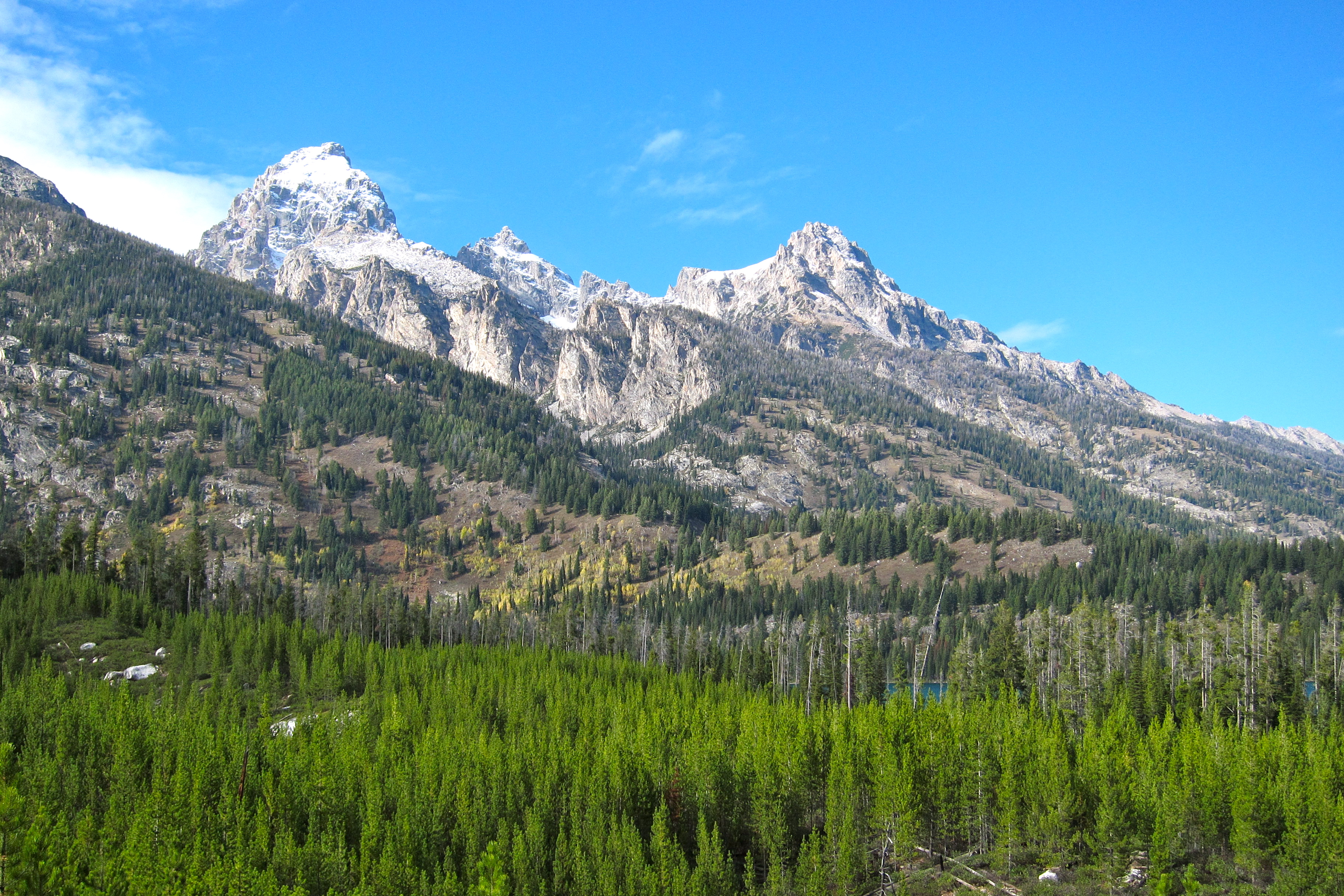
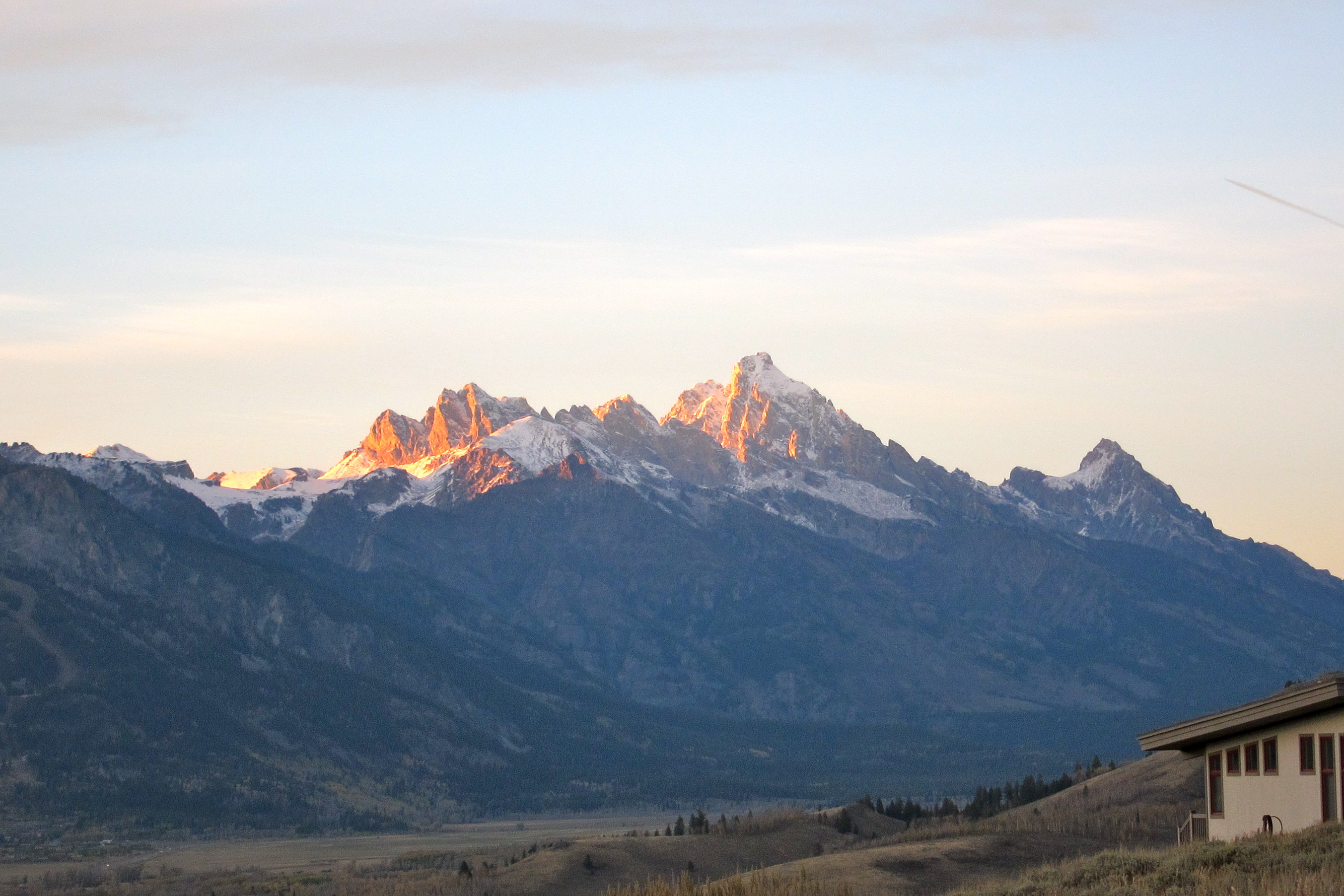
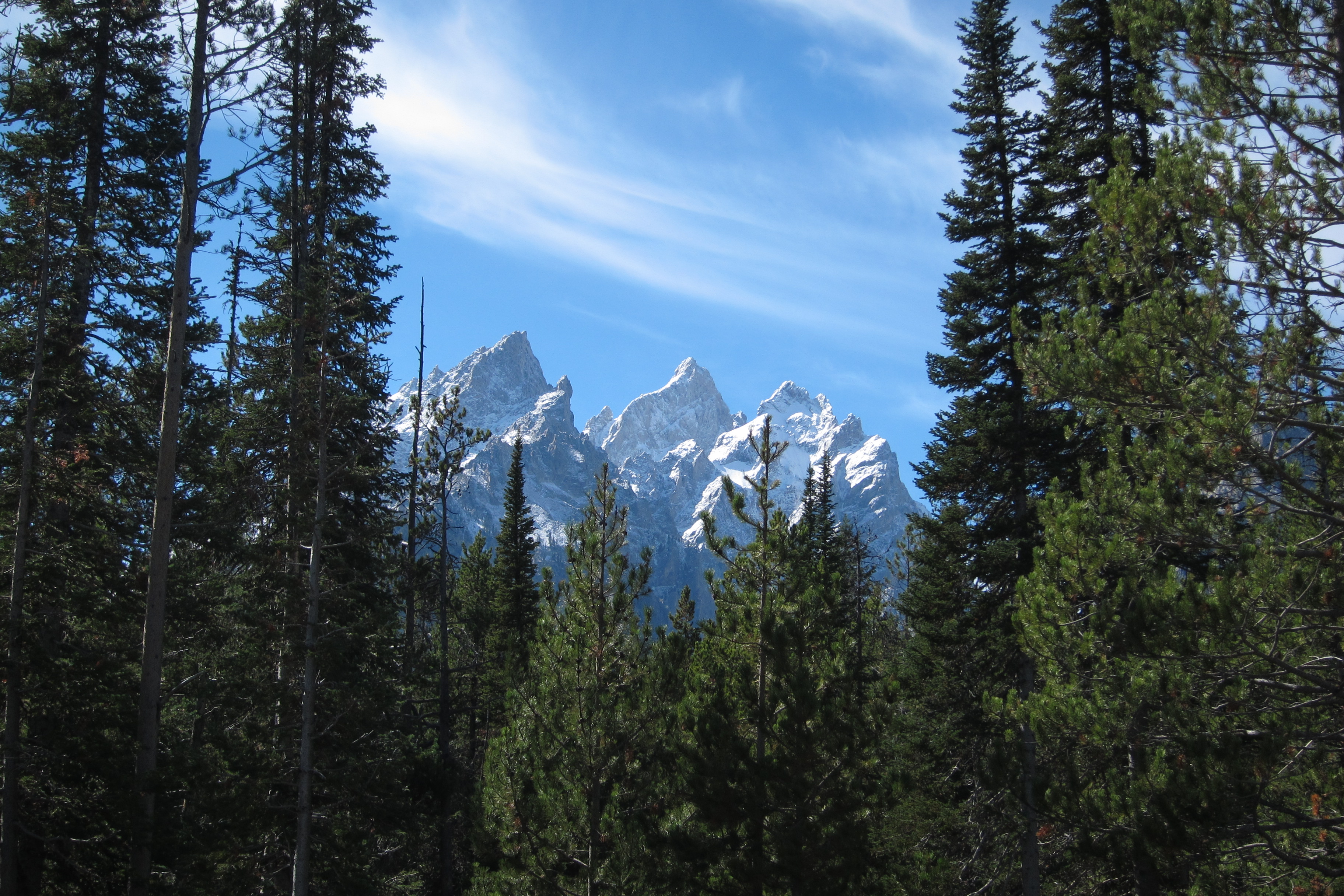
The mountain views and wildlife are truly extraordinary, starting with the tallest mountain, Grand Teton, snow-covered and bordered by glaciers. This is our sunrise view.

Oh, what a beautiful morning!

Oh, what a beautiful morning!

Midday…

Another spectacular view

Another spectacular view

And sunset…

Last rays of light

Last rays of light

Are we obsessed with these mountains? Perhaps. We’ve already spent two days driving and hiking along the Teton range enjoying these vistas. Each view seems better than the last. The mountains don’t change, but with changes in lighting and perspective, they provide new delights at every turn.
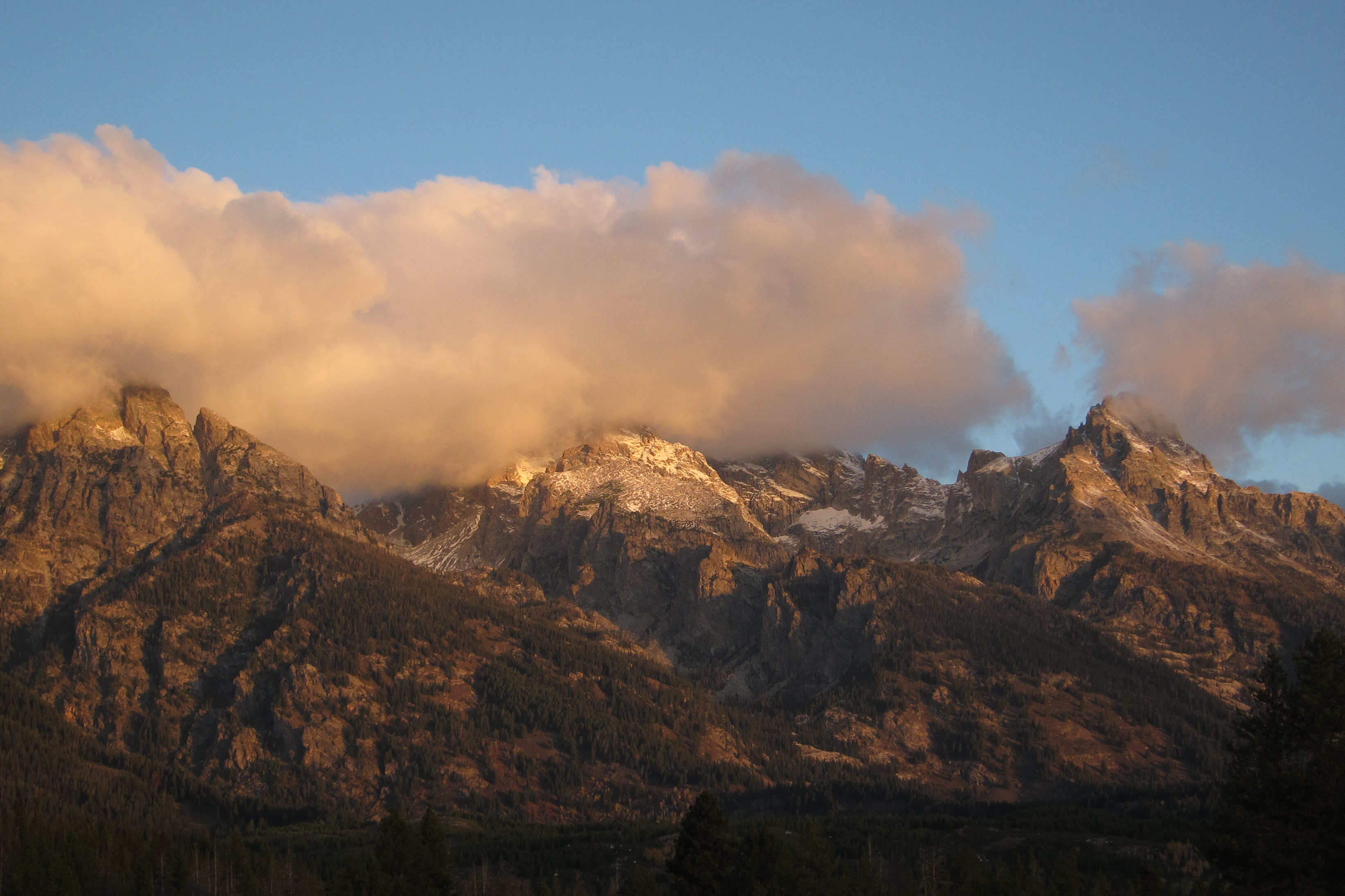
We owe a great note of thanks to John D. Rockefeller, Jr. and other conservationists who fought to preserve this natural beauty by designating it national protected lands in the 1930s. And, of course, thanks to the modern-day rangers and other workers who make it a joy to visit day-in, day-out.

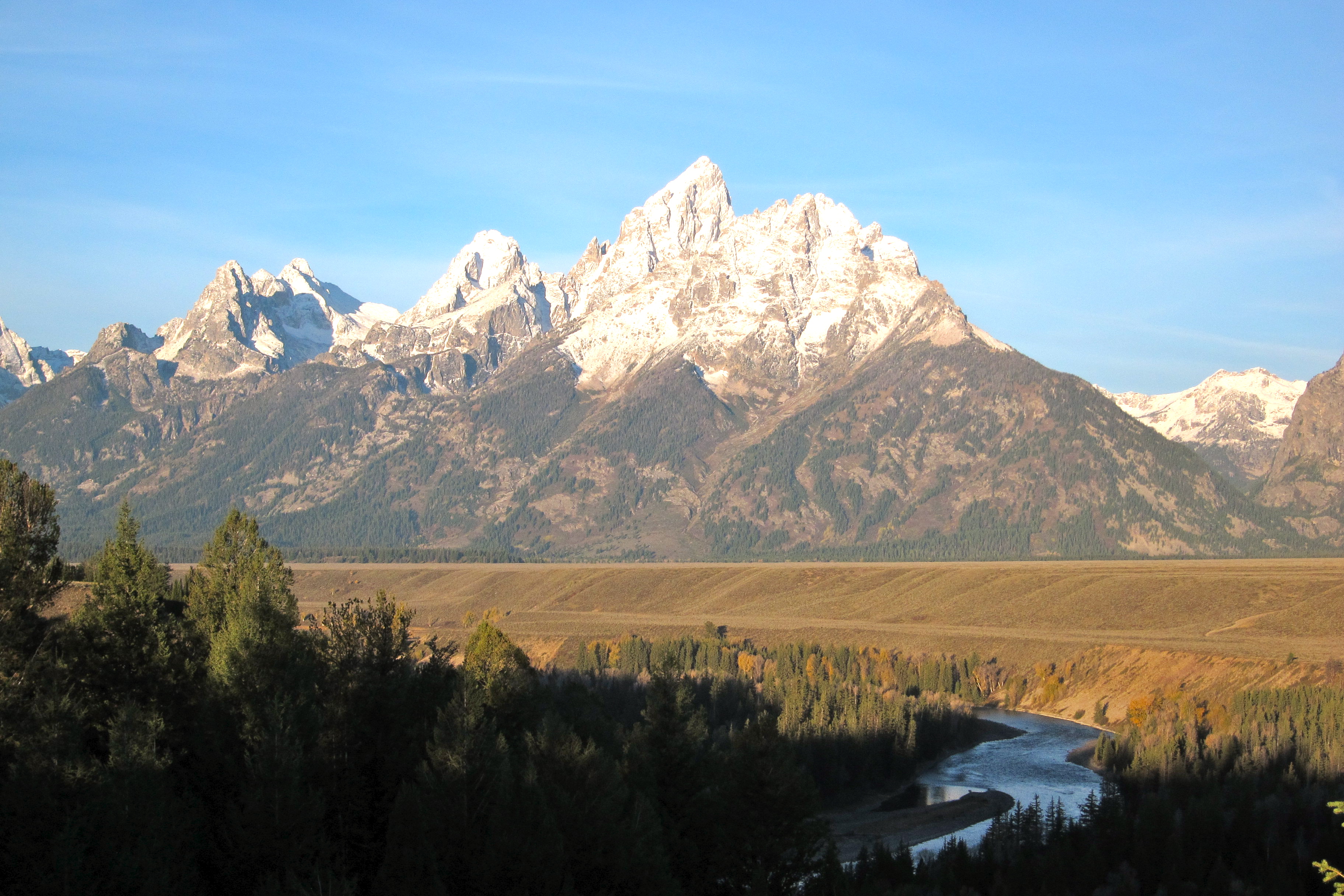
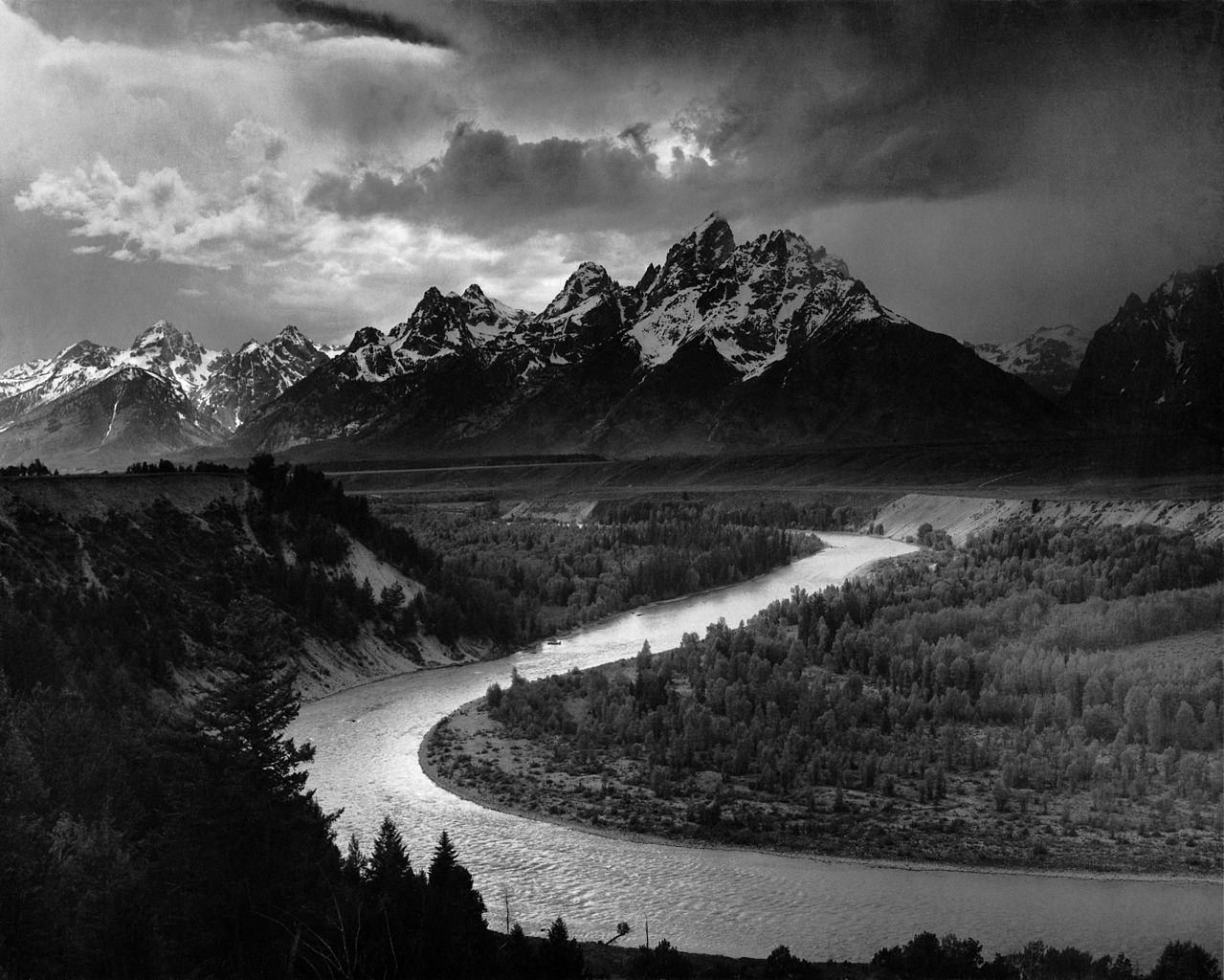
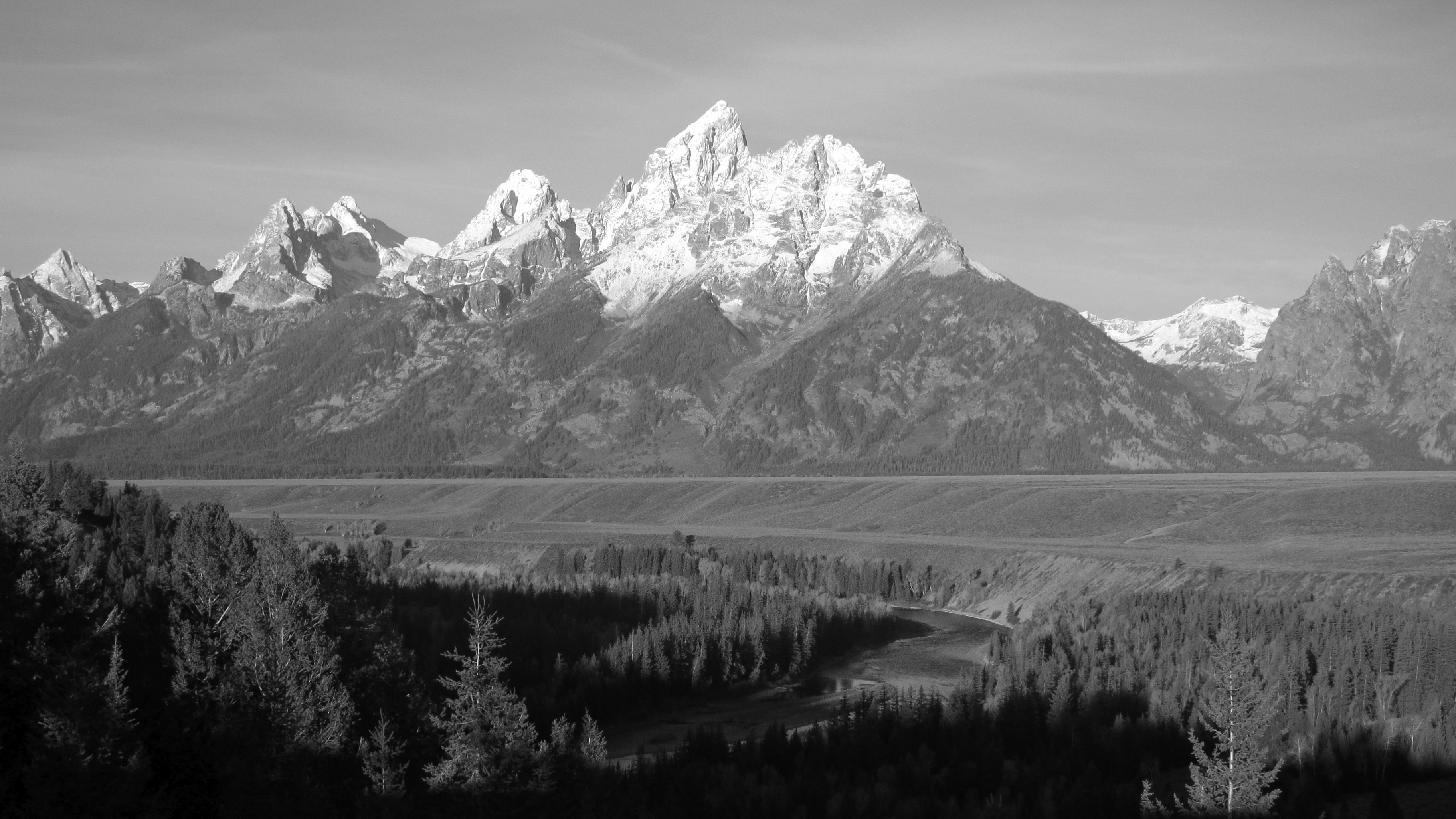
We found the viewing point where Ansel Adams took his famous black and white photo along the Snake River .

Modern Snake River in living color

Modern Snake River in living color

The course of the river has changed and the trees have grown up and now block the view of the river.  Ansel Adams version from the 1940s:

Ansel Adams. The Tetons and the Snake River

Ansel Adams. The Tetons and the Snake River

This is what happens when you Anselize the modern-day color version above.

From Michael's  Canon S-95 point and shoot camera

From Michael’s Canon S-95 point and shoot camera

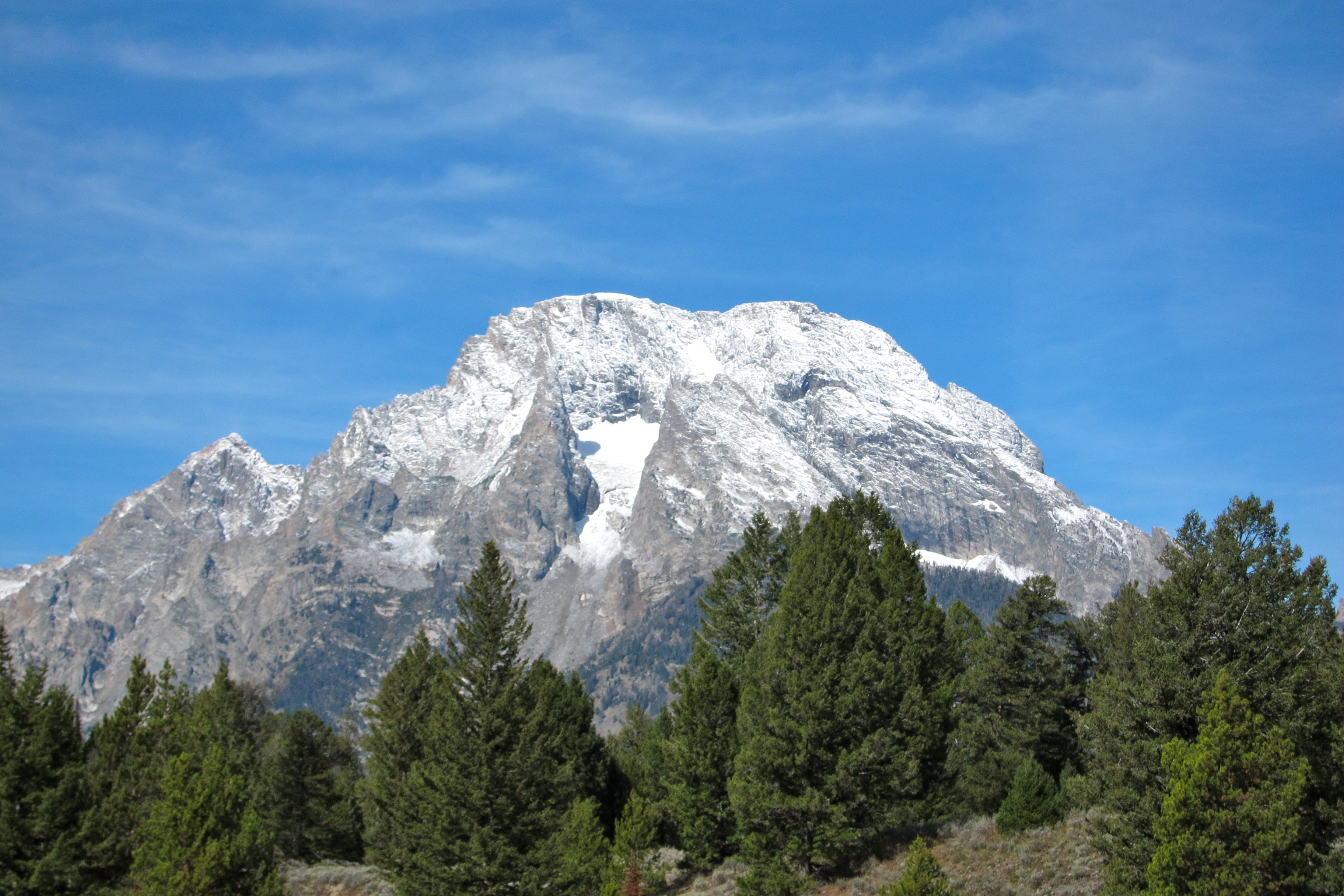
Another favorite is Mount Moran. Notice the glaciers near the top.

Glaciers. Glad to see them now while they are still around

Glaciers. Glad to see them now while they’re still around

When we asked a park ranger how many glaciers Grand Teton NP has, she said, “About 12.” She explained that the melting is happening so quickly that they are never sure when one might just disappear overnight.

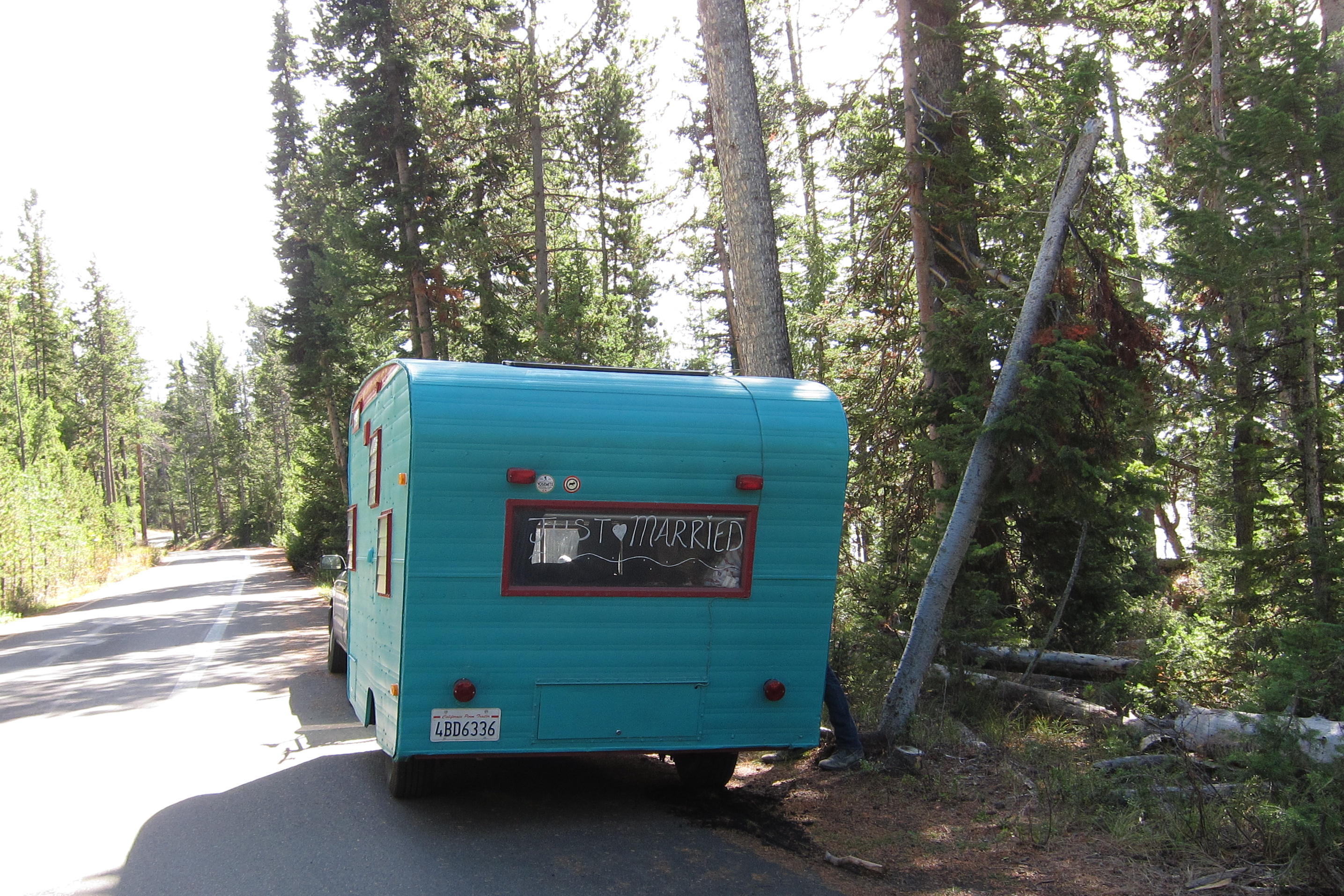
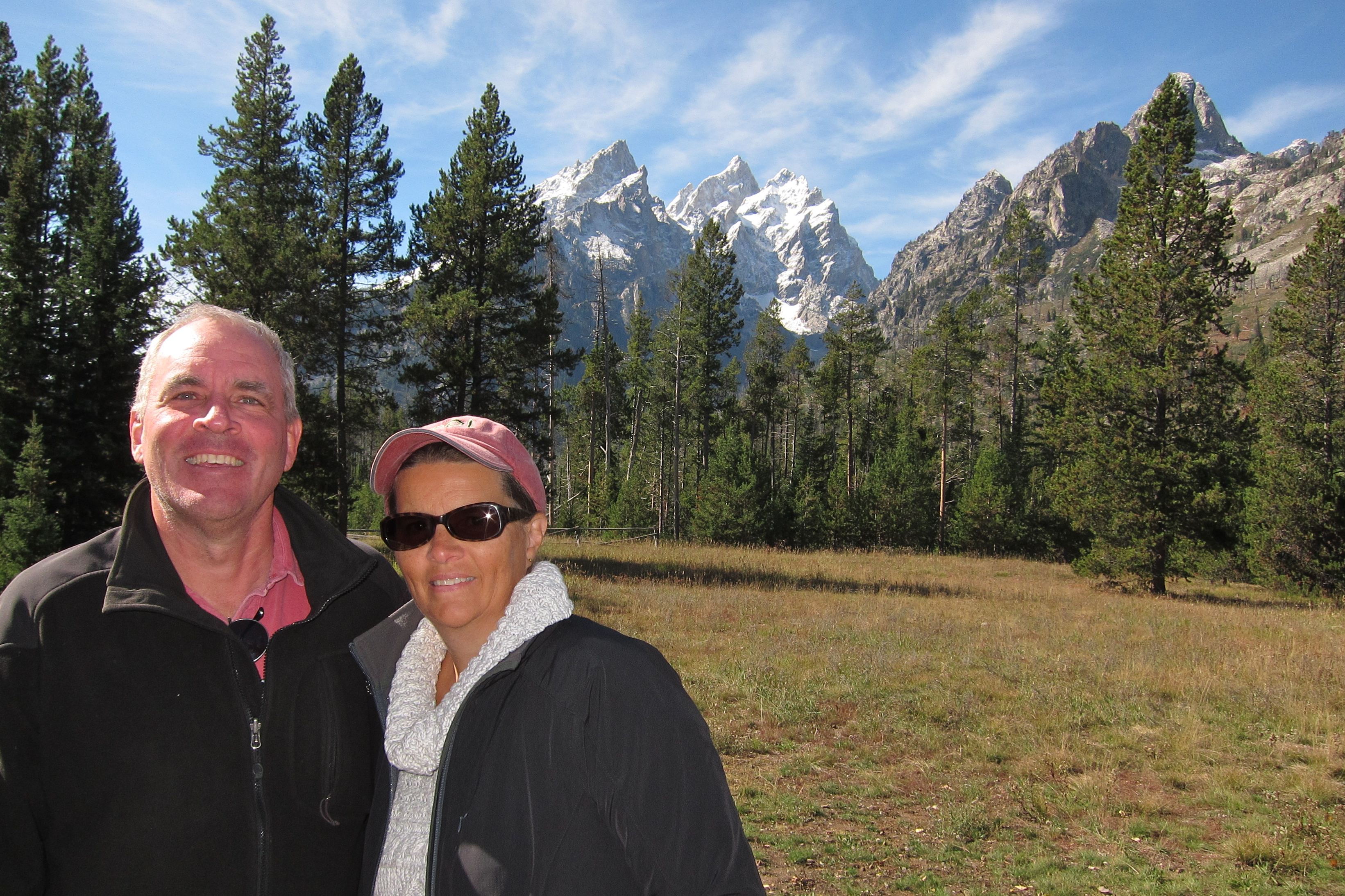
We’re finding the rangers to be both informative and entertaining. Our friend, Paul Scolieri, stayed with a ranger while traveling this way a week or so ago. The ranger observed that people visiting the park at this time of year are newlyweds or nearly deads. We found both. Newlyweds:

A better way to travel?

A better way to travel?

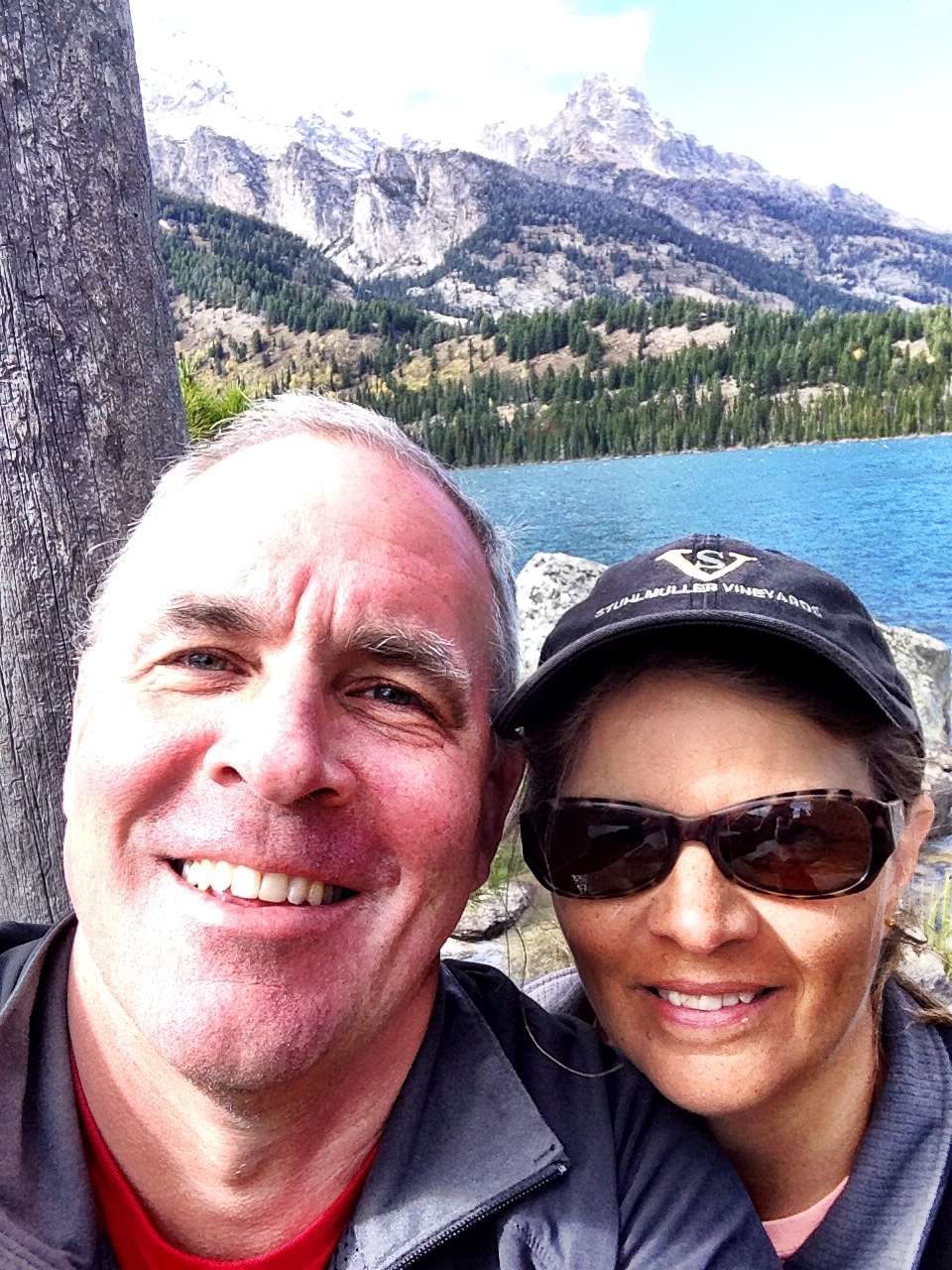
The nearly dead (but young at heart):

What would we do without selfies?

The ultimate selfie

Actually one hiker coming down the mountain told us we had about an hour-and-a-half hike up the hill. We asked if it was difficult. He said, “Well, I’m 87. If I can do it, you whipper-snappers can too.” (paraphrased slightly). He was decidedly NOT nearly dead.

We also saw lots of Chinese tourists. Michael is practicing, “Ni de Ying wen bi wo de Putonghua hao.” (Your English is better than my Chinese.) We can’t always understand their response but the body language generally says, “Just what do you think you’re saying??”

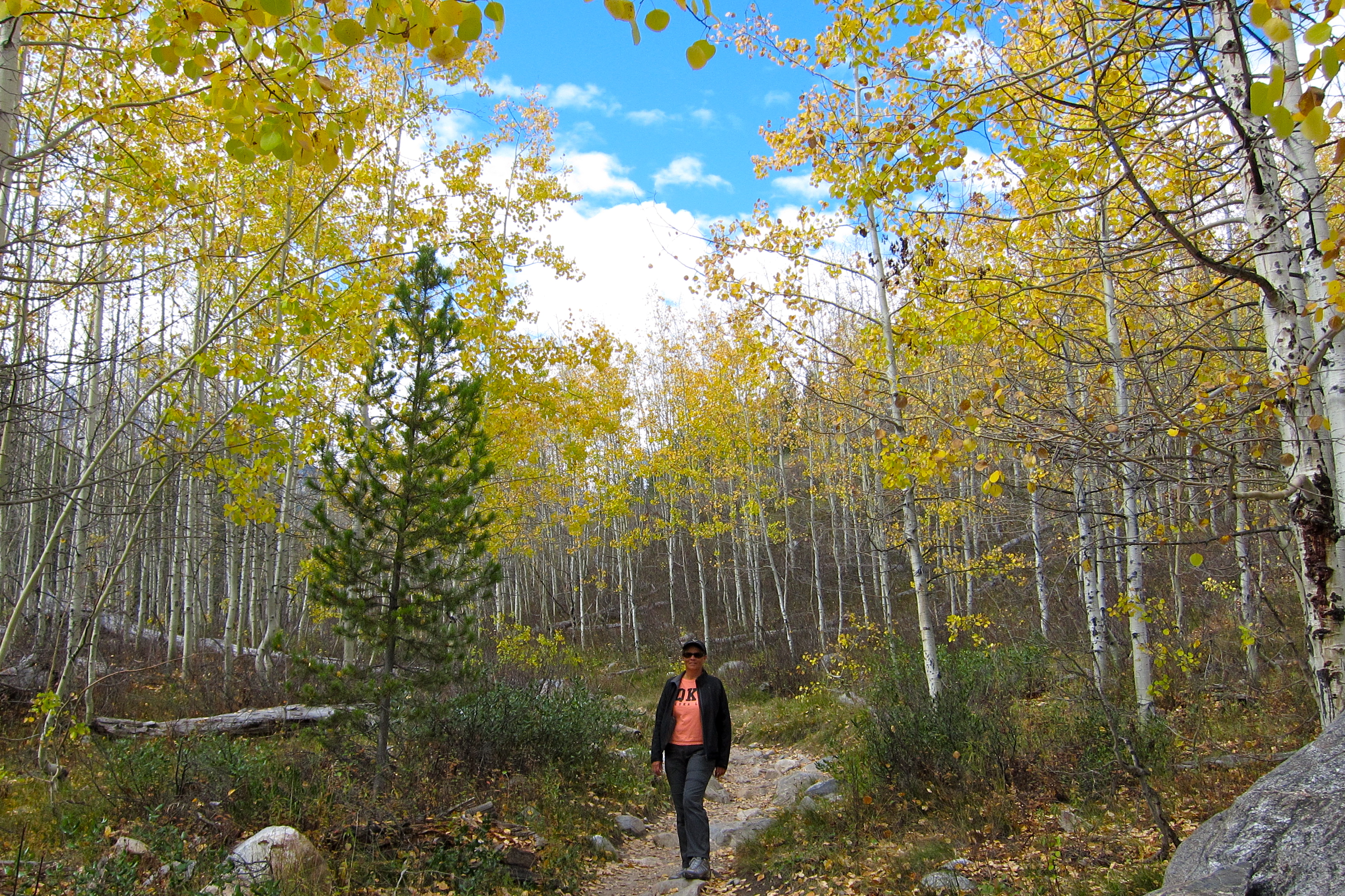
Our photos don’t do justice to the experience. The  yellow aspen leaves move like golden medallions in a mesmerizing mobile.

Michael has been searching for the perfect aspens.

Michael has been searching for the perfect aspens.

And the Christmas-on-every-path scent is simply delightful.

This is honest-to-goodness evergreen scent. Nothing artificial

This is the smell of honest-to-goodness evergreens. Nothing artificial.

We’re finding wildlife. Whenever we see a line of cars stopped along the roadside we know there’s an animal someplace in sight. We don’t have quite the cameras that the wildlife paparazzi use, but we got a few snapshots.

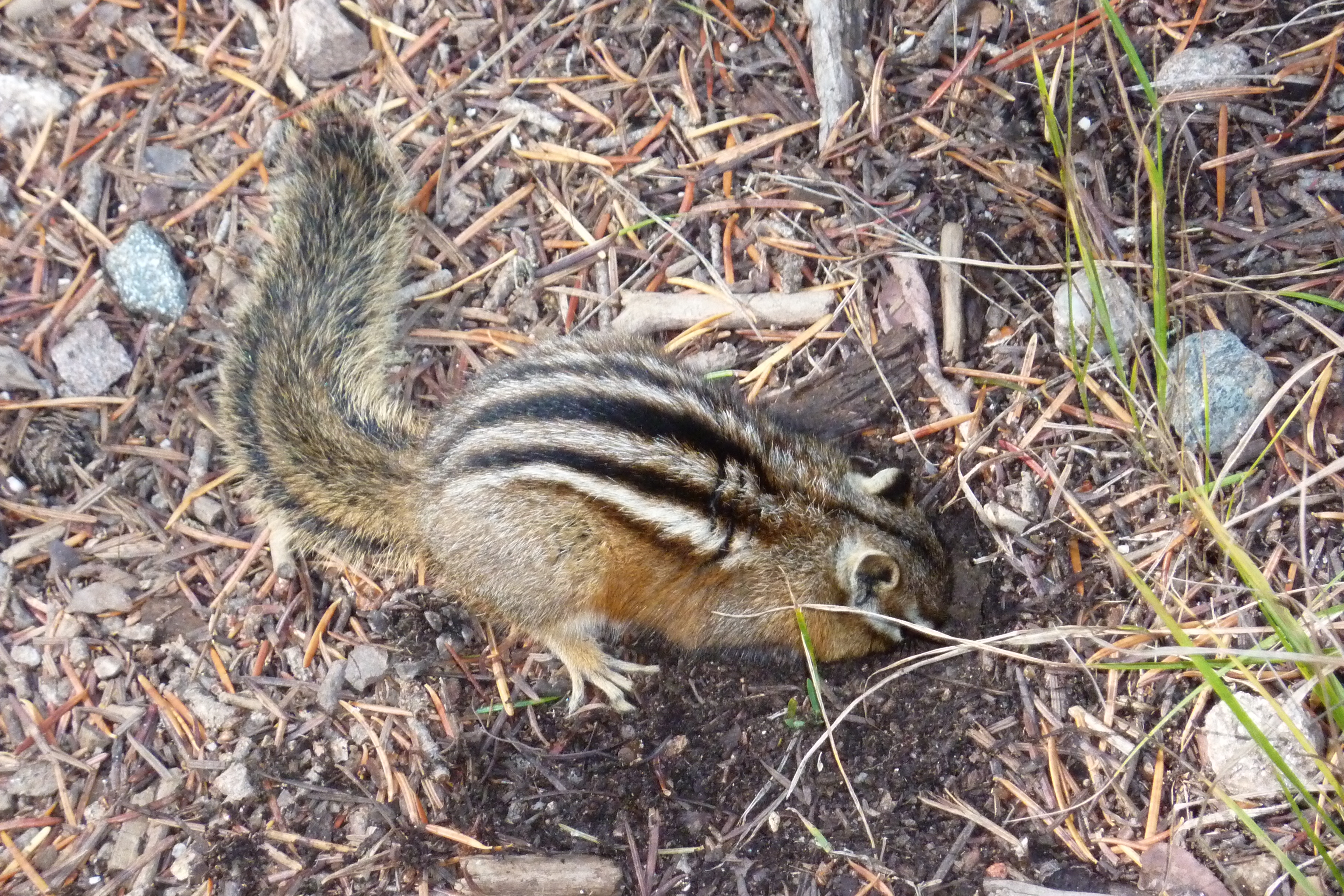
Ubiquitous chipmunks

This guy tried to get into our backpack.

This guy tried to get into our backpack.

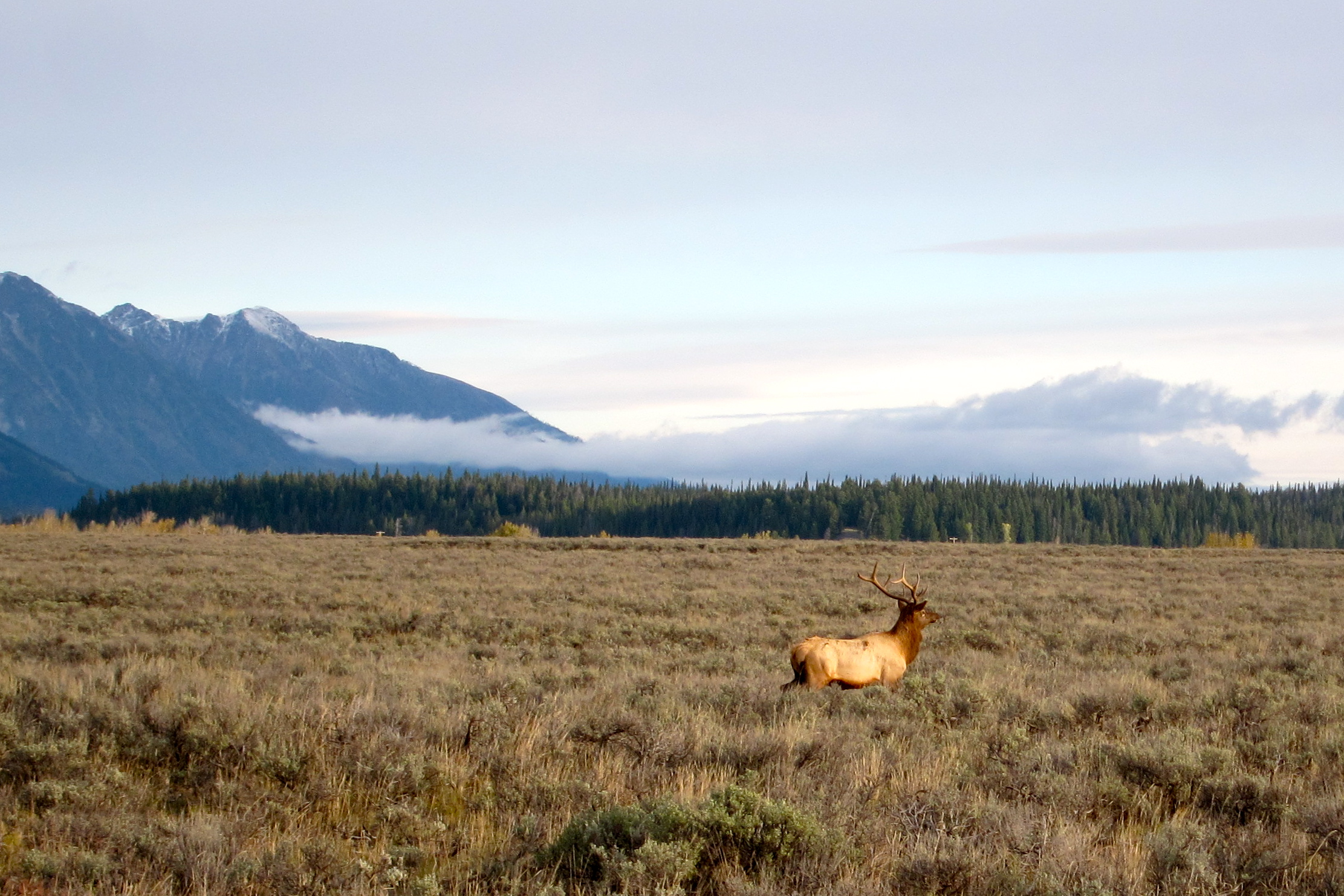
Bigger game: Elk

Michaels early morning hunting trip

Michael’s early morning hunting trip

Mule deer:

He seemed to stop and pose.

He seemed to stop and pose.

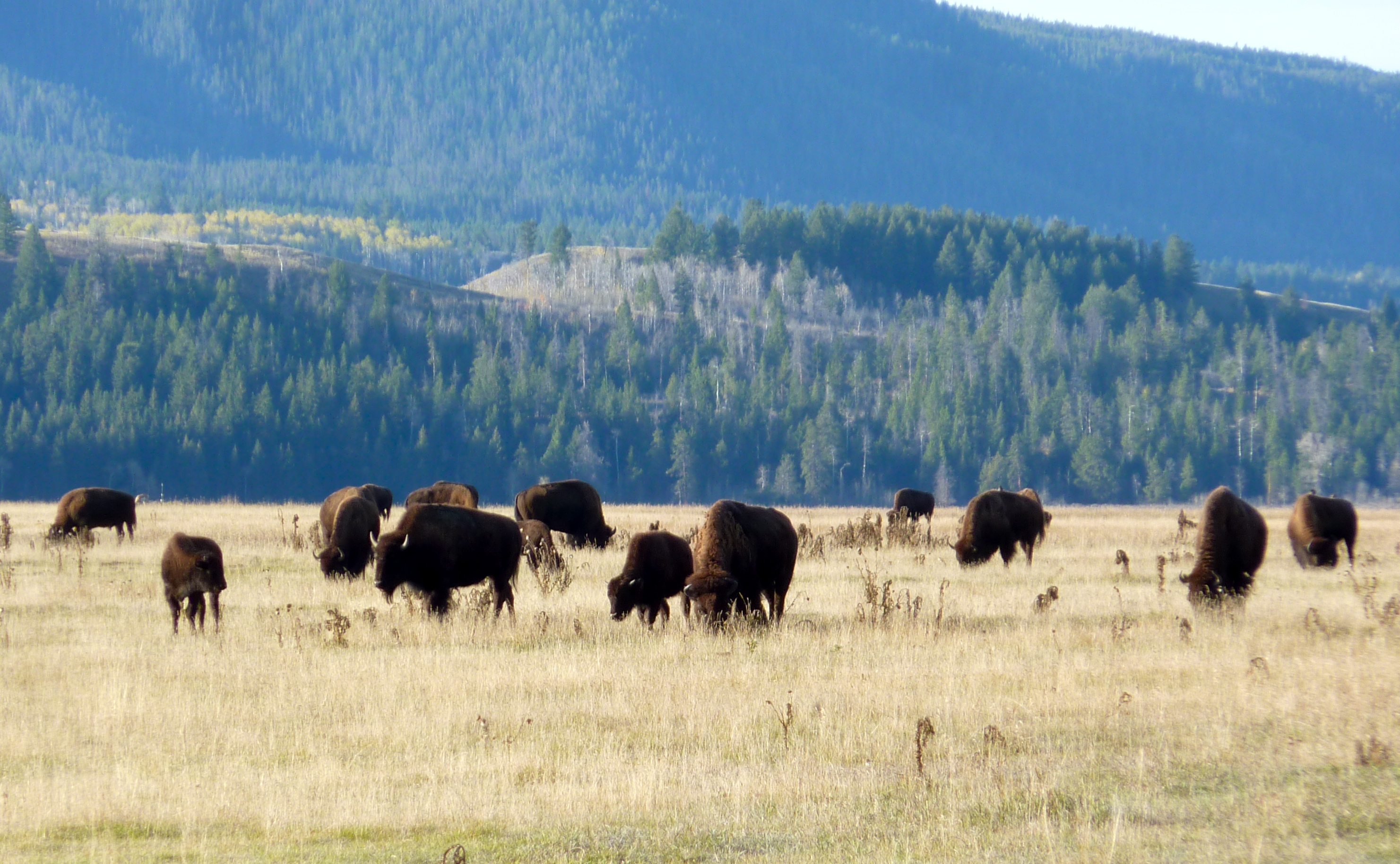
Bison

Home on the range

Home on the range
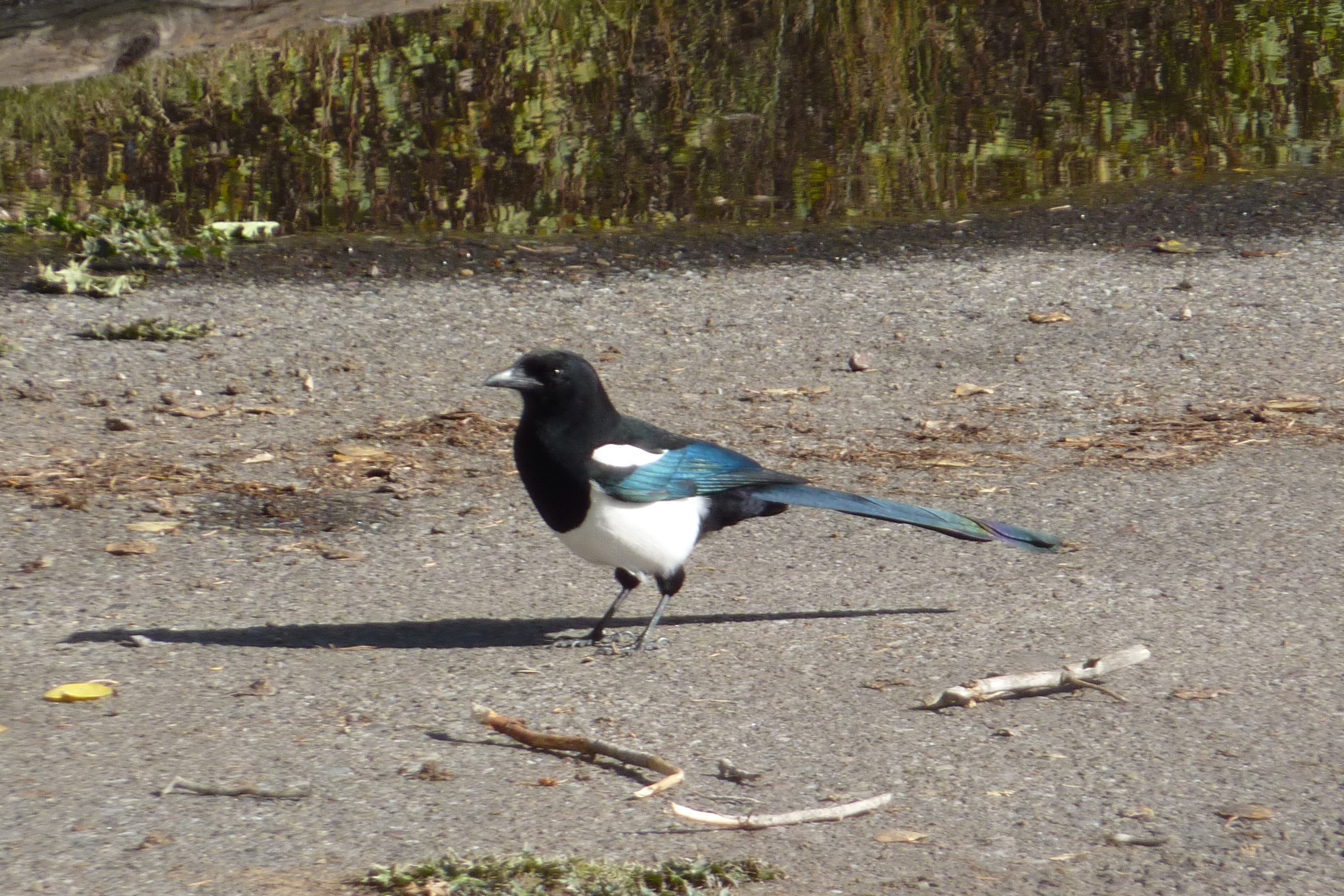
And birds.

A magpie: Heckle or Jeckle?

A magpie: Heckle or Jeckle?

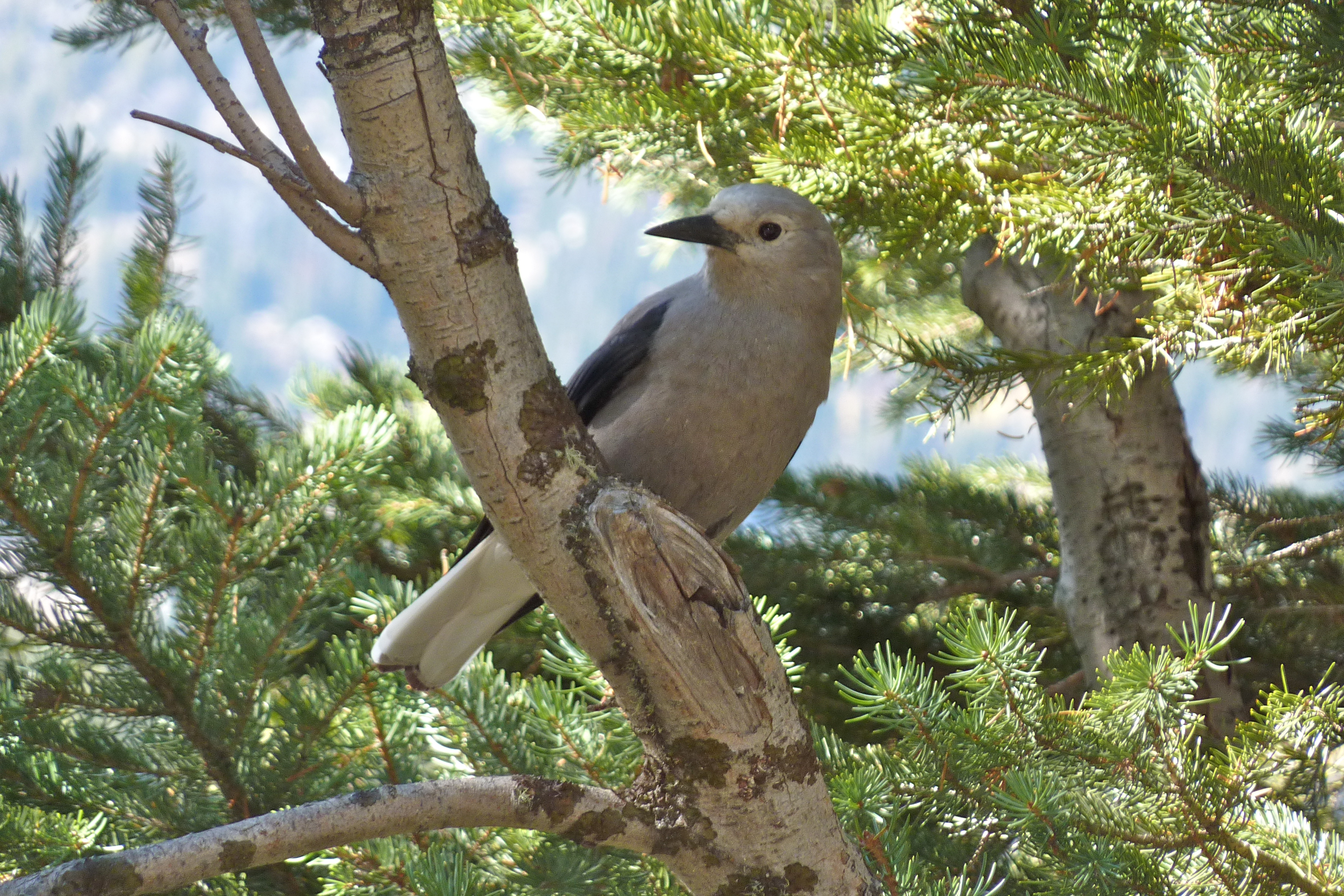
Clark’s nutcracker:

Another camera pose

Easily confused with a Gray Jay, but this guy has a longer beak. He too came back to strike this pose.

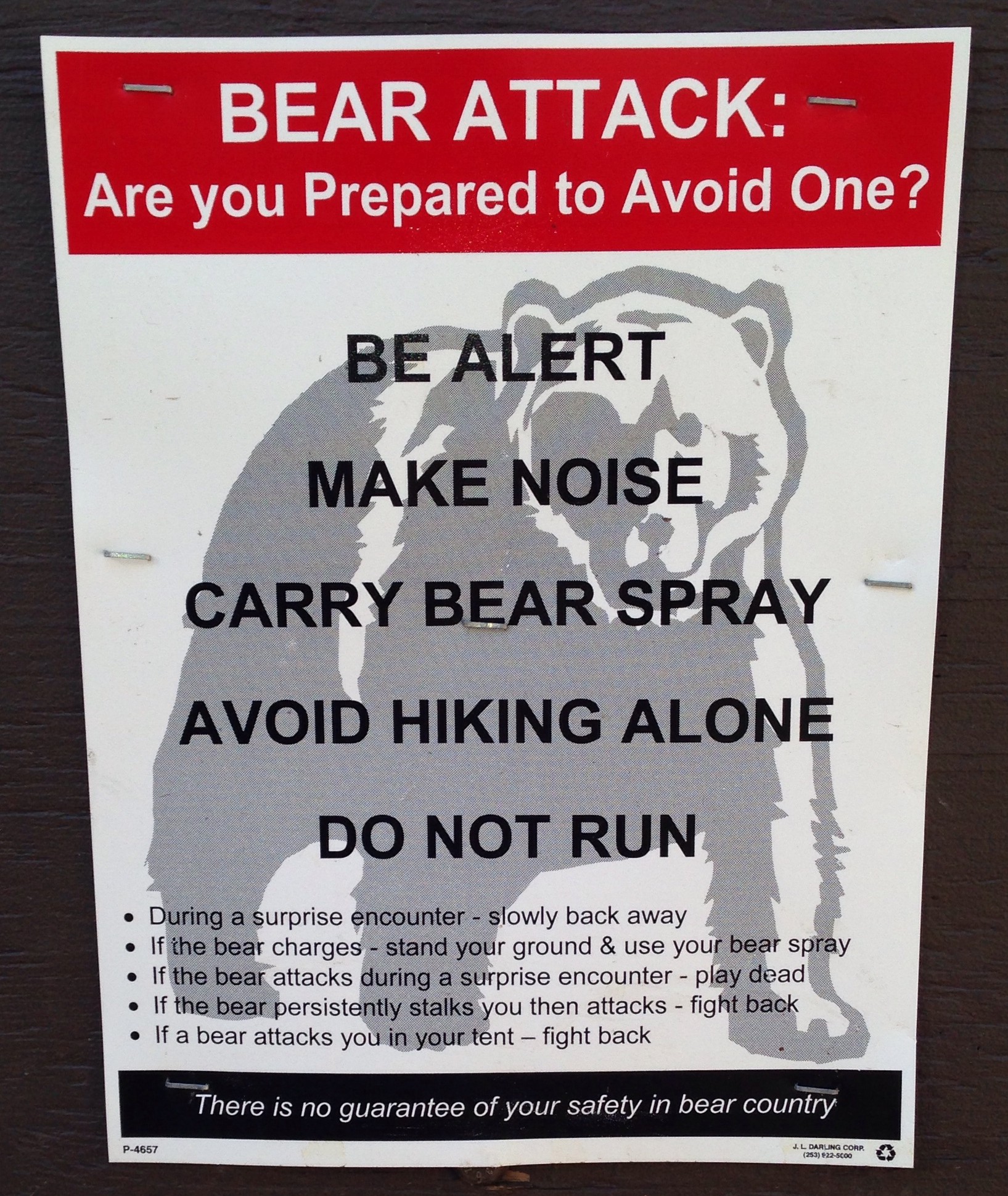
No bear yet, but we have plenty of warnings to watch for them. Andrew at the Jackson Lake General Store said, “I wouldn’t tell anyone NOT to buy bear spray.” Michael said he didn’t need bear spray since I serve that function. It’s the old joke: You don’t have to be able to outrun a bear, just outrun the person with you.

Good to know when to fight back.

Good to know when to fight back.

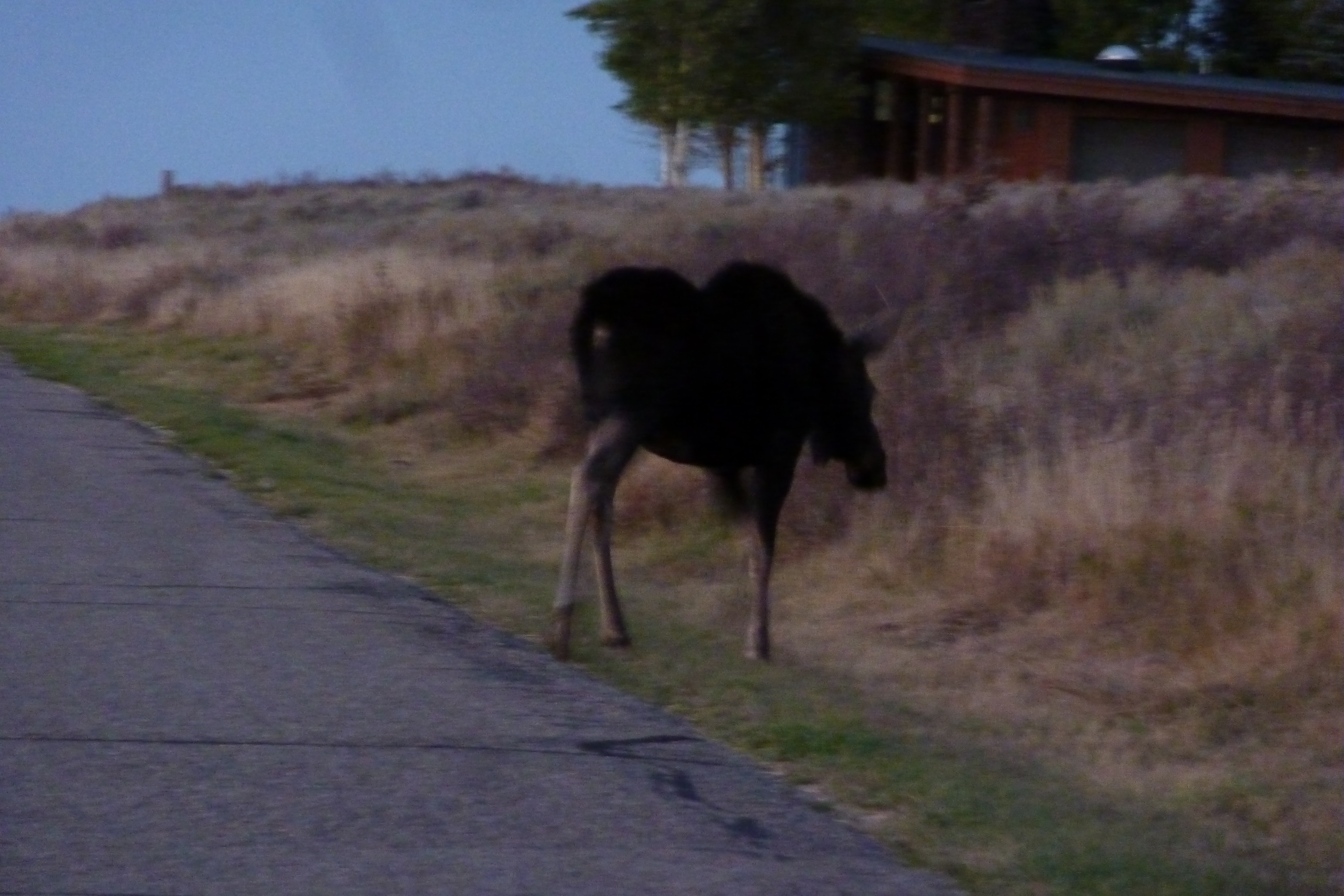
On one mountaintop sunset quest we were just about ready to head back to town when a moose walked right in front of the car. We figure he was the John Muir of moose, on a lone exploration of the wilderness. The night was a bit too dark for a good photo, but we have this magical moment on the Kodachrome of our memory (a quote from George Chigas).

John Muir Moose, heading home to his mountaintop estate.

John Muir Moose, heading home to his mountaintop estate.

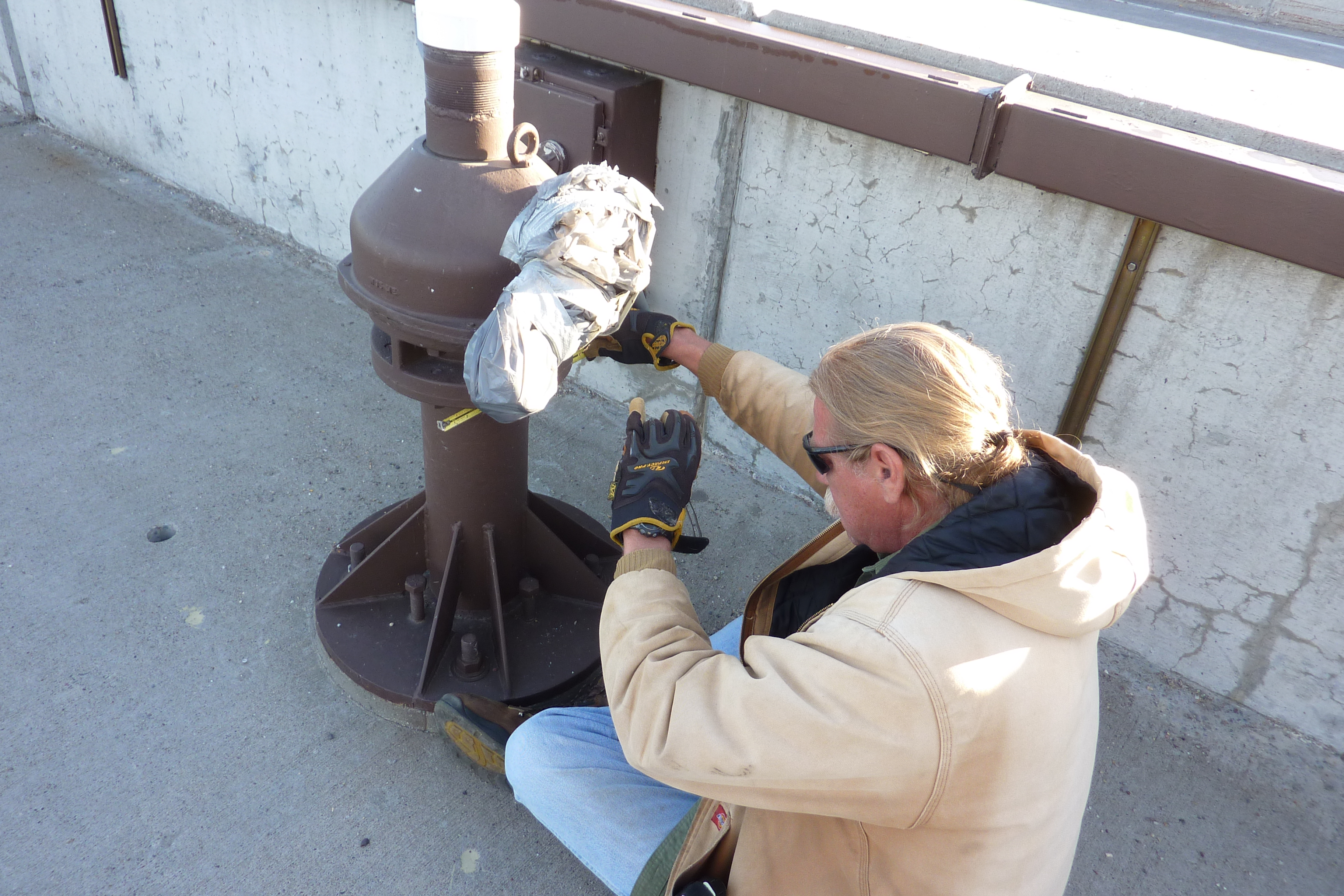
Yesterday we were talking to a county worker checking the Jackson Lake reservoir level and asked what he thought about all this “nature.” His last job was in the Grand Canyon with temperatures of 125F, so Grand Teton with a couple months of -20F is better, and as he said, “It beats working in a cubicle.” As we gazed at the view of the mountains, he reached into his pocket for a camera. We thought he was joining us in capturing the beauty, but he was just doing his  job, ensuring the reservoir level left room for spring runoff. Already thinking ahead.

Working on the "operators" controlling reservoir level

He’s photographing an “operator” controlling the reservoir level.

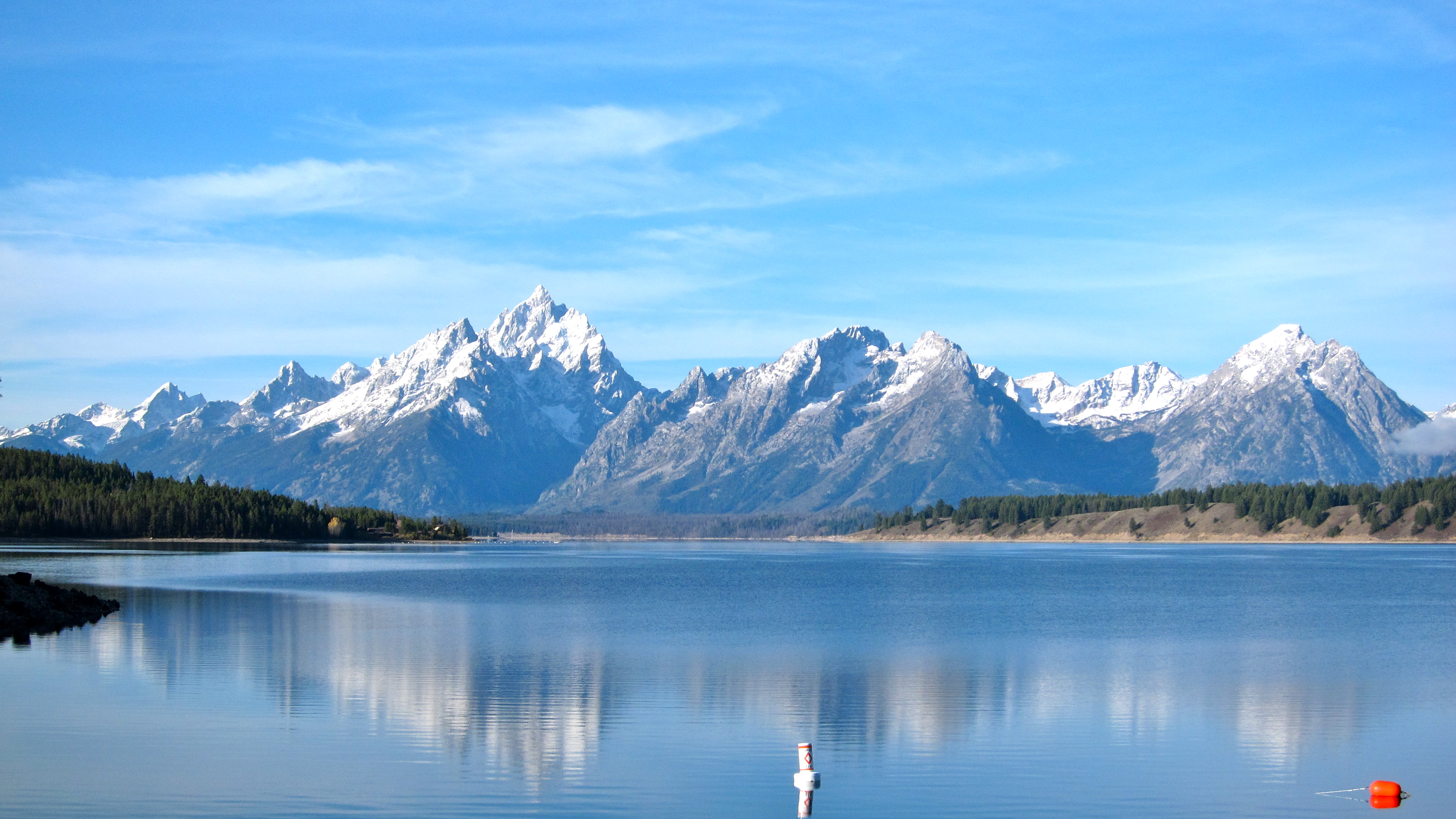
Most people don’t take pictures of their workplaces. While he was working on the reservoir, his “office” view was this:

Jackson Lake Reservoir

Jackson Lake Reservoir

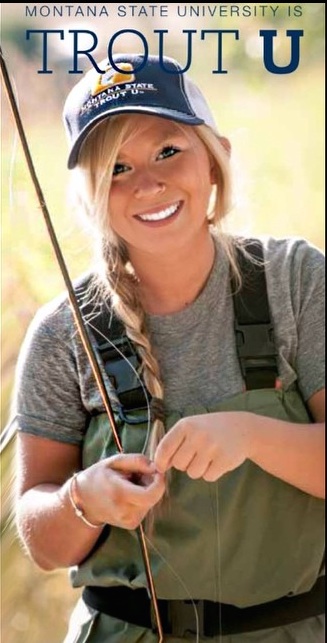
We stumbled upon Jenny Lake Lodge and stopped for lunch, fresh brook trout caught by our waiter, Montry. He was pulling my leg about catching the fish that morning, but it was delicious. Today we met the cutest fly fisher ever, Emmalee Flynn, who goes to school in Montana.

Here's someone who loves to fish.

Here’s someone who loves to fish.

kkk

…And she catches fish too.

She’s helping her parents, Trisha and Brian, celebrate their 25th anniversary here in the Tetons and Yellowstone. Congrats! Coincidentally, they live in New England, very near the bay where we went oystering a few weeks ago.

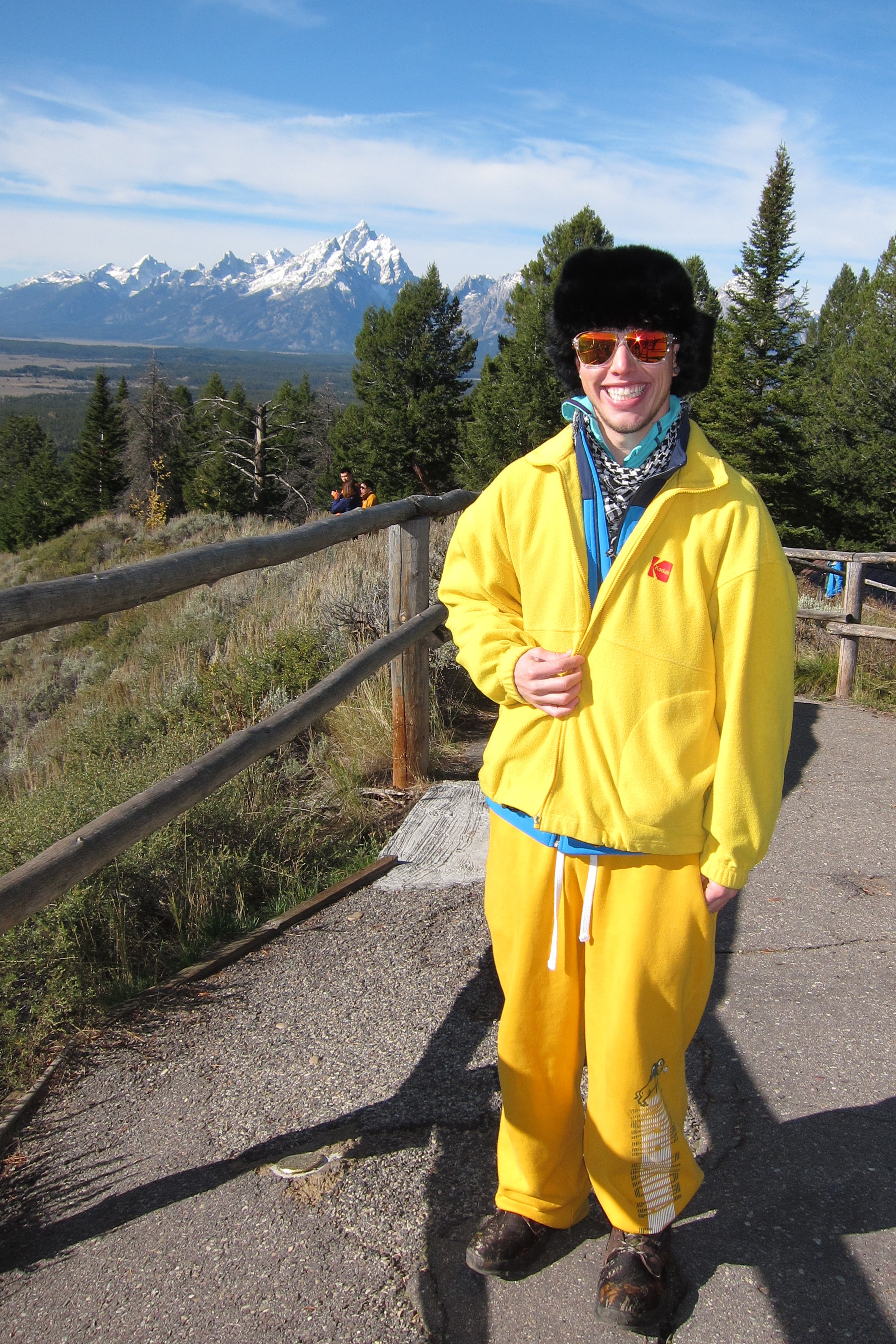
We met Jordan, another who didn’t fit the newlywed or nearly dead categories, visiting the park with his friends from Denver. Who would ever imagine that someone else would have the same excellent taste as Nancy in outerwear?

His pants, Nancy's jacket, a great ensemble. Despite the hat, Jordan will not be mistaken for a bear.

His pants, Nancy’s jacket, a great ensemble. Despite the hat, Jordan will not be mistaken for a bear.

Each person we’ve met, either visiting or working here, has been nicer than the last. Pam and Ron, the retired couple at the Jenny Lake Lodge front desk come from Tennessee each year to live in a small cabin and work. Why? “Because we didn’t do it when we were in college.”

We’ve decided we’re going to try to work here next year. Live in the park for next to nothing and have access to all this beauty.

This will be our view if we work at Jenny Lake next summer.

This will be our view if we work at Jenny Lake next summer.

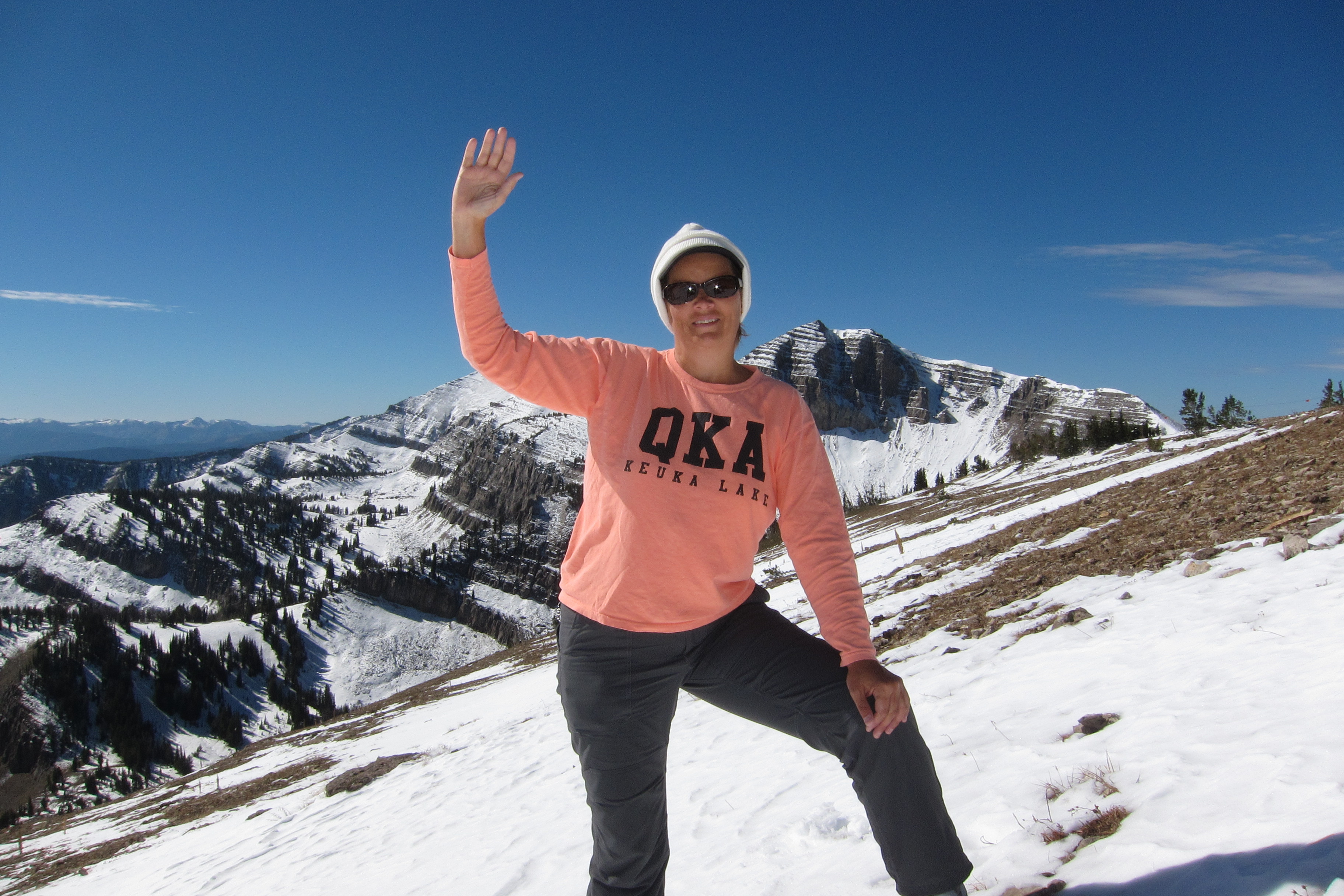
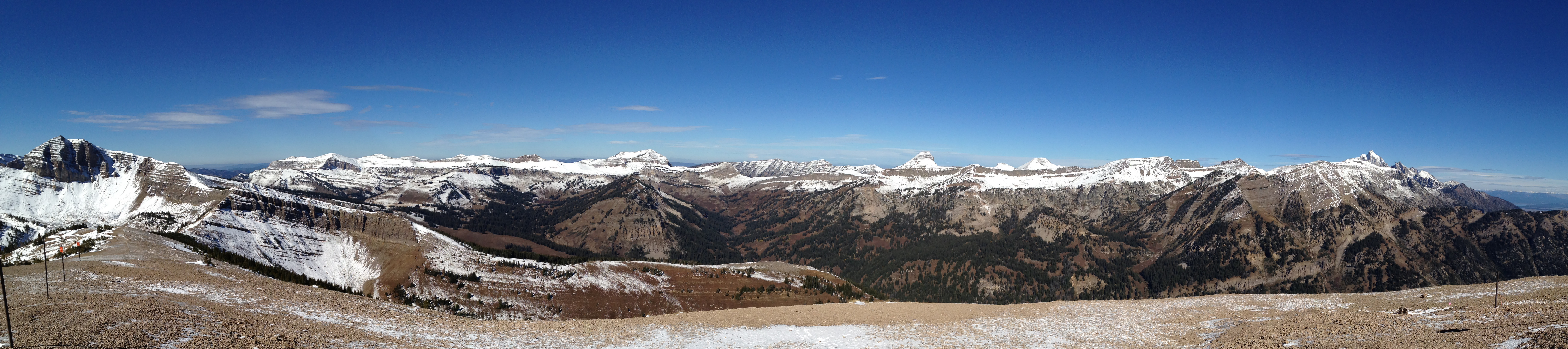
Some of our last views today were from a 10,450-foot elevation at the top of Rendezvous Mountain at Jackson Hole ski area.

Bringing Keuka Lake to the Tetons

Bringing Keuka Lake to the Tetons

This one was NOT a hike to the top.

The tram to the top

The aerial tram took us 2.5 miles up.

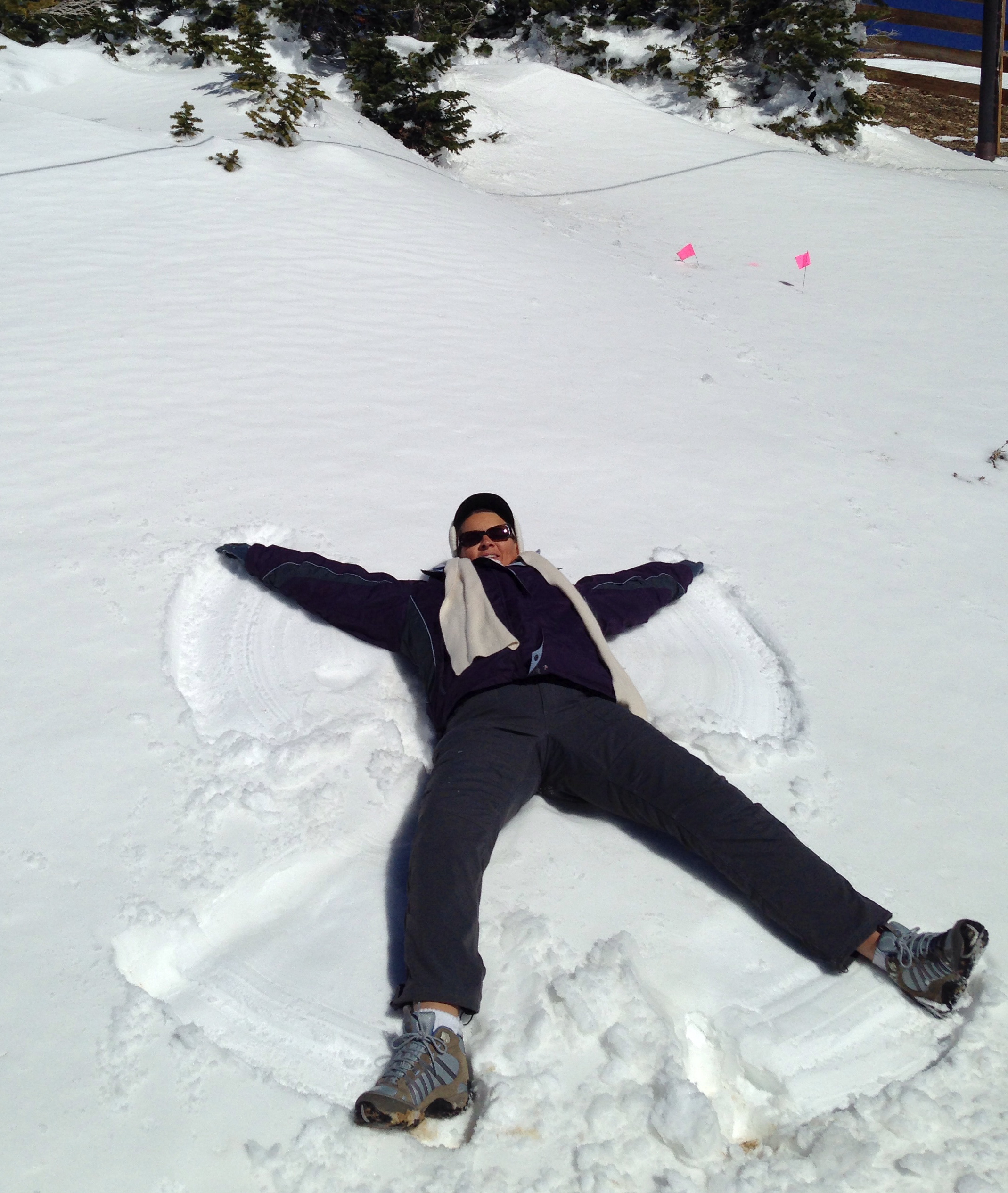
It was windy, but warm enough in the sun to make first angel tracks in the mountaintop snow. Pretty soon there will be skiers galore on this mountain.

I wonder why no one else did this first.

I wonder why no one else did this before us.

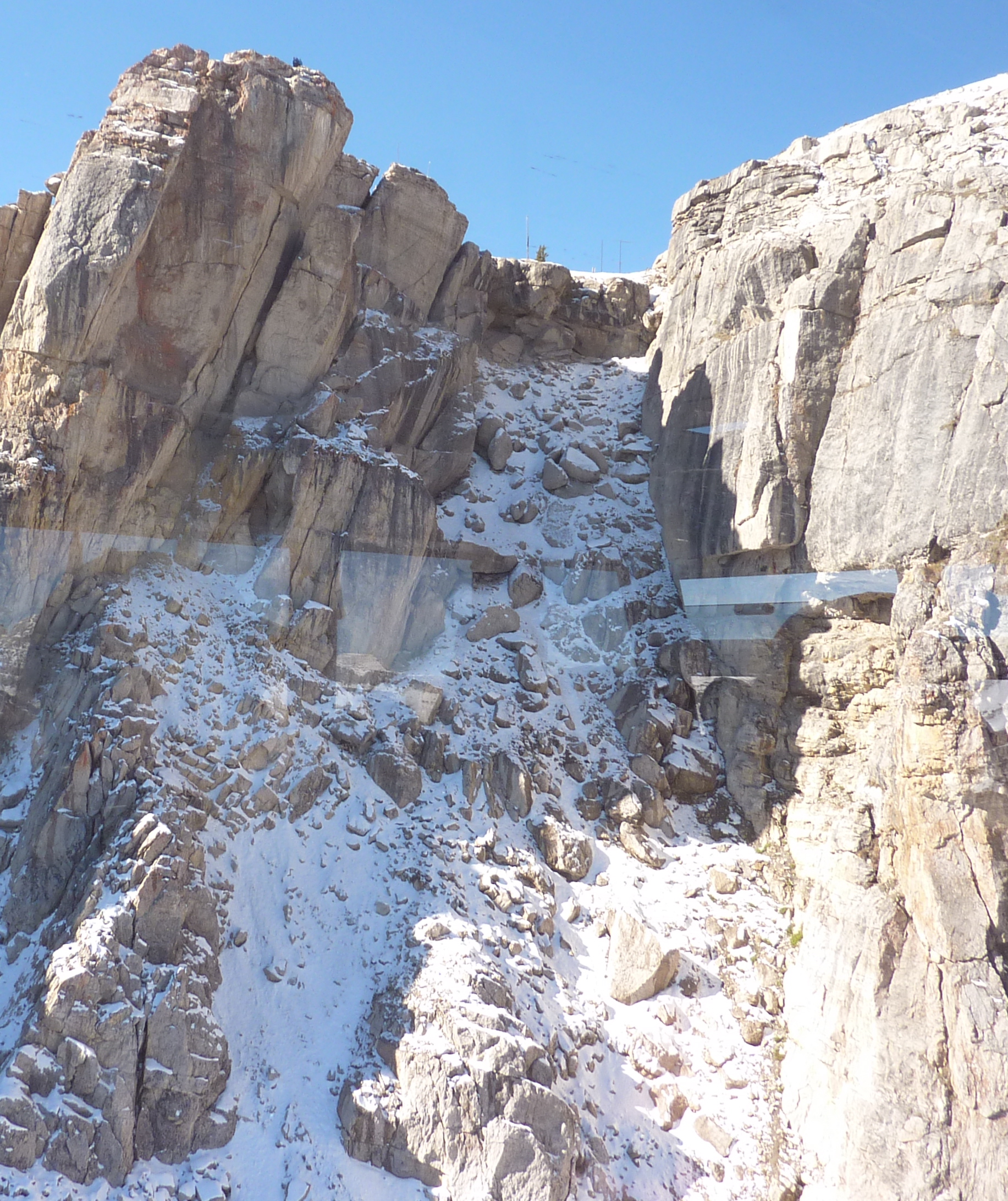
Some will even ski down this couloir, the narrow opening between the rocks. It will fill in with snow of course, as much as 400 inches, but it’s still too steep for our taste. Right, Kathy?

Chris, don't even think about it.

Chris, don’t even think about it.

At over 4,000 feet of vertical drop, Jackson Hole is one of the country’s biggest ski hills. What a view!

The mighty Tetons

The mighty Tetons


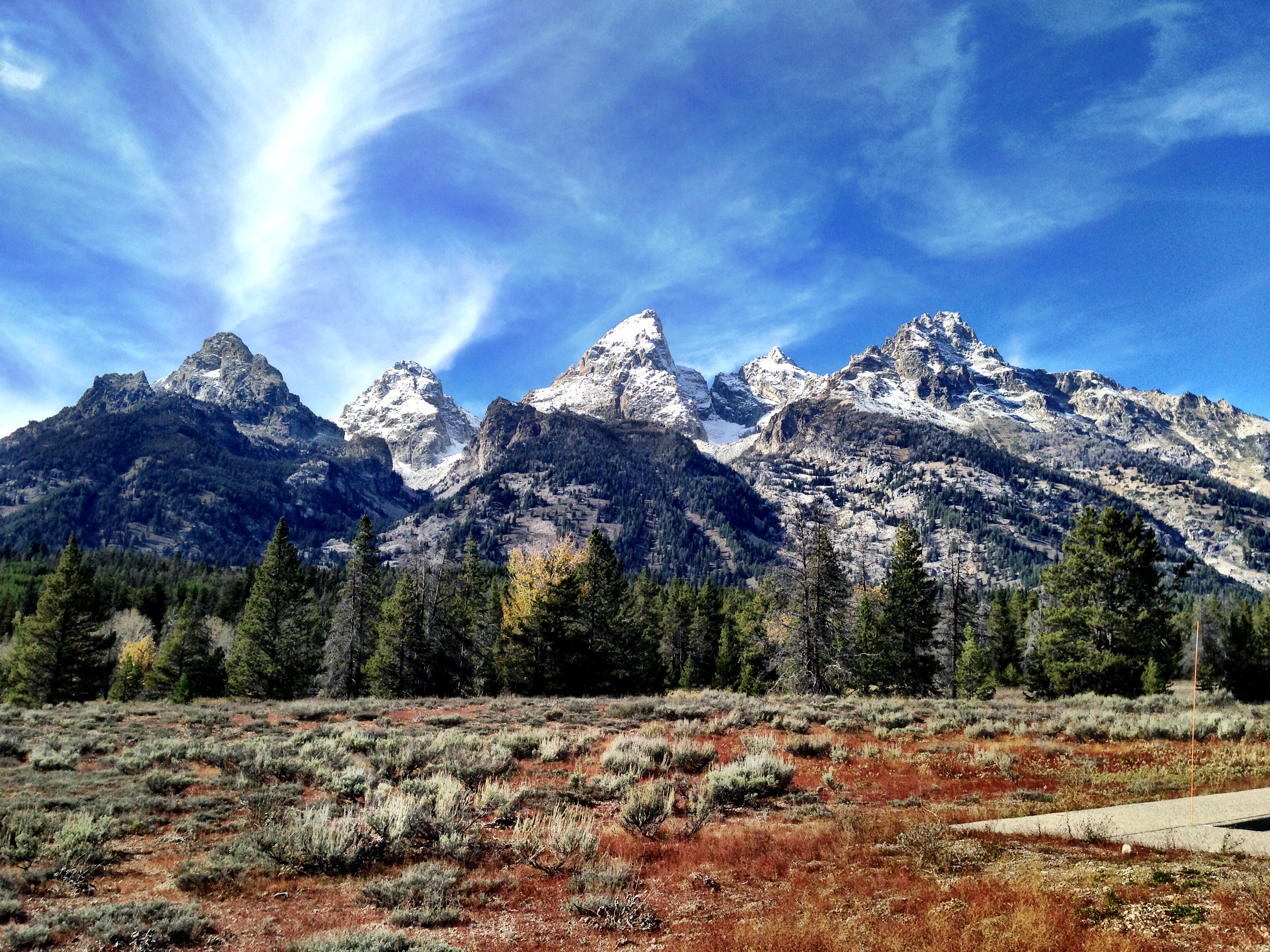
We ended the day with another spectacular view from the ground. Just can’t get enough.

Simply spectacular!

Simply spectacular!

Tomorrow it’s on to Yellowstone where Michael promises All Wildlife, All the Time!


Posted in Travel Journal | Tagged , , , , , , | Leave a comment

Westward Ho the Wagons – Day 30 on the vicious trail west

We’re following the path of the Oregon Trail. It’s a dismal, rainy day, but we’re comfortable in our climate-controlled car with fresh water and snacks within arm’s reach. What was it like for the settlers moving west in the 1850s? We stopped to find out at the National Historic Trails Interpretive Center in Casper Wyoming, a truly excellent hands-on facility, part of the US National Parks Service (worth a visit on your national park quest, Mark ).

On our trip, we’ve seen the terrain change from vast prairie
somewhere in Minnesota

Southwest South Dakota

…to rolling hills

Still fairly farmable. Maybe it would be good to settle here?

Still fairly farmable. Maybe it would be good to settle here?

…to terrain broken by sudden canyons, streams, and rises

Care to cross this in a covered wagon?

Care to cross this in a covered wagon?

…to majestic foothills

A first look...it gets better or worse for the settlers

Not quite into the Tetons. It gets better…or worse if you’re in a wagon trying to get to Oregon.

…and now the mighty mountains of the Tetons.

At what point did the settlers look at these views and murmur the 1800 equivalent of “Oh, shoot!” wishing they had never had the urge to go west? Here?
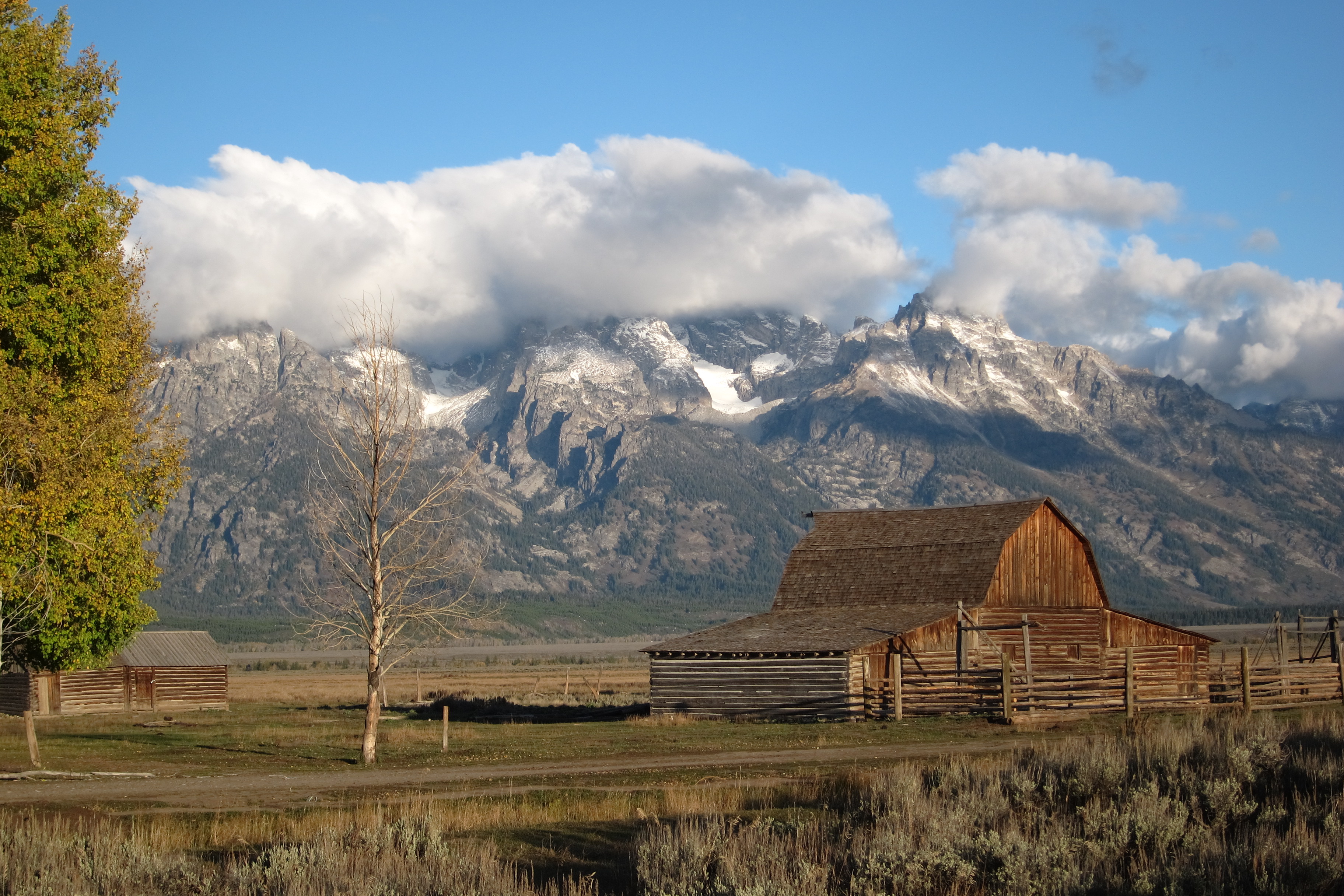
Imagine trying to cross that.
Imagine trying to cross that. Grand Teton!

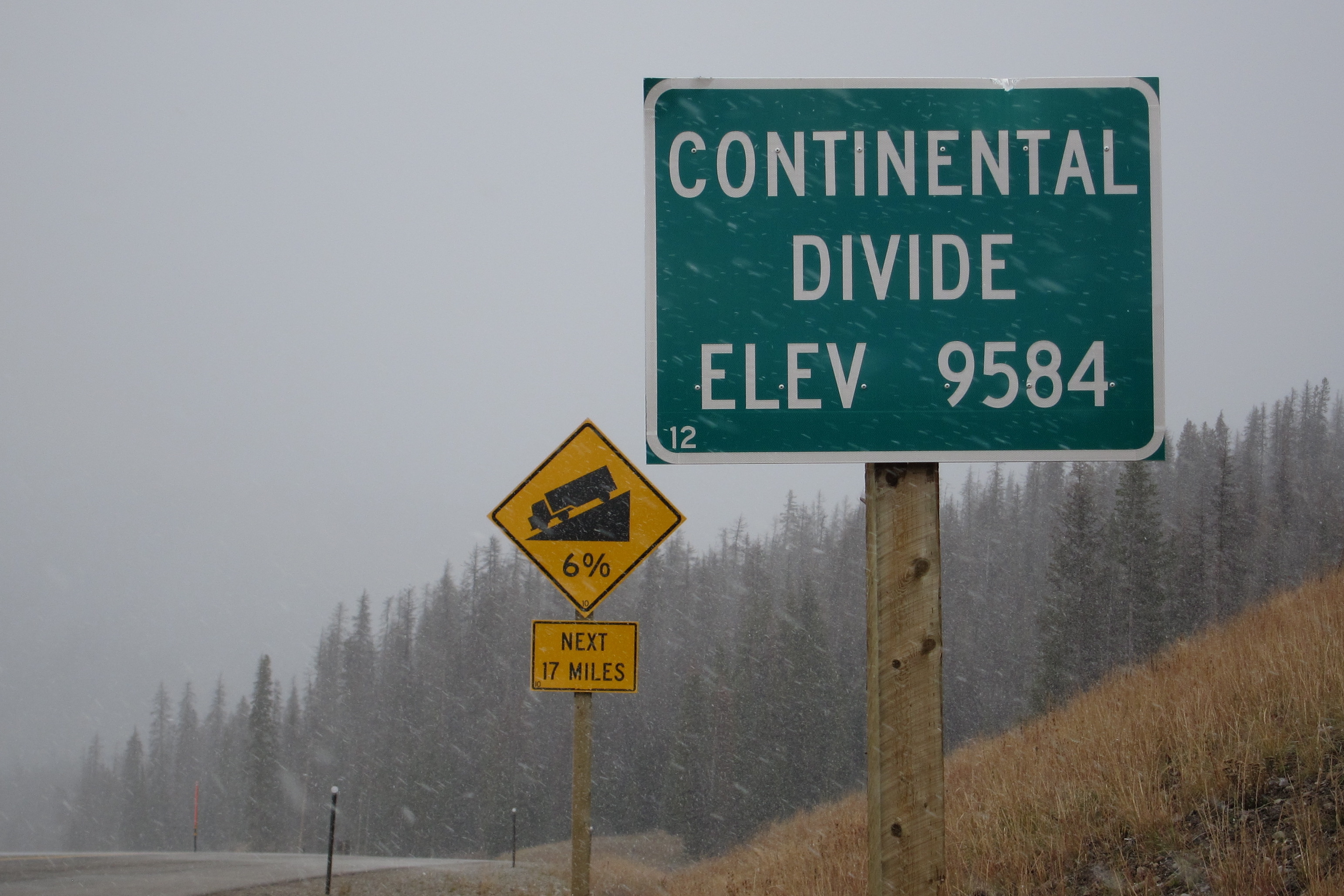
Or here  when  it started snowing?

Highest point on our trip so far. Snow on October 1

Highest point on our trip so far. Snow on October 1!

Two days ago it was 84 in Minneapolis

Two days ago it was 84 degrees in Minneapolis

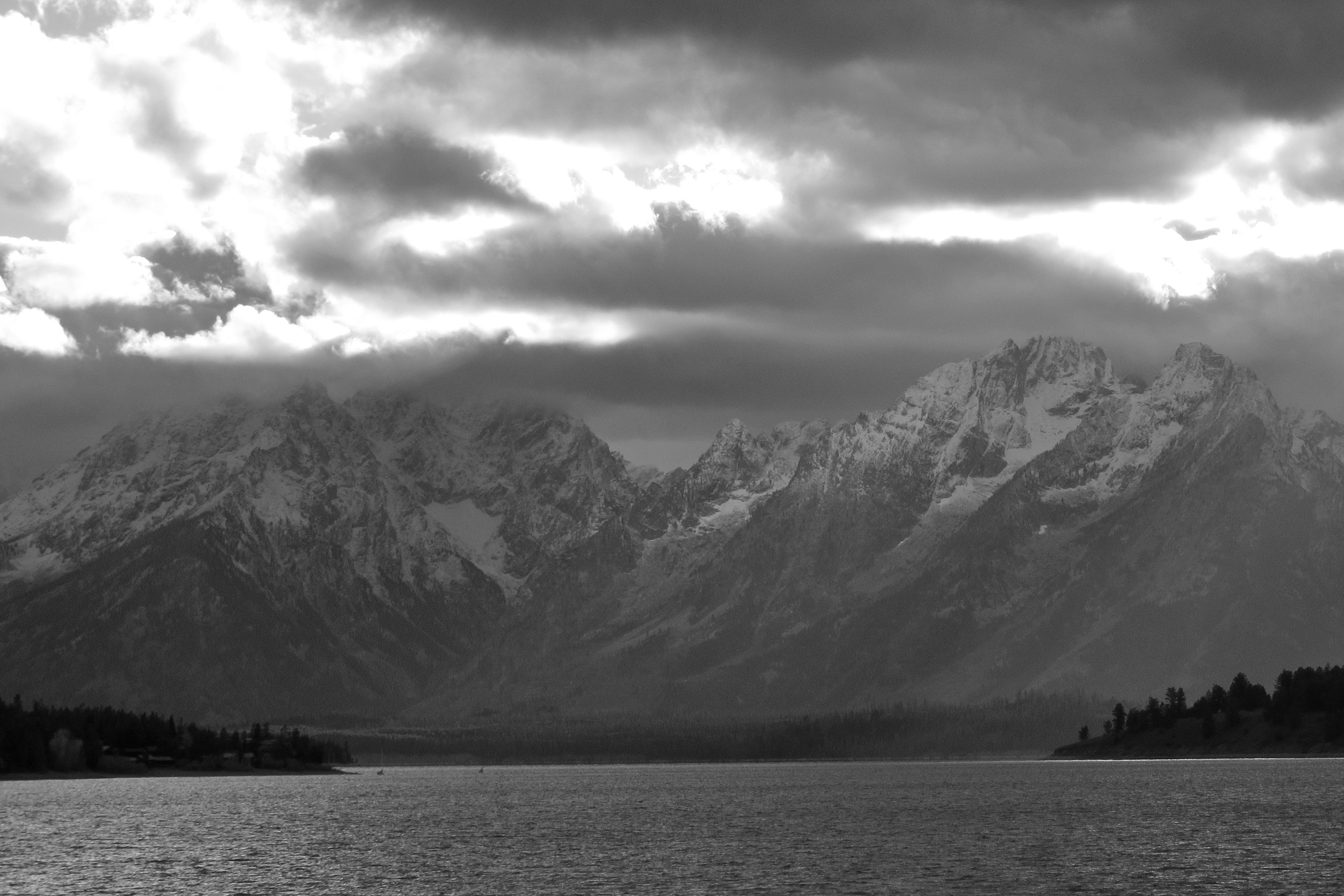
Michael gave our views the name of “cornercopia,” since we found a feast of amazing views around every corner. Some were even black and white, just like those from Ansel Adams. He, of course, couldn’t drive here on an 80-mile per hour highway as we did. When he shot the Tetons and other national parks in the 1940s, he  had to haul his large-format 4×5 camera and tripod to accommodate slower-speed film (yes, film), while Michael was able to shoot this just pulling his tiny iPhone out of his pocket.

Ansel-ish

Ansel-ish

Despite the harsh conditions on the trails, with limited water, cholera and other illnesses, variable weather, and Indians defending their native lands, 94% of the people who headed west survived the trip.

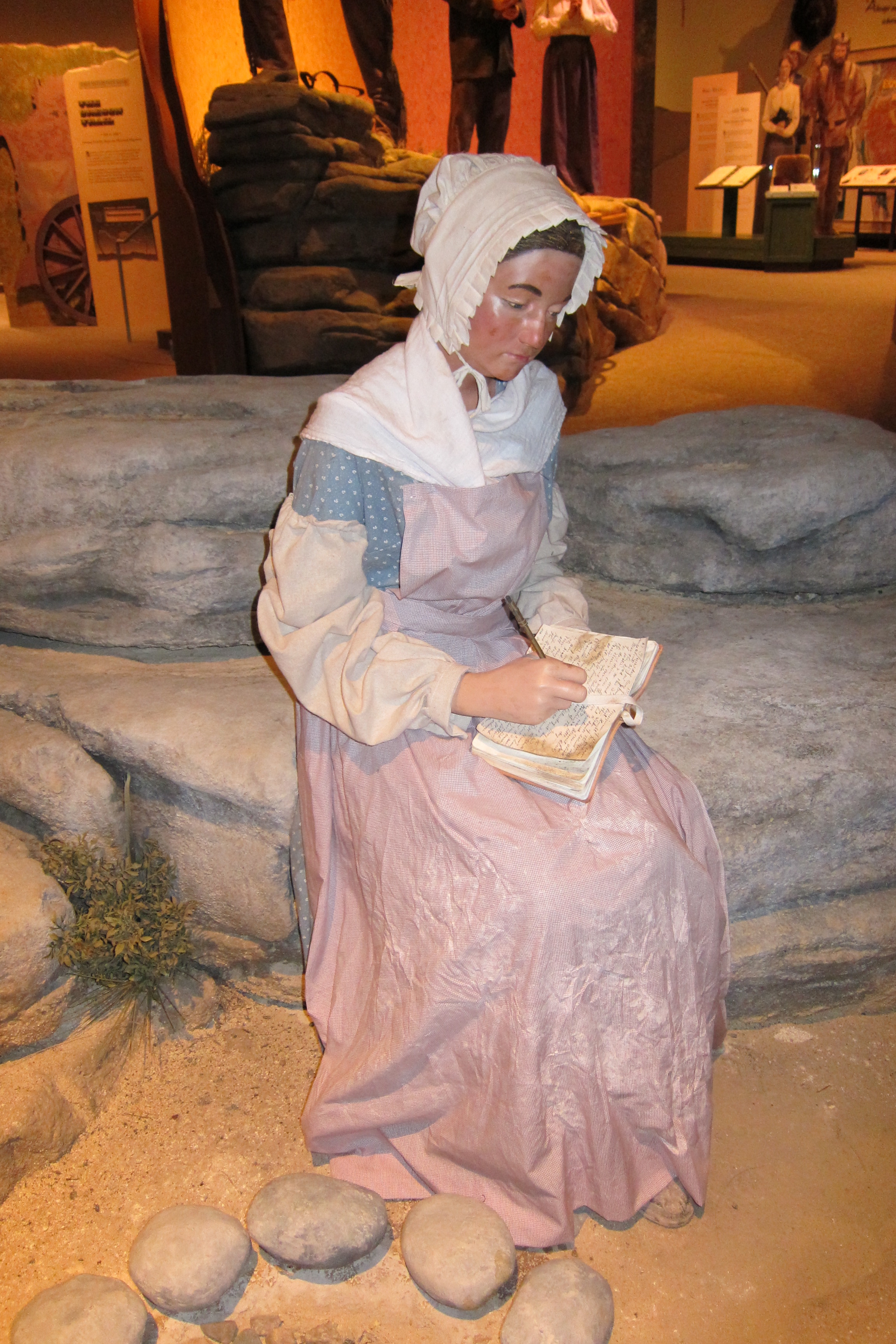
How do we know what conditions were like on the trail? From reports from the bloggers of the day…

early blogger

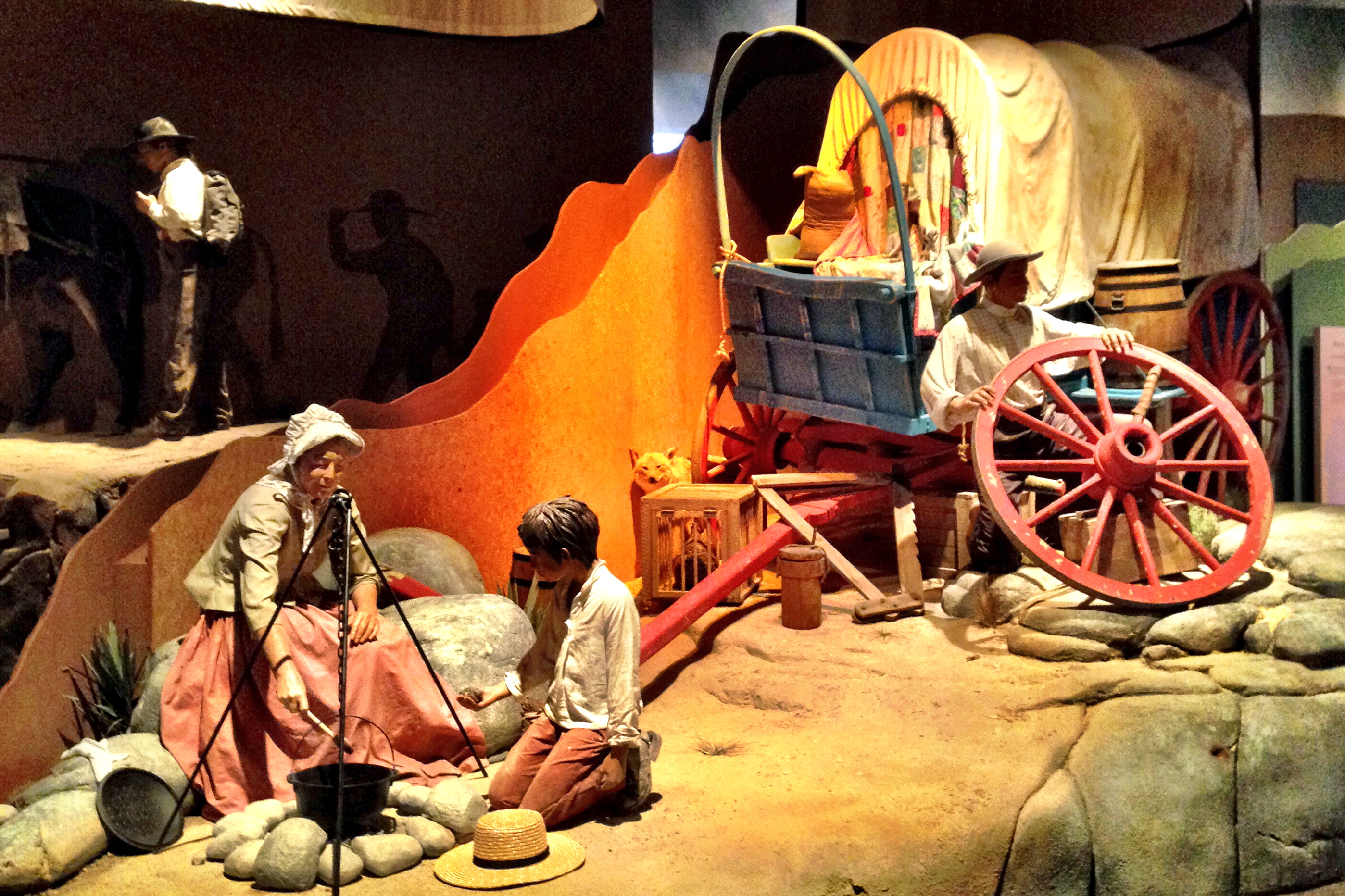
There were men’s chores: driving the wagon train behind the oxen, making the frequently required repairs, and finding the best path westward.

And women’s chores: cooking the meals, cleaning, tending the children.

Just like our trip! Michael drives and I pick the restaurant.

Just like our trip! Michael drives and I pick the restaurant.

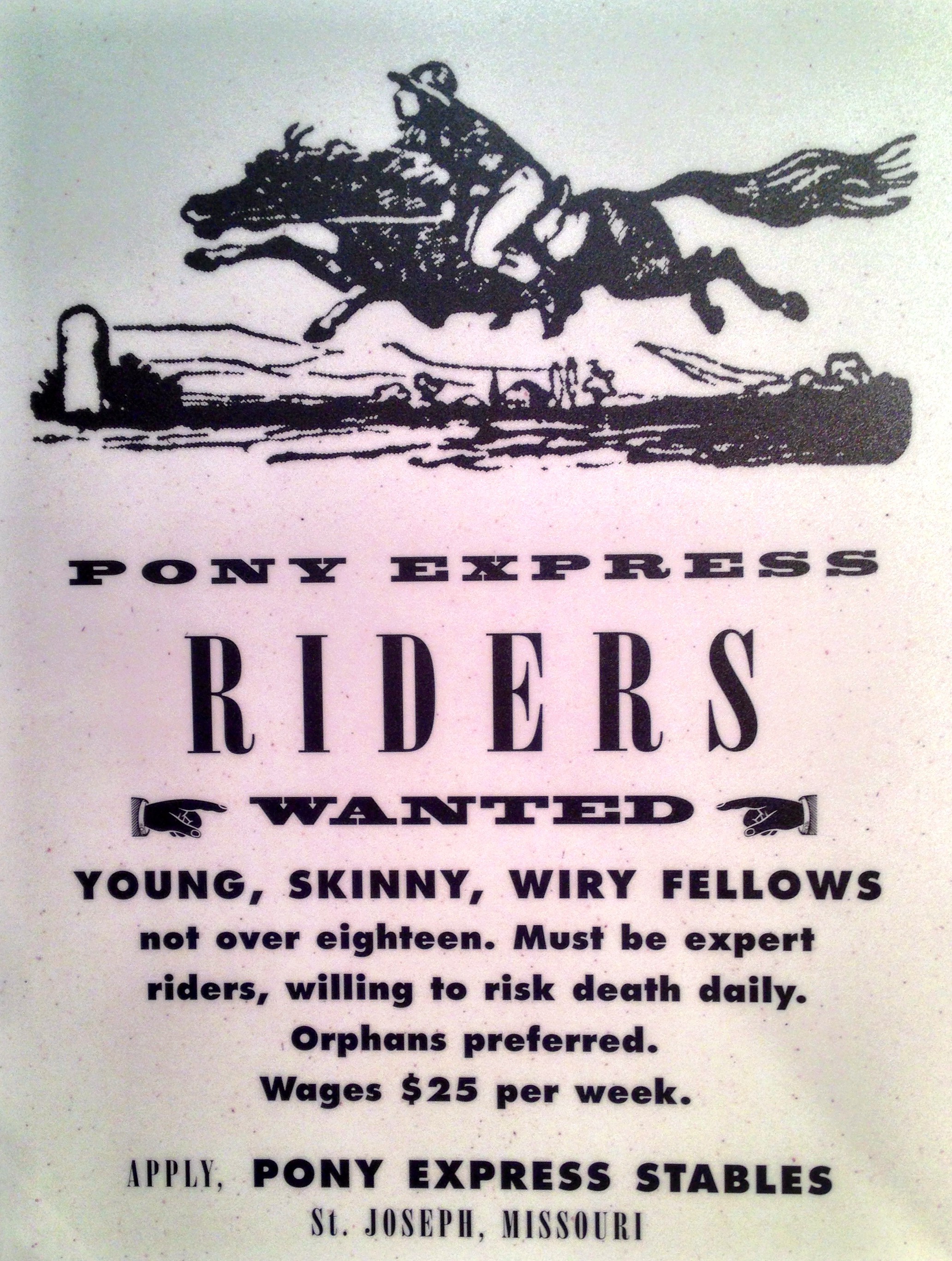
And orphan boys under 18 were encouraged to join the Pony Express. Chris calculated this as $675 a week in today’s currency, but with fairly high risk…of death!

Pat fits the bill, but too old

Pat fits the bill, but too old

With strong, but slow oxen pulling wagons, rutted or no trails to follow, streams to ford, and repairs to make, many settlers averaged only 12 miles a day. In contrast, we’ve done 1000 miles in three days, complete with overnight hotel and sightseeing stops.

We’re here for a few more days, so it’ll be all Tetons all the time.

Posted in Travel Journal | Tagged , , , | Leave a comment

Of presidents and brave men September 30 (Day 29) South Dakota

Mount Rushmore and more!

The only thing we knew about Rapid City was that it flooded recently, killing over 200 people. It turns out that wasn’t so recent, actually 1972! However, it was raining for so much of our short time here that we did see creek waters rising above the banks.

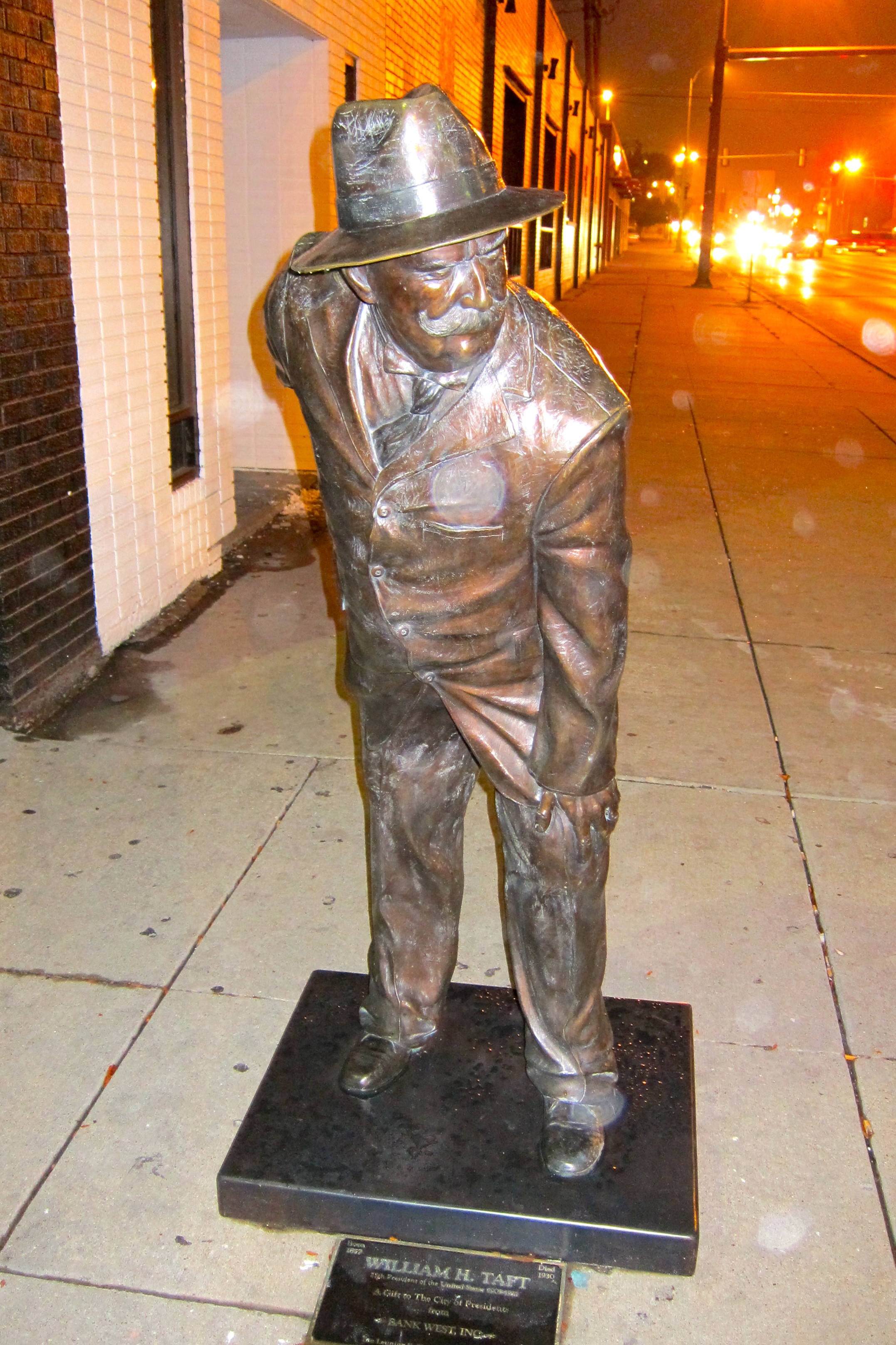
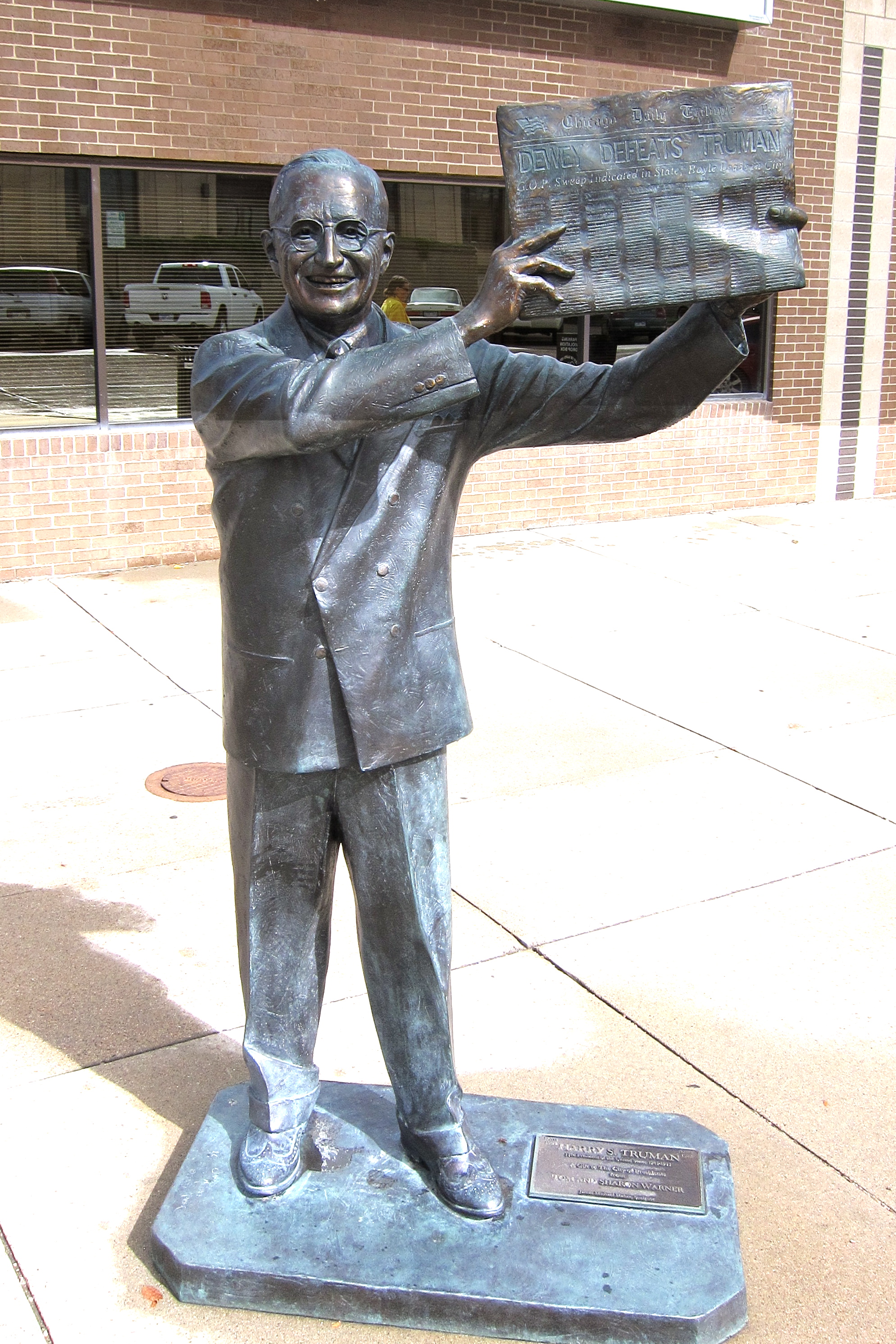
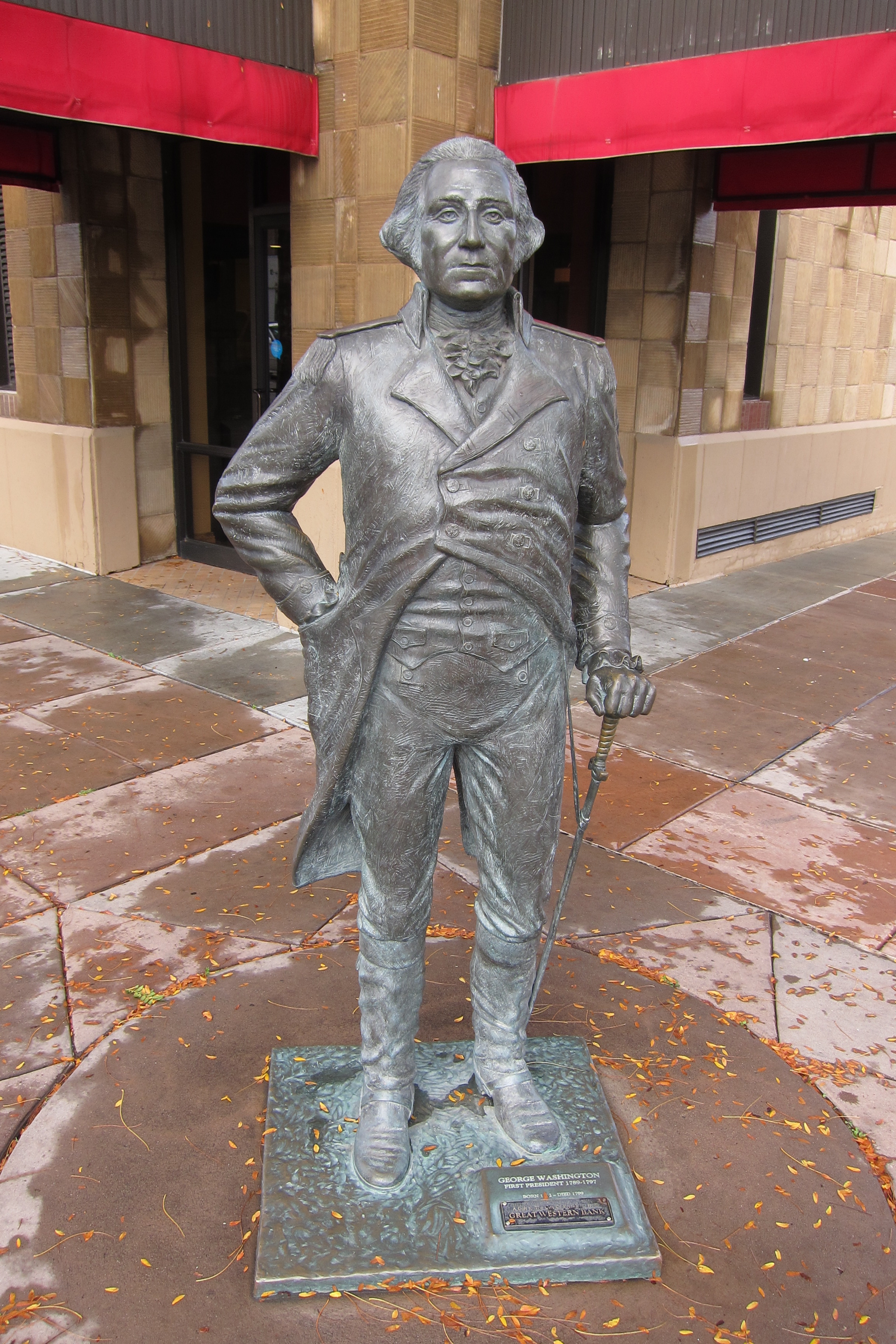
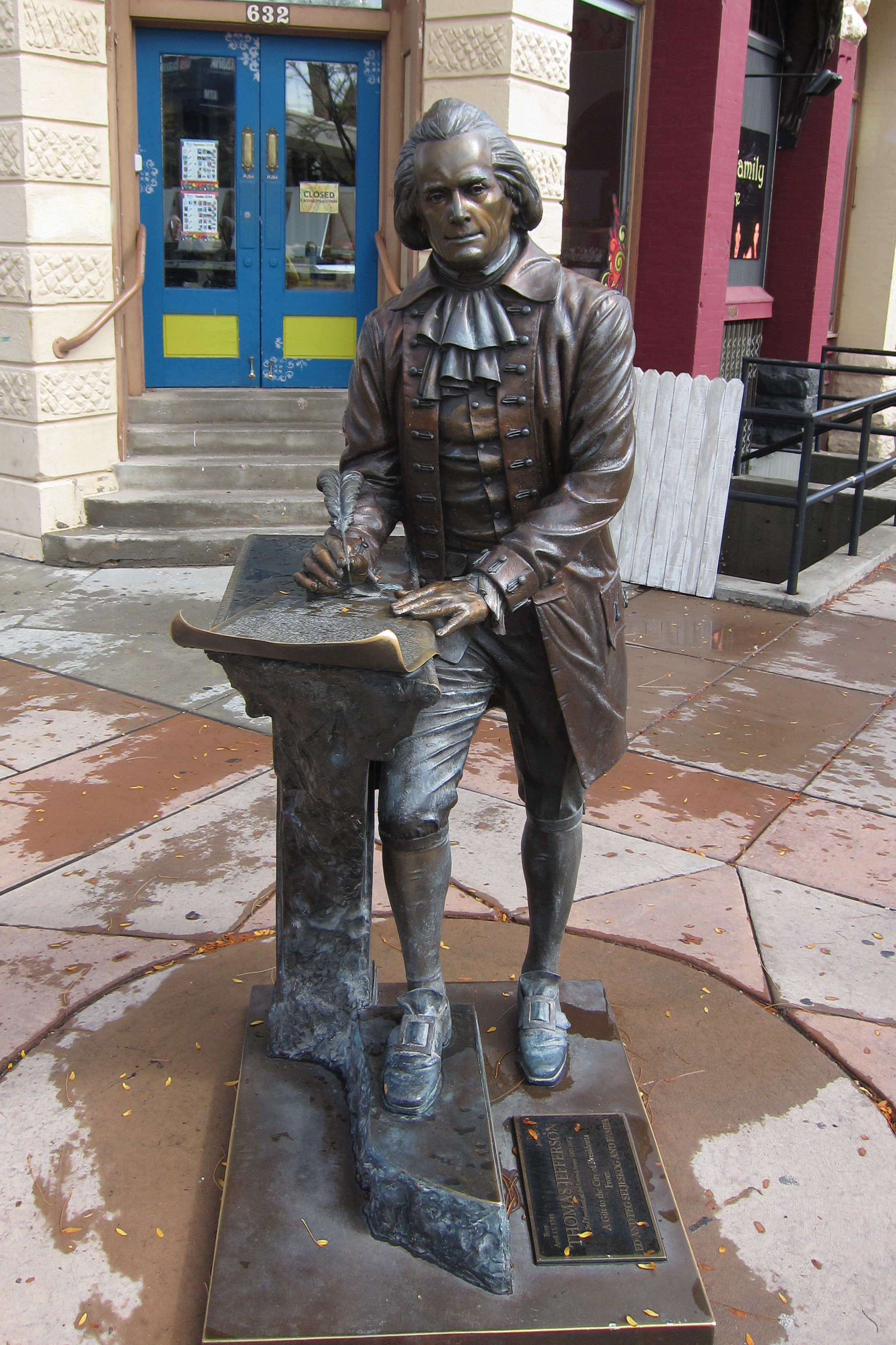
The town is simply delightful, with an amazing historic display: all 42 past presidents cast in bronze life-sized figures on the corners of the two main streets in the town. It’s like The Complete Works of Shakespeare (Abridged), only presidents.

Taft was our heaviest president, over 300 pounds, but a good athlete.

Taft was our heaviest president, over 300 pounds, but a good athlete. He’s getting ready to throw a baseball.

We’ve followed an easy, shortcut path to accomplish something similar to Mark Real’s presidential birthplace visits, but ours took less than an hour rather than many years.

Truman, the president who almost wasn't, according to early and incorrect headlines.

Truman, the president who almost wasn’t, according to early and incorrect headlines.

In a brief moment without rain Monday night, we walked along Main Street and saw some favorites, then drove around Tuesday morning in the rain. Our breakfast cook at the AmericInn told us that South Dakota was the only state with bipolar weather: It’s either nice or it’s not. With very limited visibility, it looked like we wouldn’t visit Mount Rushmore on this trip!

At least we saw the celebrated four, but in bronze rather than stone.

Washington, father of our country

Washington, father of our country

Jefferson, the best writer among our presidents. Better than John Hancock.

Jefferson, the best writer among our presidents. Better than John Hancock.

Teddy Roosevelt, a noted conservationist

Teddy Roosevelt, a noted conservationist

Lincoln, who preserved the Republic

Lincoln, who preserved the Republic

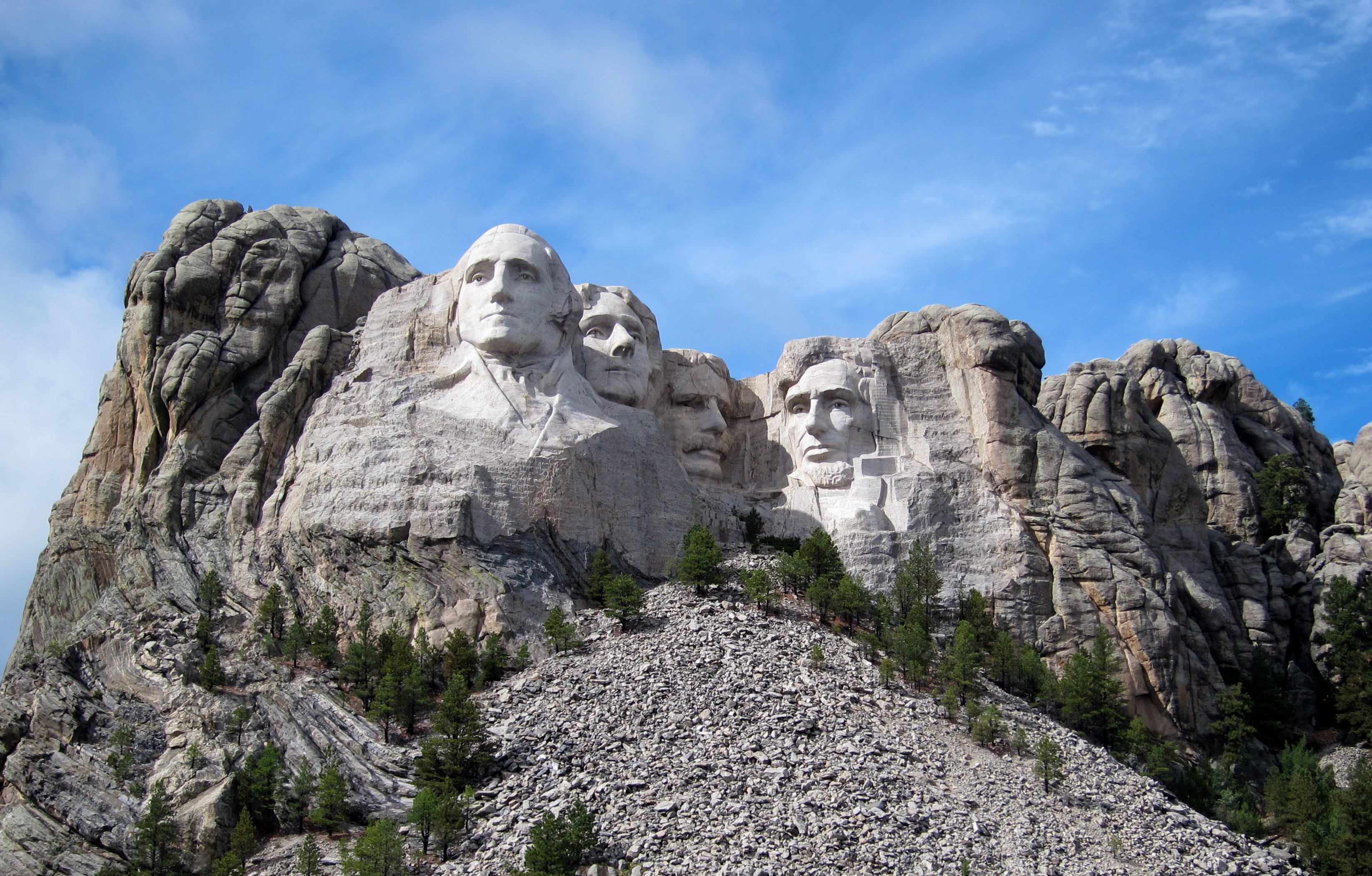
And then the weather did an about-face. The cook was right! With blue skies for a half hour we were able to get close to the amazing monument.

These 60-foot-tall granite carvings took 400 men, $1 Million, and 14 years to build.

Washington, Jefferson, T. Roosevelt, and Lincoln

Washington, Jefferson, T. Roosevelt, and Lincoln

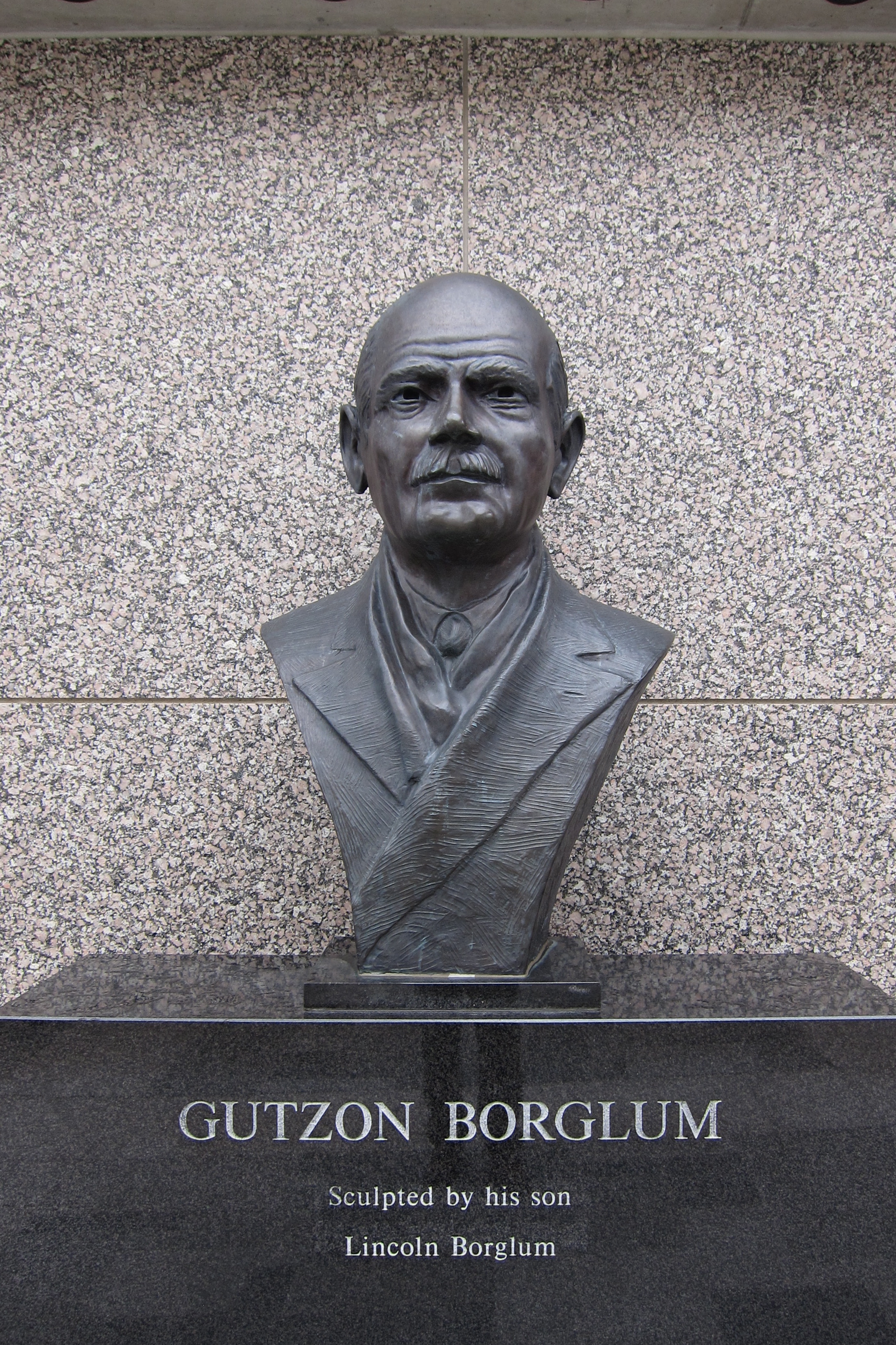
The sculpting was spearheaded by Gutzon Borglum and after his death completed by his son, Lincoln, presumably named after the president.

Borglum's head at the monument is not 60 feet tall.

Borglum’s head at the monument is not 60 feet tall.

Borglum was on the team that created the large bas-relief of the leaders of the Confederacy on Stone Mountain, Georgia. He left after having “artistic differences.” Maybe a Lincoln fan just couldn’t embrace the idea of memorializing the Confederate leaders.
(Confederacy) President Jefferson Davis and Generals Robert E. Lee and Thomas J. "Stonewall" Jackson

(Confederacy) President Jefferson Davis and Generals Robert E. Lee and Thomas J. “Stonewall” Jackson

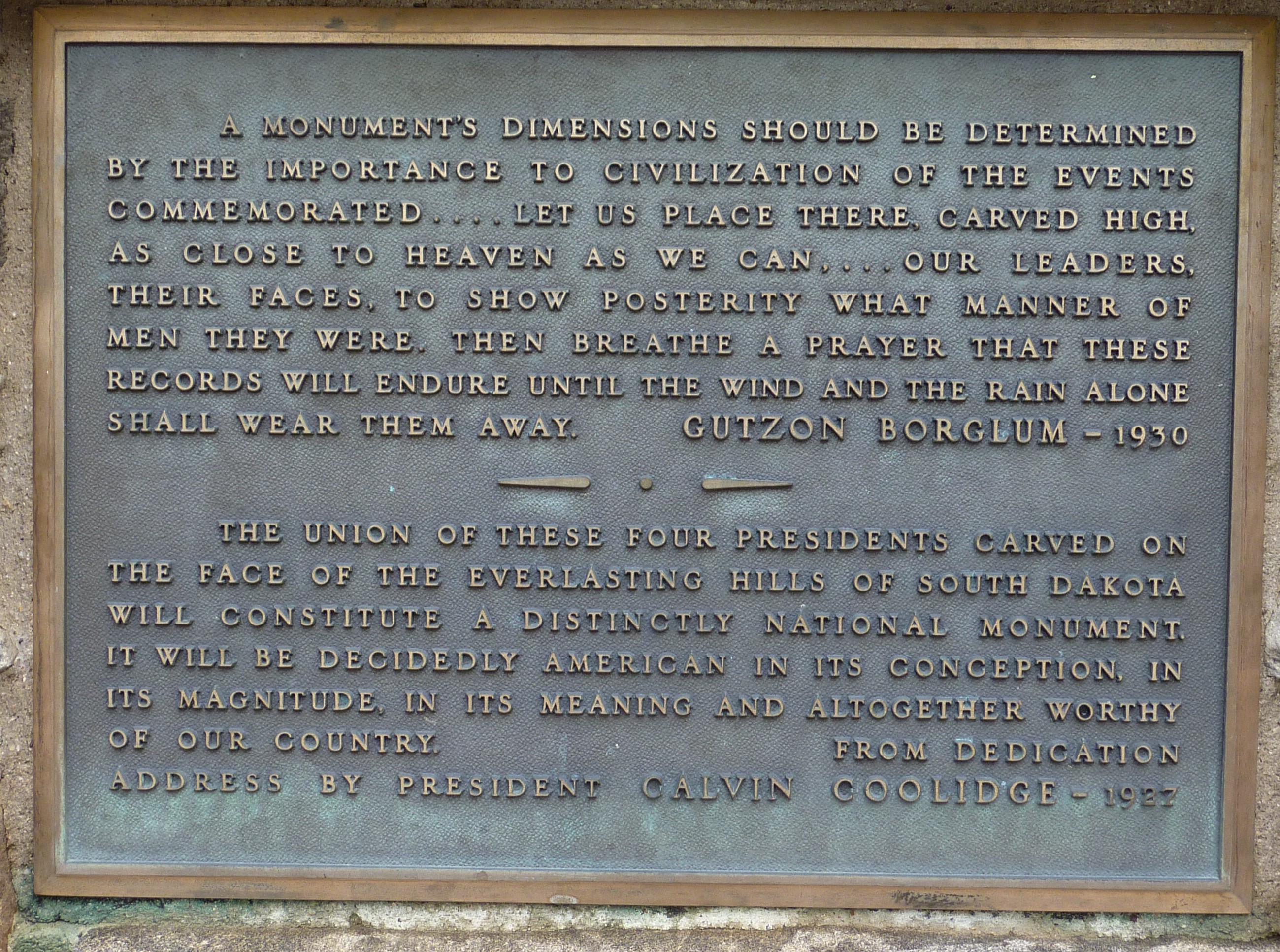
Borglum chose the four  Mount Rushmore presidents (from the 25 who had served in the 130 years since the nation was founded) because their leadership represented great importance to the nation. Whether in battle, in separatism, or in preservation, these men showed bravery in taking a difficult path.

Dedications from Borglum and President Coolidge.

Dedications from Borglum and President Coolidge.

An interesting tidbit: Did you know there was a campaign to add Susan B. Anthony to this foursome? She was, of course, a major voice in the women’s suffrage movement in the 1800s. Surprisingly the tribute was not proposed in the ragingly feminist times of the 1970s, but actually in 1937. The proposal was quickly kiboshed by the male powers that ruled, but it was at least an early start in recognizing that women mattered.

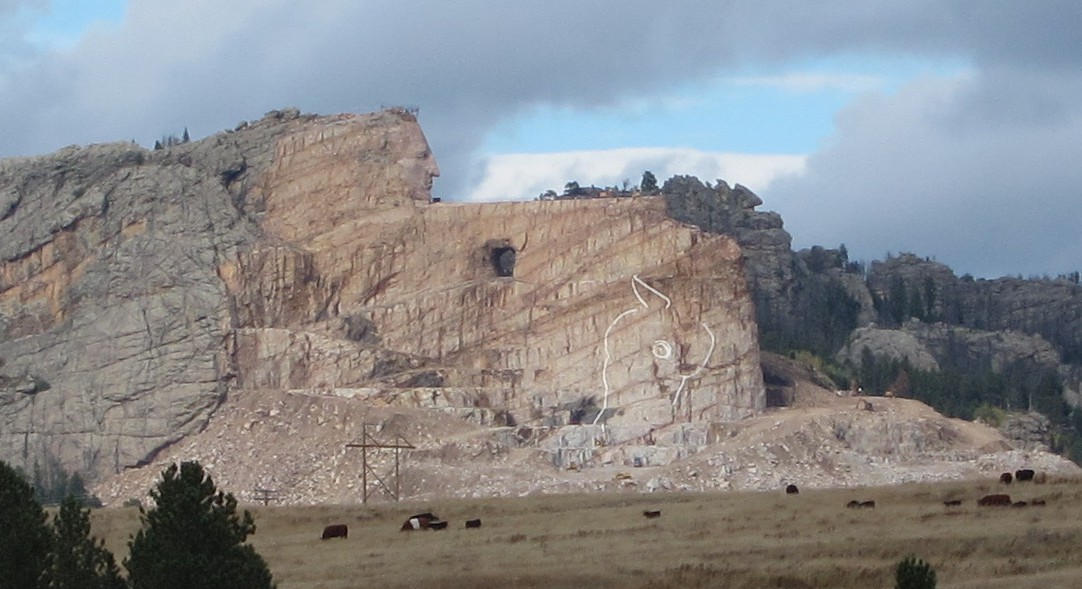
South Dakota recognizes that Native Americans matter too. The Crazy Horse Memorial is underway just a few miles from Mount Rushmore. It is intended as a tribute to the brave spirit of Lakota leader Crazy Horse and other Native Americans and will ultimately be the world’s largest statue. It was started in 1948. The head was unveiled in 1998 and the rest is scheduled for completion…soon.

Crazy Horse, coming soon

Crazy Horse, coming soon

We went to another mountain in addition to Rushmore: Mount Everest. Two Nepalese restaurants are at the top of TripAdvisor’s lists of best restaurants in Rapid City, even beating Longhorn Steakhouse! So why are two Nepalese restaurants here, halfway around the world from Nepal? According to Diva, our waitress at Kathmandu Bistro at dinner Monday, the town has 11 Nepalese doctors, and of course, they have to eat somewhere. The food was excellent!

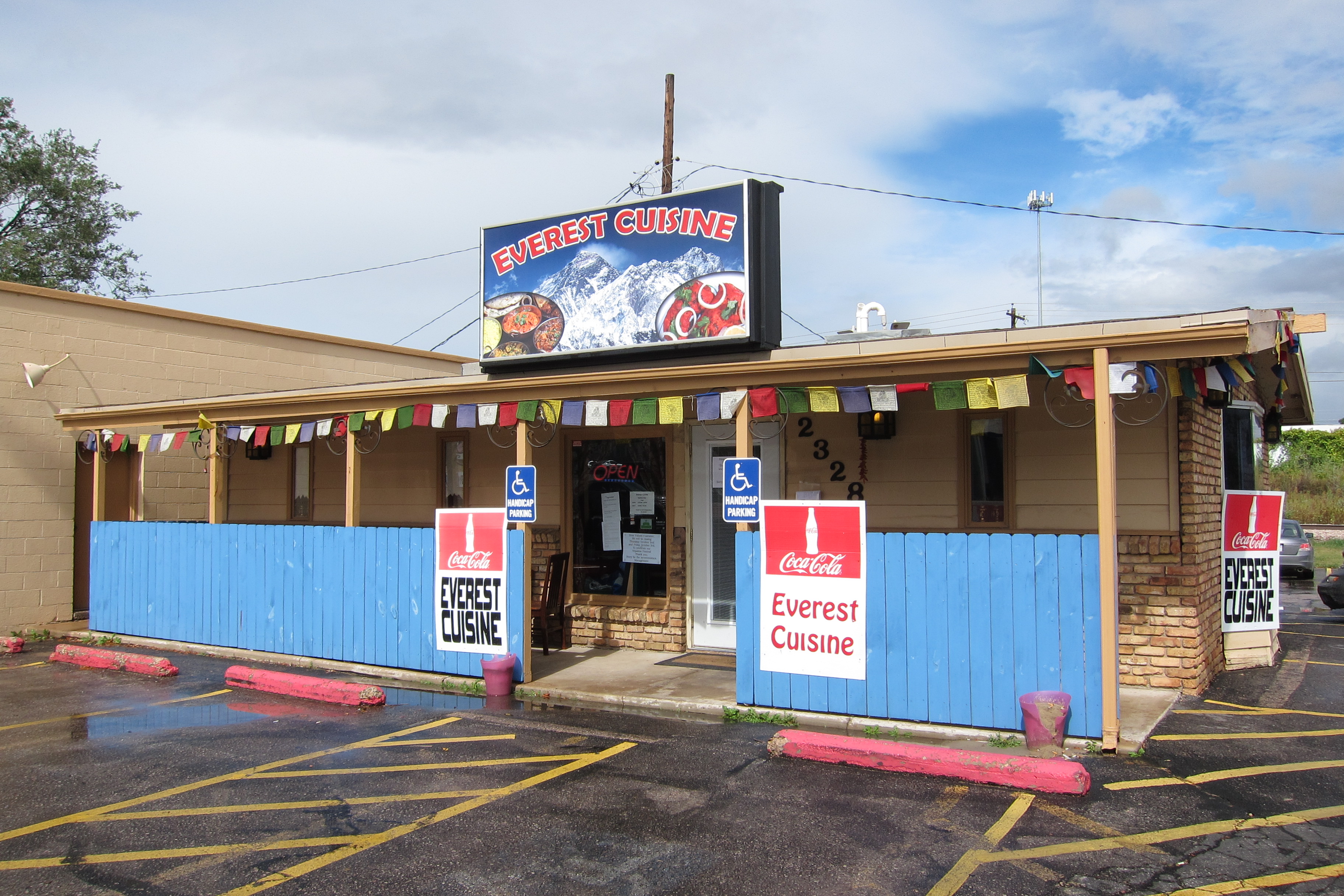
Then on our rainy Tuesday, we went to Everest Cuisine for lunch and met our waitress, the spitting image of Diva at Kathmandu. Yes, they were sisters. The same family runs both restaurants and they are only a couple miles apart.

Not overly impressive on the outside, fantastic food on the inside.

Trip Advisor says “best restaurant in Rapid City” but you might not notice it from the outside. Inside the food is fantastic.

At Everest Cuisine the man who met us at the door was quiet and polite. But we learned he had a fascinating second job. Every spring he is a Sherpa on mountainous ascents in the Himalayas.

Kathmandu has this as a huge mural of the Himalayas, Everest Cuisine has a small framed print.

Kathmandu has this as a huge mural of the Himalayas, Everest Cuisine has a small framed print. Our waiter could have put “been there” pins at the tops of several of these peaks.

He has made ELEVEN Everest ascents, the first at age 15, and four of them without oxygen. The teams he’s supported have included the son of Sir Edmund Hillary and big bosses at Mountain Gear and the North Face; they put their clothing through the paces. Last spring he was scheduled to make an Everest assault, but he chose to remove himself because of hazardous conditions. That climb encountered a fatal avalanche; sixteen climbers, who were friends and fellow Sherpas, were killed.

Climbing in the Himalayas has changed since he first started. He shared some of the pluses and minuses. On the positive side, he can use Skype to maintain contact with his clients and his team in Asia. On the negative side, some of the culture and charm of the villages has been lost, overrun by the invasion of climbers. And he noted a very negative issue: global warming. Probably a strong contributor to deadly avalanches, the melting ice causes other changes that make the already difficult job for the Sherpas that much more difficult and dangerous.

Nevertheless he will be leaving for the Himalayas in March, this time for an ascent of K2 from Pakistan. We wish him a successful climb, with a glorious summit and safe return.

Posted in Smell the Roses, Travel Journal | Tagged , , , , , , | Leave a comment

What makes a land bad? (Sep 28 to 29) Day 28 South Dakota

Amazing Badlands photos at the end, so keep reading…

Horatio Alger said “Go west, young man.” Even before that, frontierspeople left friends and family to brave the dangers of the westerly frontier. So on a beautiful fall day, we followed in their rutted trail, heading west on Highway 64 from Crivitz, with one important stop to pick up cheese curds (after all, we’re in Wisconsin). They’re so fresh they squeak when you bite in.

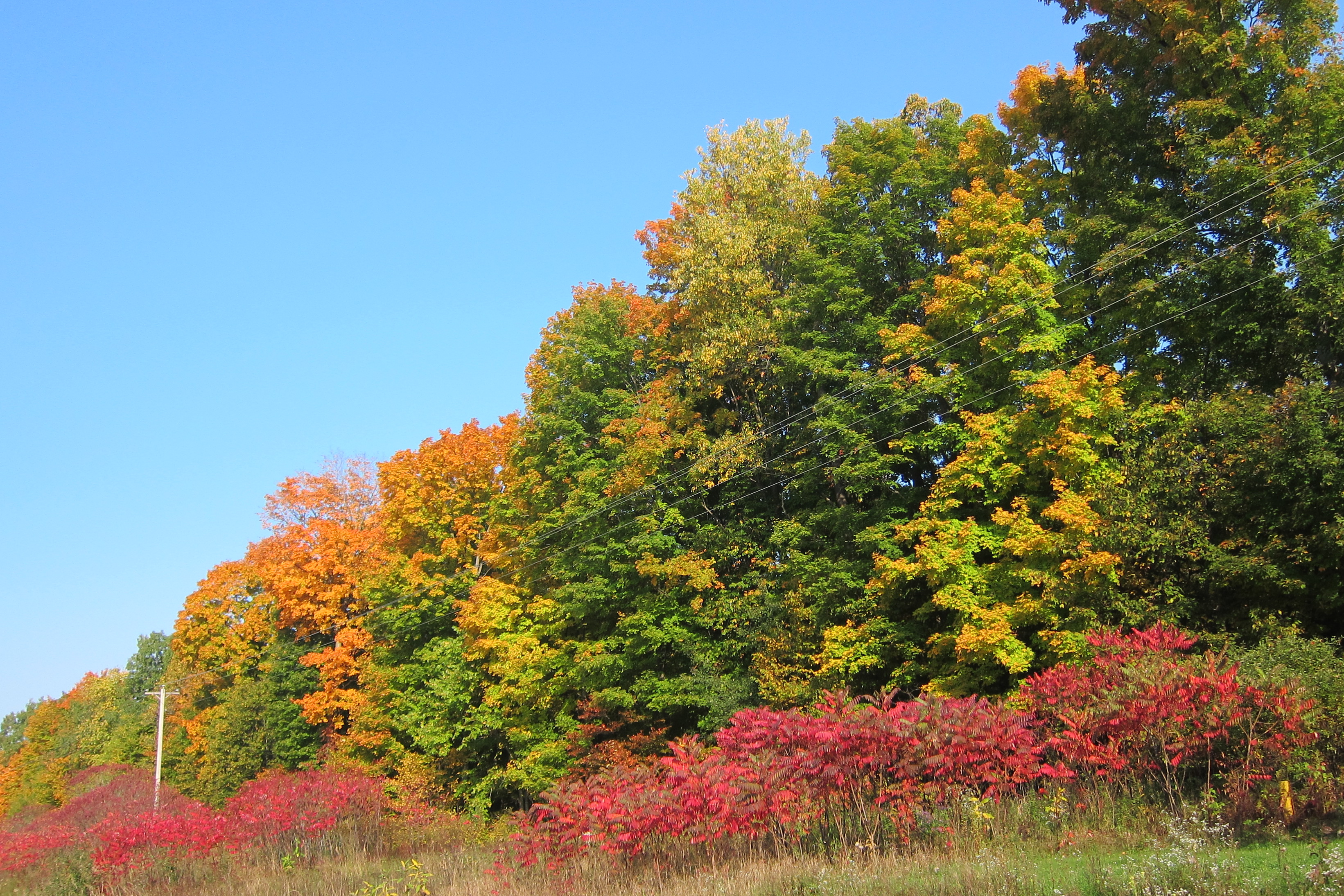
Fall colors along Highway 64. Red sumac in the front.

Fall colors along Highway 64. Red sumac in the front.

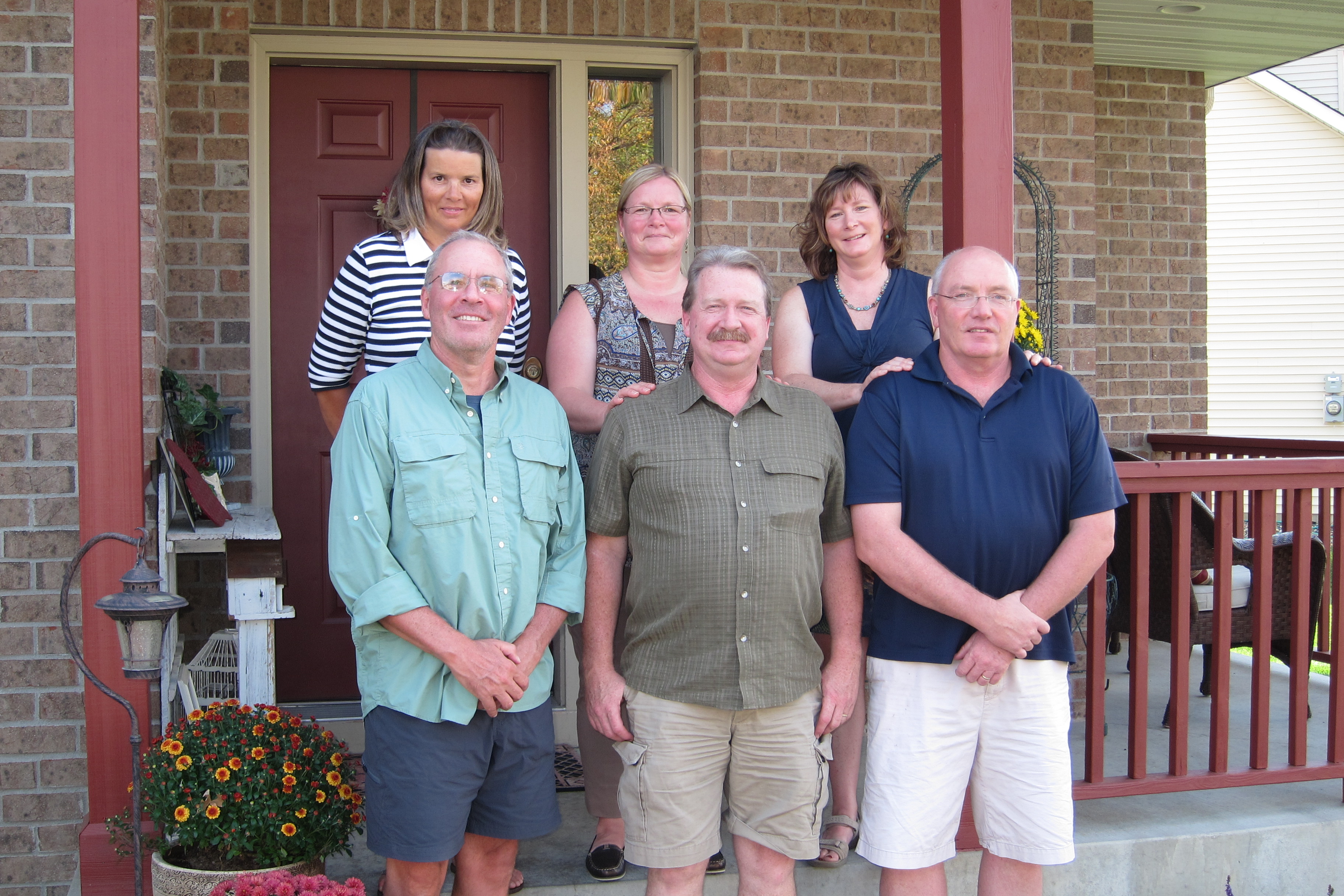
Then it was an almost straight shot to Minneapolis, home of the Great Mall of America, with an indoor theme park. We had no interest in stopping there, however. Instead we had a great visit with Nancy’s cousins, Kay and Scott, and their spouses. Scott (in the dark blue shirt below) and I haven’t seen each other in 17 years but he was easily recognizable; he looks just like his dad, my uncle.

Minnesota cousins. THANKS!

Minnesota cousins. THANKS!

Kay  and Tim (in the middle above) had just returned from a trip to Switzerland, a hop, skip, and small jump from our prior home in Geneva. We’re hoping they’ll come to visit us in France in the spring.

Scott and Lori treated us to a spectacular lunch. They created a delicious homefry dish (shredded potatoes, cream of chicken soup, sour cream, and CHEESE). We’ll be making that once we have access to a kitchen. It was so nice to see family and fuel up on good food before our harsh journey west.

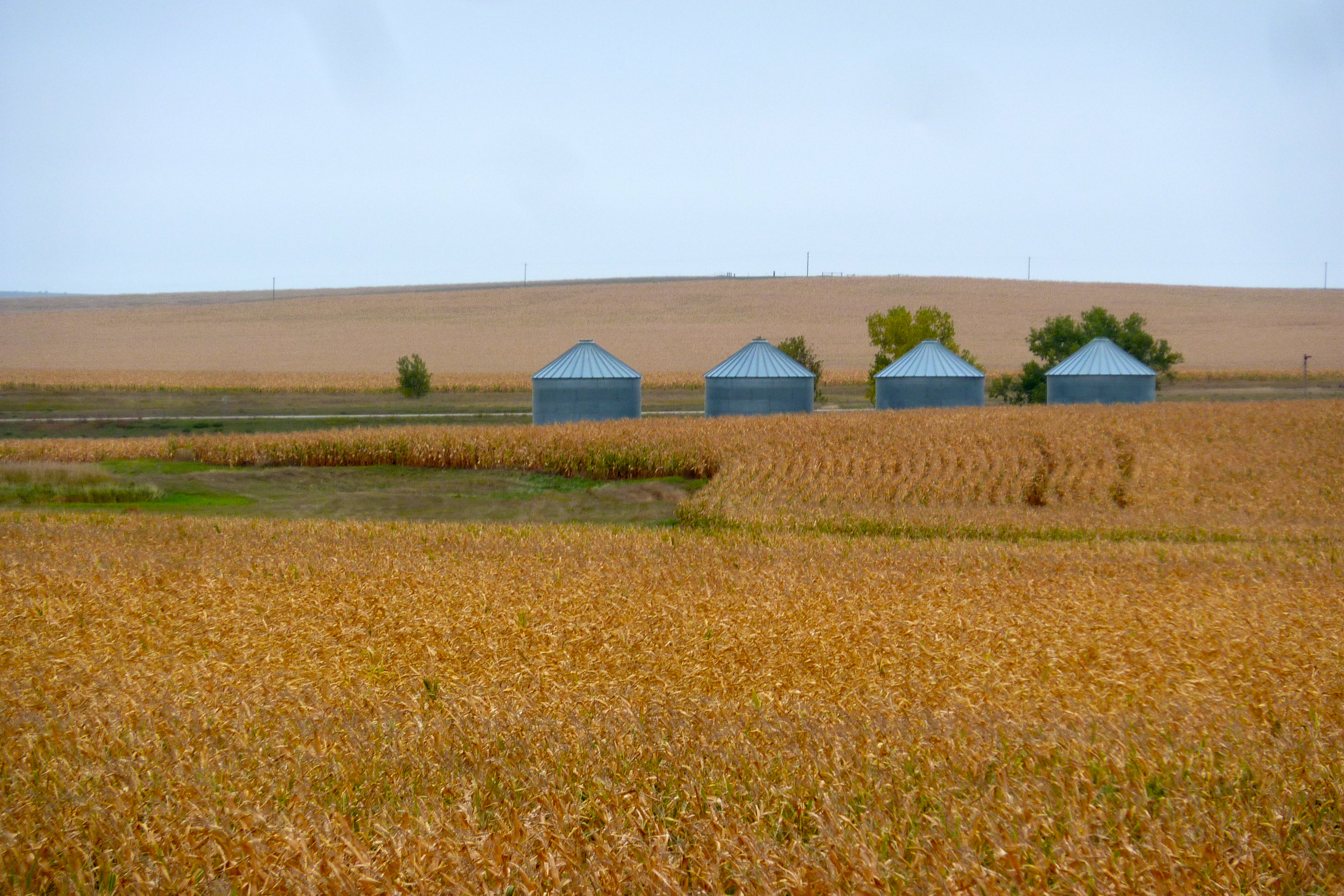
From 84 degrees in Minneapolis, we moved on to South Dakota and the Bad Lands. First a v-e-r-r-r-y  l-o-o-o-n-g drive on I-90 (the same one that passes through Rochester NY), with lots of farming.

Corn...to eat or put in your gas tank?

Corn…to eat or put in your gas tank?

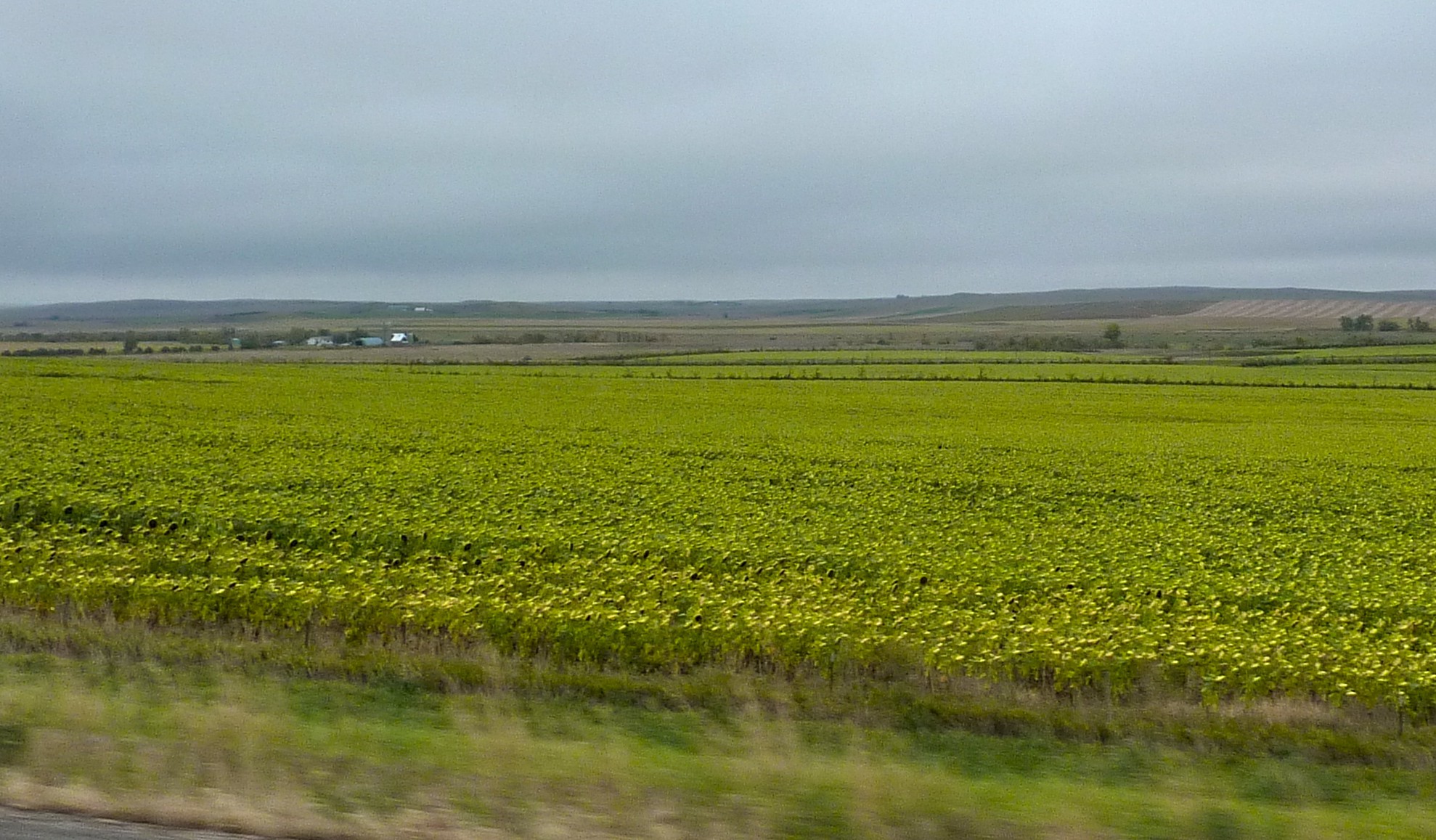
Notice the sunflower heads are facing the ground on this dreary day.

Notice the sunflower heads are facing the ground on this dreary day.

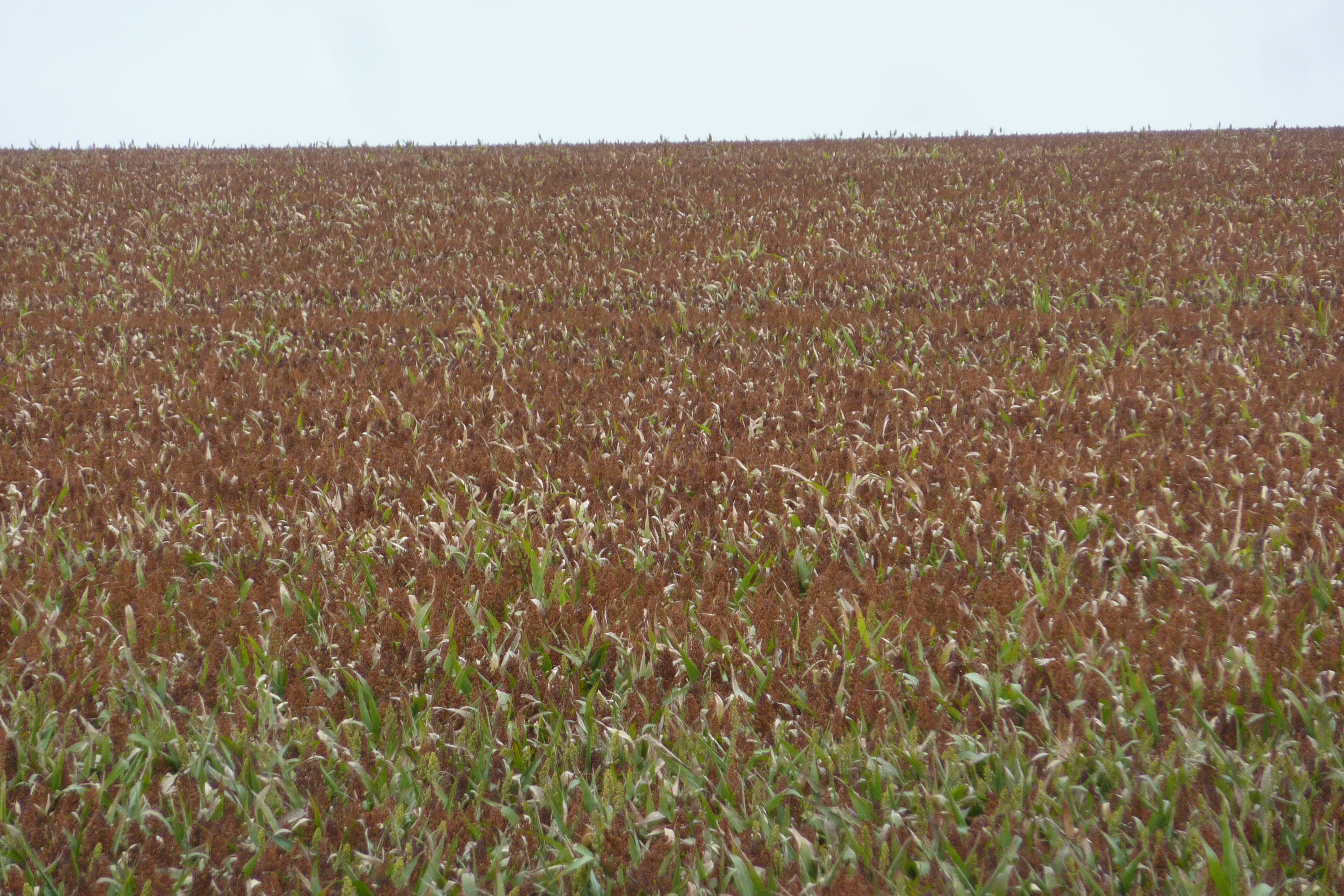
This is sorghum! I have wanted to see this plant for decades. No GMO, Liz)

This is sorghum! I have wanted to see this plant for decades. (No GMO, Liz)

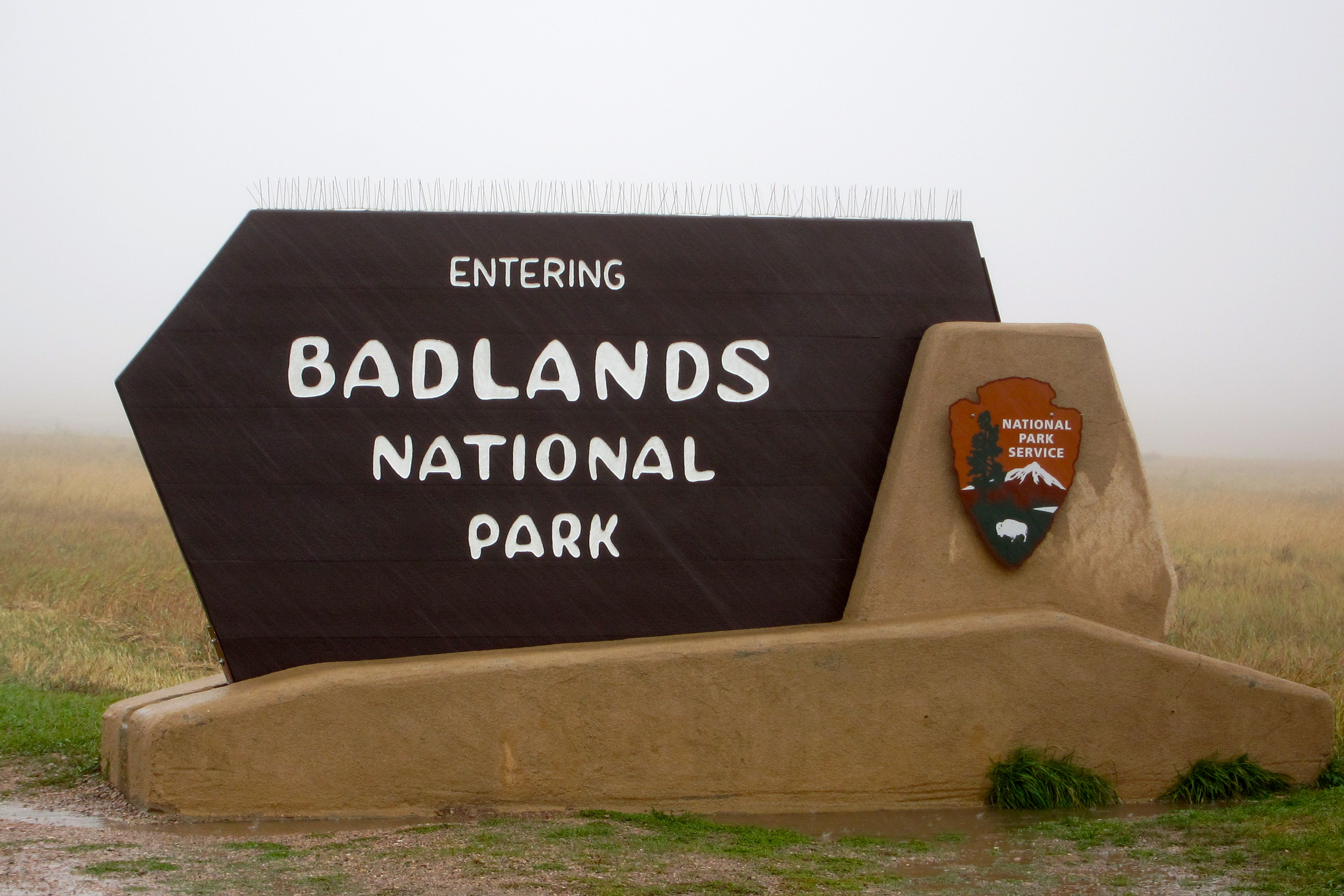
It’s fitting that we’re entering the Badlands National Park on a rainy (and chilly) day.

Our first National Park  on this trip.

Our first National Park on this trip.

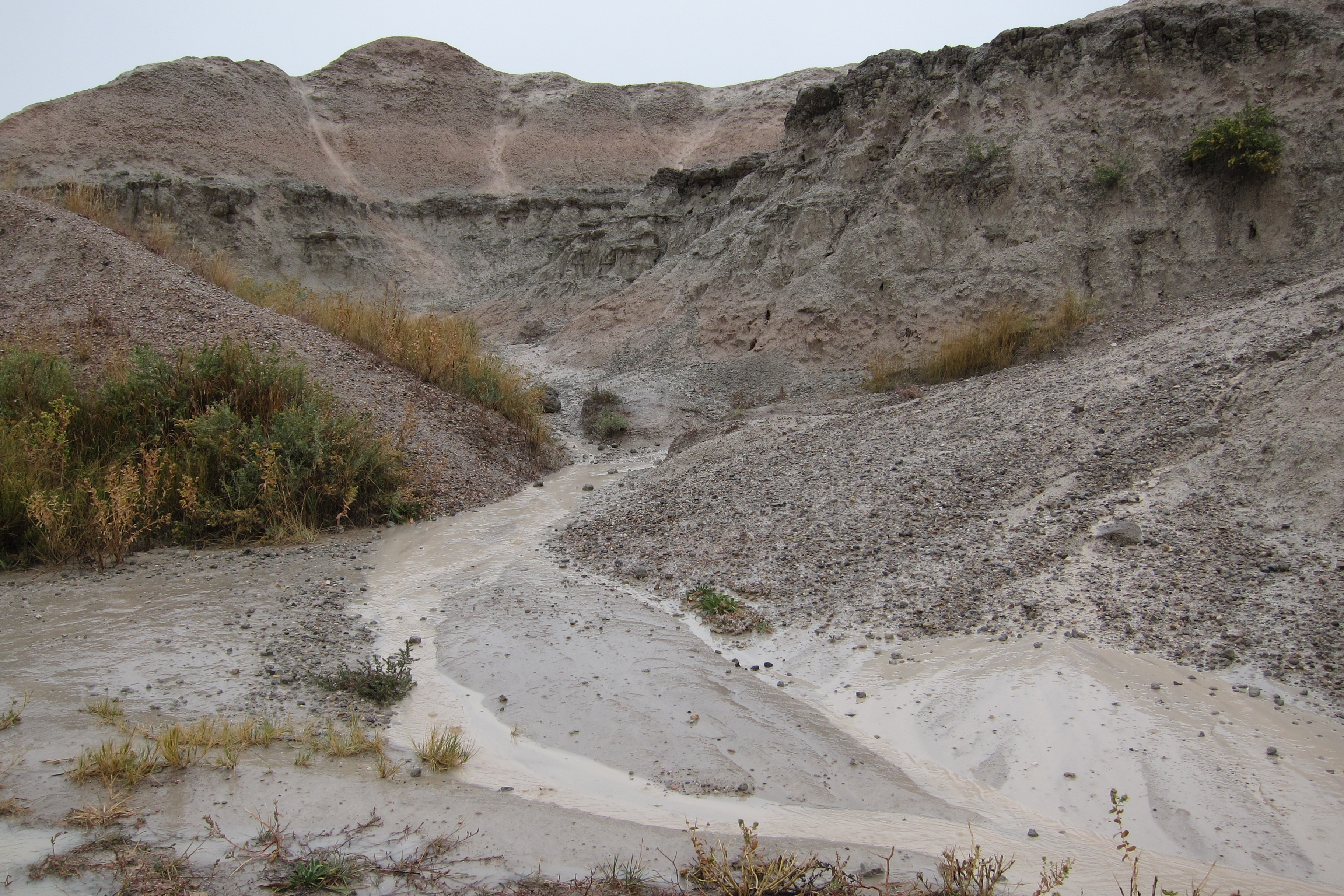
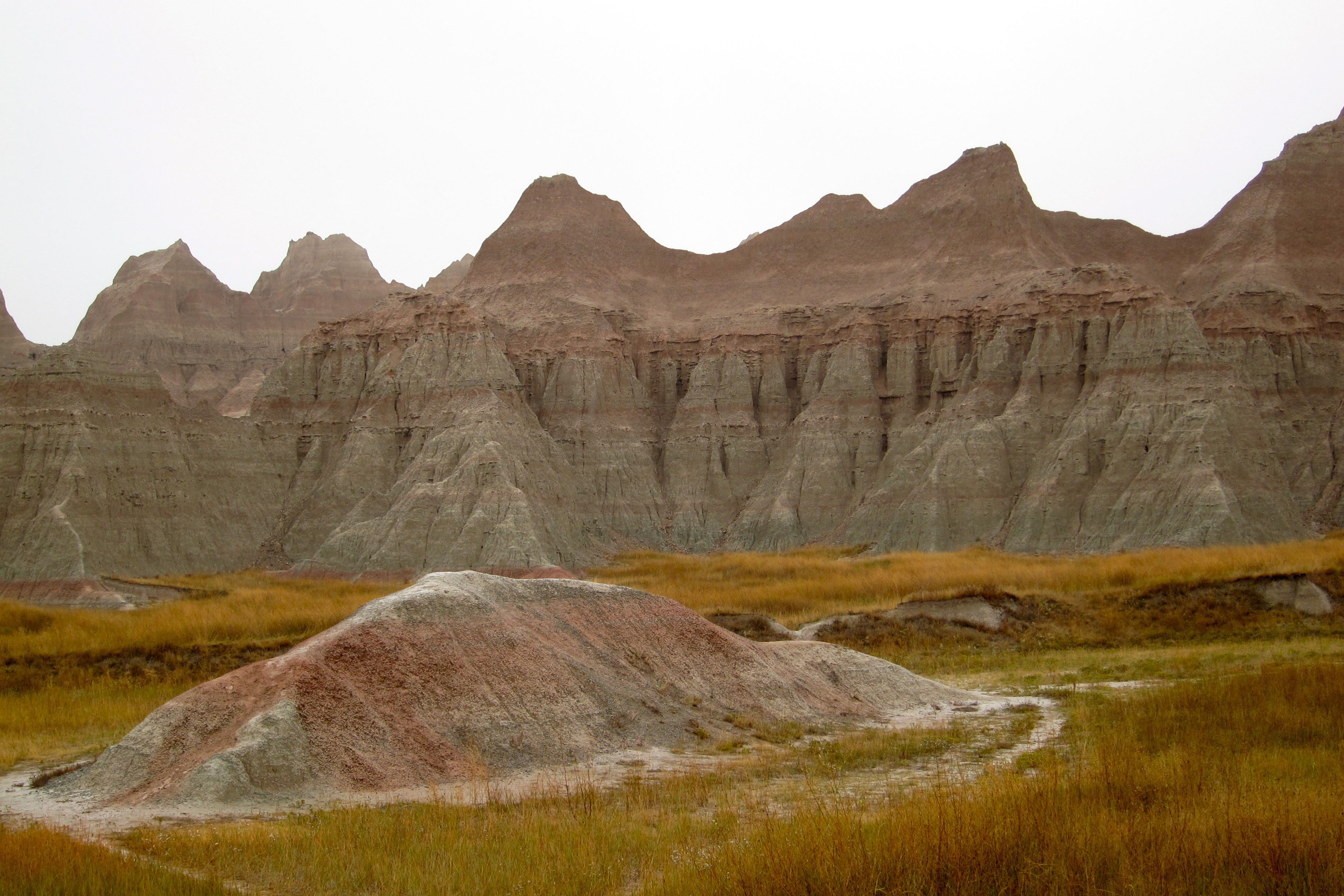
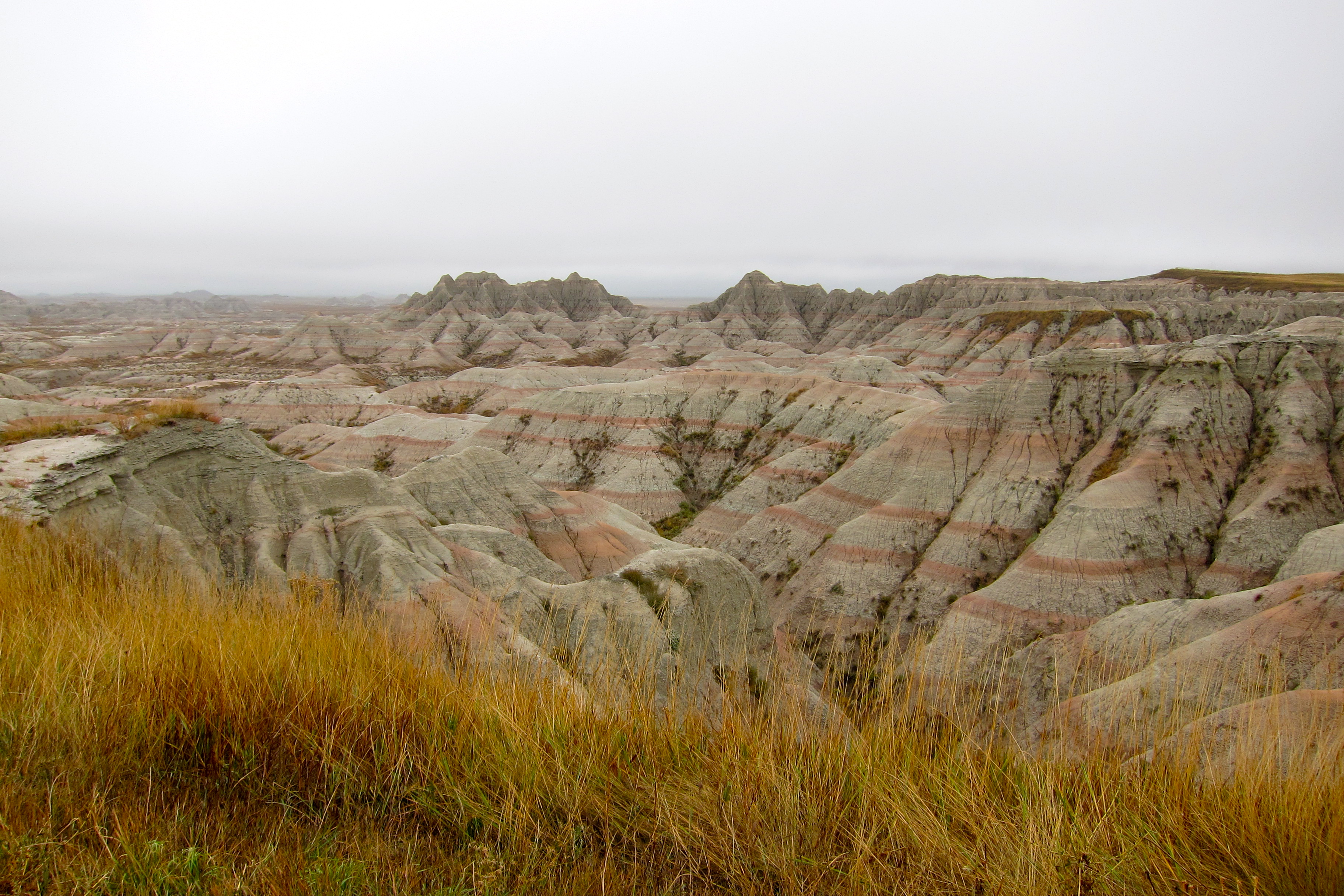
Without the rain, the Badlands would not have become bad. This area was a prairie 500,000 years ago. Then it started to rain and erode the soft soil. As the rivulets merged, more and more erosion occurred, digging gullies out of the soft limestone and leaving the harder sections standing.

Tiny rivulets like this cause massive erosion.

Tiny rivulets like this cause massive erosion.

Even with the rain, we found fascinating views around every corner.

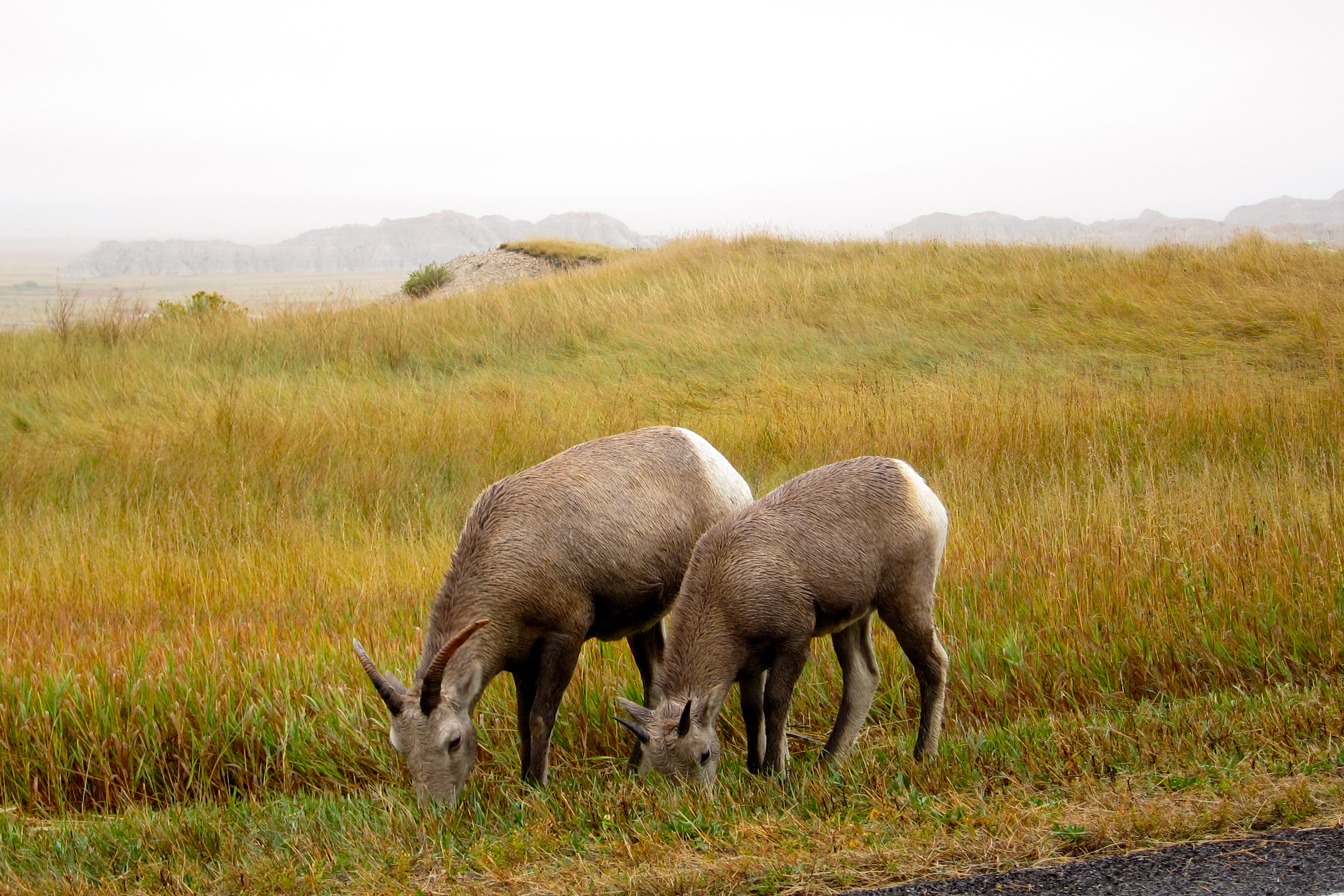
These animals ate peacefully, not worried about passing cars or imminent erosion.

These animals ate peacefully, not worried about passing cars or imminent erosion.


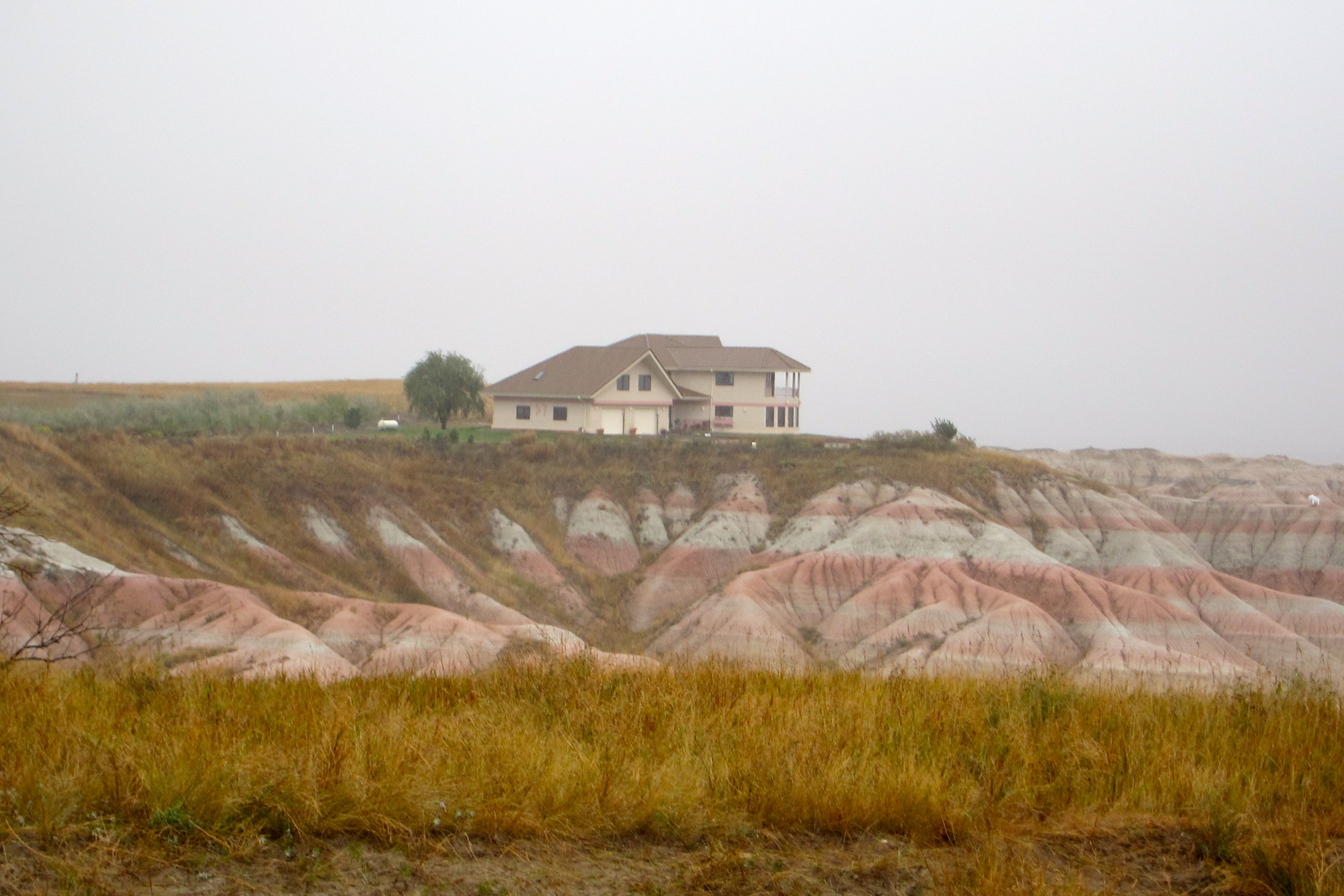
Chris, can this house get erosion insurance?

Chris, can this house get erosion insurance?

Who knows why some areas stand tall and others succumb to erosion?

Who knows why some areas stand tall and others succumb to erosion?

The park ranger told us the soil in some areas erodes at a rate of one inch per year.

At any moment, the soil beneath us could slip away.

At any moment, the soil beneath us could slip away.

And the final product, acres of very bad, but strikingly beautiful lands.

And the final product, acres of very bad, but strikingly beautiful lands.

We’ve purchased our annual national park pass. Number 1 on the tour has been phenomenal. We’re ready for Yellowstone, Glacier, Olympia… We’re going to beat Mark and Sue Real at the “put the pin in the national park” game, at least until their next trip.

Posted in Travel Journal | Tagged , , , , | 1 Comment

Chicago. Where is the Wind? Sep 22-23 (Days 23-24)

We had such a lovely two days in Chicago it’s hard to imagine the Windy City will shut down with ice and snow in a matter of months.

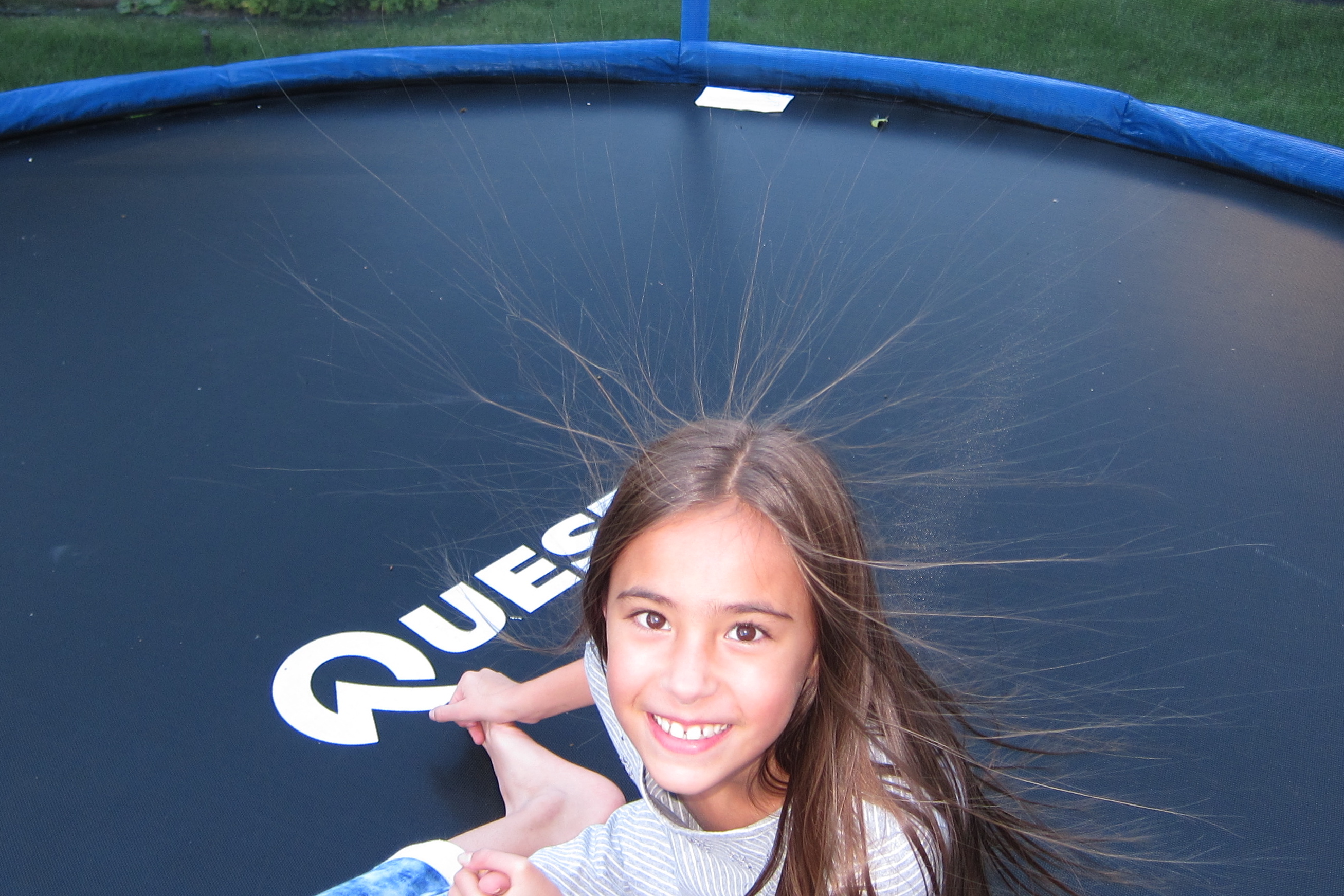
First stop was a visit with Vic and Karen Bach and our niece Maddie. She is a bundle of energy, demonstrating gymnastics for us on her trampoline.

Maddie has become a human Van der Graff machine. Look at her hair.

Maddie has become a human Van der Graaf generator. Look at her hair. Click to enlarge.

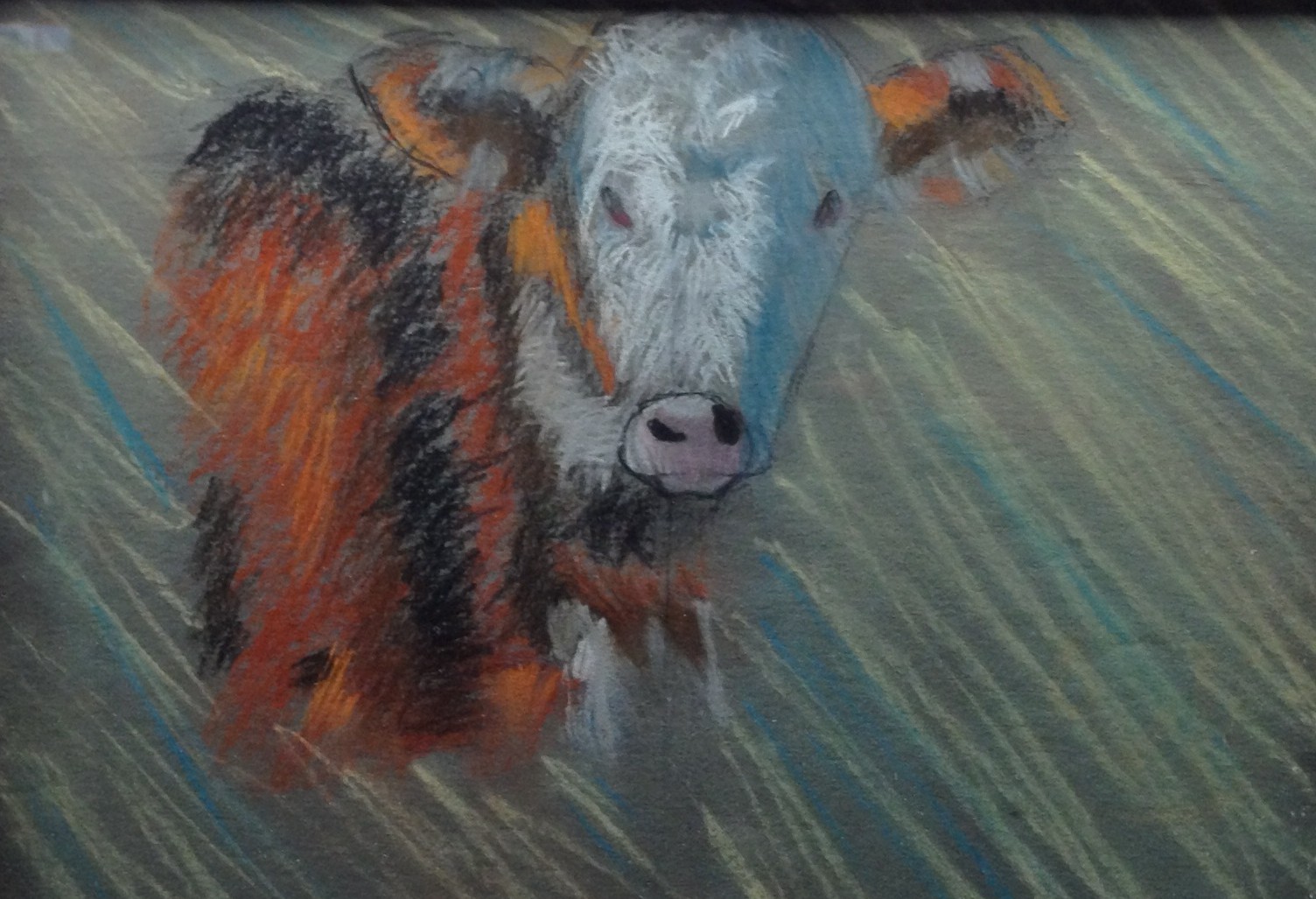
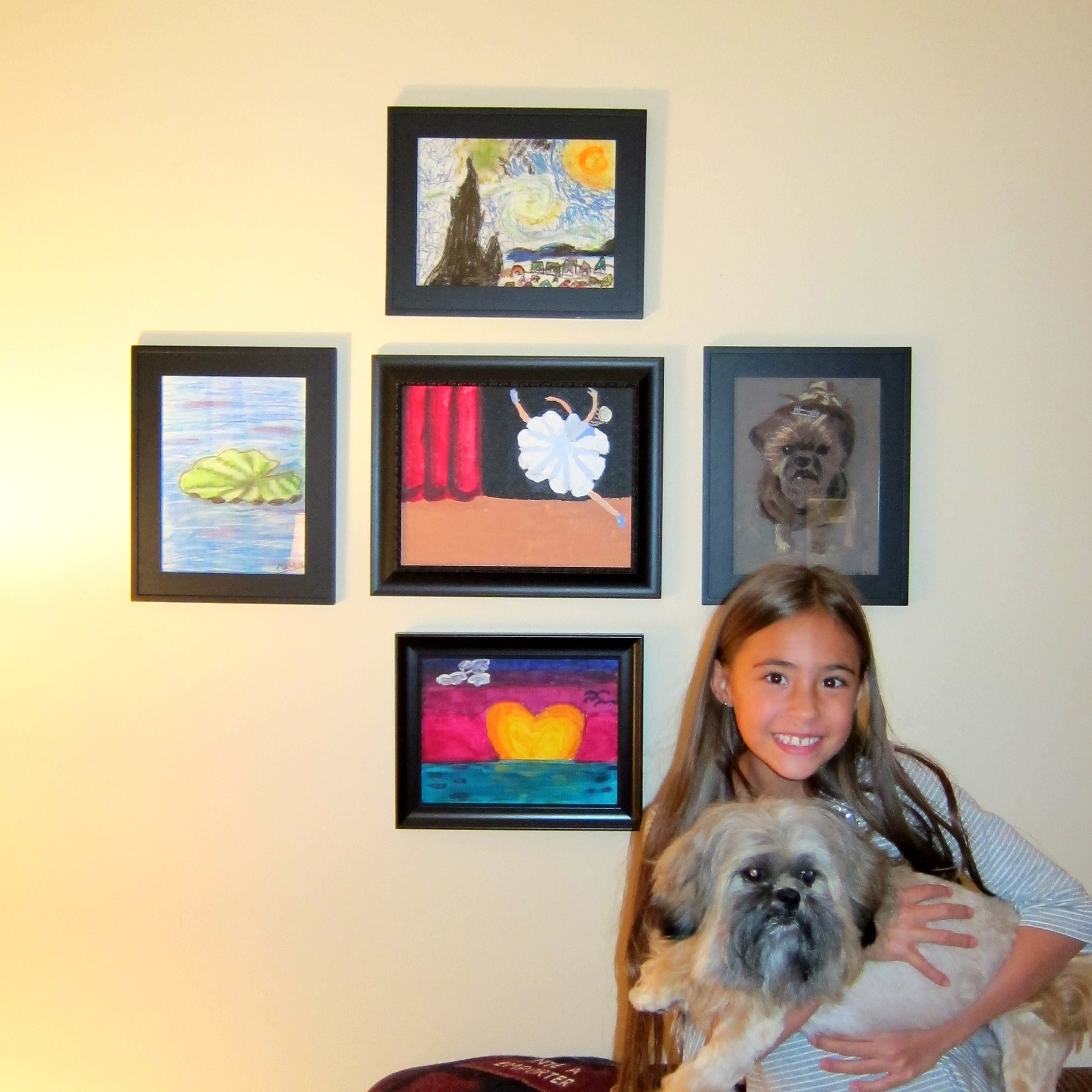
We heard that she loved art. We didn’t realize how good she is! This is her drawing of a cow she made for Grandpa Bach.

It looks like a fantastic cow to us!

It looks like a fantastic cow to us!

Someday we will be seeing her art on gallery walls, not just Mom and Dad’s living room. Great job, Maddie. Thanks for a very pleasant visit, Vic and Karen.

Notice Maddie's versions of Van Gogh, Degas, and Monet too.

Notice Maddie’s versions of Van Gogh, Degas, and Monet and a  near-photo drawing of Twinkles, her dog.

The mayors of New York and Chicago have had a running debate over which city has better pizza. New York has thin crust pizza and Chicago’s is definitely not thin! So we had to stop for Chicago deep-dish pizza, this one from Giordano’s, to see what the hullabaloo was about.  This one was pretty good!

Jon Stewart says it's a pizza casserole that even his dog wouldn't eat1

Jon Stewart says it’s a pizza casserole that even his dog wouldn’t eat. We enjoyed it.

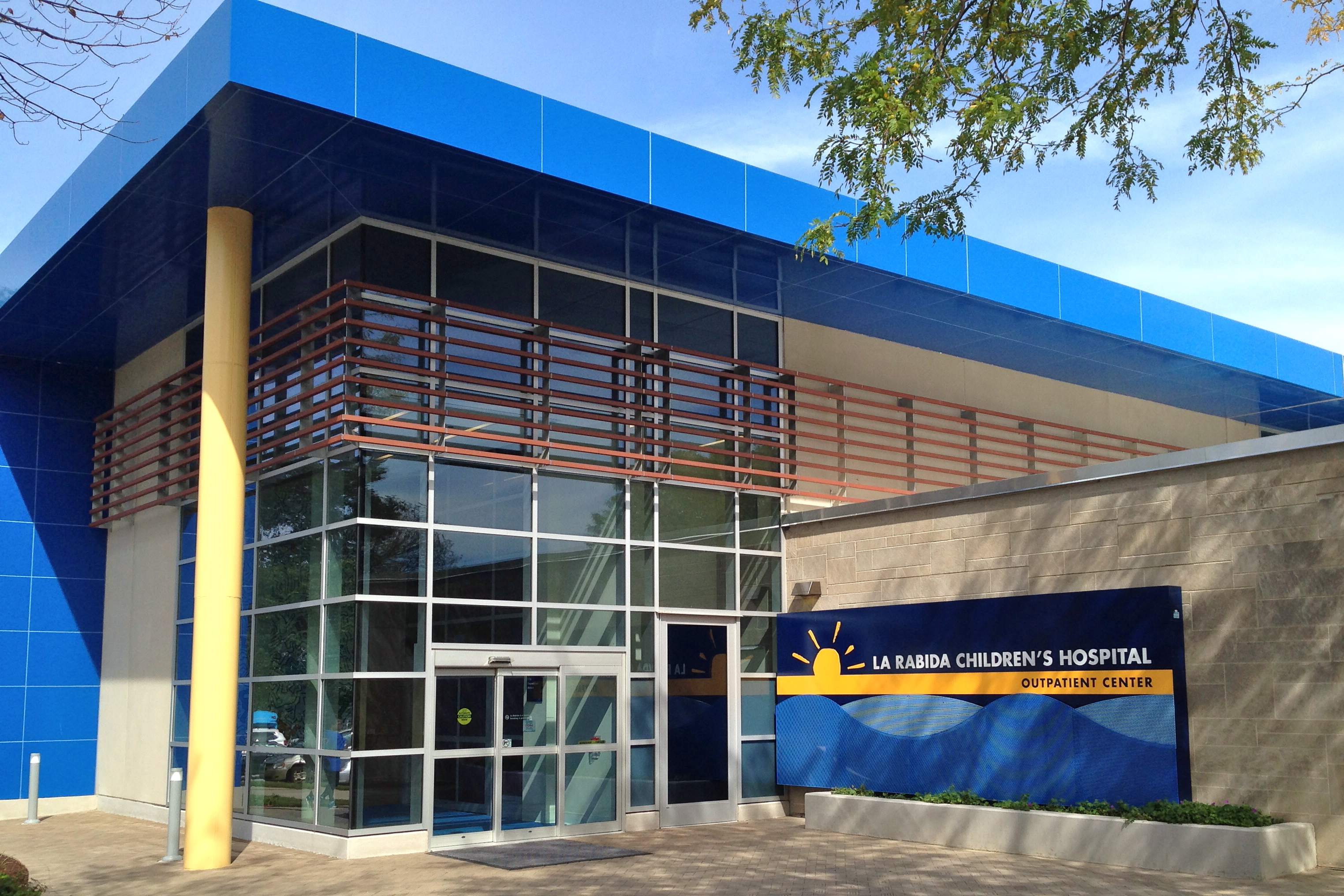
We visited La Rabida, a children’s hospital that Danny and Susan Real have supported for over 20 years. Originally a tuberculosis recovery center on the waters of Lake Michigan, it now provides chronic and out-patient pediatric care for kids from south Chicago. The very caring workers serve a noble cause.

The  kids here are on the SS La Rabida, a cruise ship for  compassionate care.

The kids here are on the SS La Rabida, a cruise ship for compassionate care.

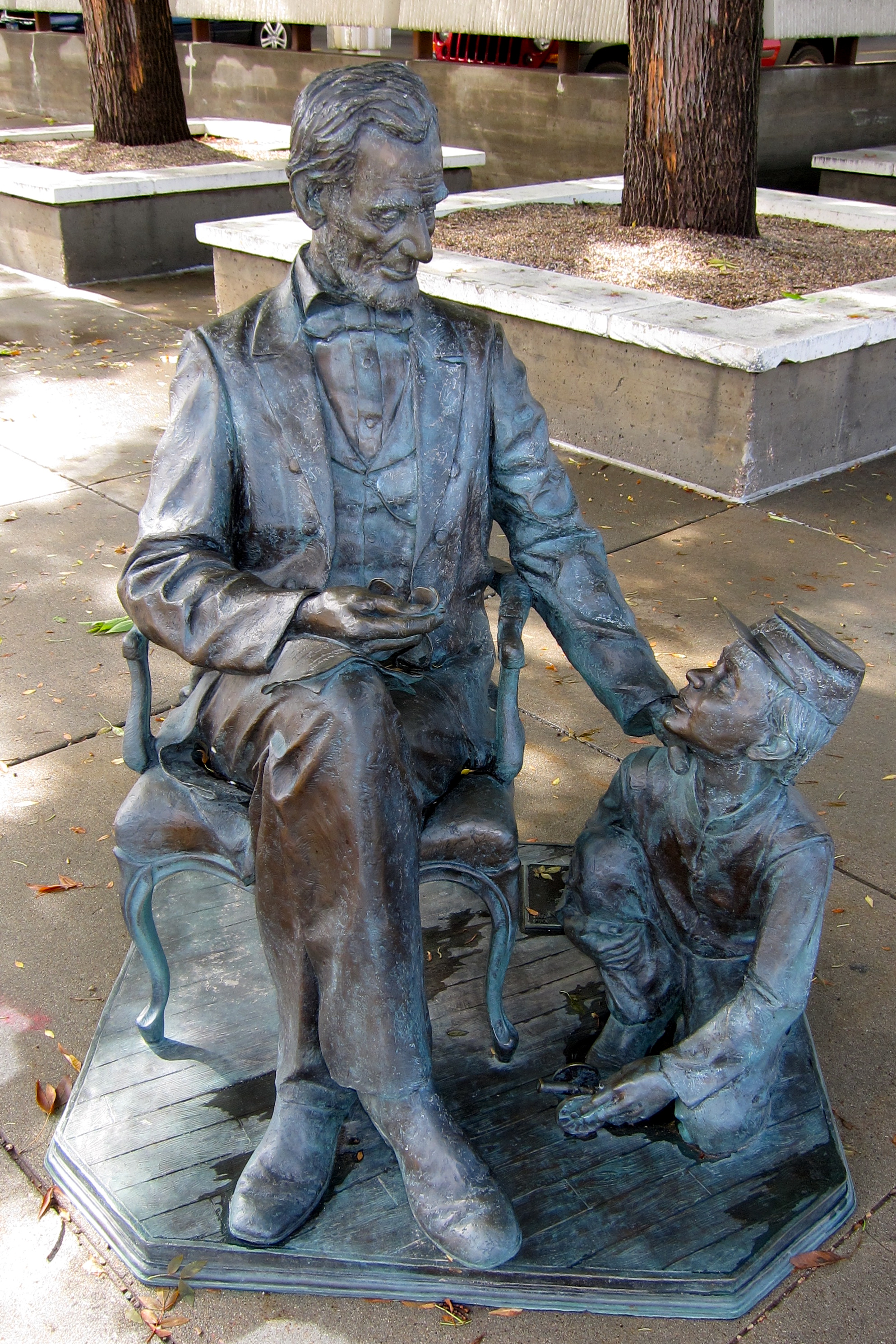
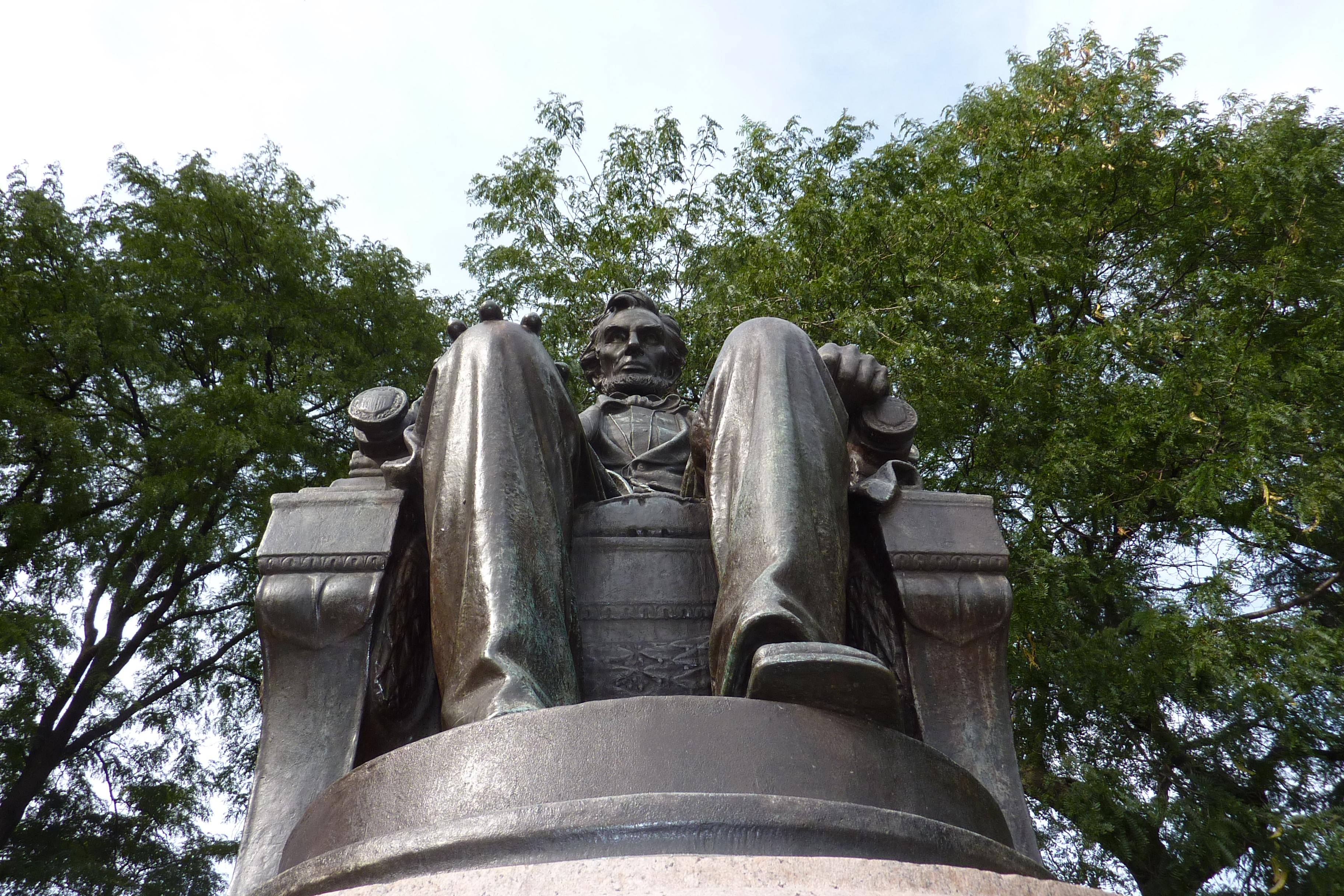
Danny and Susan are in downtown Chicago, overlooking the waterfront. We walked to Grant Park. I couldn’t find Grant, but did find another president.

Who's sitting in Grant Park? Lincoln.

Who’s sitting in Grant Park? Lincoln.

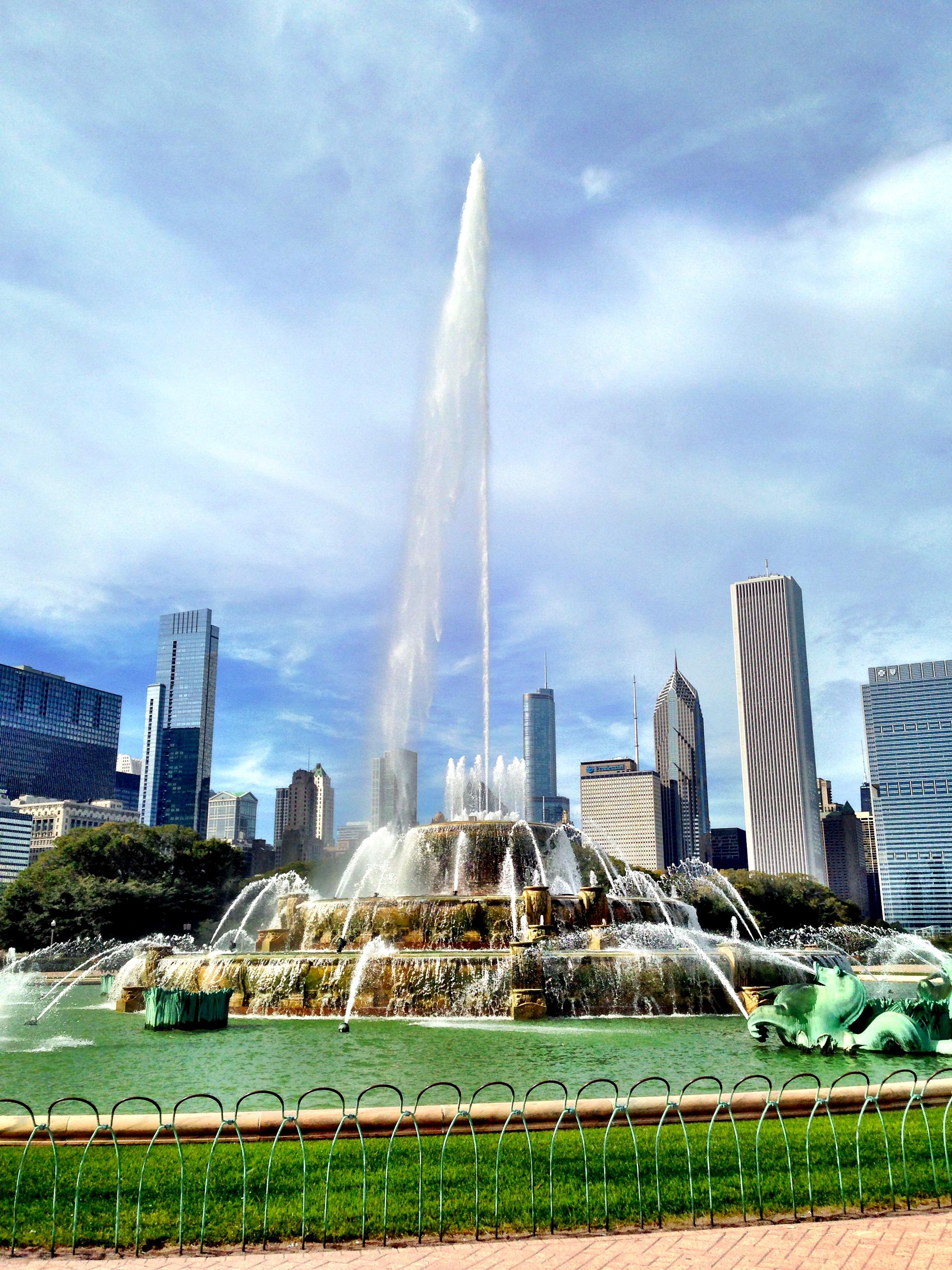
The Buckingham Fountain is very popular.

Looks a bit like the Jet d'Eau in Geneva.

Looks a bit like the Jet d’Eau in Geneva.

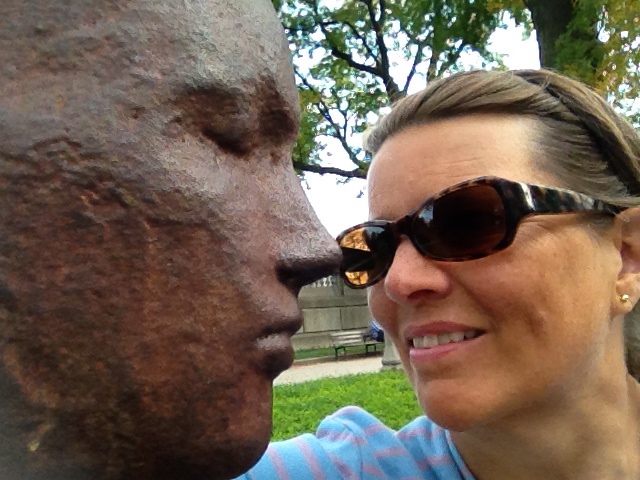
Nancy made a new friend.

First kiss. (Sculpture by Icelandic artist Steinunn Thórarinsdóttir )

First kiss. (Sculpture by Icelandic artist Steinunn Thórarinsdóttir )

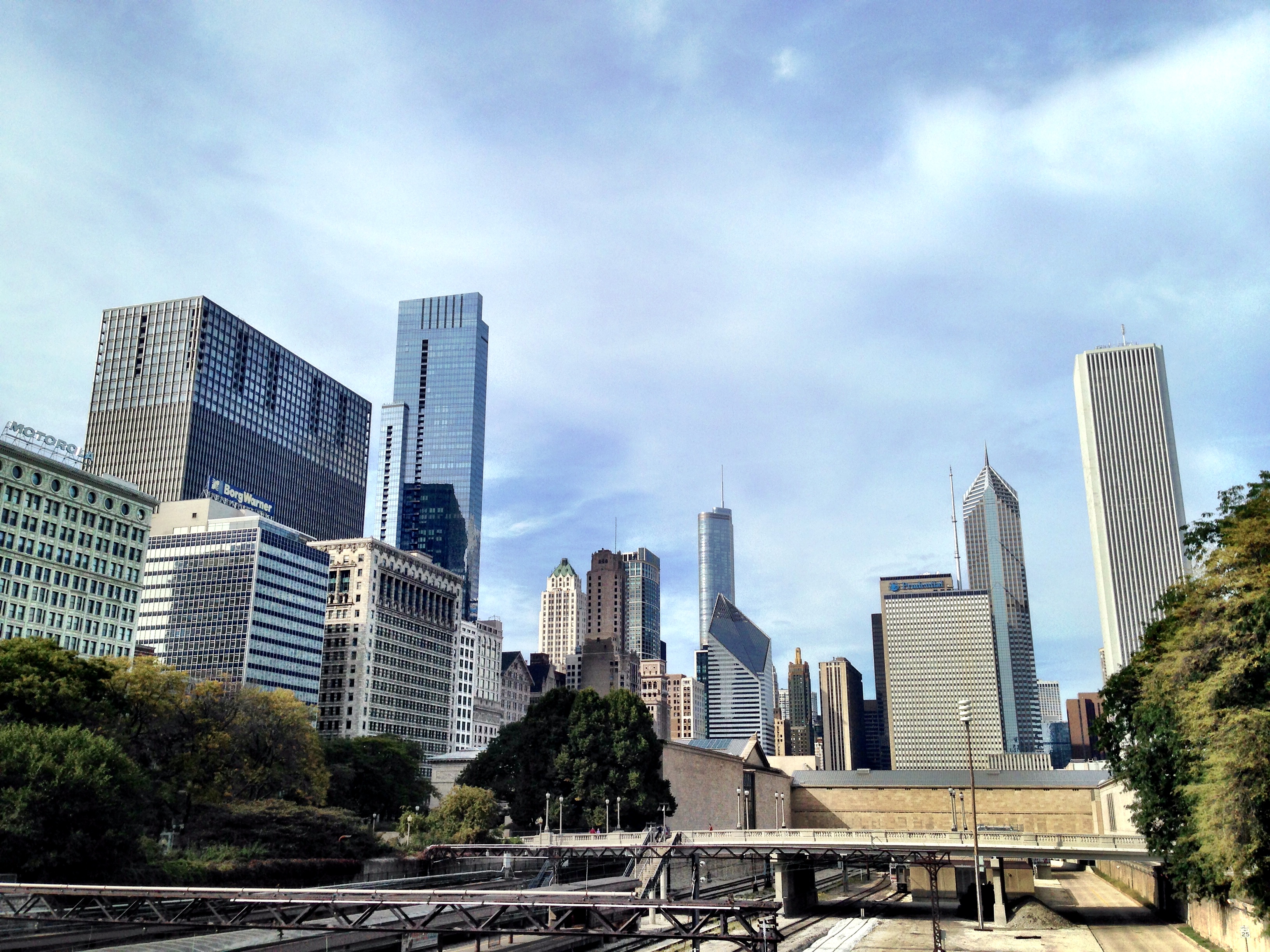
And this look back at Chicago from the lake was impressive.

What a skyline!

What a skyline!

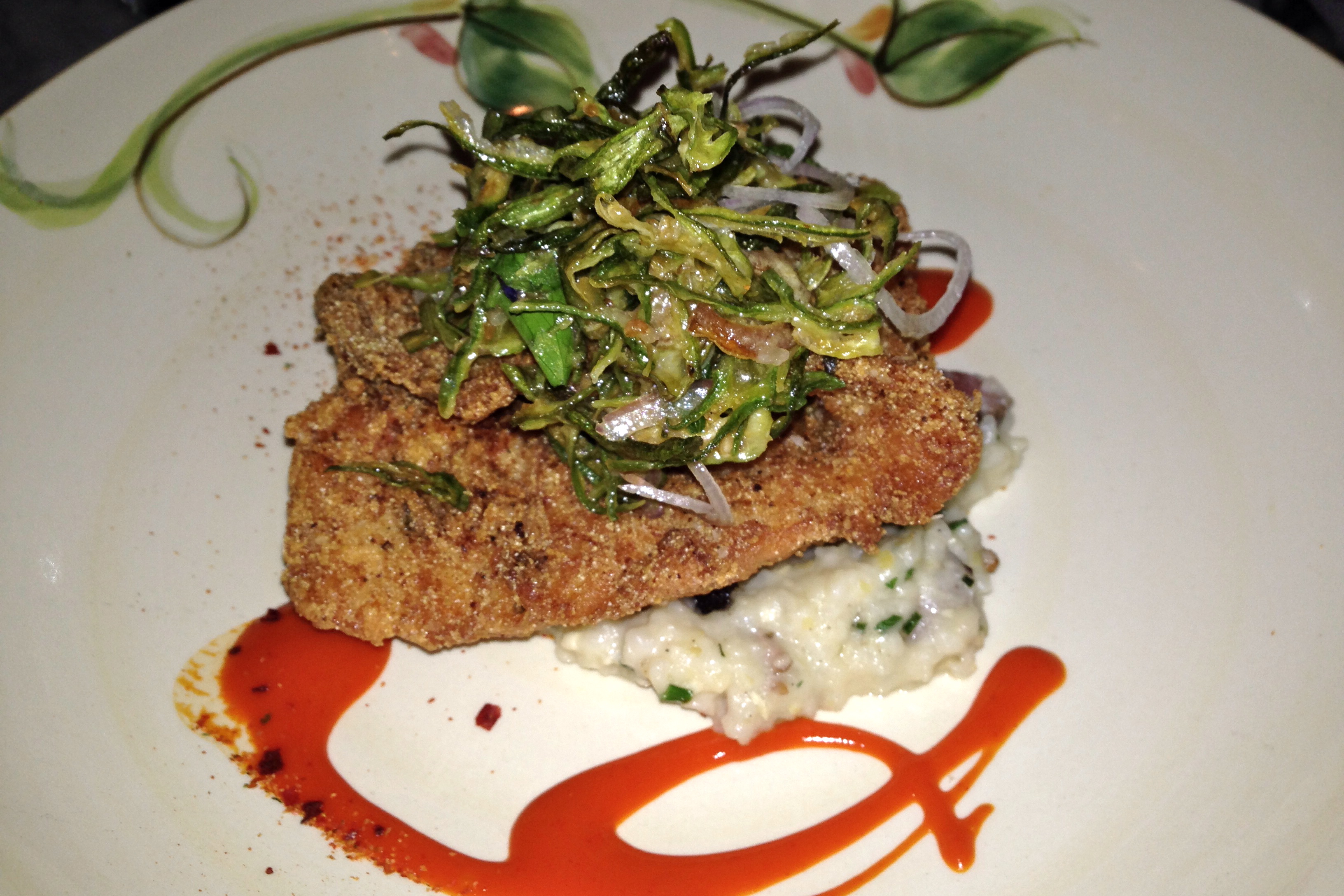
The Reals took us to one of Oprah’s favorite restaurants, Table Fifty-two, where we spoke with celebrity chef Art Smith. We were too timid to take a picture of the chef, but we did get photos of the food.

Who knew catfish could look and taste this good?

Who knew catfish could look and taste this good?

Danny and Susan, thanks for your hospitality.

We left Chicago and  headed north through Wisconsin along the western shore of Lake Michigan. We wanted to stop for lunch at Kohler where the PGA was held in 2010, but Google Maps refused to find a town of Kohler and instead routed us to Sheboygan. We found out Kohler is a giant factory, not a town.

Kohler, the prettiest factory we've ever seen.

Kohler, the prettiest factory we’ve ever seen.

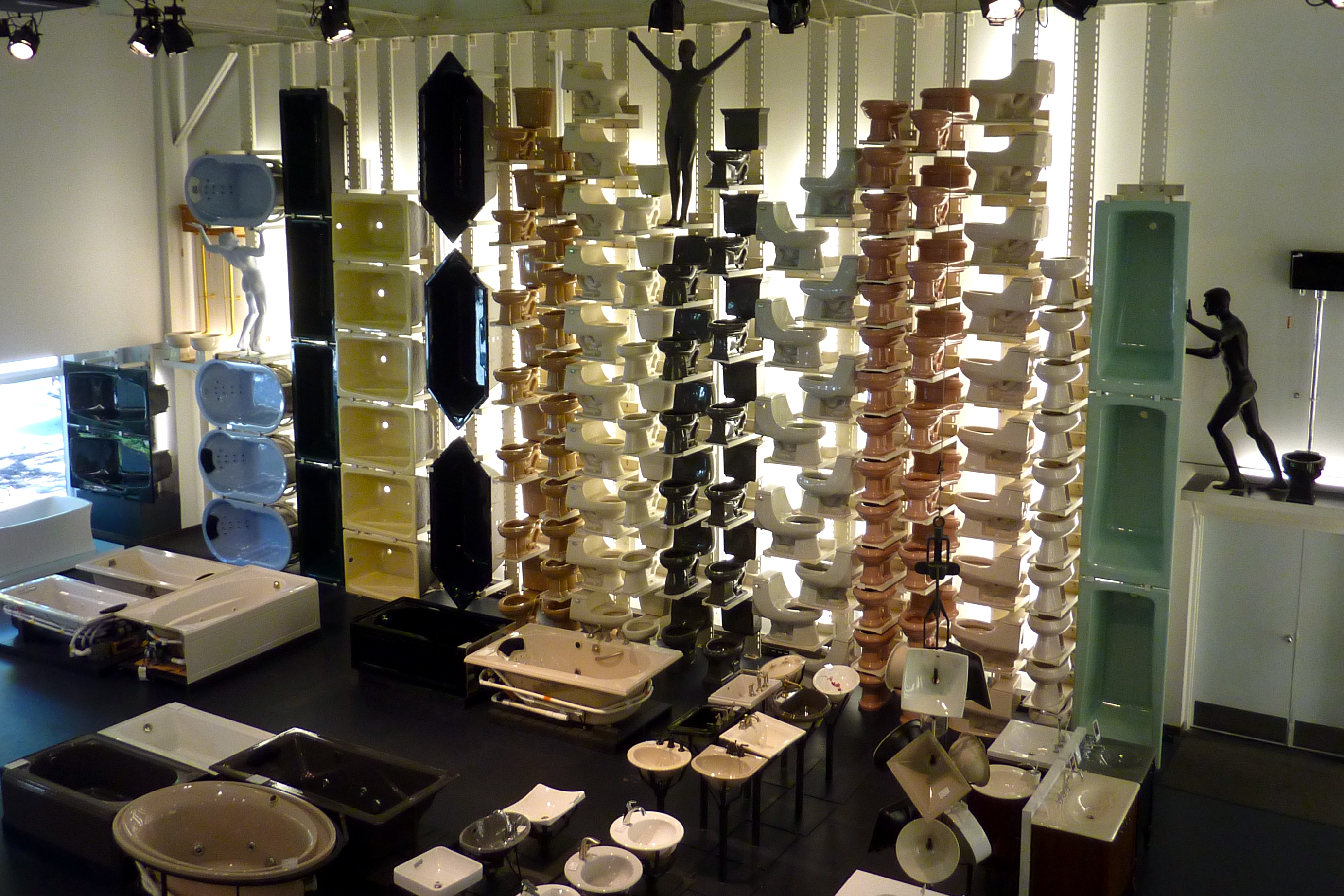
Check your bathroom and you might find a Kohler fixture. The family-run business has been in operation for 137 years and makes vitreous china in fashion colors for bathroom and kitchen fixtures. It’s not just functional, but an art form.

Mamie Eisenhower liked pink, so that was the color of sinks in the '50s.

These are fixtures! Mamie Eisenhower liked pink, so that was the color of sinks in the ’50s.

We ate at a restaurant at the American Club across from the factory. Unlike the membership-only American Club experiences we had overseas, this was a building created to welcome the immigrants who came to work in the Kohler factory and help them achieve the status of American citizenship. That contribution to building America might be the longest-lasting fixture that the company built.

From here it’s on to Marinette and Menominee.

Posted in Travel Journal | Tagged , , , , , , , , , , | Leave a comment

Ch-ch-ch-changing… End of Summer and on the road

We spent the summer on and around Keuka Lake doing our favorite things: swimming, kayaking, relaxing on the dock, picking blueberries at Bedient Farm, eating fresh-picked corn.

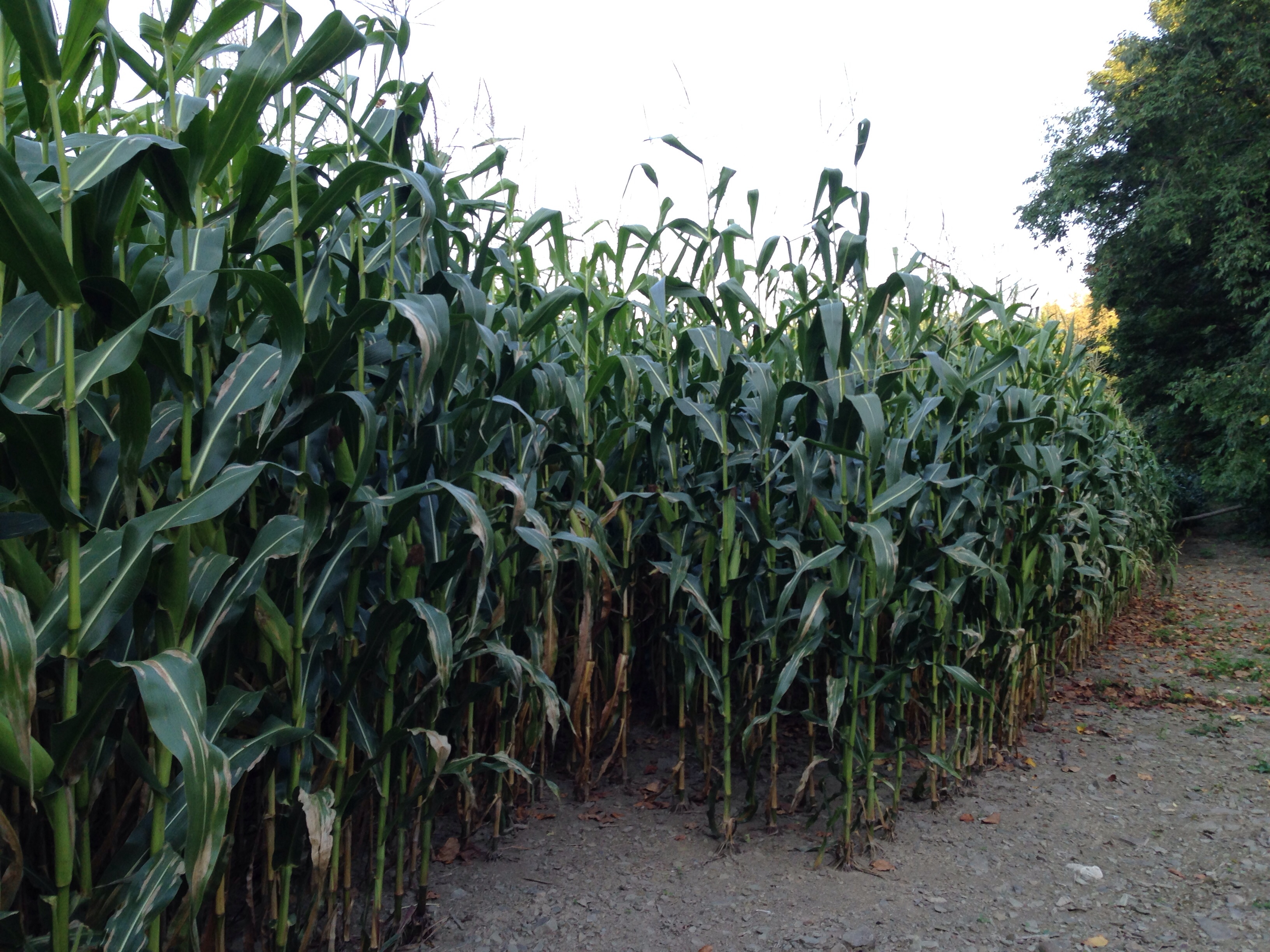
I swear this corn is 10 feet tall.

I swear this corn is 10 feet tall.

This year we added biking, including several  44-mile round-the-lake trips.

The red line shows our route around the lake with extra rides back and forth on West Lake Road.

The red line shows our route around the lake with extra rides back and forth on West Lake Road.

This is our favorite route on a sunny, not-too-hot day: 7 miles down West Lake Road for an almond croissant at the Artisan Bakery in Hammondsport, the Coolest Small Town in America.

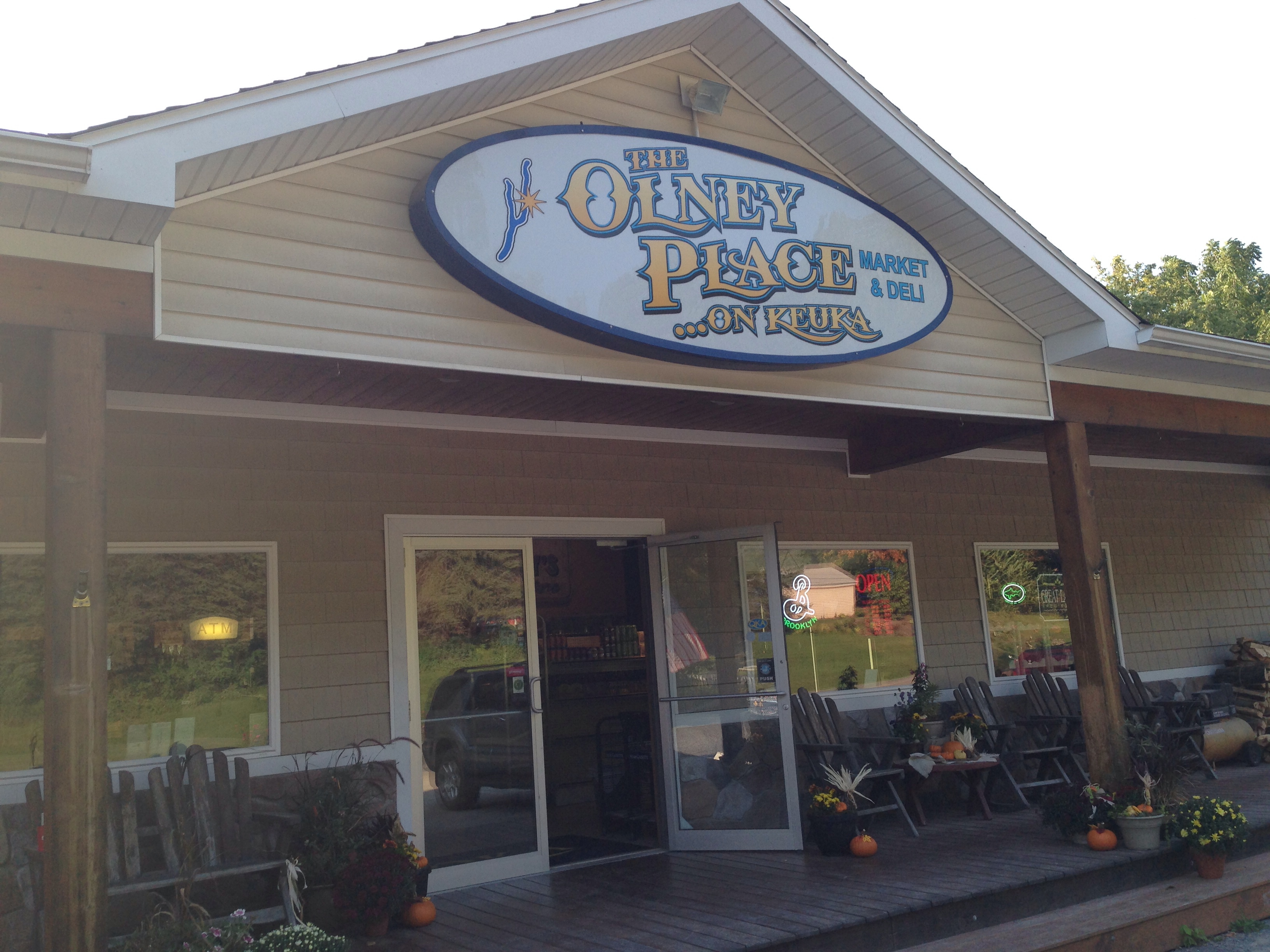
Then 15 miles up and around the east side of the lake for a Rachel sandwich and a craft beer at The Olney Place (the convenience store/deli/pub/souvenir t-shirt/everything shop)…

Best sandwiches on the Keuka Lake.

Best sandwiches on Keuka Lake.

Another 10 or so miles for a Seneca Farms ice cream just outside Penn Yan.

Then the 12-mile home stretch across the top of the Y and down the west side of the lake. Jump in the lake, bike clothes and all.

When we left on September 2 for the Cape, Keuka Lake was still over 70 degrees. But now the long hot days of summer are over.

Jimmy Durante sang it best:

It’s a long, long way

From May to December

But the days grow short

When you reach September

As we started on the next leg of our journey, heading west in mid-September, Keuka Lake was 62—and Michael still went for a swim. The lake was peaceful, more seagulls than sailboats. Summer is over. We’re smelling the grapes, ready for harvest. The corn is withering on the vine and the glorious fall colors have arrived.

Knee-high by the Fourth, now on it's last legs

Knee-high by the Fourth, now on its last legs

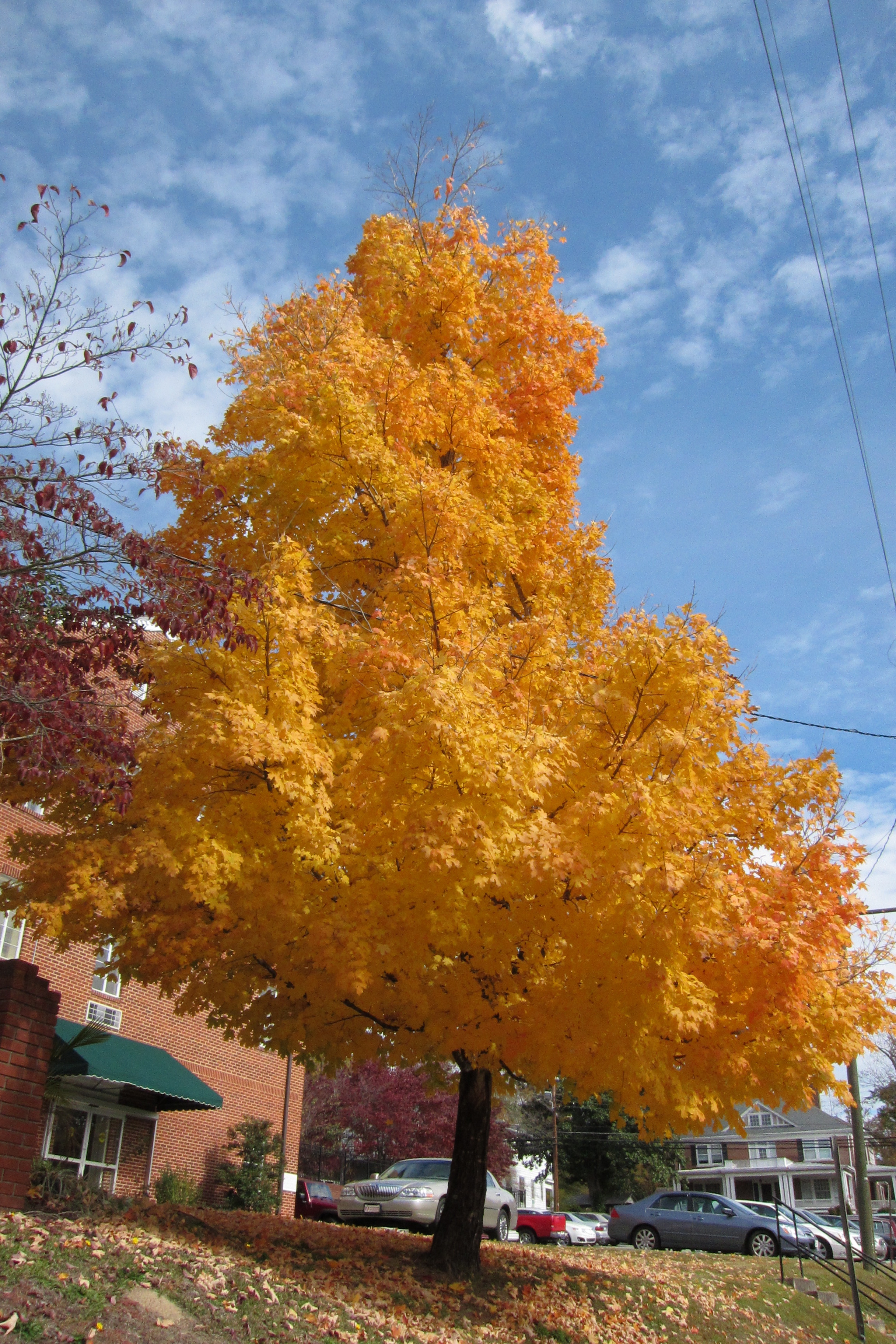
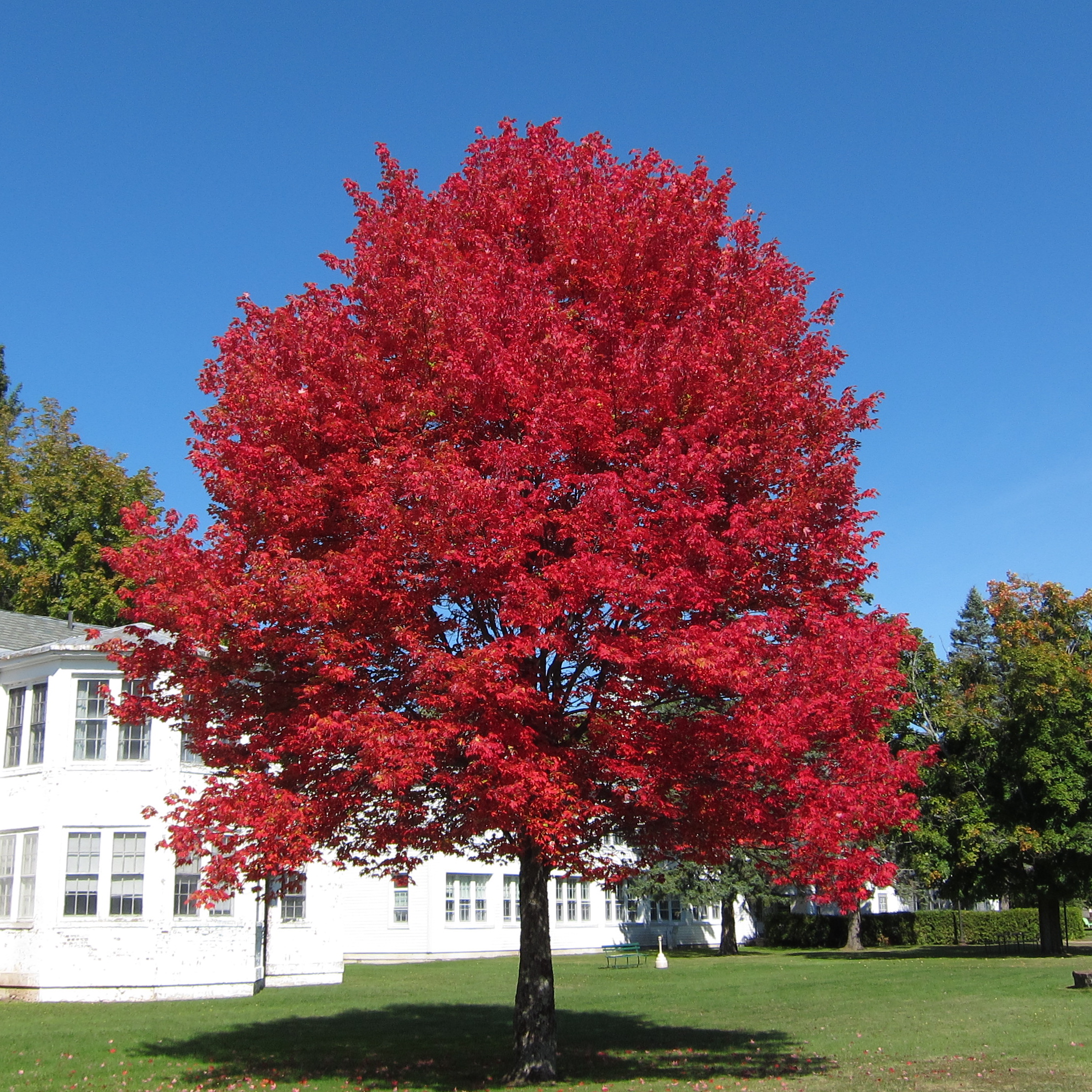
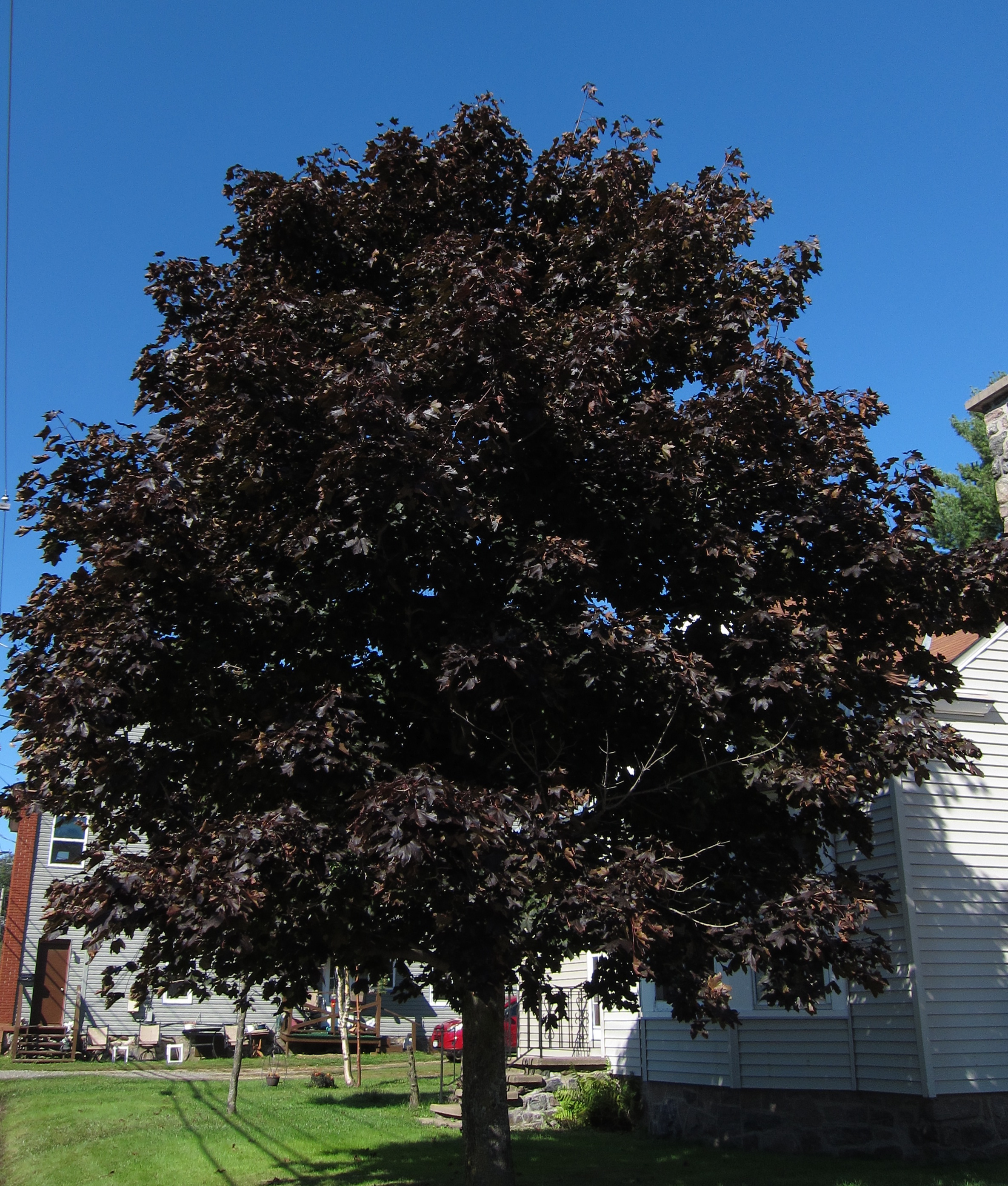
Is this maple?

Is this maple?

Maybe this one?

Could this be maple?

Or this?

Or this?

We could try to get all philosophical and talk about the major changes we’re going through as we make this next transition for our eight months on the road, but they don’t seem all that major. We’re just marching along, or perhaps meandering is a better term. The leaves, they are a-turning and the days are getting shorter.

The last day before leaving is always the hardest.

The last day before leaving the lake is always the hardest.


Posted in Smell the Roses | Tagged , , , , , , , | Leave a comment